Nori is not just a decorative sheet wrapped around a maki. It is an exceptional red seaweed from the genus Porphyra, with a light, supple and delicately iodine-flavoured sheet.
In the world of the Apéraw, the art of the living, plant-based and joyful aperitif, nori has become a real star, because it ticks all the boxes: it is tasty, practical, naturally salty, rich in protein and low in sugars.
At a time when industrial aperitif snacks are often high in sugar, salt and fat, nori offers a simple, festive and light alternative.
A botanical and cultural portrait of nori
Nori has been cultivated for over 1,000 years in East Asia, mainly in Japan, Korea and China. The seaweed is grown on floating nets at sea, then harvested, rinsed, ground and pressed into very thin sheets, dried at low temperature.
This gentle processing preserves:
the colour and texture of the seaweed
The protein in nori
Nori can contain between 30 and 40% protein.
But its real strength lies in its amino acid profile: it contains all the essential amino acids, which makes it a complete protein.
It slips easily into a plant-based diet.
Culinary uses of nori in the Apéraw
1. Living wraps
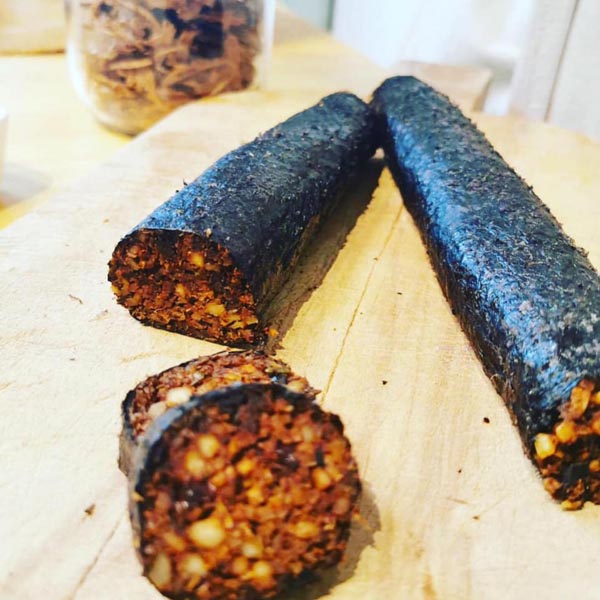
Nori sheet + avocado + grated vegetables + sprouted seeds + raw sauce → crunchy and colorful rolls.
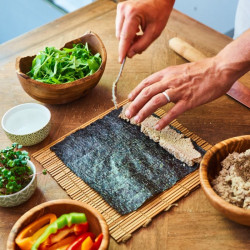
2. Rice-free makis
Replace the rice with grated kohlrabi, celeriac, carrot or beetroot.
3. Raw crisps
Cut, brush with olive oil, paprika and garlic, then dehydrate gently.
4. Sea flakes
Crumbled over salads, raw vegetables, bowls and living soups.
Biovie has been selling organic seaweed online since 2007: fresh or dried sea algae, hand-harvested in Roscoff with Bretalg, and freshwater microalgae (spirulina, chlorella, klamath) grown under controlled conditions. We are one of the few companies in France offering fresh seaweed in generous quantities, alongside dried formats that are easier to store and to dose day to day. To get started, go for dried seaweed, easy to add to everyday dishes in small amounts; for regular cooking and an unmatched taste, fresh seaweed in 1 kg packs works out cheaper per kilo. Discover the full range here, from kombu flakes to fresh spirulina in block form., 26
products