How to Naturally Boost Your Memory: Complete Guide
Omega-3, bacopa, ginkgo biloba, regular physical activity, and quality sleep are the most well-supported factors by scientific research for naturally improving memory. A meta-analysis from 2025 involving 58 randomized clinical trials confirms that a daily intake of 2,000 mg of omega-3 significantly improves attention, memory, and overall cognitive functions (Shahinfar et al., 2025).
In France, more than 900,000 people live with Alzheimer's disease (Source: Brain Research Foundation). What if I told you that our diet plays a much more crucial role in preserving our cognitive abilities than we might think? After 33 years of plant-based eating and thousands of discussions with nutritionists, naturopaths, and our clients at Biovie, I have come to a conviction: what we eat every day literally shapes our brain.
Understanding Memory: The Different Types and How They Work
Before attempting to boost one's memory, it is essential to understand how it works. Our brain does not have a single memory system but several, each with its own specific role.
The short-term memory (working memory) retains information for a few seconds to a few minutes-the time it takes to jot down a phone number or follow the thread of a conversation. The long-term memory, It stores memories in a lasting way: it is what allows you to remember the taste of your grandmother's apple pie, twenty years later.
We also distinguish the explicit memory (the facts, the dates, the conscious events) of the Implicit or procedural memory - the one that allows you to ride a bike without thinking about it or type on a keyboard with your eyes closed.
The central role of the hippocampus
At the heart of it all, a small seahorse-shaped structure: the hippocampus. It is the conductor of memory. And what is fascinating (I use the word deliberately) is that the hippocampus retains its ability to generate new neurons throughout life. This is called neurogenesis. neuroplasticity.
The Brain-Derived Neurotrophic Factor (BDNF) acts like a fertilizer for neurons - it promotes their growth, survival, and the formation of new synaptic connections. Good news: diet and physical exercise directly stimulate the production of BDNF. This is where things get tangible.
The best foods for memory and concentration
When we talk about food that is good for memory, we are not talking about a magic pill. We are talking about specific nutrients found in everyday foods, whose effects on the brain are measured by serious studies.
Omega-3: The Essential Nutrient for the Brain
60% of our brain is made up of lipids. Among them, DHA (docosahexaenoic acid), an omega-3, plays a major structural role in neuronal membranes. Without DHA, neurons communicate less effectively with each other. Period.
The most recent meta-analysis on the subject covers the issue in a fairly definitive manner. Published in Scientific Reports In 2025, she sifted through 58 randomized clinical trials. The result: a daily intake of 2,000 mg of omega-3 significantly improves attention, primary memory, and overall cognitive functions (Shahinfar et al., 2025).
Another notable piece of data: among people with mild cognitive decline, the DHA supplementation slows this decline. In coronary patients, an intake of 3.36 g of EPA+DHA per day even slowed cognitive aging by 2.5 years (Welty, 2023). Two and a half years. This is significant.
Where to find them in food ? The organic chia seeds for sprouting, flaxseeds, walnuts, and canola oil are excellent plant sources of ALA (a precursor of omega-3). For DHA directly, our Oil 50+, a blend of 6 oils rich in omega-3, contains DHA derived from microalgae - the original source of DHA in the food chain, even before fish.
TheANSES recommends at least 2 servings of fatty fish per week, or an equivalent intake of plant-based omega-3s as part of a varied and balanced diet.
Antioxidants: Protecting the Brain from Oxidative Stress
The brain consumes 20% of the body's oxygen. This high metabolic activity produces free radicals which, over time, damage neurons. This is oxidative stress - and it is one of the mechanisms of cognitive aging.
Polyphenols, flavonoids, and anthocyanins found in colorful fruits form a natural line of defense. Blueberries often top studies: their anthocyanins cross the blood-brain barrier and act directly in the brain. Blackberries, raspberries, blackcurrants-anything that is dark purple-blue-red-deserves a regular place on the plate.
And then there is the broccoli. Or rather, the sprouted broccoli. Broccoli sprouts contain up to 50 times more sulforaphane than mature broccoli. This sulfur compound has antioxidant and neuroprotective properties that greatly interest researchers. Personally, I add them to my salads almost daily - the slightly spicy taste pairs well with a lemon vinaigrette.
B vitamins, turmeric, and superfoods for the brain
Vitamins B6, B9 (folate), and B12 are involved in the production of neurotransmitters - these chemical messengers without which no information circulates between neurons. A deficiency in B12 is also associated with memory disorders, particularly after the age of 50. Green leafy vegetables (spinach, lamb's lettuce, Swiss chard) provide folate, vitamin E, and beta-carotene.
Curcumin, the active ingredient in organic turmeric, crosses the blood-brain barrier. Research is exploring its neuroprotective properties, although the results remain preliminary in humans. What we know: it has powerful antioxidant activity. At Biovie, turmeric has been one of our essentials since the beginning.
Dark chocolate (minimum 70% cocoa) also deserves a mention - its flavonoids promote cerebral blood circulation. And no, this is not an excuse to eat an entire bar. (Although.)
The most effective plants for boosting memory
Five plants are regularly mentioned in scientific literature for their effects on cognitive functions. Caution: none of them are miracle cures. They are supports, as part of an overall healthy lifestyle.
Ginkgo biloba: cerebral circulation and oxygenation
The ginkgo is one of the oldest plants on Earth - 270 million years of existence. Its flavonol glycosides and terpene lactones improve blood microcirculation, including at the cerebral level. Better circulation = better oxygenation of neurons = better cognitive performance. The logic is quite straightforward.
A network meta-analysis published in Frontiers in Pharmacology In 2025, a study compared the effectiveness of 19 different natural extracts on cognitive functions. The combination of Cistanche + Ginkgo ranked first for executive function (Li et al., 2025).
⚠️ Important precaution : Ginkgo interacts with anticoagulants (notably warfarin). If you are taking an anticoagulant treatment, talk to your doctor before any supplementation.
Bacopa monnieri: the Ayurvedic nootropic
Bacopa has been used for centuries in Ayurvedic medicine for memory and concentration. Its active compounds - bacosides A and B - act on acetylcholine, the key neurotransmitter for memory.
The scientific data is solid. The meta-analysis by Kongkeaw et al. (2014), published in the Journal of Ethnopharmacology and relating to 9 randomized clinical trials, showed that bacopa improves cognition, particularly attention speed. The systematic review by Pase et al. (2012) confirms: bacopa improves free recall memory in 9 out of 17 tests evaluated.
Studied dosage: 300 to 450 mg/day of standardized extract, for at least 12 weeks. The effects are not immediate - consistency is required.
A systematic review from 2024 also showed that bacopa has antioxidant properties and promotes the repair of damaged neurons, stimulation of kinase activity, and restoration of synaptic function (Fatima et al., 2024).
Green tea and rosemary: polyphenols and antioxidants
The catechins in green tea - particularly EGCG (epigallocatechin gallate) - have documented neuroprotective effects. Green tea acts both as an antioxidant and as a modulator of brain inflammation. I personally drink two to three cups a day and have been doing so for years. Not out of obligation. Out of taste, and because I feel better with it.
Rosemary contains rosmarinic acid - a powerful antioxidant. In Mediterranean cuisine, it is a staple. But beyond its taste, it is a plant that deserves to be more present in our daily diet.
Lion's ManeHericium erinaceus): the memory mushroom
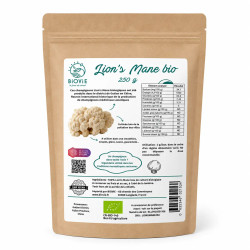
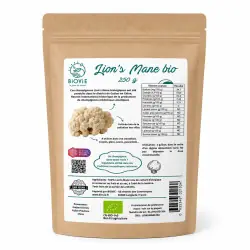
This is probably the most exciting discovery in recent years in the field of natural cognitive health. Lion's Mane is the only identified mushroom capable of naturally stimulating the production of NGF (Nerve Growth Factor), an essential growth factor for neuronal regeneration.
What struck me while studying the literature on this mushroom is its versatility: effects on memory, support for the intestinal mucosa (and therefore the gut-brain axis), and stress reduction. One mushroom, multiple mechanisms.
8 exercises and habits to maintain your memory on a daily basis
Nutrition is just one piece of the puzzle. The brain needs to be stimulated, oxygenated, and rested. Here are the habits most strongly supported by research.
Stimulate the brain: games, reading, and learning
The brain functions somewhat like a muscle - it strengthens with training. Crosswords, sudokus, and puzzles engage working memory and cognitive flexibility. But don't limit yourself to games. Learning a foreign language, a musical instrument, a new cooking recipe - anything that takes you out of your routine creates new neural connections.
Classical memorization techniques remain remarkably effective: spaced repetition, visualization, the memory palace (method of loci). Free tools like Anki work exactly on this principle.
Physical activity and memory: the link proven by science
30 minutes of aerobic exercise per day - brisk walking, cycling, swimming - are enough to increase the volume of the hippocampus. Yes, physical exercise literally enlarges the part of the brain dedicated to memory. The WHO recommends 150 minutes of moderate activity per week.
The mechanism? Exercise increases the production of BDNF, that well-known brain-derived neurotrophic factor we mentioned earlier. It also improves cerebral blood flow and reduces systemic inflammation. There's no need to run a marathon. A daily walk already makes a measurable difference.
Sleep, meditation, and stress management
Deep sleep is the time when the brain consolidates memories - it sorts, classifies, and stores them. Poor sleep sabotages your memory on a daily basis. 7 to 9 hours per night for an adult is the recommended range.
Meditation, even 10 minutes a day, reduces cortisol (the stress hormone) and improves sustained attention. Chronic stress is a direct enemy of memory - it literally damages the hippocampus in the long term.
And hydration? It is often forgotten. The brain is composed of 75% water. Even slight dehydration affects cognitive performance. 1.5 to 2 liters of water per day is the minimum according to the PNNS.
Precautions and contraindications
Some important reminders before changing your diet or considering supplementation:
Ginkgo biloba : proven interaction with anticoagulants (warfarin, high-dose aspirin). To be avoided before surgery. Consult your doctor.
Bacopa monnieri : digestive side effects (nausea, abdominal pain) are possible, especially at the beginning of the treatment. Start with a low dose and gradually increase.
Turmeric : possible interaction with certain hepatic medications and anticoagulants. Not recommended in case of bile duct obstruction.
High-dose Omega-3 : may increase the risk of bleeding in people on anticoagulants.
These plants and nutrients are not medications. They do not prevent, treat, or cure any disease. Always consult a healthcare professional before starting any supplementation, especially if you are pregnant, nursing, or under medical treatment.
FAQ - Frequently Asked Questions about Memory
What is the best food for memory ?
Fatty fish rich in omega-3 DHA, berries (blueberries, blackberries) for their anthocyanins, and leafy green vegetables for their folate and antioxidants are at the top of studies. In plant-based nutrition, chia seeds, walnuts, and an algae-based oil rich in DHA are the best alternatives, as part of a varied and balanced diet and a healthy lifestyle.
What is the miracle cure for memory ?
Let's be clear: there is no single miracle cure for memory. The most robust studies show that it is the combination of several factors that makes the difference - a diet rich in omega-3 and antioxidants, regular physical activity, quality sleep, and continuous cognitive stimulation. It's less marketable than a miracle pill, but it's the scientific reality.
What is the most effective plant for memory ?
Bacopa monnieri and ginkgo biloba are the two most scientifically documented plants. Kongkeaw's meta-analysis (2014) of 9 clinical trials shows that bacopa improves attention speed after a minimum of 12 weeks of daily intake (300-450 mg/day). Lion's Mane (Hericium erinaceus) is also very promising due to its ability to stimulate NGF.
How to improve your memory after 50 years old ?
After 50 years, the conversion of ALA to DHA decreases - it becomes important to directly obtain DHA through diet (fatty fish, DHA-enriched algae oil). Daily physical activity (even a 30-minute walk) stimulates BDNF and increases the volume of the hippocampus. Cognitive stimulation and maintaining an active social life complete the picture.
Are sprouted seeds good for the brain ?
Absolutely. Germination multiplies the bioavailability of nutrients - vitamins, minerals, enzymes. Sprouted seeds, rich in bioavailable nutrients, provide folates, zinc, magnesium, and antioxidants in a form that the body easily assimilates. At Biovie, this has been the core of our business since 2007 - and living food remains, for us, the foundation of optimal nutrition for the brain as well as the rest of the body.
What vitamins to take for memory and concentration ?
Vitamins B6, B9 (folate), and B12 are directly involved in the synthesis of neurotransmitters and the metabolism of homocysteine. Vitamin B12 is particularly critical after the age of 50, a period when absorption decreases. Vitamin E, a fat-soluble antioxidant, protects neuronal membranes. These vitamins contribute to the normal functioning of the nervous system as part of a varied and balanced diet and a healthy lifestyle.
In summary
Boosting your memory naturally is not a matter of a single supplement or a secret recipe. It's a combination of daily choices: omega-3s in your diet, antioxidants in fruits and vegetables, plants like bacopa or ginkgo for support, movement, sleep, and curiosity.
At Biovie, with Aurélie, we have been supporting this initiative since 2007 through Living food, source of vitality - sprouted seeds, algae, superfoods. Moreover, if the link between diet and the brain interests you, our book Seaweed in Everyday Life addresses the fascinating role of microalgae as the original source of DHA in the food chain.
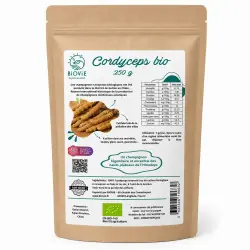
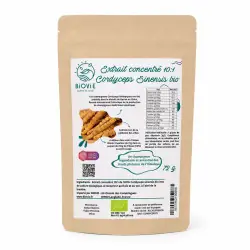
Two mushrooms make up this range: Cordyceps (Ophiocordyceps sinensis), offered as a food supplement in powder form, and Lion's Mane (Hericium erinaceus, crinière de lion), an edible mushroom in powder form to add to your drinks and preparations. Each is available as a plain powder or as a 10:1 concentrated extract, from certified organic cultivation. The composition, doses and precautions for use are given on each product page., 6
products
Warning: The information presented in this article is provided for informational purposes only and does not constitute medical advice. Consult a qualified healthcare professional before making any changes to your diet or supplementation. As part of a varied and balanced diet and a healthy lifestyle.