





Are you having trouble concentrating, experiencing embarrassing memory lapses, and feeling like your head is in a fog despite everything you've tried ? Mental fog during menopause affects 60 to 80% of women in perimenopause. This article explains the specific biological mechanisms and presents a unique natural synergy — liquid phycocyanin + marine plasma — to support lasting mental clarity.
Here is a topic that was really close to my heart, because for me, the link between diet and mental clarity is still too little explored. I have often heard individual testimonies that always describe the same thing: a foggy mind, memory lapses during meetings, a mental fatigue that has gradually set in and resists everything. Classic magnesium tested, B vitamins taken diligently — and yet, nothing. This menopausal brain fog does not respond to the usual approaches.
Frankly, this observation intrigued me. And as often happens at Biovie, we dug deeper. What I found in recent scientific literature convinced me that there is a very under-documented avenue in the world of natural supplements, and that we have real added value to offer here—not by selling yet another miracle product, but by precisely explaining what happens in the brain and why certain marine solutions can make a real difference.
What is menopause brain fog ?
Let me begin with an important reassurance: if you are going through this period and feel like you're "losing your mind," you are neither alone nor prematurely aging. This brain fog is a documented physiological reality. The International Menopause Society has officially recognized this symptom in its recommendations only since 2021 — which means that for decades, millions of women experienced this without it being taken seriously.
The figures are telling: between 60 to 80% of menopausal women report cognitive disorders, whether it be difficulties in concentration, memory lapses, or an unusual slowness in mental processing (Menopause Society, 2024). And the duration of exposure is not insignificant: in France, the Perimenopause lasts on average 4 to 7 years.. It is a long cognitive window that deserves real attention.
Mental fog during menopause typically manifests as:
- An inability to recall a word or a name at the moment
- A concentration difficult to maintain for more than a few minutes
- A slowness in processing information, even for routine tasks
- A vague feeling of "not being there," of mental disconnection
- Cognitive fatigue that sets in from the morning
But first, let's understand what is happening biologically.
.webp)
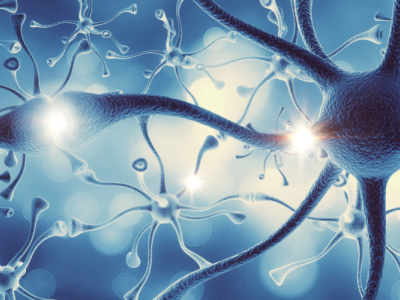
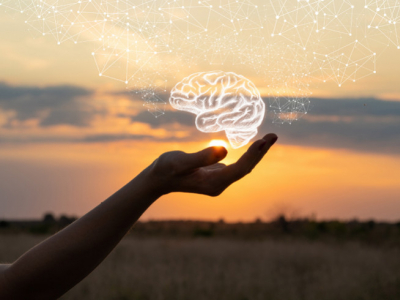
What happens in your brain during the hormonal transition
Estrogen is not only a reproductive hormone. It is also a neuroprotective. It regulates the production of acetylcholine (the memory molecule), protects neurons against oxidative stress, and modulates dopaminergic and serotonergic neurotransmitters that govern your mood, mental energy, and clarity of thought.
When estrogen levels drop sharply during perimenopause, this entire neurochemical ecosystem wavers. The brain enters a Chronic pro-inflammatory state — a low-grade inflammation, invisible but real, that directly affects the quality of nerve transmission.
There is also a second mechanism, less known but just as important: the glymphatic system. It is the "nighttime brain cleaning" network that removes metabolic waste from the brain during sleep. However, sleep disturbances are among the first symptoms of menopause. As a result, the brain no longer cleans itself properly at night, waste accumulates, and brain fog sets in (I had actually dedicated a full article to this topic). the glymphatic system and brain detoxification — I invite you to take a look if this mechanism interests you).
To this double disturbance is added a factor often overlooked: mineral deficiency. A study published in the Journal of Women's Health in 2023 highlighted that magnesium and marine mineral deficiency, particularly common during perimenopause, significantly amplifies neural fatigue. And the French data is concerning: 77% of women aged 45 to 60 would be in a state of magnesium deficiency according to the study SU.VI.MAX conducted by INRAE. This brings the mineral issue back to the center of the problem.
Why basic magnesium is not enough to combat menopause brain fog
Specifically, if you have already tried a standard magnesium from the pharmacy without significant results against your cognitive fatigue menopause, there is a simple explanation: the brain doesn't just need magnesium. It needs a complete mineral terrain.
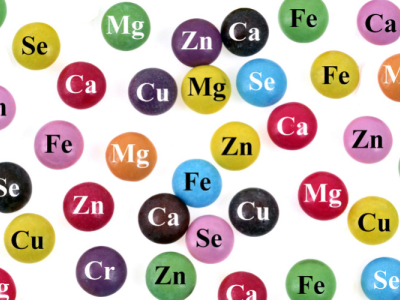
Neurotransmission relies on an extremely precise electrolytic ballet:
- The magnesium for the synthesis of serotonin and GABA
- The zinc for synaptic plasticity and working memory
- The silicon to protect the myelin (the sheath of nerve fibers)
- The potassium and copper for the balance of ionic flows
It's not a mineral your brain needs — it's an entire orchestra.
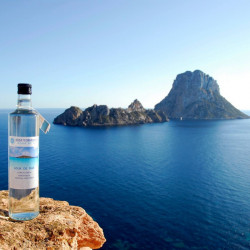
This is precisely where the ... comes into play. Marine plasma — or microfiltered seawater, often called Quinton water. To learn more about the different origins of marine plasma and their specificities, I invite you to read our article on the differences between Mediterranean and Atlantic marine plasma. What I want to remember here is that marine plasma contains 78 trace elements in bioavailable ionic form — exactly the matrix that the brain uses to function. That's what our article on the role of trace elements described as "essential catalysts": these tiny molecules that make possible the activation of enzymes and nerve transmission.
In reality, comparing magnesium in capsule form to marine plasma is like comparing a single brick to a cathedral. One provides a single component, while the other restores an entire ecosystem.
Phycocyanin: The blue pigment neuroprotective against mental fog
Let's now talk about what, in my view, constitutes the most innovative angle of this article — and the least documented in the Natural solutions for menopause brain fog available today.
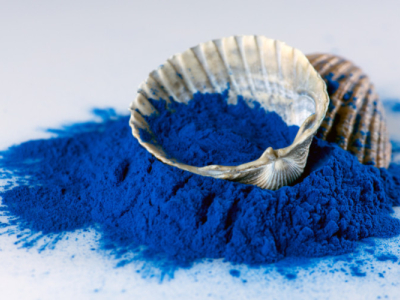
The Phycocyanin is the blue-green pigment that gives spirulina its characteristic color. It accounts for between 15 and 20% of the dry weight of spirulina. This is not an insignificant component: it is a molecule that research is only beginning to fully appreciate.
Two mechanisms of action are particularly documented in the context of menopause.
The cerebral anti-inflammatory action. Phycocyanin inhibits two major pathways of neuroinflammation: cyclooxygenase COX-2 and the NF-kB factor (Romay et al., 2003). However, the drop in estrogen levels places the brain in a chronic pro-inflammatory state. Phycocyanin helps support the normal functioning of the neurological environment by participating in the regulation of this inflammation.
The antioxidant action on neurons. Phycocyanin has an antioxidant capacity (measured in ORAC) approximately three times higher than vitamin C. It notably captures hydroxyl radicals — highly reactive molecules that damage neurons. Recent studies, including Liu et al. (2024) published in PubMed, have documented a neuroprotective effect on brain cells exposed to oxidative stress.
What makes the Phycocyanin and fatigue Menopausal particularly relevant to study together, is that phycocyanin is one of the few natural molecules that acts simultaneously on inflammation AND neuronal oxidative stress. This dual angle of action is exactly what the hormonally transitioning brain needs.
The synergy of phycocyanin + marine minerals: two active ingredients, two mechanisms
Here is what seems truly differentiating to me in the approach I want to share with you today. Taken separately, marine minerals and phycocyanin each have their own benefits. But together, they address the Two biological roots of brain fog during menopause.
Marine plasma forms the basic biochemical "terrain": it replenishes the brain with 78 trace elements, rebalances electrolyte flows, supports the synthesis of serotonin and GABA through magnesium, and helps protect nerve sheaths via silicon. It is the foundation.
Phycocyanin acts in the upper layer: it helps regulate cerebral inflammation and contributes to protecting neuronal cells against oxidative stress amplified by hormonal decline.
This combination marine plasma memory + phycocyanin brain is not documented in any other competing article on the French market. It is our belief, based on our reading of the scientific literature and our 18 years of experience in marine products and microalgae.
4-week practical protocol to regain mental clarity
At Biovie, we don't like vague promises. So here is a concrete proposal based on these two assets.
Weeks 1 and 2 — Basic Remineralization
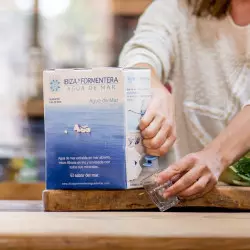
Start with the isotonic marine plasma, in the morning on an empty stomach. The isotonic form is the one to prioritize for daily intake, as its salt concentration is identical to that of blood plasma — it is the most easily assimilable in the long term. Start gradually with 30 ml and then adjust according to how you feel.
Meanwhile, if you are not yet familiar with spirulina, now is a good time to incorporate it into your daily diet in the form of flakes in a smoothie. Organic spirulina helps to support memory naturally and provides a base in phycocyanin, even though the concentrated liquid form remains more interesting for the future.
Weeks 3 and 4 — Introduction to phycocyanin
From the third week, integrate the Phycocyanin, preferably in the morning as well, 20-30 minutes apart from marine plasma to optimize absorption.
Improve sleep quality is also an essential complementary lever during these 4 weeks, as it is sleep that determines the proper functioning of the glymphatic system. We have dedicated a full article to it with 10 practical keys.
The first observations from our clients generally appear between the third and fourth week. It is not an immediate magical effect, but a gradual restoration of the foundation.
What our clients say
At Biovie, we do not invent testimonials. Here, I share with you some authentic feedback from our community.
Prisca T., nutrition therapist — "I am constantly looking for organic, ethical, and high-performance products for my own health and my client recommendations. For several years, I have been ordering from Biovie, and it is one of the few sites I have absolute trust in. The products are of remarkable quality, well-sourced, and often unavailable elsewhere."
Mr. Grewis — "I am very satisfied with Quinton water. I have been drinking a glass on an empty stomach in the morning for 2 months."
Julie C. — "Quinton water for remineralization... I highly recommend it."
These are, of course, not testimonials specific to menopausal brain fog — we cannot make that promise — but they illustrate the consistent quality we strive to maintain with these marine products.
Menopause and Cognitive Health: The Big Picture
It would be reductive to see the natural treatment for mental fog as a problem of trace elements and phycocyanin. The reality is broader. If you go through this period, the Natural solutions for menopause provide a useful initial anchor. And our complete guide on menopause approaches this stage of life in its entirety — physical symptoms, nutrition, emotional management.
What I am trying to do in this article is to delve deeper into a specific angle: the synergy between phycocyanin and marine plasma to support brain health during hormonal transition periods. This is not an alternative to medical follow-up or a comprehensive approach to menopause. It is a complement, based on a serious reading of science and our years of experience with marine products.
* A varied and balanced diet and a healthy lifestyle are important for maintaining your overall well-being. The beneficial effect of the active ingredients described here is achieved through regular use tailored to your personal situation.
Frequently Asked Questions About Menopause Brain Fog
How to combat brain fog during menopause ?
The most honest answer is that it is necessary to act on several levers simultaneously: the mineral terrain (with bioavailable minerals like marine plasma, rather than isolated magnesium), cerebral antioxidant and anti-inflammatory protection (where liquid phycocyanin plays an interesting role), sleep quality (to allow the glymphatic system to function), and of course a diet rich in omega-3 and antioxidants. No single solution is sufficient.
Which vitamin or mineral for brain fog ?
B vitamins (B6, B12, folates) are often mentioned first and they are important for the synthesis of neurotransmitters. However, it would be a shame to stop there. Magnesium, zinc, silicon, copper—all contribute to normal neurotransmission. In my opinion, a broad intake via marine plasma (78 trace elements in ionic form) is more relevant than an isolated mineral.
Can phycocyanin really help memory and concentration during menopause ?
The available scientific studies primarily document a neuroprotective effect — meaning that phycocyanin helps protect nerve cells against inflammation and oxidative stress. It is not a "memory booster" in the popular sense of the term, but rather support for the neurological environment. The distinction is important.
How long before seeing the effects on menopause brain fog ?
The initial feedback from our clients generally mentions 3 to 4 weeks of regular use before noticing a significant change in mental clarity and cognitive fatigue. This timeframe aligns with biological logic: rebalancing a mineral terrain and supporting anti-inflammatory regulation takes time.
Mental fog in perimenopause or established menopause: is it the same thing ?
The mechanism is similar, but the intensity varies. Perimenopause, with its significant hormonal fluctuations, is often the most challenging period cognitively. Once menopause is established, some women describe a stabilization. In both cases, the mineral and phycocyanin approach can be relevant, as it addresses the underlying biological causes regardless of the degree of hormonal variation.
In summary
The mental fog during menopause is not a fatality and even less a sign of weakness. It is a documented biological consequence of the drop in estrogen on a brain that simultaneously loses its natural neuroprotective shield and its mineral balance.
Most solutions available on the market address the general symptoms of menopause without targeting these two specific mechanisms. The synergy phycocyanin + isotonic marine plasma represents in my view a coherent complementary approach, because it acts on brain inflammation and on the neurological mineral terrain — the two biological roots of cognitive fog.
This is not a promise of healing. It is an invitation to experiment, with serious, carefully sourced ingredients, and a transparent explanation of what science says about them.
Here it is — and if you have any questions about this protocol or the products mentioned here, feel free to write to us. At Biovie, we take the time to respond.
Bibliographic references
- Menopause Society, 2024 — Cognitive symptoms and menopause transition
- International Menopause Society, 2021 — Recommendations on brain fog in menopause
- Romay C. et al., 2003 — Phycocyanin, COX-2/NF-kB inhibition — meta-analysis
- Liu W. et al., 2024 (PubMed) — Neuroprotective effect of phycocyanin on oxidative stress
- Journal of Women's Health, 2023 — Magnesium deficiency and neuronal fatigue in perimenopause
- Study SU.VI.MAX, INRAE — Prevalence of magnesium deficiency in French women aged 45-60 years
* A varied and balanced diet and a healthy lifestyle are important. The beneficial effect of the marine actives mentioned in this article is achieved through regular use adapted to your personal situation.
Update: April 2026. Article approved by Éric Viard, founder of Biovie and engineer ISTOM, co-author of " Seaweed in everyday life "(Gallimard, 2024) —" Best cookbook in the world, Gourmand Cookbook Awards 2025, and Best cookbook in France, National Academy of Cuisine 2025.