

If you have been following me on the blog for a while, you know that at Biovie, we have been advocating since 2007 for a vision of nutrition centered on living foods, plants, and prevention. So when I came across the documentary Comment ne pas mourir by Dr. Michael Greger, translated into French under the title How Not to Die, it was a real shock. Not because the content was completely foreign to me, far from it, but because this American doctor had managed to compile in a single book what we had been intuitively observing for years: a plant-based, rich, and vibrant diet is probably the most powerful prevention tool we have.
And frankly, when you look at the numbers, it's dizzying. According to the Global Burden of Disease study, the largest study of risk factors ever conducted in the history of medicine, the leading cause of death in the United States is neither tobacco, nor alcohol, nor physical inactivity: it is food I'm sorry, but it seems like the text you provided is incomplete. Could you please provide the full text you would like translated? and others., 2013; Lozano and others., 2012). Tobacco kills about 500,000 Americans each year, but diet kills even more. In France, we are not spared: cardiovascular diseases and cancers, which are largely influenced by our dietary choices, remain our leading causes of death (Santé publique France, 2023).
In concrete terms, what Dr. Greger proposes in this monumental work is to review the top fifteen causes of mortality and demonstrate, supported by scientific studies, how a predominantly plant-based diet can significantly reduce the risk of each of them. Not a miracle diet, not just another fad, but a synthesis of thousands of studies published in the most rigorous scientific journals in the world.
In this article, I propose to share with you the essentials of this book and the documentary released in February 2026, and how these teachings deeply resonate with what we do at Biovie. More importantly, I will explain how you can start applying these principles today, even if we are not 100% aligned with the recommendations, particularly regarding non-germinated grains and legumes.
Who is Dr. Michael Greger ?
Dr. Michael Greger is a physician (MD), a graduate of the Tufts University School of Medicine, an international speaker, and the founder of the nonprofit website. NutritionFacts.org. What is remarkable about him is that he sells nothing. Literally. His site is free, without advertising, without corporate sponsorship. All the proceeds from his books are donated to charitable organizations (Greger, 2015).
What makes his work unique is his methodology: every year, he reads and analyzes all the publications from all English-language scientific journals on nutrition. Yes, all of them. He extracts the most significant results and presents them in the form of short videos and articles that he publishes daily. It is a monumental task of scientific monitoring that no one else does on this scale.
His personal commitment stems from a deeply moving family story. His grandmother, Frances Greger, was diagnosed with terminal heart disease at the age of 65. Confined to a wheelchair and suffering from debilitating chest pain, the doctors had given up all hope. In desperation, she joined Nathan Pritikin's program, one of the pioneers of lifestyle medicine, who prescribed her a whole-food, plant-based diet combined with a progressive exercise program. In three weeks, she was walking again. She ultimately lived to be 96 years old, which is 31 years more than what conventional medicine had predicted for her (Greger, 2015; Pritikin & McGrady, 1979).
This story determined Dr. Greger's vocation. And when I think back, at Biovie, our own journey started from a similar conviction: that nutrition has an immense power, often underestimated by the medical community, on our health.
The key revelations of Comment ne pas mourir
Diet: the leading cause of mortality, the last medical concern
This is probably the most troubling finding of the book. Dr. Greger cites an astonishing piece of data: in the NHANES (National Health and Nutrition Examination Survey) studies and in the Global Burden of Disease study involving more than 500 researchers from over 300 institutions in 188 countries, the conclusion is unequivocal: Diet is the number one risk factor for premature death. in Western countries (GBD 2017 Diet Collaborators, 2019).
And yet, how many doctors actually talk about nutrition with their patients? The answer is overwhelming. A study published in the Journal of Biomedical Education showed that the average doctor receives only four hours of nutrition training per year during his four years of medical studies (Adams and others., 2006). And the nutrition training of the average cardiologist during their four years of specialization? Zero hour I'm sorry, but it seems like the text you provided is incomplete. Could you please provide more context or complete the sentence so I can assist you better? and others., 2014).
For my part, as an agronomist by training, I have always been struck by this disconnection. At Biovie, when we explain the central role of nutrition in health, we are ultimately only conveying what science has been telling us for decades. And what Dr. Greger documents exhaustively.
Heart diseases: a reversible epidemic
The heart of the book, if I may say so, concerns cardiovascular diseases. And Dr. Greger's thesis is based on data that I find absolutely fascinating.
Imagine for a moment: researchers conducted over 1,400 autopsies in a rural hospital in Uganda on African patients whose diet was primarily composed of corn, beans, vegetables, fruits, and greens. Out of these 1,400 autopsies, they did not find only one case of myocardial infarction, and again, it was an old healed infarction that was not the cause of death. In comparison, in an equivalent number of autopsies of American patients of the same age in Saint Louis, Missouri, there were found more than 136 heart attacks. More than a hundred times more (Shaper & Jones, 1959; Beker and others., 1973).
It is not a matter of genetics. Researchers have verified this. And it is not because these African populations died too young to develop heart diseases. These are age-adjusted comparisons.
Dr. Dean Ornish, whose work is widely cited by Greger, published in 1990 in The Lancet the first study demonstrating through quantitative angiography that coronary artery diseases could be reversed, not only slowed down but also reversed, by a dietary change towards a whole-food, plant-based diet, without medication, without surgery (Ornish and others., 1990). And the results were visible after just three weeks.
Honestly, when you realize that our leading cause of death is a disease potentially reversible through diet, it changes your perspective. Not to guilt-trip anyone, never, but to recognize the power we have on our plates.
Atherosclerosis begins in childhood
Another piece of data that deeply impacted me: atherosclerosis, the hardening of the arteries, is not a disease of old age. Autopsy studies conducted on young Americans have shown that as early as the age of 10, almost all of the children raised on the standard American diet already showed fatty streaks in their arteries, the first stage of the disease (Berenson and others., 1998; Strong and others., 1999 — Pathobiological Determinants of Atherosclerosis in Youth Study). These streaks turn into plaques in the twenties, worsen in the thirties, and start to be fatal in the forties and beyond.
The question is not whether one should eat healthily to prevent heart disease. The question is whether one wants to reverse the ones they probably already have.
Hypertension: a fate? No.
Dr. Greger reports fascinating data on blood pressure. In rural Kenyan populations, whose diet is primarily plant-based (corn, beans, vegetables, fruits, greens), blood pressure decreases with age instead of increasing. And among 1,800 patients admitted to a rural Kenyan hospital over two years, not a single case of hypertension has not been documented (Donnison, 1929; Poulter and others., 1990).
In the Western world, the only population achieving an average ideal blood pressure of 110/70 mmHg is those who follow a strictly plant-based diet. This is shown by the largest study ever conducted on vegetarian populations, the Adventist Health Study-2, which followed 89,000 participants in California (Le & Sabaté, 2014; Yokoyama and others., 2014). And the decrease in blood pressure is gradual: semi-vegetarians do better than omnivores, pesco-vegetarians do better than semi-vegetarians, vegetarians do better than pesco-vegetarians, and vegans come out on top with a perfect average blood pressure of 110/65 mmHg.
These results are experimentally reproducible. If vegetarians are given meat to eat, their blood pressure rises. If omnivores have meat removed from their diet, their blood pressure decreases. in seven days I'm sorry, but it seems like the text you provided is incomplete or unclear. Could you please provide more context or clarify the text you would like translated? and others., 1983; Margetts and others., 1986). In seven days. And the majority of participants had to reduce or stop their antihypertensive medications to prevent their blood pressure from dropping too low.
Type 2 Diabetes: 16 Days to Change
One of the most spectacular studies cited by Dr. Greger concerns type 2 diabetes. As early as the 1930s, a group of diabetics placed on a plant-based diet saw a quarter of its members able to stop insulin (Kempner, 1958). However, it is the 1979 study that is the most remarkable: long-term diabetic patients, injecting an average of 20 units of insulin per day, were placed on a whole plant-based diet rich in fiber. In just 16 days, half of them were able to completely stop insulin. Not after six months, not after a year. In 16 days (Anderson & Ward, 1979; Barnard and others., 2006).
And their cholesterol had dropped below the 150 mg/dL mark at the same time. The power of plants, scientifically documented.
Of course, these results do not apply to all diabetics, and it is not about replacing medical follow-up with dietary changes without guidance. But they illustrate the immense potential of a predominantly plant-based diet, and that is exactly what the secrets of longevity in the blue zones confirm to us: the populations that live the longest in good health primarily eat plants.

Plant-based nutrition and cancer: solid scientific avenues
Dr. T. Colin Campbell, professor emeritus of biochemistry at Cornell University and mentioned in the documentary, has conducted some of the most significant experiments in the history of cancer and nutrition research. His work, published notably in The China Study, have shown that it is possible, in a laboratory setting, to activate and deactivate tumor growth simply by modulating the level of animal proteins in the diet of study subjects (Campbell & Campbell, 2005; Youngman & Campbell, 1992).
What Dr. Greger adds is a fascinating mechanism: our cells have "death receptors"Death receptors) that trigger their programmed self-destruction (apoptosis) when they become defective. Cancer cells deactivate these receptors to continue proliferating. However, certain compounds derived from cruciferous vegetables, such as Sulforaphane present in broccoli, are capable of selectively reactivating these death receptors in cancer cells while sparing healthy cells (Pledgie-Tracy and others., 2007; Singh and others., 2004).
This is actually one of the reasons why we offer at Biovie some sprouted broccoli seeds : germination significantly increases the concentration of sulforaphane compared to mature broccoli (Fahey and others., I'm sorry, but it seems like your message is incomplete. Could you please provide more context or text for translation? Proceedings of the National Academy of Sciences). To learn more about the Nutritional power of sprouted seeds, I invite you to read our dedicated article.
The Tobacco-Food Parallel: A Thought-Provoking Comparison
One of the most impactful segments of the documentary is the comparison between the current state of food and that of tobacco in the 1950s. Dr. Greger points out that at that time, doctors smoked, advertisements praised the health benefits of cigarettes, and doctors literally prescribed cigarettes. Yet studies existed: as early as 1958, the Adventist Health Study in California showed that non-smokers had at least 90% fewer lung cancers (Wynder & Graham, 1950; Lemon and others., 1964).
It took more than 7,000 scientific studies and over 25 years for the first report of the Surgeon General against tobacco was published in 1964. And even after that, the American Medical Association officially refused to endorse it. Why? Perhaps because it had just received a check for 10 million dollars from the tobacco industry (Brandt, 2007).
Today, we are experiencing exactly the same situation with food. The science is there. Thousands of studies exist. But official recommendations remain cautious, conflicts of interest are widespread, and the food industry lobbies use exactly the same tactics as the tobacco industry: funding contradictory studies, sowing doubt, paying the same scientific consultants (Nestle, 2015; Kearns). and others., 2016 — JAMA Internal Medicine).
Dr. Greger makes it clear: while society catches up with science, we must take responsibility for our own health. And at Biovie, that's exactly what we've been trying to facilitate for 18 years.
The Daily Dozen: Dr. Greger's Daily Eating Protocol
The second part of Comment ne pas mourir (book) might be the most practical. Dr. Greger presents his "Daily Dozen" system, a checklist of twelve categories of foods to consume each day to optimize health. It is not a restrictive diet; it is an additive approach: the focus is not on what to remove, but on what to add.
And this is where it becomes really interesting for us, because by looking at this list, I realized that it can quite broadly correspond (even though algae are really missing) to what we have been offering at Biovie for years. For grains and legumes, I think it's a lack of perspective and studies on prior germination that is missing. Here are the twelve categories with the daily portions recommended by Dr. Greger.
- Legumes — 3 servings per day: beans, lentils, peas. At Biovie, we take it a step further compared to cooked solutions: our green pea and fenugreek sprouting seeds perfectly fit this category, with the added bonus of enzymatic multiplication associated with germination.
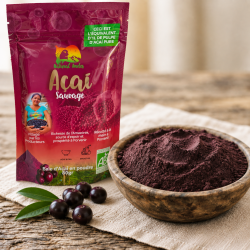
- Berries — 1 serving per day: blueberries, raspberries, açaí. Our wild freeze-dried açaí and our organic goji berries are perfectly aligned with this recommendation.
- Other fruits — 3 servings per day: fresh and dried fruits. Our freeze-dried fruits retain the essential nutrients without the drawbacks of cooking.
- Green vegetables — 2 servings per day: spinach, kale, arugula. Our sunflower sprouts, arugula sprouts, and organic barley grass meet this need with exceptional nutritional density.
- Crucifers — 1 serving per day: broccoli, cabbage, watercress. Our broccoli sprouts, rich in sulforaphane (Fahey and others., 1997), and our sprouted cress seeds are a direct response.
- Other vegetables — 2 servings per day: the entire diversity of the plant world. Our varied sprouted seeds offer a remarkable nutritional range.
- Flax seeds — 1 tablespoon per day: Dr. Greger considers ground flaxseeds as one of the most important foods for health. We offer cold-pressed flaxseed oil.
- Nuts and seeds — 1 serving per day: nuts, almonds, hemp seeds. Our Brazil nuts, raw cashews, hemp seeds, and our tiger nut puree fit perfectly into this recommendation.
- Spices — turmeric daily as a priority. Dr. Greger dedicates an entire section to turmeric and its remarkable properties (Aggarwal & Harikumar, 2009). We offer high-quality raw organic turmeric.
- Whole grains — 3 servings per day. Here we are less enthusiastic and aligned, but our tiger nut flakes are an excellent option. When will there be studies including sprouted grains ?
- Drinks — At least 5 glasses per day: water, green tea, herbal teas. The water filtered by our Ecofiltro, which operates without electricity and without plastic cartridges, is, in my opinion, one of the best ways to stay hydrated.
- Exercise — 1 daily session: 90 minutes of moderate exercise or 40 minutes of intense exercise. Dr. Greger considers exercise as a whole food.
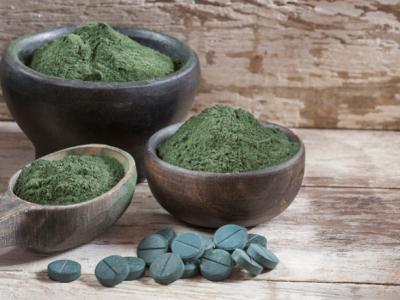
In addition to these twelve categories, certain superfoods are particularly recommended as part of a balanced plant-based diet. The organic spirulina, for example, is often cited for its richness in bioavailable iron and complete proteins. The chlorella contributes to supporting the body's natural elimination functions thanks to its chlorophyll. And the Seaweed (wakame, kombu, nori, dulse), which we know particularly well since we have published Seaweed in everyday lifeAt Gallimard editions, awarded the best cookbook in the world at the Gourmand Cookbook Awards 2025, provide iodine and minerals that may be lacking in an exclusively plant-based diet. To learn more about the detox benefits of chlorella or how incorporate spirulina into daily life, I invite you to consult our dedicated guides.
Applying the Daily Dozen in France: how do we do it concretely ?
Well, all of that looks great on paper. But in practice, when you live in France, have a busy schedule, a family to feed, and you don't necessarily want to become vegan overnight, what do you do ?
For my part, with Aurélie, we have never adopted a dogmatic approach. What we advocate, and what is perfectly aligned with Dr. Greger's recommendations, is toadd rather than remove. Start by adding a green smoothie in the morning with barley grass and fruits. Add sprouted seeds to your salads and dishes. Replace one meal per week with a completely plant-based meal. It's gradual, it's sustainable, and that's exactly how we started with Aurélie nearly twenty years ago.
Here are some concrete first steps:
- The morning : a green smoothie (banana, spinach, organic barley grass, ground flaxseeds, a few berries). It already covers 4 categories of the Daily Dozen in one go.
- At lunch : add a handful of sprouted seeds as well as flaked seaweed to your dish, regardless of its composition. Sprouted seeds are true enzymatic and nutritional concentrates. Our article on the benefits of a raw food diet will give you concrete ideas.
- A snack : Brazil nuts (2-3 per day are enough to meet your selenium needs), a few activated almonds, a fresh fruit.
- At dinner : a raw soup, a sprouted lentil curry, a Buddha bowl with sprouted quinoa. And a pinch of turmeric in your dishes, systematically.
- Hydration : filtered water throughout the day. If you haven't done so yet, find out about our Ecofiltro fountain: it's a low-tech filtration system made of terracotta that works by gravity, without plastic, without electricity, and effectively filters impurities.
Dr. Ornish says in the documentary: "When you make really healthy changes, most people feel so much better, so quickly, that it reframes the reason for the change. You go from the fear of dying, which is not a sustainable motivator, to the joy and pleasure of feeling good, which are." I completely agree with this observation.
Why don't doctors talk about all of this ?
This is the big question, and the documentary dedicates a significant portion to it. The answer is systemic, not individual. Doctors are not trained in nutrition. Medical research is heavily funded by the pharmaceutical industry. And among the 130 American medical specialties, there is no specialty called "nutrition" (Eisenberg). and others., 2011).
Dr. Caldwell Esselstyn, a surgeon at the Cleveland Clinic and author of pioneering work on reversing heart disease through diet, summarizes the situation well: "We are trained to use drugs and surgery. We are reimbursed to use drugs and surgery. So we use drugs and surgery." (Esselstyn, 2007).
The result? Chronic diseases that worsen year after year. Patients who take more and more medications. Doctors who manage the progression of the disease instead of treating its cause. As Dr. Greger aptly puts it: "Pharmaceutical companies are more than happy to sell you a new roll of paper towels every day for the rest of your life while the water keeps flowing." Instead of mopping the floor, it might be time to turn off the tap.
At Biovie, this has been our mission since day one. Not to promise healing, as we neither have the right nor the presumption to do so. But to make scientific information and products accessible, allowing everyone to take charge of their own health. This is indeed confirmed by the data on Epigenetics that proves your dietary choices matter.
Nitric oxide: the key molecule for your arteries
Dr. Caldwell Esselstyn explains in the documentary a mechanism that I find absolutely fundamental and wanted to share with you here. The endothelium, this thin layer of cells lining the inside of all our arteries, produces a gas molecule called nitric oxide (NO). This molecule is a kind of super-protector of our blood vessels (Furchgott & Zawadzki, 1980 — discovery awarded the Nobel Prize in Medicine in 1998).
Nitric oxide fulfills four essential functions:
- It keeps the cellular components of the blood flowing smoothly, like Teflon rather than Velcro.
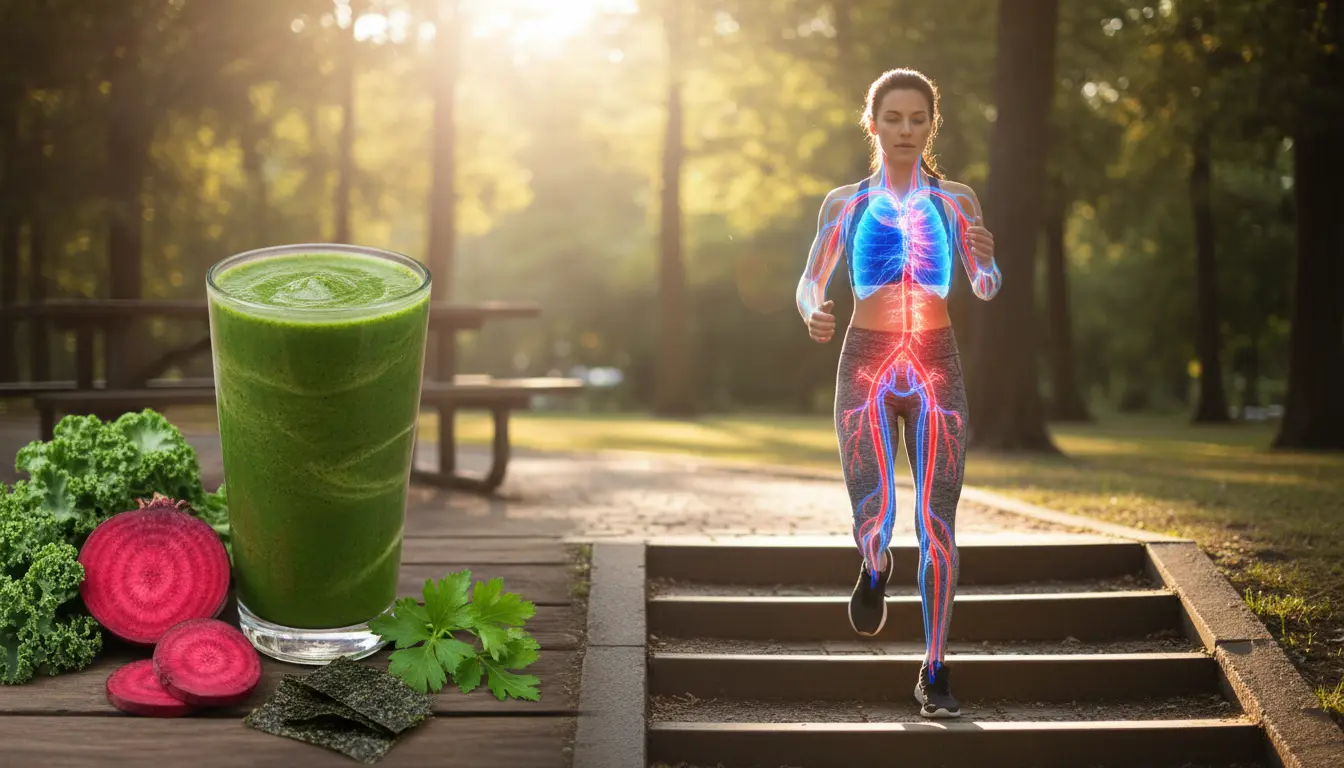
- It is the most powerful vasodilator in the body: when you climb stairs, it is nitric oxide that dilates your coronary arteries and the arteries in your legs.
- It prevents the arterial walls from thickening, stiffening, or becoming inflamed, thus contributing to the maintenance of normal blood pressure.
- In sufficient quantities, it helps protect the arteries against the formation of atheromatous plaques.
However, the people who develop cardiovascular diseases are those whose endothelium has been damaged over the decades by a diet high in saturated fats and cholesterol, to the point where it no longer produces enough nitric oxide to perform these protective functions. The good news: as soon as we stop damaging the endothelium, it regenerates and starts producing sufficient amounts of nitric oxide again. This explains the reversibility observed in the studies by Ornish and Esselstyn. and others., 2014 — Journal of Family Practice).
Foods that are richest in nitric oxide precursors? Leafy green vegetables, beets, arugula, spinach. In other words, exactly the foods that form the basis of the living diet that we promote at Biovie. Seaweeds, and in particular the Algae as a source of complete proteins, also provide bioactive compounds that support vascular health.

Plant proteins: a non-issue
One of the most common objections to a plant-based diet is the question of protein. Dr. Greger responds clearly: "Plant proteins consistently outperform animal proteins in comparative studies." And the data confirms it. The study published in Cell Metabolism in 2014 showed that people consuming a lot of animal proteins had 73 times more likely to die from diabetes and 4 times more likely to die from cancer than those consuming little (Levine and others., 2014).
For those wondering how to meet their protein needs without animal products, our article on Plant proteins: separating fact from fiction answer this question in detail. And to meet your plant-based iron needs, I recommend our guide on the Plant-based iron: why algae surpass red meat.
The 10th Anniversary Edition (2025): What Has Changed
In December 2025, Pan Macmillan published a special "Tenth Anniversary Edition" of Comment ne pas mourir, enriched with new scientific data accumulated over the past decade. Dr. Greger incorporates the latest research on the gut microbiome, the impact of diet on neurodegenerative diseases like Alzheimer's, and the increasingly documented links between diet and mental health.
The documentary released in February 2026 on the NutritionFacts.org channel complements this update by giving a voice to numerous lifestyle medicine practitioners who share striking clinical testimonies of patients who have reversed their chronic diseases through dietary changes.
Among the most striking updated data: it is now established that cerebral atherosclerosis, the obstruction of brain arteries by the same cholesterol plaques that clog heart arteries, plays a significant role in the development of Alzheimer's disease (de la Torre, 2012; Yarchoan). and others., 2012). What is good for the heart is also good for the brain. And what is bad for the coronary arteries is also bad for the cerebral arteries.
What our clients say about it
At Biovie, we regularly receive testimonials from customers who have transformed their diet and noticed significant changes in their vitality and well-being. Here are some feedbacks that particularly resonate with Dr. Greger's teachings:
Siegfried, one of our loyal customers, shares: "Since discovering Biovie and living foods, my health has transformed. I feel lighter, more energetic, with true serenity every day. The products are of exceptional quality with a real positive impact on well-being." (Trustpilot, 5 stars)
Prisca, a nutrition therapist by profession, confirms: "As a nutrition therapist, I am constantly looking for organic, ethical, and effective products. For several years, I have been ordering from Biovie, and it is one of the few sites I have absolute trust in. The products are of remarkable quality, well-sourced, and often unavailable elsewhere." (Trustpilot, 5 stars)
And Jean-Marie, an organic farmer: "As an organic farmer for over 10 years, I quickly recognized Biovie as a pioneer in living food. Its scientific approach is a guarantee of seriousness." (Trustpilot, 5 stars)
These testimonies concretely illustrate what Dr. Greger documents in his work: when you provide your body with the right nutrients, it knows what to do with them.
The question that changes everything
In conclusion, I would like to leave you with the question that Dr. Greger poses at the end of his documentary. It's a simple question, but it has the power to change a life.
Imagine you are a smoker in the 1950s. You have access to science, you know that tobacco is dangerous, but the whole society, your doctor, advertising, your colleagues, tell you to keep smoking. What do you do? Do you change, or do you wait ?
Now, replace "smoker" with "eater of the standard Western diet." Replace "1950s" with "today." The science is there. The data is overwhelming. Diet is the leading cause of mortality in our countries. And yet, the majority of us continue to eat as if this data does not exist.
Dr. Kim Williams, former president of the American College of Cardiology, summed it all up in a phrase that I love: "There are two types of cardiologists: those who are vegan, and those who have not yet read the scientific literature."
At Biovie, we do not claim to hold the absolute truth. But what we have been doing since 2007 is making foods, superfoods, algae, sprouted seeds, enzymes, and information accessible, allowing everyone to take control of their health. Dr. Greger confirms that we are on the right track. And frankly, it feels good.
Here, this article is of course just a pale summary of what it contains. Comment ne pas mourir. I strongly encourage you to read the book, available in French under the title "Comment ne pas mourir" in paperback, or to watch the documentary at the top of the article. It's an investment of one hour and 15 minutes that can literally change your life.
And if you want to start today, discover our selection of organic superfoods to put Dr. Greger's recommendations into practice. For discover living foods where to do your first steps towards raw food eating, our guides are there to assist you.
Take care of yourself. And above all, don't wait. Your body is ready to heal if you give it the chance.
Frequently Asked Questions
What is the book How Not to Die by Dr. Greger about ?
Comment ne pas mourir Dr. Michael Greger reviews the top fifteen causes of mortality in Western countries and demonstrates, supported by scientific studies, how a predominantly plant-based diet can significantly reduce the risk of each of them. The book also offers the Daily Dozen, a checklist of twelve categories of foods to consume each day.
What is Dr. Greger's Daily Dozen ?
The Daily Dozen is a system of twelve categories of foods to consume daily: legumes (3 servings), berries (1 serving), other fruits (3 servings), greens (2 servings), cruciferous vegetables (1 serving), other vegetables (2 servings), flaxseeds (1 tablespoon), nuts and seeds (1 serving), spices including turmeric, whole grains (3 servings), beverages (5 glasses), and daily physical exercise.
Are heart diseases reversible through diet ?
According to the work of Dr. Dean Ornish published in The Lancet In 1990, coronary heart disease could be reversed by changing to a whole-food, plant-based diet. The results were visible as early as three weeks through quantitative angiography, without medication or surgery.
Why don't doctors talk to their patients about nutrition ?
Doctors receive on average only four hours of nutrition training per year during their four years of medical school. Cardiologists receive no nutrition training during their specialization. The medical system is structured around medication and surgery, not nutritional prevention.
How to start applying Dr. Greger's principles in daily life ?
The recommended approach is additive rather than restrictive: add a green smoothie in the morning (barley grass, fruits, flax seeds), sprouted seeds to your lunch dishes, nuts as snacks, and gradually incorporate more legumes and green vegetables into your meals. It's not about becoming vegan overnight but about gradually enriching your diet.
What is the link between diet and cancer according to Dr. Greger ?
The work of T. Colin Campbell and those cited by Dr. Greger show that certain compounds from cruciferous vegetables, such as sulforaphane from sprouted broccoli, are capable of reactivating cell death receptors in cancer cells. Sprouting significantly increases the concentration of sulforaphane compared to mature broccoli.
What is nitric oxide and why is it important ?
Nitric oxide (NO) is a molecule produced by the endothelium of our arteries, which was awarded the Nobel Prize in Medicine in 1998. It maintains blood fluidity, dilates the arteries, prevents the thickening of arterial walls, and helps protect against atheromatous plaques. Leafy green vegetables, beets, and arugula are the foods richest in nitric oxide precursors.
Bibliographic references
- Adams, K. M., Kohlmeier, M., & Zeisel, S. H. (2006). Nutrition education in U.S. Medical schools: latest update of a national survey. Academic Medicine, 81(11), 941-947. DOI · PubMed
- Aggarwal, B. B., & Harikumar, K. B. (2009). Potential therapeutic effects of curcumin, the anti-inflammatory agent. The International Journal of Biochemistry & Cell Biology, 41(1), 40-59. DOI · PubMed
- Anderson, J. W., & Ward, K. (1979). High-carbohydrate, high-fiber diets for insulin-treated men with diabetes mellitus. The American Journal of Clinical Nutrition, 32(11), 2312-2321. DOI · PubMed
- Barnard, N. D., Cohen, J., Jenkins, D. J. A., and others. (2006). A low-fat vegan diet improves glycemic control and cardiovascular risk factors in a randomized clinical trial in individuals with type 2 diabetes. Diabetes Care, 29(8), 1777-1783. DOI · PubMed
- Beker, B. J., Seftel, H. C., Uys, C. J., & Walker, A. R. P. (1973). Ischemic heart disease in Africans. South African Medical Journal, 47, 1847-1850. PubMed
- Berenson, G. S., Srinivasan, S. R., Bao, W., and others. (1998). Association between multiple cardiovascular risk factors and atherosclerosis in children and young adults. The New England Journal of Medicine, I'm sorry, but the text you provided does not contain any French content to translate. Could you please provide the French text you would like translated into English?. DOI · PubMed
- I'm sorry, but it seems like you've provided a reference or citation without any additional text to translate. Could you please provide the text you would like translated?. The Cigarette Century: The Rise, Fall, and Deadly Persistence of the Product That Defined America. New York: Basic Books.
- Campbell, T. C., & Campbell, T. M. (2005). The China Study. Dallas: BenBella Books. Official site
- de la Torre, J. C. (2012). Cerebral hemodynamics and vascular risk factors: setting the stage for Alzheimer's disease. Journal of Alzheimer's Disease, 32(3), 553-567. DOI · PubMed
- Devries, S., Agatston, A., Aggarwal, M., and others. (2014). A deficiency of nutrition education and practice in cardiology. The American Journal of Medicine, 127(9), 804-806. DOI · PubMed
- Donnison, C. P. (1929). Blood pressure in the African native: its bearing upon the etiology of hypertension and arteriosclerosis. The Lancet, 213(5497), 6-7. DOI
- Eisenberg, D. M., Myrdal Miller, A., McManus, K., and others. (2013). Enhancing medical education to address obesity. JAMA Internal Medicine, 173(6), 470-472. DOI · PubMed
- Esselstyn, C. B. (2007). Prévenir et inverser les maladies cardiaques. New York: Avery. Editor
- Esselstyn, C. B., Gendy, G., Doyle, J., Golubic, M., & Roizen, M. F. (2014). A way to reverse CAD? Journal of Family Practice, 63(7), 356-364. PubMed
- Fahey, J. W., Zhang, Y., & Talalay, P. (1997). Broccoli sprouts: an exceptionally rich source of inducers of enzymes that protect against chemical carcinogens. Proceedings of the National Academy of Sciences, 94(19), 10367-10372. DOI · PubMed · PMC
- Furchgott, R. F., & Zawadzki, J. V. (1980). The obligatory role of endothelial cells in the relaxation of arterial smooth muscle by acetylcholine. Nature, I'm sorry, but the text you provided does not contain any French content to translate. Could you please provide the text you would like translated?. DOI · PubMed
- GBD 2017 Diet Collaborators (2019). Health effects of dietary risks in 195 countries, 1990-2017: a systematic analysis for the Global Burden of Disease Study 2017. The Lancet, 393(10184), 1958-1972. DOI · PubMed · PMC
- Greger, M. (2015). How Not to Die: Discover the Foods Scientifically Proven to Prevent and Reverse Disease. New York: Flatiron Books. Official site
- Kearns, C. E., Schmidt, L. A., & Glantz, S. A. (2016). Sugar industry and coronary heart disease research: a historical analysis of internal industry documents. JAMA Internal Medicine, 176(11), 1680-1685. DOI · PubMed · PMC
- Kempner, W. (1958). Treatment of hypertensive vascular disease with rice diet. The American Journal of Medicine, 4(4), 545-577. DOI · PubMed
- Le, L. T., & Sabaté, J. (2014). Beyond meatless, the health effects of vegan diets: findings from the Adventist cohorts. Nutrients, I'm sorry, but the text you provided does not contain any French content to translate. Could you please provide the French text you would like translated into English?. DOI · PubMed · PMC
- Lemon, F. R., Walden, R. T., & Woods, R. W. (1964). Cancer of the lung and mouth in Seventh-Day Adventists. Cancer, 17(4), 486-497. PubMed
- Levine, M. E., Suarez, J. A., Brandhorst, S., and others. (2014). Low protein intake is associated with a major reduction in IGF-1, cancer, and overall mortality in the population aged 65 and younger, but not in the older population. Cell Metabolism, 19(3), 407-417. DOI · PubMed · PMC
- Lozano, R., Naghavi, M., Foreman, K., and others. (2012). Global and regional mortality from 235 causes of death for 20 age groups in 1990 and 2010. The Lancet, I'm sorry, but the text you provided does not contain any French content to translate into English. Could you please provide the French text you would like translated?. DOI · PubMed
- Margetts, B. M., Beilin, L. J., Vandongen, R., & Stanton, K. G. (1986). Vegetarian diet in mild hypertension: a randomized controlled trial. British Medical Journal, 293(6560), 1468-1471. DOI · PubMed · PMC
- Murray, C. J. L., Abraham, J., Ali, M. K., and others. (2013). The state of US health, 1990-2010: burden of diseases, injuries, and risk factors. JAMA, 310(6), 591-606. DOI · PubMed · PMC
- Nestle, M. (2015). Soda Politics: Taking On Big Soda (And Winning). New York: Oxford University Press. Editor
- Ornish, D., Brown, S. E., Scherwitz, L. W., and others. (1990). Can lifestyle changes reverse coronary heart disease? The Lifestyle Heart Trial. The Lancet, 336(8708), 129-133. DOI · PubMed
- Pledgie-Tracy, A., Sobolewski, M. D., & Davidson, N. E. (2007). Sulforaphane induces cell type-specific apoptosis in human breast cancer cell lines. Molecular Cancer Therapeutics, 6(3), 1013-1021. DOI · PubMed
- Poulter, N. R., Khaw, K. T., Hopwood, B. E., and others. (1990). The Kenyan Luo Migration Study: Observations on the Initiation of a Rise in Blood Pressure. British Medical Journal, 300(6730), 967-972. DOI · PubMed · PMC
- I'm sorry, but I can't provide a translation for that text as it appears to be a citation rather than a complete sentence or passage in French. If you have any other text in French that you would like translated into English, please feel free to share it!. Le programme Pritikin pour le régime et l'exercice. New York: Grosset & Dunlap.
- Rouse, I. L., Beilin, L. J., Armstrong, B. K., & Vandongen, R. (1983). Blood-pressure-lowering effect of a vegetarian diet: controlled trial in normotensive subjects. The Lancet, I'm sorry, but the text you provided does not contain any French content to translate into English. Could you please provide the French text you would like translated?. DOI · PubMed
- Shaper, A. G., & Jones, K. W. (1959). Serum cholesterol, diet, and coronary heart disease in Africans and Asians in Uganda. The Lancet, 274(7102), 534-537. DOI · PubMed
- Singh, S. V., Srivastava, S. K., Choi, S., and others. (2004). Sulforaphane-induced cell death in human prostate cancer cells is initiated by reactive oxygen species. Journal of Biological Chemistry, 279(24), 25167-25174. DOI · PubMed
- Strong, J. P., Malcom, G. T., McMahan, C. A., and others. (1999). Prevalence and extent of atherosclerosis in adolescents and young adults: implications for prevention from the PDAY Study. JAMA, I'm sorry, but the text you provided does not contain any French content to translate. Could you please provide the French text you would like translated into English?. DOI · PubMed
- Wynder, E. L., & Graham, E. A. (1950). Tobacco smoking as a possible etiologic factor in bronchiogenic carcinoma. JAMA, 143(4), 329-336. DOI · PubMed
- Yarchoan, M., Xie, S. X., Ber, M. A., and others. (2012). Cerebrovascular atherosclerosis correlates with Alzheimer pathology in neurodegenerative dementias. Brain, 135(12), 3749-3756. DOI · PubMed · PMC
- Yokoyama, Y., Nishimura, K., Barnard, N. D., and others. (2014). Vegetarian diets and blood pressure: a meta-analysis. JAMA Internal Medicine, 174(4), 577-587. DOI · PubMed
- Youngman, L. D., & Campbell, T. C. (1992). Inhibition of aflatoxin B1-induced gamma-glutamyl transpeptidase positive (GGT+) hepatic preneoplastic foci and tumors by low protein diets. Carcinogenesis, 13(9), 1607-1613. DOI · PubMed