Fast delivery
.png)
 Fair prices


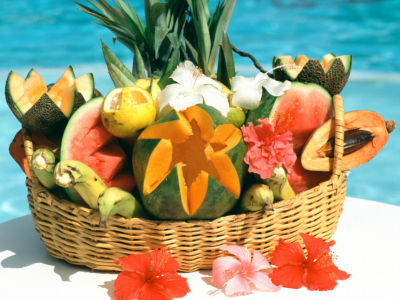

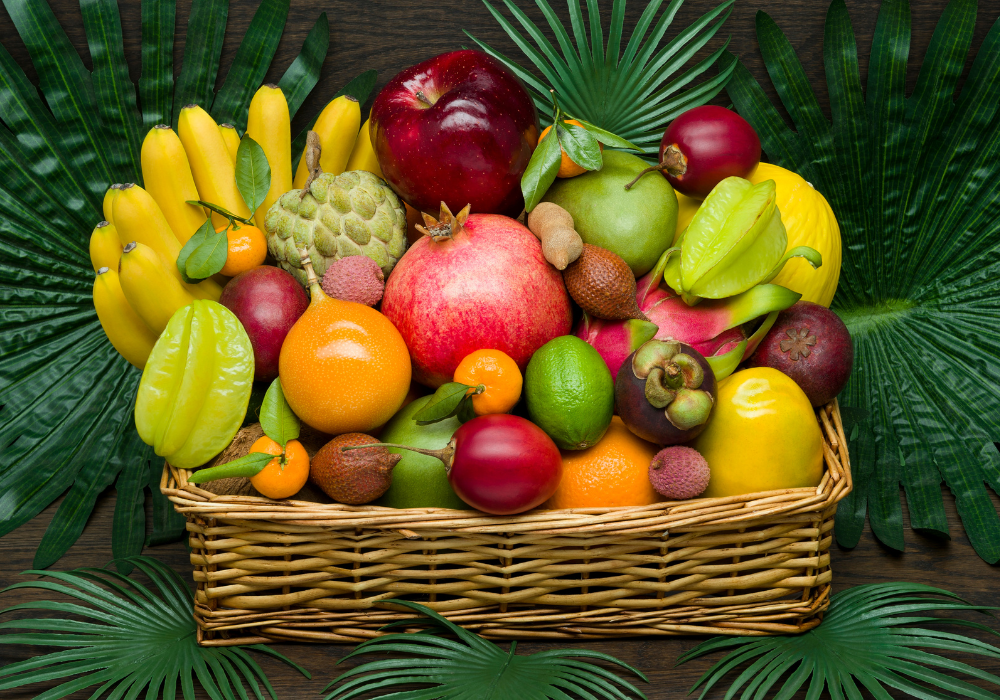
The exotic fruits are fruits cultivated in tropical or subtropical regions, valued for their richness in vitamins C and A, antioxidants, and unique digestive enzymes like bromelain or papain. With Aurélie, we have been incorporating them into our daily routine for over twenty years — and honestly, when you taste a mango picked at maturity in Andalusia or a fresh papaya that has traveled less than 48 hours, you quickly understand why these fruits are so fascinating.
In France, households consume an average of 7.5 kg of exotic fruits per year (excluding bananas), a figure that is constantly increasing. Classics like bananas, pineapples, and coconut to hidden treasures like mangosteen or jaboticaba — this guide presents everything you need to know about these exceptional fruits. Their nutritional benefits, their seasons, how to choose them, and a few surprises you might not have expected.
What is an exotic fruit? Definition and differences with tropical fruits
A tropical fruit is a fruit that grows in tropical, subtropical, or equatorial climate regions. Specifically, it is a fruit that cannot tolerate cold — below 4°C, it suffers irreversible damage.source). That is the botanical definition.
Now, the term " exotic fruits ", it's something else. It's a relative term. It simply refers to a fruit that is imported and consumed in a country where it does not naturally grow. A pineapple in Costa Rica is not exotic. The same pineapple in Paris? Exotic fruit. In practice, the two terms overlap significantly and are used interchangeably in everyday language.
What many people don't know: some exotic fruits are now being grown in Europe. The Axarquía region, between Malaga and Granada in Spain, benefits from a subtropical microclimate that allows for the cultivation of mangoes, papayas, avocados, and guavas. In fact, several fruits offered by Biovie come from this region, with short transportation that allows for harvesting at maturity. The difference in taste is considerable.
In terms of global production, tropical fruits account for approximately 67.7 million tons per year. Four major fruits make up 75% of this production: mango (36%), pineapple (23%), papaya (12.6%), and avocado (4.8%).
The 7 most well-known exotic fruits
Here are the most well-known tropical fruits in the world. For each one, I will share the documented nutritional information, a tasting tip, and — when available — a link to our dedicated article for further exploration.
The banana
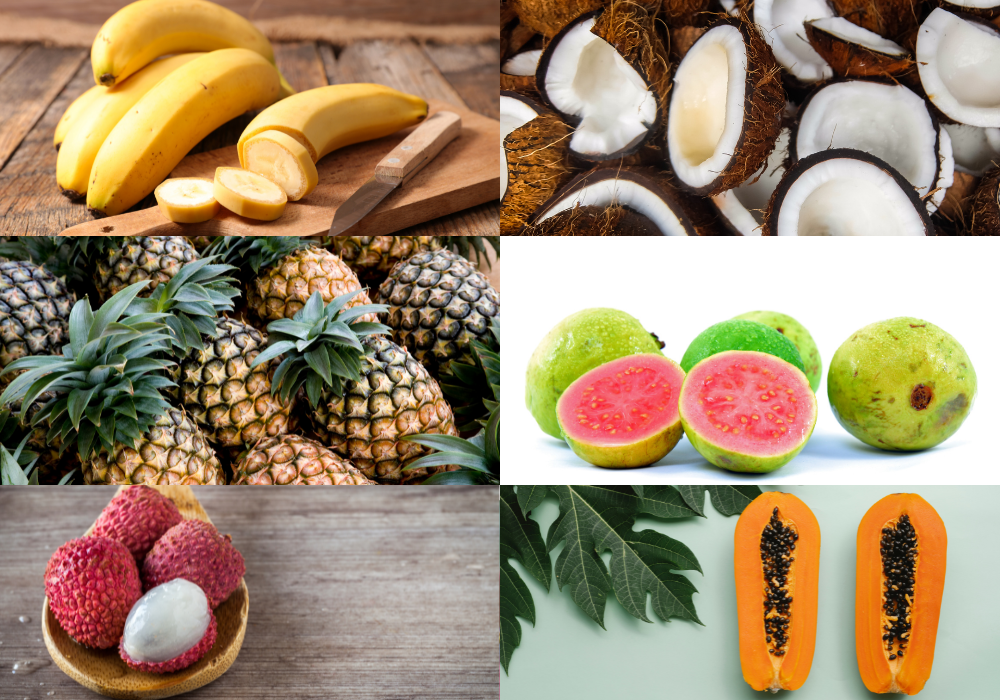
Originally from Southeast Asia, the banana is the most consumed tropical fruit in France. More than 10 kg per person per year — that's huge. This yellow exotic fruit is an excellent source of potassium (358 mg per 100 g) and vitamins B6 and C. Its creamy texture makes it the number one ally for smoothies and fruit salads. Personally, I like bananas that are well-ripened, with those small brown spots on the yellow skin: it's at this stage that they are the most digestible and naturally sweet.
Pineapple
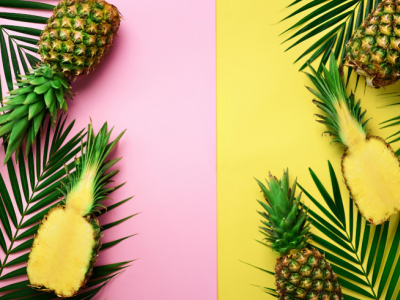
Originally from South America, thepineapple is a juicy fruit, rich in manganese (more than 30% of the Nutritional Reference Values per 100 g) and in vitamin C (source Aprifel/Ciqual 2020). It mainly contains bromelain, an enzyme with documented anti-inflammatory properties — this is actually what gives it that characteristic sensation in the mouth.
An important detail that few people know: the pineapple is a non-climacteric fruit. Translation: once picked, it no longer ripens. So how do you choose it? Gently pull on a leaf from the crown — if it comes off easily, that's a good sign. And smell the base of the fruit: a strong sweet fragrance indicates a ripe pineapple. To learn more, discover the 5 health benefits of pineapple.
The coconut
Originally from the tropical islands of the Pacific, the coconut is an exceptionally versatile fruit. Its white chair Copra is rich in fiber (9 g per 100 g of fresh flesh), potassium, and magnesium. Coconut water, on the other hand, is a natural hydration drink that athletes are beginning to rediscover. Then there is coconut milk, obtained by pressing grated flesh, which has become essential in Asian cooking and smoothies.
With Aurélie, it's a fruit that we use in all its forms. To learn more, check out our article on the Benefits of fresh organic coconut.
? Customer review: "The coconuts are just perfect. I recommend 1000%." — Laurence F., Google review ⭐⭐⭐⭐⭐

The mango
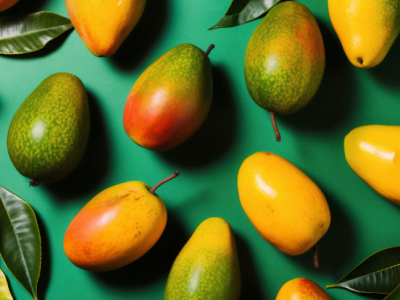
Originally from India, the mango It is often nicknamed "the queen of tropical fruits." And when you taste it seriously, you understand why. About 74 kcal per 100 g, rich in vitamins B9 and C, a source of vitamins A and E. It is the 5th richest fruit in beta-carotene according to the table. Ciqual 2020 (ANSES).
His/Her/Its yellow chair orange, sweet, and fragrant, it pairs just as well in a fruit salad as it does on grilled fish or ceviche. To assess its ripeness, rely on its softness to the touch—not its color. A green mango can be perfectly ripe. To learn more, read our guide on the 7 health benefits of mango.
? Customer review: "I ordered 2 times 5 kg of mangoes, and they are super good!" — Olivia F., Google review ⭐⭐⭐⭐⭐
The lychee
Originally from China, the lychee (Litchi chinensis) is a small exotic red fruit with translucent, delicate, and sweet pulp. What is remarkable from a nutritional standpoint: it provides more vitamin C than an orange and more beta-carotene than a carrot (interprofessional data). Its firm and juicy flesh makes it a refreshing choice at the end of a meal or in a cocktail.
The fresh lychee season is from November to February — the best ones come from Madagascar and Réunion. Storage: about a week in the refrigerator. And a practical tip: the browning of the skin does not affect the quality of the flesh inside.
Papaya
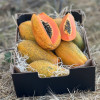
Originally from Central and South America, the papaya is a juicy and surprisingly low-calorie fruit: 43 kcal per 100 g. Specifically, it is the 4th fruit richest in vitamin C — 65.3 mg per 100 g, or 81.6% of the Nutritional Reference Values — after guava, blackcurrant, and kiwi (source Aprifel/Ciqual 2020).
It also contains some papain, an enzyme that facilitates the digestion of proteins. Its small black seeds? Edible, with a slightly peppery taste that surprises at the first bite. (I like to add them to a vinaigrette, it adds a kick.)
The guava
Originally from Central America, the guava is a true vitamin C powerhouse. According to the Ciqual 2020 table, it is simply the fruit that contains the most vitamin C, ahead of blackcurrant and kiwi. It is also rich in dietary fiber (5.4 g per 100 g) and potassium (417 mg). Its dew chair emits a powerful and recognizable fragrance when it is fully ripe. Enjoy it fresh, in a sorbet for the summer, or in a coconut-based cocktail.
Exotic seasonal fruits: when to enjoy them ?
The exotic fruits are generally available all year round — they are grown in permanent tropical climates. However, some have more distinct production seasons, periods when they are at their best in terms of taste and maturity. And that makes all the difference.
Here is a summary by season:
- Spring (March-June): passion fruit (maracuja), mangosteen
- Summer (June-September): dragon fruit (pitaya), starfruit, awara, durian (May-July)
- Autumn (Sep-Nov): Keitt mango from Spain (peak in October), dates, starfruit
- Winter (Nov-Feb): lychee (Madagascar/Reunion), papaya, guava, pomegranate
Focus on some seasonal fruits
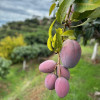
The Keitt mango from Spain: The mango season varies depending on the region and the variety. The Keitt mango from Andalusia, which we offer at Biovie, is available from September to November, with a peak in October. Its advantage? A very short transport distance from Spain, allowing it to be picked at optimal ripeness. The difference in flavor compared to a mango picked green and ripened in a cold room during transport — frankly, it's like night and day.
Dates: available from summer to late autumn. Rich in nutrients, they contribute to normal energy metabolism and are often consumed as a natural snack or to sweeten preparations without refined sugar.
Passion fruit: also called passion fruit or granadilla, it is distinguished by its yellow skin to violet depending on the variety. Originally from Latin America, it is available from March to June. Its tangy and sweet flavor makes it a popular ingredient in juices, desserts, and cocktails. How do you know if it is ripe? It's counterintuitive: the more wrinkled the skin, the better the fruit.
The starfruit: also called star fruit due to its distinctive shape when sliced. This exotic fruit offers a tangy and refreshing taste, available in summer and autumn. Its green skin turns yellow when ripe. However, caution: starfruit is not recommended for people with kidney failure due to its oxalic acid content (caramboxin).
Dragon fruit (pitaya): available in summer and autumn, this fruit of oval shape with vibrant pink skin is a spiky exotic fruit Visually spectacular. It is a source of vitamin C and B vitamins. Its tender flesh, sprinkled with small black seeds, can be enjoyed fresh, in a smoothie, or in a fruit salad.
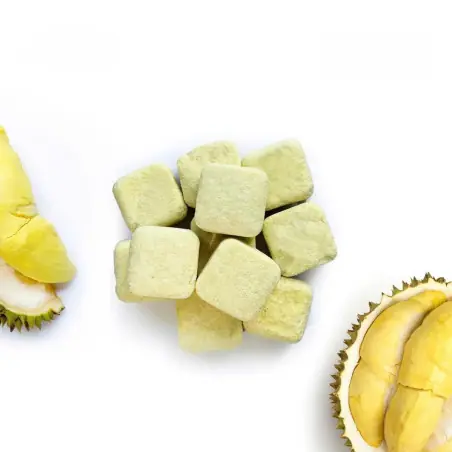
The durian: available from May to July, this fruit originating fromSoutheast Asia is known for its... let's say... polarizing aroma. Beneath its spiky rind, a creamy flesh offers a unique blend of sweet and savory flavors. It's the kind of fruit you either love or refuse to smell—there's no middle ground. For a first approach without the odor, try the freeze-dried durian : the flavor is preserved, the aroma is greatly diminished.
? Customer review: "All the avocados and mangoes were exquisite. Excellent from start to finish." — Frédéric G., Trustpilot review ⭐⭐⭐⭐⭐
To purchase quality exotic fruits, our partner Jurassic Fruit is a specialist in home delivery of exotic fruits. Most of their fruits come from European farms, primarily from southern Spain, but also from local organic producers in Africa and Latin America. Mangoes with exceptional fragrance, naturally ripened papayas, rich avocados, coconut sprouted — all in organic or equivalent quality.
The rarest exotic fruits in the world
Some rare tropical fruits remain unknown, even to exotic fruit enthusiasts. The reasons? Demanding growing conditions, a very short shelf life, or simply distribution limited to their region of origin. Here are five fruits worth discovering.
- The mangosteen: Originally from Indonesia and Malaysia, this small round fruit with a dark purple shell contains a white pulp of exceptional gentleness. Often considered as the the rarest tropical fruit — and for good reason: the mangosteen tree takes more than ten years to bear its first fruits, and transportation is extremely delicate. It's not a fruit you find at the local supermarket.
- The rambutan: originally from Thailand, this exotic red fruit covered with soft thorns hides a white chair Juicy, sweet, and slightly tangy. According to research data on tropical fruits, 10 to 12 rambutans provide more than double the recommended daily intake of vitamin C.
- The Miracle Fruit (Miracle Berry): This small red fruit native to West Africa (Synsepalum dulcificum) possesses a fascinating property. The Miraculin it temporarily alters taste perception: sour foods become sweet. I had the opportunity to try it at a fair in Bangkok. The effect lasts about thirty minutes. Amazing.
- The santol: Asian fruit originating from Southeast Asia, from round shape and of yellow color, with a thick and waxy skin. Its flesh is sweet and tangy, with edible seeds inside.
- The jaboticaba: Originally from Brazil, this small black fruit grows directly on the tree trunk — a spectacle in itself. Its sweet chair and juicy, reminiscent of muscat grapes. Its rarity is simply explained: 2 to 3 days of preservation after picking. Impossible to export fresh.
You will find some of these exceptional varieties in the shop. Jurassic Fruit. These extraordinary fruits, like the durian, the Jackfruit or the mangosteen, are among the oldest on earth !
Benefits of exotic fruits for health
Tropical fruits are not only good, they are nutritionally remarkable. A scientific review published in Foods in 2021 confirms that tropical fruits are a major source of bioactive compounds — polyphenols, carotenoids, fibers — with documented antioxidant and cardioprotective effects (Zheng et al., 2021 — PubMedA meta-analysis of 77 studies goes further: an additional serving of fruit per day is associated with a 3 to 8% reduction in cardiovascular risk.
Here are the main points benefits of exotic fruits, as part of a varied and balanced diet:
- Rich in vitamin C: Guava (228 mg/100 g!), papaya (65 mg), and pineapple are among the fruits richest in vitamin C. Vitamin C contributes to the normal functioning of the immune system and the normal formation of collagen.
- Powerful antioxidants: Mango (beta-carotene, vitamin E), lychee, and passion fruit contain polyphenols and carotenoids that help protect cells against oxidative stress (Septembre-Malaterre et al., 2016).
- Natural digestive enzymes: The bromelain from pineapple and the papain from papaya contribute to normal digestive function. These enzymes aid in the digestion of proteins — that's why pineapple is traditionally served with meats in many cultures.
- Source of fiber: Most tropical fruits provide between 1.5 and 5.4 g of fiber per 100 g (with guava leading), which contributes to the proper functioning of intestinal transit.
- Low caloric intake: between 40 and 75 kcal per 100 g for the majority of fresh exotic fruits. Healthy snacks that are filling and truly offer nutritional benefits.
Nutritional values compared (per 100 g of fresh fruit)
Data from the table Ciqual 2020 (ANSES) and ofAprifel :
- Guava: 68 kcal | Vitamin C: 228 mg | Fiber: 5.4 g | Potassium: 417 mg
- Papaya: 43 kcal | Vitamin C: 65 mg | Vitamin B9: 55 µg | Fiber: 1.8 g
- Lychee: 66 kcal | Vitamin C: 71 mg | Potassium: 171 mg | Fiber: 1.3 g
- Pineapple: 52 kcal | Vitamin C: 47 mg | Manganese: >30% NRV | Fiber: 1.4 g
- Mango: 74 kcal | Vitamin C: 36 mg | Vitamin A: 144 µg | Fiber: 1.8 g
- Banana: 90 kcal | Potassium: 358 mg | Vitamin B6: 0.37 mg | Fiber: 2.6 g
- Coconut (fresh flesh): 354 kcal | Fiber: 9 g | Potassium: 356 mg | Magnesium: 32 mg
At Biovie, we offer several of these fruits in a version fresh organic or freeze-dried, to enjoy their benefits throughout the year — including out of season.
How to choose, store, and enjoy exotic fruits ?
Choosing the right exotic fruits
The ripeness of an exotic fruit is not always judged by its color. This is a common mistake. Here are some concrete guidelines, fruit by fruit:
- Mango: a fruit that is soft to the touch (not mushy), emitting a sweet fragrance at the base of the stem. Color is not a reliable indicator — a green mango can be perfectly ripe.
- Pineapple: leaves that detach easily, sweet fragrance at the base. Reminder: it does not ripen after being picked.
- Papaya: The skin changes from green to yellow-orange. A slight softness under the fingers indicates ripeness.
- Passion fruit: Wrinkled skin is a sign of maturity. Counterintuitive, but that's how it is.
- Coconut: Shake it — you should hear the water inside. The heavier it is, the more juice it contains.
? Customer review: "The quality of organic fresh fruits from Andalusia is excellent, better than in organic stores." — Cassandre, Trustpilot review ⭐⭐⭐⭐⭐
Tasting ideas
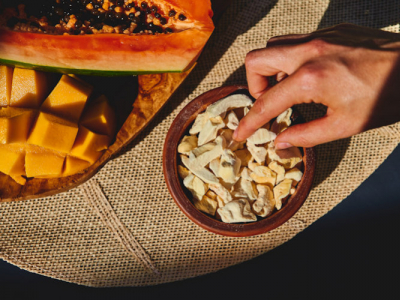
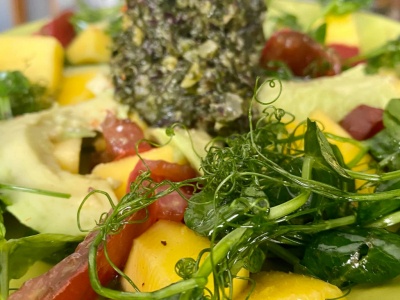
Exotic fruits can be enjoyed in many ways. Fresh as a snack, in a tropical fruit salad (mango + pineapple + passion fruit + lime), in a smoothie bowl, in pressed juice, or incorporated into savory dishes. Pineapple with shrimp, mango on raw fish, papaya with lime and Espelette pepper. And to preserve the benefits out of season, consider the freeze-dried fruits — Freeze-drying preserves vitamins and flavors without adding sugar or preservatives.
Precautions to know
Some precautions deserve to be mentioned:
- Latex-fruit allergy: Individuals allergic to latex may experience cross-reactions with certain tropical fruits, including banana, avocado, kiwi, and papaya. If in doubt, consult an allergist.
- Starfruit and kidney failure: Starfruit contains oxalic acid (caramboxin) and is not recommended for people with kidney problems.
- Drug interactions: Grapefruit and pomelo can interact with certain medications (statins, immunosuppressants). If you are undergoing treatment, talk to your doctor.
Complete list of exotic and tropical fruits of the world
Here is our Alphabetical list of exotic fruits and tropical, with their region of origin and their season of availability in France. This list covers both the Asian fruits than the fruits from Latin America, Africa, and Oceania.
- Açaí — Small dark berry from South America, rich in antioxidants (available year-round, frozen)
- Acerola — Antilles Cherry, champion of vitamin C (April-November)
- Pineapple — Sweet and juicy fruit from South America (year-round, peak: December-March)
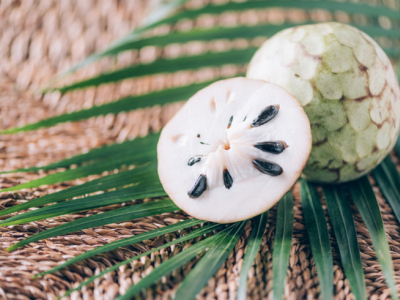
- Soursop (cherimoya) — Creamy fruit from tropical America (October-February)
- Breadfruit tree — Starchy fruit from Asia and Oceania (June-October)
- Lawyer — Creamy flesh, green exotic fruit, from Central America (all year round)
- Awara — Amazonian tropical fruit at the sweet chair of orange color (summer-fall)
- Banana — Yellow exotic fruit basic in tropical areas, native to Asia (all year round)
- Starfruit — Refreshing fruit from Southeast Asia (August-February)
- Citron — Tangy citrus fruit from tropical countries (October-January)
- Ground cherry (physalis) — Small fruit from Colombia and South Africa (December-June)
- Ceriman (Swiss cheese plant fruit) — Rare fruit with a pineapple-banana taste (summer)
- Lime — Bright citrus from warm regions, green exotic fruit (all year)
- Coconut — Versatile fruit of the tropics (all year round)
- Dates — Sweet fruit from the Middle East and North Africa (summer-autumn)
- Durian — Very fragrant fruit and Thorny Southeast Asia (May-July)
- Prickly pear — Fruit of the cactus native to Mexico (August-October)
- Passion fruit (maracuja) — Tart fruit from Latin America (March-June)
- Dragon fruit (pitaya) — Spectacular fruit and Thorny Central America, exotic red fruit outside (summer-fall)
- Salak fruit (snake fruit) — Scaly-skinned fruit from Indonesia (May-December)
- Guava — Fragrant fruit from Central America, green exotic fruit at maturity (winter)
- Grenade — Mediterranean fruit at the red chair rich in antioxidants (September-January)
- Yellow passion fruit — Mild variant of the passion fruit to the yellow skin (March-June)
- Jaboticaba — Small Brazilian black fruit (October-November)
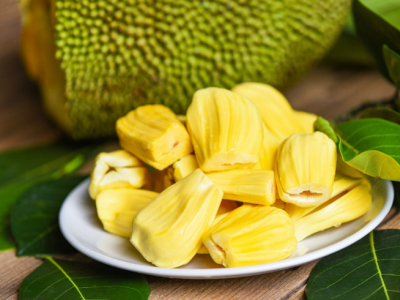
- Jackfruit — The largest fruit in the world, up to 40 kg, from tropical Asia (all year round). Discover the benefits of jackfruit.
- Persimmon — Sweet fruit grown in the Mediterranean (October-December)
- Kiwi — Tart fruit originating from China (November-May)
- Kumquat — Small citrus fruit that is eaten with the skin (December-March)
- Lychee — Small sweet fruit from Asia, exotic red fruit (November-February)
- Longan (dragon's eye) — Translucent and soft flesh, cousin of the lychee (July-September)
- Lucuma — Egg-shaped fruit from South America with a caramel taste (January-April)
- Mangosteen — Rare small fruit from Indonesia, white pulp exquisite (May-September)
- Mango — Sweet and juicy fruit from India, yellow chair fragrant (March-November depending on the varieties)
- Marula — Fleshy fruit from Southern Africa (January-March)
- Nectarine — Sweet fruit originating from China (June-September)
- Coconut — Versatile fruit of the tropics, white chair rich (all year round)
- Papaya — Juicy fruit from Central America, orange chair vitaminized (all year round)
- Pitaya (dragon fruit) — White or red flesh speckled with black seeds (summer-autumn)
- Pomelo — Large citrus fruit from Southeast Asia with a sweet-bitter taste (November-March)
- Rambutan — Spiky exotic fruit Red from Thailand, white chair sweet (May-September)
- Sapodilla — Fruit with a caramel taste from Central America (November-March)
- Tamarin — Pod fruit with a tangy taste from Africa (all year round, dry)
Here, this list is of course not exhaustive. New tropical fruits are regularly discovered and marketed. Each exotic fruit has unique flavors, textures, and nutritional benefits that truly deserve to be explored — at your own pace, according to your tastes and desires.
FAQ: Exotic and Tropical Fruits
What is a tropical fruit ?
A tropical fruit is a fruit originating from regions with a tropical, subtropical, or equatorial climate. These fruits cannot withstand cold and can be damaged below 4°C. The main exporting countries are located in the Far East, Latin America, the Caribbean, and Africa.
What are the most common exotic fruits ?
The most consumed exotic fruits in France are bananas (more than 10 kg per person per year), pineapples, avocados, and mangoes. Lychees, papayas, and guavas complete the ranking of the most popular tropical fruits. Together, these seven fruits account for the vast majority of exotic fruit purchases in France.
Where do tropical fruits come from ?
The majority of tropical fruits come from Latin America (61% of global exports), the Far East (22%), and Africa (10%). Some exotic fruits are also grown in Europe, particularly in the Axarquía region of Spain (mango, avocado, papaya), from where several fruits offered by Biovie originate.
What is the difference between tropical fruit and exotic fruit ?
The term "tropical fruit" refers to a fruit that grows in tropical or subtropical regions. "Exotic fruit" is a relative term that refers to a fruit that is imported and consumed in a country where it is not locally grown. The two terms overlap significantly: a pineapple is tropical (it grows in tropical regions) and exotic in France (it is imported there).
How to taste exotic fruits ?
Exotic fruits can be enjoyed fresh, in fruit salads, in smoothies, in desserts, or incorporated into savory dishes. Mango pairs well with fish, pineapple with shrimp, and coconut with chocolate. The freeze-dried fruits are an excellent alternative to enjoy flavors and vitamins out of season.
What are the health benefits of exotic fruits ?
Exotic fruits are rich in vitamins C, A, and B9, antioxidants, and fiber. As part of a varied and balanced diet, vitamin C contributes to the normal functioning of the immune system, antioxidants help protect cells against oxidative stress, and enzymes like bromelain (pineapple) and papain (papaya) contribute to normal digestive function.
What is the rarest tropical fruit in the world ?
The mangosteen is often considered the rarest tropical fruit due to the difficulty of its cultivation (the mangosteen tree takes more than 10 years to mature) and its short shelf life. The miracle fruit (Synsepalum dulcificum) and the jaboticaba are also very rare outside their region of origin.
What exotic fruits can be grown in France ?
In mainland France, certain exotic fruits can grow in the mildest regions (Côte d'Azur, Corsica): kiwi, prickly pear, pomegranate, kumquat, and some varieties of guava. In the overseas territories (Martinique, Guadeloupe, Réunion, French Guiana), the cultivation of bananas, pineapples, mangoes, and lychees is well established. In neighboring Spain, the Axarquía region produces organic mangoes, papayas, and avocados.
References
- Zheng, B., et al. (2021). "Tropical Fruits and Their Co-Products as Bioactive Compounds and Their Health Effects: A Review". Foods, 10(8), 1952.
- Septembre-Malaterre, A., et al. (2016). "Evaluation of nutritional and antioxidant properties of tropical fruits cultivated in Réunion French Island". Food Chemistry, 212, 225-233.
- Aune, D., et al. (2021). "Fruit consumption and multiple health outcomes: An umbrella review". Trends in Food Science & Technology.
- Table Ciqual 2020 — ANSES. https://ciqual.anses.fr/
- Fiches nutritionnelles — Aprifel (Agence pour la Recherche et l'Information en Fruits et Légumes). https://www.aprifel.com/
Warning: The information presented in this article is provided for informational purposes only and does not constitute medical advice. Consult a qualified healthcare professional before making any changes to your diet or supplementation. As part of a varied and balanced diet and a healthy lifestyle.