What is the origin and history of the mango?
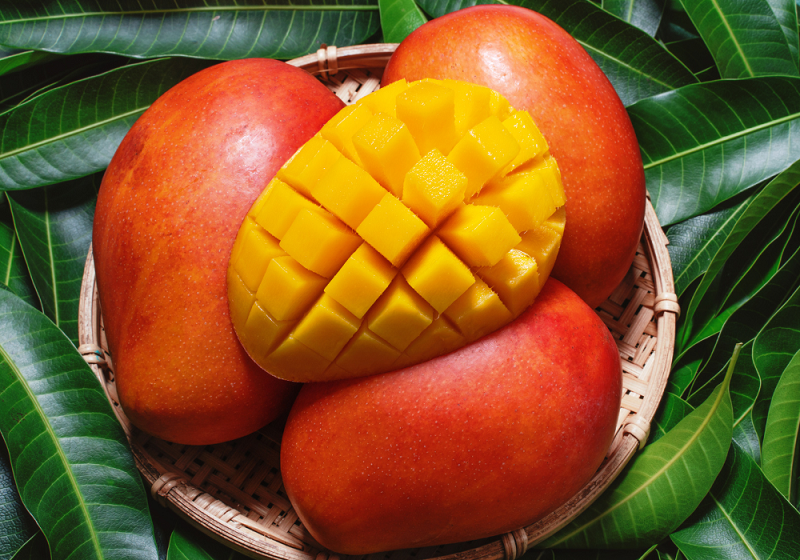
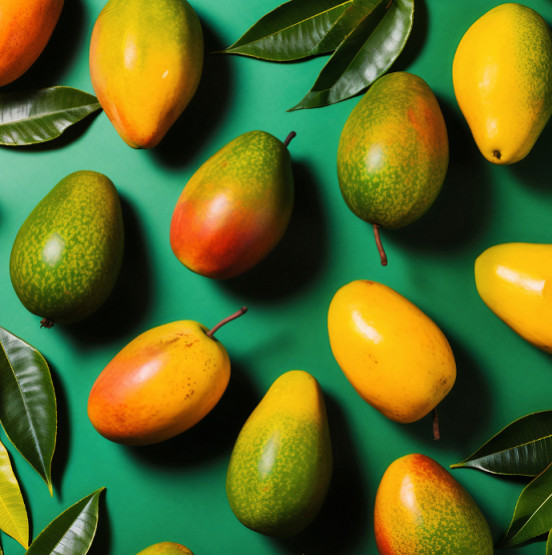
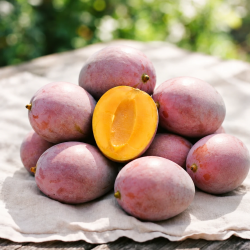
The mango originates from the tropical regions of the Indian subcontinent, specifically between eastern India and Myanmar. The mango tree, a tropical evergreen, is considered a symbol of prosperity in several Asian cultures - it even appears in ancient Buddhist texts. This is where its nickname "king of fruits" comes from. Today, it is cultivated on all tropical continents, from India to Brazil, including Spanish Andalusia (from where our organic mangoes), the mango remains one of the most consumed fruits in the world.
Mango season: when are Osteen, Irwin and Kent available?
Our mangoes come from Andalusia, in southern Spain. Here is the harvest window of the three varieties we sell, as documented by the industry:
- Osteen (the bulk of our volumes): mid-August to late October, peaking in early October
- Irwin (early): September to mid-October
- Kent (late): October
The Spanish season runs roughly from mid-August to late November [source]. That is why the shipping dates shown on each product page change every week: we follow the harvest, not a fixed calendar.
Nutritional values of mango (per 100 g)
Before discussing the benefits of mango, let's look at what it actually contains. This data comes from the USDA FoodData Central database (#169910, updated 2024):
- Calories: 60 kcal
- Carbohydrates: 15 g - including sugars13.7 g
- Fibers: 1.6 g (6% of the RDI)
- Proteins0.82 g
- Vitamin C: 36.4 mg (40% of the RDI) ⭐
- Vitamin A: 54 µg RAE / 1,082 IU (6% of the RDI)
- Vitamin B9 (folate): 43 µg (11% of the RDI)
- Vitamin B6: 0.12 mg (9% of the RDI)
- Vitamin E: 0.9 mg (6% of the RDI)
- Vitamin K: 4.2 µg (3.5% of the RDI)
- Potassium: 168 mg (5% of the RDI)
- Copper: 0.11 mg (12% of the RDI)
- Magnesium: 10 mg (2.4% of the RDI)
Source: USDA FoodData Central #169910
What stands out here is the concentration of vitamin C - the mango and vitamin C duo is often underestimated compared to citrus fruits. And with folate at 43 µg (not 29 µg as sometimes stated on some sites), it makes it a particularly interesting fruit for pregnant women. We will come back to this.
The 10 benefits and virtues of mango for health
1. Strengthen the immune system with vitamin C and antioxidants
100 g of mango cover 40% of your daily vitamin C needs. Vitamin C contributes to the normal functioning of the immune system - a claim authorized by the EFSA, and in the case of mango, it is well-deserved. But that's not all. Mango also contains mangiferin, quercetin, and beta-carotene, three natural antioxidants whose protective role against free radicals is well-documented. The review by Burton-Freeman et al. (2025), published in Food Function, synthesizes the work conducted between 2016 and 2025 and confirms that regular consumption of mango is associated with a reduction in oxidative stress, as part of a varied and balanced diet and a healthy lifestyle.
I have experienced it personally - and our clients regularly confirm it: mango aids digestion. Why? On one hand, its dietary fibers (1.6 g per 100 g) contribute to intestinal transit. On the other hand, it contains amylase enzymes that help break down complex carbohydrates.
A randomized clinical trial conducted by Asuncion et al. (2023), published in Food Science & Nutrition, showed an improvement in gut health and microbiota in participants consuming fresh mango. For those wondering if mango is good for the stomach: yes, in the majority of cases. (To be nuanced for people sensitive to FODMAPs, of course.)
3. Contributes to the regulation of blood sugar levels
"Mango and diabetes, is it compatible?" This is a question I am often asked. The answer is nuanced. The glycemic index of mango is moderate (around 51), which places it in the category of medium GI fruits. Its polyphenols - particularly mangiferin - have shown interesting effects on glycemic control.
The systematic review by Zarasvand et al. (2023), published in Nutrition Research and based on 28 animal and human studies, highlighted the favorable properties of different parts of the mango tree in managing type 2 diabetes. However, caution is advised: with 13.7g of sugars per 100g, consumption should remain moderate for people with diabetes. Half a mango per day fits well into an adapted glycemic monitoring plan.
4. Protects cardiovascular health
The potassium and magnesium present in mango help maintain normal blood pressure. Pectin, the soluble fiber found in its flesh, contributes to the regulation of LDL cholesterol. These are not just theoretical claims.
A clinical trial by Burton-Freeman et al. (2025), published in the Journal of the American College of Nutrition, observed in postmenopausal women that consuming 330 g of mango per day for two weeks was associated with a decrease in systolic blood pressure and cholesterol. And the systematic review by Minniti et al. (2023), published in Life (Basel) and covering 13 studies, confirmed the favorable effects of mango on the components of metabolic syndrome. Encouraging results, although they still require confirmation in larger cohorts.
5. Preserves eye health
Mango is rich in vitamin A (54 µg RAE per 100 g), essential for maintaining normal vision. It also contains lutein and zeaxanthin - two natural pigments present in the fruit's flesh that help protect the retina. These carotenoids are particularly studied for their potential role in preventing age-related macular degeneration (AMD).
6. Benefits of Mango for Skin and Hair
Vitamins A, C, and E: this trio is a classic when it comes to skin health. Vitamin C contributes to normal collagen formation to ensure the normal functioning of the skin - this is an EFSA-authorized claim. Vitamin A plays a role in cell renewal, and vitamin E helps protect cells against oxidative stress.
For hair, it's vitamin A that draws attention. It helps maintain normal hair as part of a varied and balanced diet. No need for a mango mask (even though it can be fun) - eating it is enough.
7. Exceptional source of B vitamins
It is often forgotten, but mango is a good source of several B vitamins: B1, B2, B3, B5, B6, and B9. B vitamins contribute to normal energy metabolism and the normal functioning of the nervous system. It's a cocktail that I particularly appreciate in my daily diet - these vitamins can sometimes be difficult to find in sufficient quantities in a 100% plant-based diet.
Folate (vitamin B9, 43 µg per 100 g, or 11% of the RDA) deserves special mention: it contributes to the growth of maternal tissues during pregnancy. Pregnant women will therefore find it a valuable ally. Consult your doctor or midwife to adjust your intake in case of gestational diabetes.
8. Anti-inflammatory properties
Mango polyphenols-primarily mangiferin and gallic acid-are the subject of promising research on inflammation modulation. A randomized crossover clinical trial conducted by Sakaguchi et al. (2024), published in Nutrients, followed 22 cyclists consuming 330g of mango per day for two weeks. Result: a modulation of post-exercise inflammation markers compared to the control group.
Let's remain cautious in our interpretation - this is a limited sample and a specific sports context. However, these data add to the body of evidence that research is accumulating on the fruit's polyphenols.
9. Weight control assistance
60 kcal per 100 g. Reread this figure. The mango is sweet, yes - but it is low in calories. Its fibers contribute to the feeling of fullness, making it a smart snack between meals.
And here is the flip side of the coin (it needs to be mentioned): dried mango is a whole different story. It easily exceeds 500 kcal per cup. Fresh fruit is always preferable if you are watching your calorie intake. The same goes for juice, which concentrates sugars without the fibers.
Another angle I like to remind people of: for those who are underweight and looking to gain mass, mango can also be an ally-paired with granola, nut butter, or a rich smoothie. It's a fruit that adapts to all goals.
10. Good for brain health
The vitamin B6 present in mango (0.12 mg per 100 g) contributes to the normal functioning of the nervous system and normal psychological functions - two EFSA-authorized claims. B6 is involved in the synthesis of neurotransmitters such as GABA, serotonin, and dopamine.
The mango also contains glutamine, an amino acid involved in cognitive functions. Research on these effects is still at a preliminary stage, and I am not going to tell you that eating a mango will make you smarter. What I can say is that as part of a varied diet, these micronutrients contribute to the maintenance of normal brain functions.
How to consume mango?
The mango lends itself to a multitude of preparations. Here are the main forms of consumption:
In fresh fruit - the simplest and most nutritious way. Choose it soft to the touch, with a sweet fragrance at the base of the stem. Our Organic mangoes from Andalusia generally arrive not quite ripe and can be kept for a few days at room temperature.
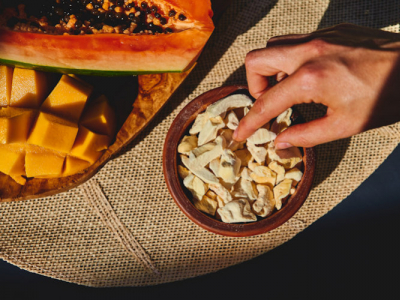
Freeze-dried - all the flavor concentrated, without water. Our freeze-dried mangoes Nam Dok Mai variety are a true natural candy. Convenient for smoothies, granola, or as a snack. Also discover the Benefits of freeze-dried fruits to understand why this process preserves the essential nutrients.
In juice or smoothie - mixed with banana, plant-based milk, and a handful of chia seeds. Be careful with overly sweet smoothies: half a mango is enough per serving. The fibers remain present in the smoothie (unlike filtered juice), which regulates the absorption of sugars.
In chutney - an exceptional sweet and savory condiment with spicy dishes.
Mango leaves - used in infusions in traditional Indian medicine. Research on this subject remains limited.
Mango tree bark - also used in traditional medicine, but with scientific data still insufficient to draw conclusions.
Our customers' feedback
⭐⭐⭐⭐⭐ "Excellent mangoes, arrived not yet ripe but every day I can eat one." - Client Biovie (order 5 kg)
⭐⭐⭐⭐⭐ "The mangoes were exquisite, they ripened and remained in perfect condition." - Biovie Client
And what about the mango pit? It is generally thrown away, but it actually contains interesting phenolic compounds. Some cultures use it dried and ground into powder - this is not a common practice in Europe, but it's good to know.
Mango in the morning or evening: when to consume it?
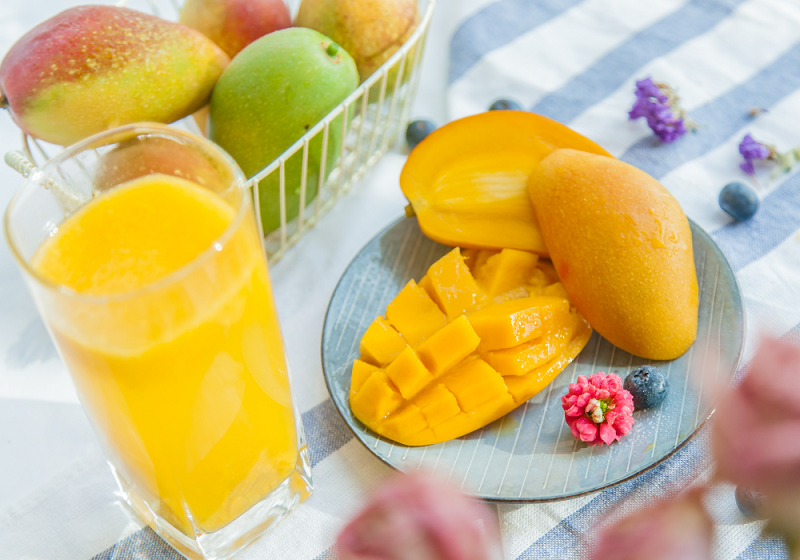
Classic question - and the answer is reassuring: both work. In the morning, mango provides an excellent boost of vitality thanks to its natural sugars and vitamin C. In the evening, its fibers regulate sugar absorption and do not disturb sleep for the majority of people.
Does eating a mango in the evening make you gain weight? No, not more than any other fruit with 60 kcal per 100 g. What matters is the total amount of your food intake throughout the day, not the time you eat a fruit.
A practical tip: if you are sensitive to bloating, consume it at least an hour before bedtime. As for the quantity, half a mango to a whole mango per day fits perfectly into a balanced diet.
Mango and sleep? No demonstrated effect in either direction. Some sites mention tryptophan, but mango only contains it in negligible amounts. No sedative properties, no stimulating properties. Eat it whenever you feel like it.
Precautions and contraindications of mango
Mango is a safe food for the vast majority of people. But some precautions are necessary - and it's a topic that too few articles address.
Cross allergy. The mango belongs to the Anacardiaceae family, like cashews and pistachios. If you are allergic to one of these nuts, a cross-reaction is possible. Consult your allergist if in doubt.
Mango skin contains urushiol. - the same irritating compound as in poison ivy. Some people develop contact dermatitis after handling the fruit's skin. Can you eat mango skin? Technically yes, it is edible and rich in polyphenols. But urushiol can cause skin or mouth irritation in sensitive individuals. My advice: peel it.
Interaction with warfarin. Mango contains vitamin A and vitamin K. If you are taking a blood thinner like warfarin, talk to your doctor - vitamin K can interfere with the dosage of the treatment.
Dried mango: watch out for the calories. We return to this because it's important: the concentration of sugars and calories in dried mango is significantly higher than that of fresh fruit. More than 500 kcal per cup compared to less than 100 kcal for the same amount of fresh fruit.
Mango and liver. Some sites attribute hepatoprotective properties to mango. Studies on the subject mainly focus on isolated mangiferin, in animal models. There is nothing sufficiently solid to make a recommendation. In case of liver disease, consult your doctor.
Pregnancy. Mango can certainly be consumed during pregnancy - its folate content is even an advantage. However, it should be eaten in moderation due to its natural sugar content. In case of gestational diabetes, adjust your consumption under medical supervision.
Our recipe: quinoa salad with mango and avocado
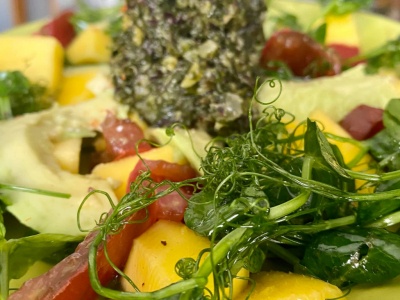
A recipe that we developed at Biovie and that combines three ingredients I love: the quinoa, the mango and the Lawyer. If you are not yet familiar with the Benefits of avocado, it's an opportunity to discover them.
Ingredients (2 people):
- 100 g of quinoa (white or tricolor)
- 1 ripe mango
- 1 ripe avocado
- 1 handful of sprouted seeds (alfalfa or radish)
- The juice of a lime
- 2 tablespoons of olive oil
- A few leaves of fresh coriander
- Salt, pepper
Preparation:
- Rinse the quinoa and cook it according to the instructions (How to prepare quinoa). Let cool.
- Cut the mango and avocado into cubes.
- Mix the cooled quinoa with the diced fruits.
- Prepare the dressing: lime juice, olive oil, salt, and pepper.
- Season, add the sprouts and coriander when serving.
Germination brings living enzymes and multiplies the vitamin content of seeds - it is one of the pillars of the living food that we advocate at Biovie.
FAQ - Frequently Asked Questions about Mangoes
What are the main benefits of mango?
Mango is rich in vitamin C (40% of the RDI per 100g), antioxidants (mangiferin, quercetin, beta-carotene), and fiber. Vitamin C contributes to the normal functioning of the immune system. Mango also provides B vitamins, potassium, and copper. According to the review of studies by Burton-Freeman et al. (2025) in Food Function, its regular consumption is associated with favorable effects on glycemic control and the reduction of oxidative stress.
Can one eat mango in the evening?
Yes. The fibers in mango regulate sugar absorption and do not disrupt sleep. With about 60 kcal per 100 g, eating a mango in the evening does not cause weight gain. The only precaution: consume it at least an hour before bedtime if you are prone to bloating.
Can a pregnant woman eat mangoes?
Mango is rich in folate (vitamin B9, 43 µg per 100 g), which contributes to the growth of maternal tissues during pregnancy. It can be consumed in moderation during pregnancy. Consult your doctor in case of gestational diabetes due to the natural sugar content of the fruit.
What are the harmful effects of mango?
The main disadvantages are the risk of cross-allergy (Anacardiaceae family: cashew, pistachio), contact dermatitis related to urushiol present in the fruit's skin, and a possible interaction with warfarin. Dried mango is particularly high in calories (more than 500 kcal per cup compared to less than 100 kcal for the fresh fruit).
How many mangoes can one eat per day?
Half a mango to a whole mango per day fits into a varied and balanced diet. Diabetic individuals should adjust their consumption based on their glycemic monitoring. A whole mango (about 200 g of flesh) provides approximately 120 kcal and 27 g of sugars.
References
- Burton-Freeman, B.M., et al. (2025). "Les bienfaits pour la santé du fruit de la mangue – revue récente de la littérature". Food Function, 16(22):8680-8694.
- Burton-Freeman, B.M., et al. (2025). "Cardiometabolic Response to Mango in Postmenopausal Women". Journal of the American College of Nutrition.
- Minniti, G., et al. (2023). "Mangifera indica L., By-Products, and Mangiferin on Cardio-Metabolic and Other Health Conditions: A Systematic Review". Life (Basel), 13(12):2270.
- Asuncion, P., et al. (2023). "The effects of fresh mango consumption on gut health and microbiome – Randomized controlled trial". Food Science & Nutrition, 11(4):2069-2078.
- Mirza, B., et al. (2021). "Mango (Mangifera indica L.): a magnificent plant with cancer preventive and anticancer therapeutic potential". Critical Reviews in Food Science and Nutrition, 61(13):2125-2151.
- Sakaguchi, C.A., et al. (2024). "Influence of 2 Weeks of Mango Ingestion on Inflammation Resolution after Vigorous Exercise". Nutrients, 16(1):36.
- USDA FoodData Central (2024).Mangoes, raw"FDC ID #169910."
Updated: September 2026. Article written and validated by
Éric Viard,
founder of Biovie since 2007 and ISTOM engineer,
co-author of « Algues au quotidien » (Gallimard, 2024) -
Best Cookbook in the World, Gourmand Cookbook Awards 2025, and
Best Cookbook of France, Académie Nationale de Cuisine 2025.
Warning: The information presented in this article is provided for informational purposes only and does not constitute medical advice. Consult a qualified healthcare professional before making any changes to your diet or supplementation. As part of a varied and balanced diet and a healthy lifestyle.