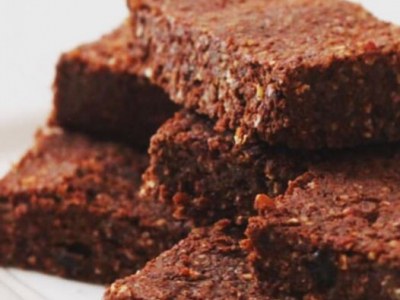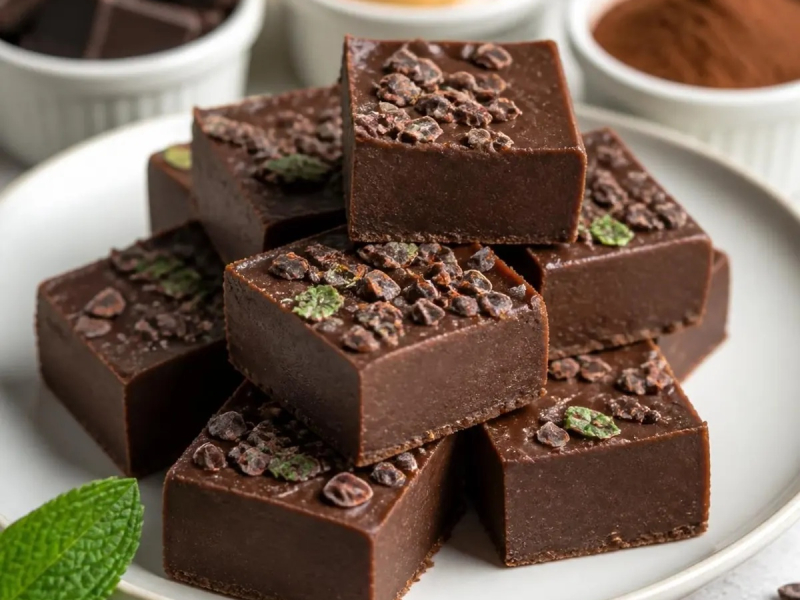



A clever way to waste nothing: this recipe turns carrot pulp, usually discarded after juicing, into soft coconut cookies. Each one is crowned with a little hat of melting raw chocolate, an indulgent touch that pleases young and old alike. Simple and quick, it is the ideal way to make use of what your juicer leaves behind.

Carrot Pulp Cookies with Raw Chocolate Hats
Share this article
Ingredients
Carrot cookies
- 1.5 cups carrot pulp (or 300 g of finely blended carrot if you have no pulp)
- 1 cup desiccated coconut
- 2 tablespoons tahini
- 1/2 cup filtered and hydrogenated water
- 2 tablespoons agave nectar
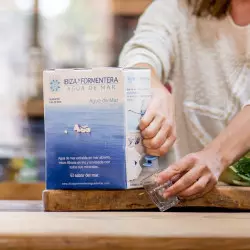
- 2 small pinches of Himalayan pink salt (equivalent to 1 tablespoon - 15 ml - of seawater)
- 2 teaspoons mesquite powder
- 1/2 teaspoon real vanilla extract
Chocolate hat
- 4 tablespoons virgin coconut oil
- 4 tablespoons raw cacao powder
- 2 tablespoons agave nectar
Preparation
- Grind the desiccated coconut into a fine flour in a coffee grinder or blender.
- If you have no carrot pulp, blend raw carrot in the food processor until finely chopped.
- Put the coconut flour in the food processor, add the other cookie ingredients and blend until you have a soft dough that holds together.
- Pipe the cookies with a wide nozzle, or shape them by hand, onto a dehydrator tray lined with a mesh sheet.
- Make a hollow in the centre of each cookie with your fingertip, ready to hold the melted chocolate.
- Dehydrate for 3 to 4 hours.
- For the hat, melt the coconut oil over a warm water bath or in the dehydrator.
- Add the cacao and the agave, and stir by hand until you have a smooth chocolate.
- Pour the melted chocolate into moulds, or straight into the hollow of the cookies once dry, then leave to set in the fridge.
Tip
No dehydrator? Put the cookies in the oven at its lowest setting, with the door ajar, for a similar gentle drying.
The full range EQUIPMENT
46 products
Discover the full range
FAQ: your questions about carrot pulp cookies
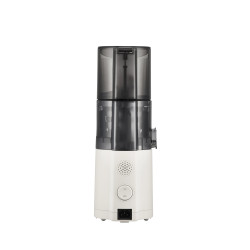
What can you do with the waste from a juicer?
It is not waste but fibre. Vegetable pulp works very well in dehydrated crackers, in vegetable patties, or in a soup or sauce to thicken it. Fruit pulp slips into cookies, bars, a pancake batter or a fruit leather. The simplest approach: freeze it as you go in bags, sorted by family - roots on one side, fruit on the other - and dip into it as needed.
What can you do with fruit pulp?
Sweet uses are plentiful: cookies like the ones in this recipe, energy bars, muffins, dehydrated fruit leather, or simply a spoonful stirred into a plant-based yoghurt. It can also flavour water or an infusion. One rule only: use it within 24 hours or freeze it straight away, as damp fibre oxidises quickly.
What is the ideal temperature for a dehydrator?
It depends on what you are after. In living food, you stay below 42 °C to preserve heat-sensitive enzymes and vitamins: that is the setting to keep here. For simple drying for storage, 55 to 65 °C is faster. A common trick is to start for an hour at a higher temperature to drive off the surface moisture, then drop back to 40-42 °C for the rest of the cycle.
Share this article
Related articles