Fast delivery
.png)
 Fair prices


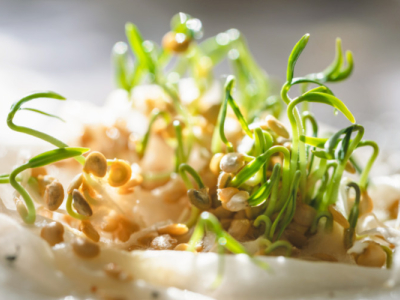

Growing your own seeds at home is one of the simplest and most powerful actions of theliving food. But to successfully germinate, it is important to know the right soaking times and the appropriate germination durations for each variety. This is precisely the purpose of this guide: to offer you the The most comprehensive sprouted seed germination chart on the French-speaking market, enriched with practical advice from over 33 years of experience in germination.
At Biovie, germination is not a trend — it's been our business since 2007. Every seed we offer has been selected, tested, and validated for germination in a jar, sprouter, or bag. This guide will provide you with all the keys to mastering the Soaking time, the Germination durations, the yields and specificities of each variety — from quinoa that sprouts in 24 hours to mucilaginous seeds that require a very distinct method.
Why is a germination chart essential?
Germination is a living process, sensitive to external conditions. Each seed variety has its own requirements: a soaking time too short does not properly activate the enzymes, while too long a duration can cause undesirable fermentation or the appearance of mold. Similarly, germination times vary significantly from one seed to another — from 24 hours for quinoa to 7 days for certain legumes.
A reliable germination chart allows you to:
- Plan your germination cycles throughout the week to always have fresh seeds available;
- Avoid common mistakes (soaking too long, insufficient rinsing, incorrect temperature);
- Adapt your technique according to the variety (mucilaginous seeds, legumes, cereals);
- Maximize the yields and nutritional quality of your sprouts.
There is also a fundamental distinction that many overlook: the mucilaginous seeds (chia, basil, flax) do not soak in water — they form a gel that prevents any normal germination in a jar. This particularity is systematically omitted in general guides.
Discover why sprouting your seeds daily is one of the pillars of a living diet in our article. Why consume sprouted seeds daily?
The Biovie germination table — by variety
Here is our complete repository, organized by seed family. For each variety, you will find the recommended soaking time, the germination duration, the rinsing frequency, and a practical tip from our field experience.
Sprouted legumes and grains
These seeds form the basis of daily germination. They sprout easily in a jar and offer an excellent protein yield.
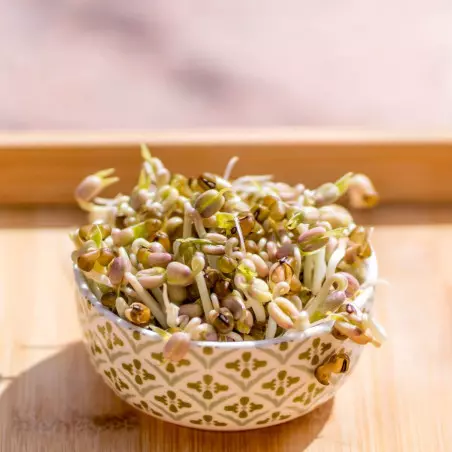
- Green lentils — Soaking: 6 to 8 hours — Germination: 2 to 3 days — Rinsing: 2×/day — Yield: approximately ×3. Tip: one of the easiest seeds to start with. The small white sprouts appear as early as the 2nd day.andDay. See our Tip for sprouting green lentils.
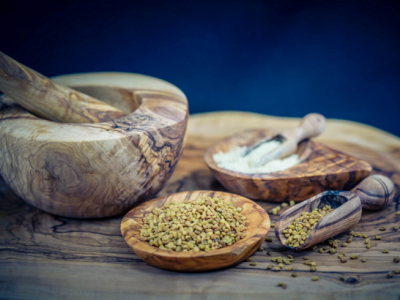
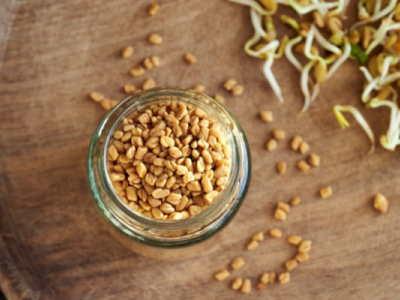
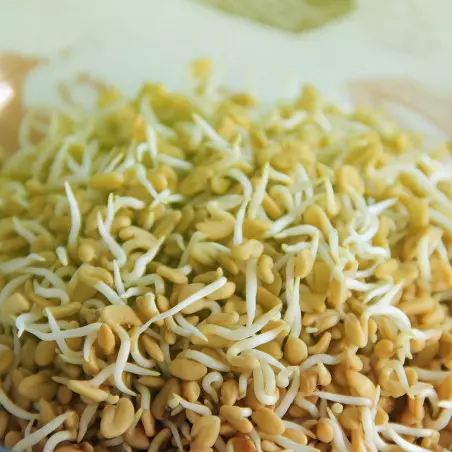
- Fenugreek — Soaking: 6 to 8 hours — Germination: 3 to 5 days — Rinsing: 2×/day — Yield: ×2.5. Tip: slightly bitter taste and characteristic aroma. Rich in beneficial mucilages. Preferably consume at 3-4 days for a milder flavor. See our article why fenugreek is essential for sprouting.
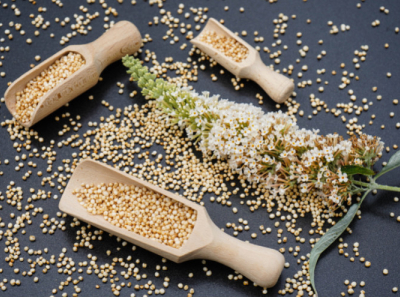
- Quinoa — Soaking: 2 to 4 hours — Germination: 24 to 48 hours — Rinsing: 2×/day — Yield: ×2. Tip: the fastest seed to germinate. A simple rinse after soaking is often enough to trigger germination in a few hours.
- Green peas — Soaking: 8 to 12 hours — Germination: 3 to 4 days — Rinsing: 2×/day — Yield: ×2. Tip: mild and fresh flavor. Excellent in salads or green smoothies.
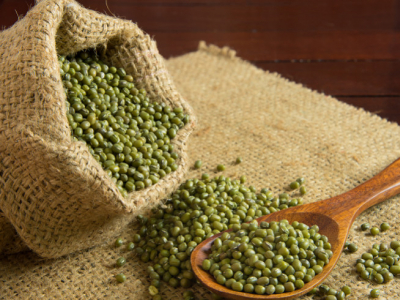
- Mung bean (green soybean) — Soaking: 8 to 12 hours — Germination: 3 to 5 days — Rinsing: 2×/day — Yield: ×3 to 4. Tip: Commercial soybean sprouts are actually mung bean sprouts. Easy, good yield. Discover the Benefits of mung beans.
- Azuki — Soaking: 8 to 12 hours — Germination: 3 to 5 days — Rinsing: 2×/day — Yield: ×2.5. Tip: slightly bitter sprout, highly appreciated in Asian cuisine. Consume at 3 days for a milder taste.
- Spelt — Soaking: 6 to 8 hours — Germination: 2 to 3 days — Rinsing: 2×/day — Yield: ×1.5. Tip: be sure to choose unhulled spelt to obtain good sprouts.
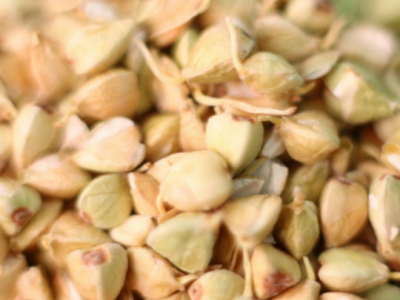
- Buckwheat — Soaking: 6 to 8 hours — Germination: 2 to 3 days — Rinsing: 3 times/day — Yield: ×1.5. Tip: Buckwheat produces mucilage during rinsing — this is normal. Rinse thoroughly until the water is clear.
Vegetable and aromatic plant seeds
These seeds produce fine, aromatic sprouts that are particularly rich in phytonutrients. They are often grown for their sprouts and microgreens.
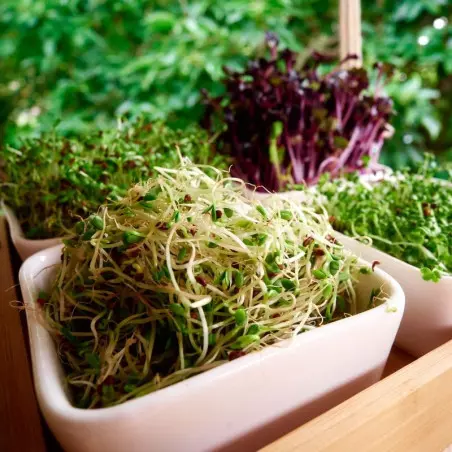
- Alfalfa (lucerne) — Soaking: 4 to 6 hours — Germination: 5 to 7 days — Rinsing: 2×/day — Yield: ×6 to 8. Tip: seed is slightly mucilaginous on the surface — rinse well after soaking. Alfalfa sprouts are among the most delicate and mild. Ideal for salads.
- Broccoli - Soaking: 6 to 8 hours - Germination: 4 to 6 days - Rinsing: 2×/day - Yield: ×6 Tip: Sprouted broccoli seeds contain up to 100 times more sulforaphane than mature broccoli according to several scientific studies. Consume at 4-5 days when the green leaves begin to develop. See sprouted broccoli seeds: 100 times more sulforaphane.
- Watercress — Soaking: 4 to 6 hours — Germination: 5 to 7 days — Rinsing: 2×/day — Yield: ×5. Tip: spicy and aromatic flavor. Preferably grow on a moist substrate rather than in a jar.
- Radish — Soaking: 4 to 6 hours — Germination: 4 to 6 days — Rinsing: 2×/day — Yield: ×5 to 6. Tip: intense peppery flavor. Ideal for enhancing a salad or a veggie sandwich.
- Leek — Soaking: 6 to 8 hours — Germination: 8 to 10 days — Rinsing: 2×/day — Yield: ×4. Tip: slower germination but fine flavor. Read the benefits of sprouted leek seeds.
- Fennel — Soaking: 4 to 6 hours — Germination: 5 to 8 days — Rinsing: 2×/day — Yield: ×4. Tip: mild anise flavor, perfect for summer salads.
- Rocket — Soaking: 4 to 6 hours — Germination: 5 to 7 days — Rinsing: 2×/day — Yield: ×5. Tip: slightly mucilaginous — rinse thoroughly. Peppery and slightly bitter taste.
Special case: mucilaginous seeds
The mucilaginous seeds (chia, basil, flax) have a coating that, upon contact with water, swells and forms a protective gel. This gel, beneficial for our digestion, completely prevents germination in a jar. These seeds are not soaked before germination.
- Chia — Soaking: NONE — Method: moistening on a flat surface (plate, tray) — Germination: 5 to 8 days — Rinsing: spray once a day. Tip: spread the seeds in a thin layer on a moistened tray. Do not saturate with water. Small pinkish sprouts appear on day 3-4.
- Basil — Soaking: NONE — Method: moistening on a flat surface — Germination: 6 to 10 days — Rinsing: spray 1×/day. Tip: same method as chia. Indirect light recommended for good development.
- Lin — Soaking: NONE — Method: moistening on a flat surface — Germination: 5 to 7 days — Rinsing: spray once a day. Tip: Sprouted flax seeds offer an excellent omega-3 profile. Use quickly after germination.
Oilseeds: sunflower, pumpkin, hemp
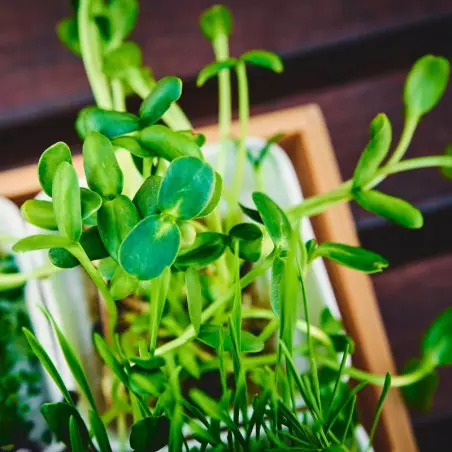
- Hulled sunflower — Soaking: 4 to 6 hours — Germination: 1 to 2 days — Rinsing: 2×/day — Yield: ×1.5. Tip: choose sunflower organic shelled. Germination is very short — consume as soon as the sprout appears (a white tail of 2-3 mm). Sweet and crunchy flavor.
- Pumpkin seeds — Soaking: 4 to 6 hours — Germination: 1 to 2 days — Rinsing: 2×/day — Yield: ×1.5. Tip: consume very young (24-36 hours after soaking). Rich in zinc.
- Hulled hemp — Soaking: 2 to 4 hours — Germination: difficult in a jar (hulled seed) — Advice: hulled hemp is difficult to germinate — prefer simple soaking (activation) for 4-6 hours to improve digestibility without trying to obtain sprouts.
"For about 12 years, I have been buying my sprouting seeds from Biovie. Stored in the cellar in sealed buckets, they remain active for 2 years."
— Véronique Dupont, Biovie customer (Trustpilot review ★★★★★)
How to read and use this germination table?
To get the most out of this table, here's how to interpret each parameter:
- Soaking time: duration during which the seeds are soaked in water (preferably non-chlorinated) before starting germination. Soaking activates the enzymes and removes the natural inhibitors present in the seed coat.
- Germination duration: number of days between the end of soaking and the optimal harvest of sprouts. This duration varies depending on the ambient temperature (ideally 18 to 22 °C).
- Rinsing frequency: recommended number of daily rinses. Rinsing removes microorganisms, provides necessary moisture, and prevents mold development. It is the most important step that should never be neglected.
- Yield: ratio between the volume of dry seeds and the volume of sprouts obtained. A yield of ×3 means that 100 g of dry seeds produce approximately 300 g of fresh sprouts.
Key tips for successful germination:
- Use filtered or spring water for soaking and rinsing — chlorinated water can inhibit germination;
- Maintain an ambient temperature between 18 and 22°C — below 15°C, germination slows down considerably;
- Avoid direct exposure to the sun — indirect light is more suitable;
- Drain well after each rinse — excess standing water is the primary cause of mold;
- Sprouts can be stored for 3 to 5 days in the refrigerator in a slightly damp jar.
The signs of good germination: the sprouts are white or slightly green, firm, with no unpleasant odor. If you notice a sour smell, white filaments (mold), or a brown color, rinse thoroughly or restart the cycle.
What equipment should you choose to germinate your seeds?
The germination technique depends on the type of seed and the desired quantity. Here are the main options, from the simplest to the most advanced.
The jar sprouter — the classic method
A simple glass jar with a mesh or net at the opening is enough to get started. This is the ideal method for legumes, grains, and small vegetable seeds. Tilting the jar at a 45° angle after rinsing allows for good drainage and aeration.
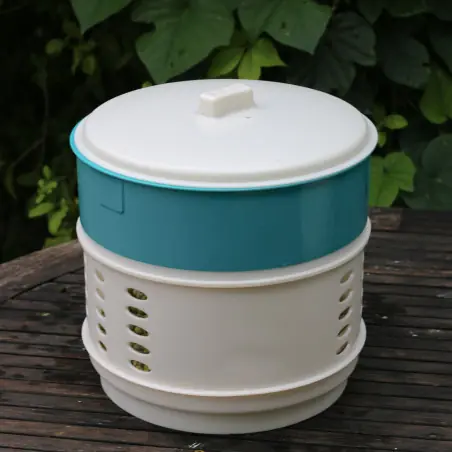
The EasyGreen — the automatic sprouter reference by Biovie
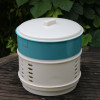
TheEasyGreen is the automatic sprouter that we have been using and recommending at Biovie for over 20 years. Its automatic misting system ensures regular watering every hour, eliminating the need for manual rinsing twice a day. The result: more uniform sprouts, reduced risk of mold, and maximum nutritional quality.
The EasyGreen Sol and EasyGreen Pro allow for the simultaneous cultivation of multiple seed varieties on separate trays — perfect for a continuous supply.
To compare the different types of sprouters, consult our complete guide: What is the best sprouter for sprouting seeds?
The hemp sprouting bag
The sprouting bag is particularly suitable for larger legumes (lentils, peas, azuki) and sprouted grains. Its breathable texture promotes aeration and natural drainage. Easy to carry, it is also the ideal equipment for sprouting while traveling.
Learn how to properly use a sprouting bag in our tutorial: how to use a sprouting bag.
"I order my sprouted seeds from Biovie and I am very satisfied with them. I also ordered the EasyGreen Sol, which works very well and is very useful to me."
— Jerome, client Biovie (Trustpilot review ★★★★★)
Which seeds to choose to start? Biovie's 5 recommendations
If you are new to germination, here are the 5 varieties that combine ease, speed, and nutritional value — tested and validated by our team:
- 1. Fenugreek — Grows in 3 to 5 days, very easy, rich in fiber and mucilage. A slightly bitter characteristic flavor that many appreciate. One of the most popular seeds in the Biovie community.
- 2. Green lentils — Germination in 2 to 3 days, neutral and versatile taste. Ideal in salads, stir-fries, or eaten directly. Excellent value for money.
- 3. Quinoa — The fastest seed: sprouts ready in 24 to 48 hours. Perfect for never running out of fresh sprouts.
- 4. Broccoli seeds — 4 to 6 days, but the most concentrated sprouts in sulforaphane available. An exceptional nutritional investment for a small amount of seeds.
- 5. Alfalfa (lucerne) — 5 to 7 days, mild and light flavor, exceptional yield (×6 to 8). Alfalfa sprouts are the most photogenic and popular in gourmet salads.
For a complete list of all the seeds you can sprout, check out our guide: which seeds can be sprouted?
Why does germination transform the nutritional value of seeds?
Germination is not just a culinary phenomenon — it is a profound biochemical transformation which radically alters the nutritional composition of the seed. Here is what science tells us:
- Multiplication of B vitamins: according to research published in Food Bioscience (2024), germination leads to a significant increase in B vitamins — with documented increases in vitamin B1 (+285%), vitamin B2 (+515%), and niacin (+256%) compared to the dry seed.
- Reduction of anti-nutrientsSoaking and germination reduce phytates, lectins, and trypsin inhibitors by 50 to 90%, according to a review published on PubMed in 2021 (PMID 33719022). This reduction significantly improves the bioavailability of minerals (zinc, iron, calcium, magnesium).
- Enzymatic activation: the active germination of hundreds ofhydrolytic enzymes which begin to pre-digest the proteins, carbohydrates, and fats of the seed. This pre-digestion facilitates absorption by our body. A PMC study (PMC8398379, 2021) documents the exceptional enzymatic activity of sprouted seeds.
- Development of phytonutrients: glucosinolates (broccoli), isoflavones (legumes), and flavonoids develop significantly during germination — sometimes with concentrations significantly higher than those in the mature vegetable.
To go further, discover our complete guide on the benefits: 12 Proven Health Benefits of Sprouted Seeds.
Sources: PMC8398379 — Edible Plant Sprouts: Health Benefits (2021)Sure, please provide the text you would like translated. PubMed 33719022 — Use of Sprouts to Improve Nutritional Value (2021)Sure, please provide the text you would like translated. ScienceDirect — Functional potential of sprouts (2024).
"I have placed several orders on the Biovie website: sprouting seeds and the EasyGreen sprouter, which I consume daily. I appreciate their blog and their advice."
— Segond, client Biovie (Trustpilot review ★★★★★)
Precautions and contraindications to know
Germination is a safe practice for the vast majority of people. However, certain precautions should be known:
- Red beans: never sprout raw. Red beansPhaseolus vulgaris) contain phytohemagglutinin, a natural toxin that is destroyed only by cooking at 100°C for at least 10 minutes. When consumed raw or sprouted, they can cause severe digestive disorders.
- Solanaceae: Tomato, pepper, and eggplant seeds are not recommended for germination for food purposes — their alkaloids can become concentrated during the process.
- Immunocompromised individuals: raw sprouts can pose a bacteriological risk (Salmonella, E. coli in rare cases of contamination). If undergoing immunosuppressive treatment, it is preferable to consume sprouts that are lightly steamed (30 seconds is sufficient).
- Prioritize organic products imperatively: non-organic seeds may contain pesticide residues that concentrate during germination. Our Biovie sprouting seeds are all certified organic and specifically selected for food germination.
- Insufficient rinsing: the first risk in germination is related to infrequent rinsing. In case of excessive heat (>25 °C) or if a rinsing is forgotten, increase the frequency to 3 times a day.
FAQ — Frequently Asked Questions about Seed Germination
How long should seeds be soaked before germinating them?
The soaking time varies depending on the variety: 4 to 6 hours for alfalfa, 6 to 8 hours for lentils and fenugreek, 8 to 12 hours for larger legumes like peas and azukis. Mucilaginous seeds (chia, basil, flax) are not soaked because they form a gel in water that prevents germination in a jar.
How many days does it take for seeds to germinate?
The germination duration varies from 24 to 48 hours for quinoa (the fastest), 2 to 3 days for lentils and fenugreek, 3 to 5 days for alfalfa and broccoli, up to 5 to 7 days for certain legumes and vegetable seeds. The ambient temperature (ideally 18-22°C) directly influences the speed of germination — below 15°C, the durations should be multiplied by 1.5 to 2.
Should seeds in germination be rinsed every day?
Yes, it is recommended to rinse the seeds twice a day with fresh water (morning and evening) throughout the germination period. This rinsing removes microorganisms, maintains optimal humidity, and prevents mold development. Insufficient rinsing is the main cause of germination failure. In case of high heat (>25°C), increase to 3 rinses per day.
Which seeds should never be sprouted?
Raw red beans contain phytohemagglutinin, a toxin that is only destroyed by cooking: never consume them raw when sprouted. Seeds from the nightshade family (tomato, pepper, eggplant) are not recommended. Non-organic certified seeds potentially concentrate pesticide residues during germination — always choose organic seeds specifically selected for food germination.
How to germinate mucilaginous seeds like chia?
Mucilaginous seeds (chia, basil, flax) should not be soaked in water: they form a gel that prevents any germination in a jar. To sprout them, lightly moisten them on a flat surface (plate, ceramic tray) and maintain constant humidity by gentle misting. Do not saturate with water. Their germination takes 5 to 8 days. The small pink (chia) or green (basil) sprouts are harvested when the first leaves unfold.
Can any type of water be used to soak seeds?
It is recommended to use filtered or non-chlorinated water for soaking and rinsing sprouted seeds. Heavily chlorinated tap water can inhibit germination and disrupt the beneficial microorganisms of the seeds. Spring or filtered water (ceramic filter, activated charcoal, or reverse osmosis) yields better results. If you use tap water, let it sit in an open container for 30 minutes to dissipate the chlorine.
What is the fastest seed to germinate?
Quinoa is the fastest seed to sprout: after 2 to 4 hours of soaking, the first sprouts (a small white tail) appear in 24 to 48 hours. Green lentils and fenugreek are also among the fastest (2 to 3 days), making them excellent choices for starting sprouting at home or for never running out of fresh sprouts.
Update: April 2026. Article approved by Éric Viard, founder of Biovie and engineer ISTOM, co-author of "Seaweed in everyday life" (Gallimard, 2024) — Best cookbook in the world, Gourmand Cookbook Awards 2025, and Best cookbook in France, National Academy of Cuisine 2025.
Warning: The information presented in this article is provided for informational purposes only and does not constitute medical advice. Consult a qualified healthcare professional before making any significant changes to your diet or supplementation. As part of a varied and balanced diet and a healthy lifestyle.