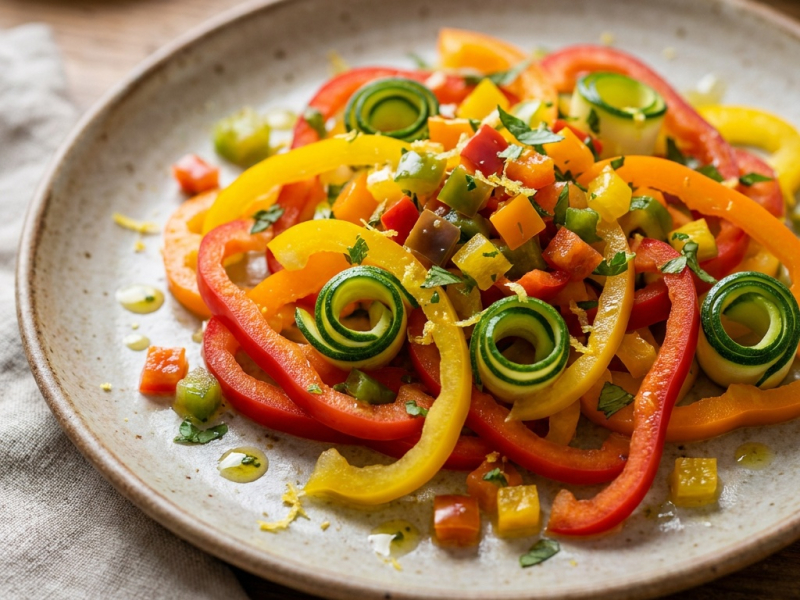



Making an entirely raw pizza takes a little more organisation than a classic recipe, but the result is always a pleasant surprise. The crust, made from courgette and soaked almonds, is dehydrated until firm and crisp, while the sun-dried tomato sauce and fermented nut cheese bring all the indulgence you expect from a real pizza. Peppers, marinated mushrooms, red onion and olives complete the topping before a quick trip back into the dehydrator to warm everything through. An ideal kitchen project to introduce someone to raw food, well off the beaten track.
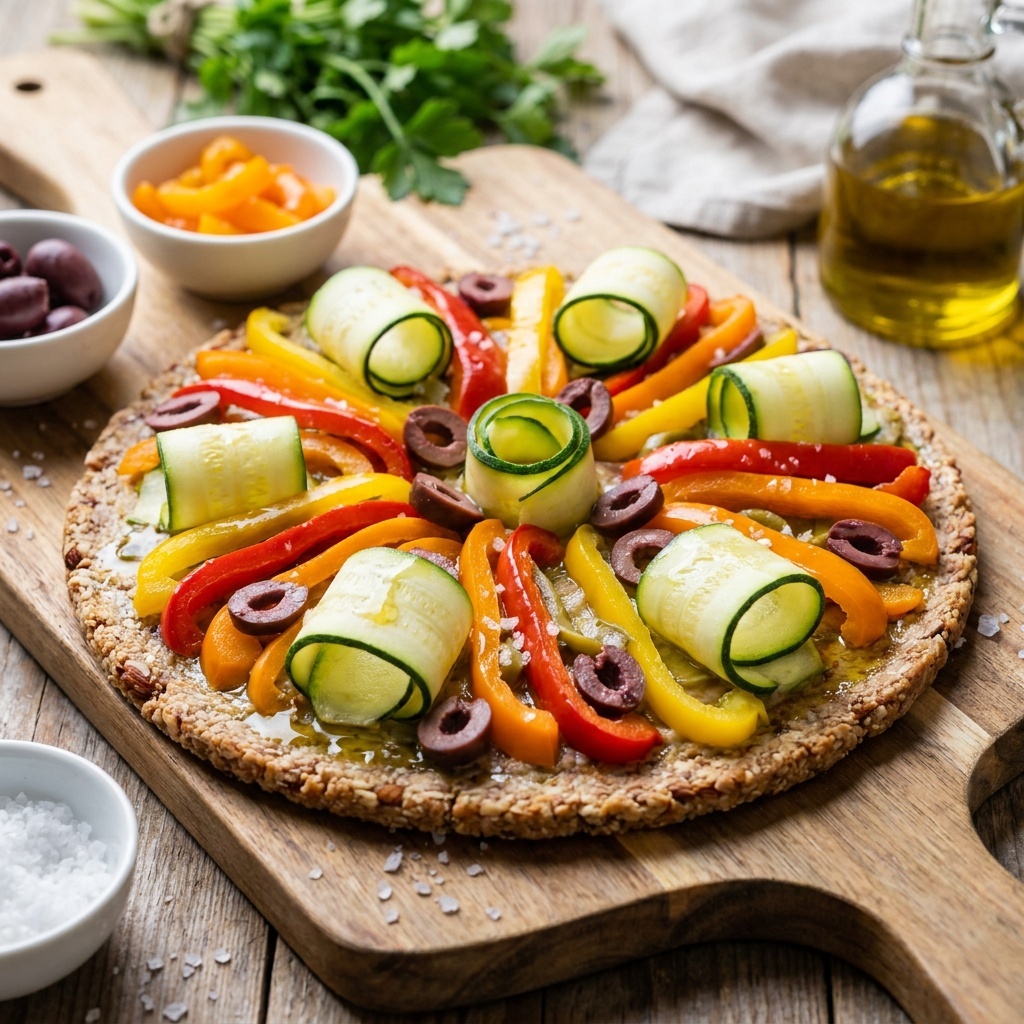
Raw pepper and olive pizza with an almond and courgette crust

Share this article

Ingredients
For the crust
- 270 g peeled and chopped courgette (about 3 courgettes)
- 1 1/2 teaspoons Celtic salt
- 120 ml good quality extra virgin olive oil
- 95 g golden or brown flaxseed flour
- 145 g almonds soaked for 8 hours
For the sauce
- 80 g sun-dried tomatoes, soaked for 2 hours or more
- 1/2 medium tomato or red pepper, chopped
- 1 large pitted date (or 2 teaspoons of honey)
- 1 clove of garlic (optional)
- 4 large basil leaves
- 1 tablespoon chopped onion (optional)
- 1/2 teaspoon Celtic salt
- 1/4 teaspoon oregano
- 1/2 teaspoon Italian seasoning
For the cheese
- 290 g pine nuts, cashews or macadamia nuts
- 120 ml water
- 2 probiotic capsules
- After fermenting: 1 tablespoon unpasteurised light miso, 1/4 teaspoon Celtic salt, 1 teaspoon lemon juice
For the topping
- 1 red pepper, diced
- 15 sliced mushrooms, marinated in olive oil and salt
- 1/2 red onion, sliced
- 10 pitted black olives
- 2 sliced avocados (if you are not using the nut cheese)
Method
- Blend the courgette, salt and olive oil until smooth, then add the almonds and blend until the mixture is even.
- Transfer to a bowl, stir in the flaxseed flour and let the dough thicken for a few minutes.
- Shape 4 small or 2 large crusts on dehydrator sheets.
- Dehydrate at 40 °C for 4 hours, turn the crusts over, then continue dehydrating until firm (8 hours or more in total).
- For the sauce, blend all the ingredients with the tomato soaking water until smooth, leave to stand for 30 minutes and remove any excess water on the surface.
- For the cheese, blend the nuts with the water until you get a thick paste, stir in the contents of the probiotic capsules, cover and leave to ferment for 8 to 12 hours somewhere warm (27 °C or more).
- Once the cheese is slightly tangy, add the miso, the salt and the lemon juice.
- Spread the sauce over the crust, add the fermented cheese (or the avocado), then the toppings.
- Warm through in the dehydrator at 46 °C for 30 to 60 minutes before serving.
Tip
To save time, you can skip fermenting the cheese and season it straight away; the dehydrated crusts freeze for up to 3 months. Spread the dough as evenly as you can: a crust of uneven thickness dries out in the middle and stays soft at the edges. If your kitchen is cool, place the bowl of cheese in the switched-off dehydrator with the lamp on, where the temperature stays ideal for fermenting.
The full range Oilseeds, nuts, seeds
20 products
Discover the full range

FAQ: your questions about the raw pepper and olive pizza
Which ferments are used in cheese?
In dairy cheeses, lactic acid bacteria (lactococci, lactobacilli, thermophilic streptococci) acidify the milk, followed sometimes by surface moulds or rennet. For a raw plant cheese, only the first stage is reproduced: the lactic acid bacteria from a probiotic capsule acidify the nut paste and develop the flavour. That is what gives this characteristic tangy note, impossible to obtain with a simple squeeze of lemon.
What is the recipe for vegan cashew cheese?
The base is always the same: soaked cashews blended with a little water into a thick paste, then inoculated with the contents of one or two probiotic capsules. Cover and leave to ferment for 8 to 12 hours at 27 °C or above. The seasoning comes after fermenting: unpasteurised miso, salt and lemon juice. The cheese then keeps for a week in the fridge in a sealed jar.
What is the ideal hydration level for pizza dough?
That question concerns leavened pizza dough, where hydration (the water to flour ratio) sits around 60 to 70 %. A raw crust works completely differently: it is not gluten and yeast that give it structure, but the flaxseed flour, which gels on contact with the water in the courgette. The few minutes of rest after adding the flax play the role of kneading: that is when the dough thickens and becomes workable.
Share this article
Related articles