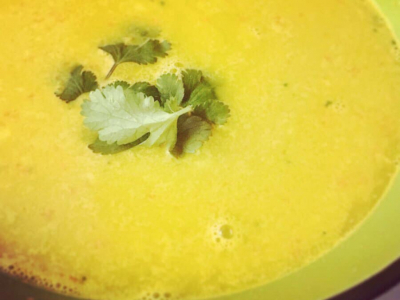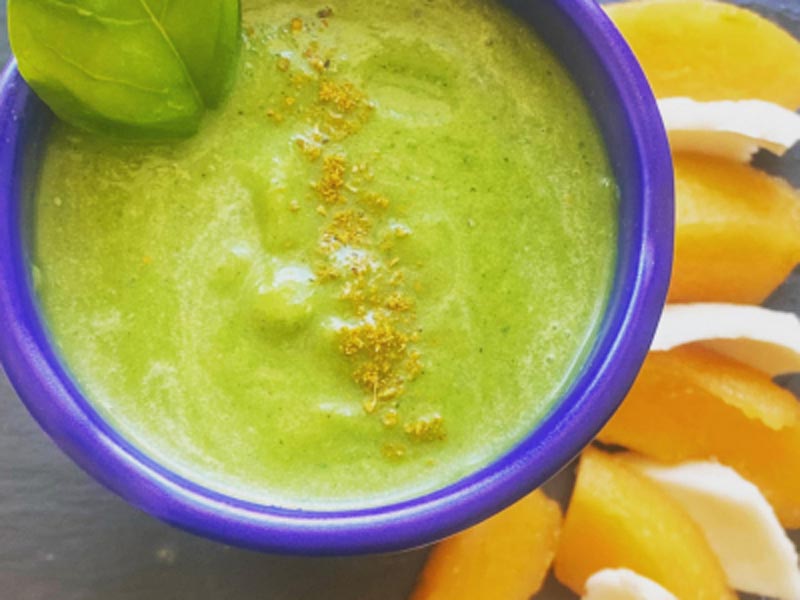


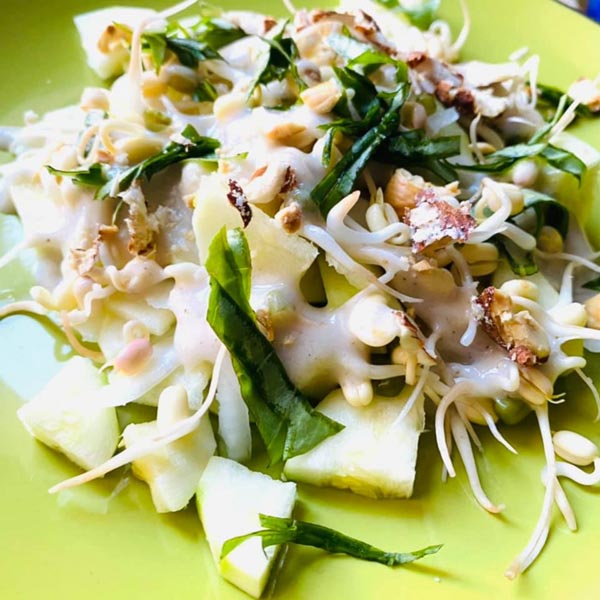

You are looking for a Coconut Curry Recipe that changes everything, no cooking, 100% raw and ready in 15 minutes? This raw coconut curry with mung bean sprouts is my signature dish at home. Creamy sauce made from fresh coconut, the aroma of Indian spices, the freshness of raw vegetables: it's simple, spectacular, and easy to digest.
Why a raw coconut curry is a game changer
Gentle cooking preserves flavors, but it also eliminates natural enzymes and some heat-sensitive vitamins (B1, B6, C). By keeping a raw coconut curry recipe 100% raw, we preserve the full nutritional potential of the ingredients while achieving a creamy texture worthy of a traditional curry.
In my kitchen, this raw coconut curry has become the star dish of summer meals: it can be prepared in fifteen minutes, transports perfectly, and is universally loved — even by non-raw food eaters, which is often the real test. It is living proof that theliving food is not an austere diet, but a celebration of raw and complete flavors.
For those discovering raw food and its benefits for digestion and energy, this raw vegan curry recipe is an ideal entry point: it reassures, it delights, it requires no sophisticated equipment.
The key ingredients of this coconut curry recipe
Fresh coconut, the heart of the sauce
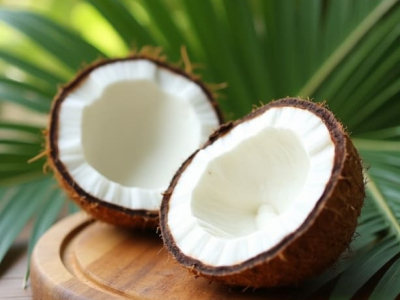
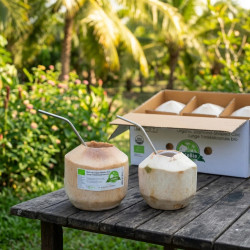
The fresh coconut — the real one, the kind you open with a machete — has nothing to do with canned coconut cream. Its raw flesh melts in your mouth and releases a natural milky sweetness. In terms of nutrition, 100 g of fresh flesh provide (Source Ciqual ANSES, 2024354 kcal, 33 g of fats including a significant portion of medium-chain triglycerides (MCT), 9 g of fiber, 356 mg of potassium, and 1.5 mg of manganese.
Find all the Benefits of fresh coconut in our dedicated guide.
€33.90
NEXT SHIPMENT ON SEPTEMBER 14
Certified organic fresh coconuts
Mung bean sprouts, the protein nugget
The sprouted mung bean provides complete proteins, fibers, and vitamins. During germination, the vitamin C content can be multiplied by 3 to 5 depending on the conditions.Ghavidel & Prakash, 2007, PubMed), and the digestibility of proteins increases measurably. That is why the mung bean sprouts are a key element of this recipe, bringing a nutritional liveliness that is impossible to achieve with dry seeds.
No sprouter? Our article germinate seeds in 48 hours guides you step by step.
Homemade curry spices
Turmeric, ginger, coriander, cumin, black pepper: these five spices form the aromatic backbone of homemade curry. Turmeric, in particular, increases in bioavailability when combined with black pepper and a fat.Hewlings & Kalman, 2017, Foods) — the coconut sauce perfectly fulfills this role in our recipe.
Raw Coconut Curry Recipe (Biovie Signature Version)
Ingredients for 2 people
- Fresh flesh of ½ coconut(≈ 150 g)
- 2 tablespoons of coconut water
- 1 small handful of sprouts of mung bean (≈ 60 g)
- 1 young zucchini cut into thin tagliatelle
- 1 grated carrot
- ½ sliced red bell pepper
- 1 teaspoon of turmeric powder
- 1 teaspoon of freshly grated ginger
- ½ teaspoon of ground coriander
- ½ teaspoon of ground cumin
- 1 pinch of freshly ground black pepper
- The juice of ½ lime
- 1 tablespoon of raw coconut oil
- Grey salt from Guérande
- A few fresh coriander leaves for garnish
€9.90
Organic mung bean seeds

Coconut curry sauce step by step
- Blend the coconut flesh with coconut water, coconut oil, lime juice, and spices until you achieve a very smooth cream.
- Adjust the texture with a trickle of water if necessary: the sauce should coat without running.
- Lightly salt and taste: adjust the spiciness according to your tolerance for ginger and pepper.
- In a large bowl, place the zucchini tagliatelle, grated carrot, and bell pepper.
- Generously coat with coconut curry sauce, add the mung bean sprouts on top, and finish with fresh cilantro.
Training and trimmings
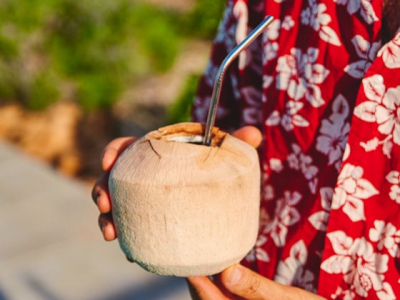
Serve immediately in two deep plates. For a more indulgent version, add a few soaked raw cashews crushed or a slice of avocado. For a festive version, serve the curry in a hollowed-out half coconut shell. Also, check out our coconut and curry recipes for warm variations.
My tips for making a successful raw coconut curry
Choose a fresh coconut. A good coconut should feel heavy in the hand, the water should slosh when shaken, and the three "eyes" should be dry and free of mold. To open it cleanly, a dedicated palette radically change life — without it, the risk of injury is real. It's the practical trick of raw curry: well-equipped, it's easy.
Sprout mung beans in 48 hours. Rinse the seeds, soak them for 8 hours, drain, then leave them in a sprouter, rinsing morning and evening. The first sprouts appear in 24 hours and are ready to consume in 48 hours. The EasyGreen sprouter automates the entire process and ensures optimal germination.
Children's variant. Remove the pepper and halve the ginger. Add half a ripe mango to the sauce to bring a natural sweet note. For more ideas, check our raw recipes for children. This raw curry recipe for children works wonderfully from 3 years old.
Conservation and freshness. This curry is ideally consumed within an hour of preparation. Beyond that, the sprouts lose their crunchiness. Maximum: 24 hours in the refrigerator in an airtight container. This is the advantage of a no-cook curry: freshness takes precedence over longevity.
The benefits of raw coconut according to science
Beyond its delicious taste, fresh coconut ticks several interesting nutritional boxes. Its flesh is rich in medium-chain fatty acids (lauric acid in the lead), whose effects on energy metabolism have been explored in scientific literatureHamid et al., 2020, J Complement Integr Med).
It also contributes to a good intake of fibers (9 g/100 g, or almost one-third of the recommended daily intake) and in Potassium (356 mg/100 g). Regarding trace elements, manganese (1.5 mg/100 g) contributes to the normal functioning of bones and energy metabolism according to regulation EC 432/2012. To learn more about the hydration and mineral composition of coconut, also check out our article on the Benefits of coconut water.
Precautions. Although the coconut is not botanically a tree nut, cross-reactions are possible in allergic individuals.ANSES allergens sheetConsume the flesh quickly after opening (within 24 hours if kept refrigerated). Avoid chili and reduce ginger for young children.
FAQ: Your questions about raw coconut curry
Can you really eat a curry without cooking it ?
Yes, provided that you use quality raw ingredients and adhere to the germination times for legumes. The raw coconut sauce perfectly replaces a cooked coconut sauce, offering more freshness and digestibility. This is exactly the concept of this raw coconut curry recipe.
What is the difference between coconut milk and fresh coconut ?
Industrial coconut milk is generally pasteurized and often contains additives. Fresh flesh blended with a bit of coconut water produces a raw, vibrant cream, without any thermal treatment and nutritionally much more complete. This is the main appeal of curry made with fresh coconut.
How long does a raw coconut curry last ?
Ideally, consume it immediately after preparation. When stored in a cool place and in an airtight container, it keeps for a maximum of 24 hours. Beyond that, the sprouts lose their crunchiness and oxidation alters the flavors of this curry recipe.
Is this curry suitable for children ?
Yes, by adjusting the seasoning: remove the pepper, halve the ginger, and add half a ripe mango to the sauce for a natural sweet note. Mung bean sprouts are perfectly suitable for children from 3 years old. It's an excellent raw curry recipe to introduce children to living foods.
What protein contributions are in this recipe ?
One serving provides approximately 8 to 10 g of protein thanks to mung bean sprouts and coconut flesh. To increase the intake, add a handful of soaked raw cashews or sprouted pumpkin seeds. This raw vegan curry recipe offers a good nutritional balance for a no-cook dish.
€9.90
€24.90
€27.66
NEXT SHIPMENT ON SEPTEMBER 14
Organic mung bean seeds
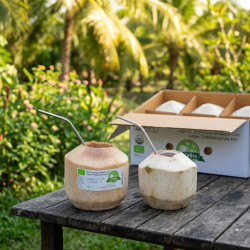
Pallet of fresh organic coconuts (18 cartons of 9 coconuts)
Updated on April 30, 2026 by Eric Viard, ISTOM (ISTOM), 33 years of veganism, co-founder of Biovie.fr and co-author of the book Seaweed in Everyday Life (Gourmand World Cookbook Award + National Academy of Cuisine Award).
This article is not a substitute for medical advice. In case of allergy or illness, consult a healthcare professional.