

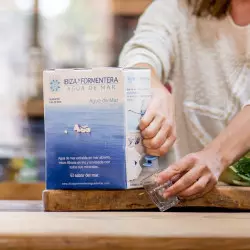
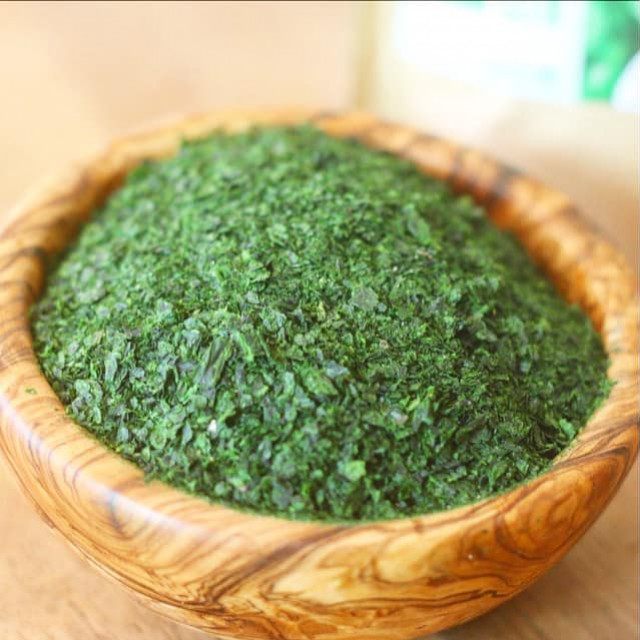

Seaweed is the unexpected ally of your salt shaker. By adding their richness in minerals, trace elements, and antioxidants to simple sea salt, they transform an ordinary condiment into a true sea superfood. In our book Seaweed in Everyday Life, we explored dozens of culinary uses for seaweed — and seaweed salt is one of the most accessible for beginners.
What is seaweed salt?
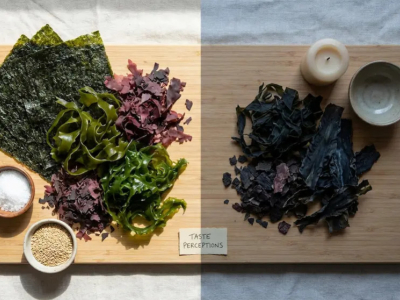
Seaweed salt is a natural condiment made from a mixture of sea salt and ground dried seaweed. It typically includes different varieties of edible seaweed: nori, dulse, wakame, kombu, or sea lettuce, depending on the recipes and producers.
It is distinct from seaweed fleur de sel (more refined, used as a finishing touch), seaweed sea salt (often coarser, for cooking), and Guérande seaweed salt (the classic Breton). In all cases, the principle is the same: seaweed naturally provides a salty and iodized flavor, allowing for a reduction in sodium intake in the diet.
According to the World Health Organization, salt consumption should not exceed 5g per day, which is about a teaspoon. However, modern diets push us well beyond that. Seaweed salt is one of the most natural and flavorful solutions to correct this imbalance.
Why use seaweed salt? Key benefits
Up to 7 times less sodium than table salt
This is the number one health argument for seaweed salt. According to data from the CEVA (Center for the Study and Valorization of Algae), dried seaweed contains between 20 and 36 mg of sodium per gram, compared to 381 mg per gram for table salt — about 10 times less.
Result: by seasoning your dishes with a sea salt + seaweed flakes mixture, you maintain the salty taste while significantly reducing your sodium intake. For people suffering from hypertension or following a low-sodium diet, it's a particularly interesting option. A study published in 2023 in ScienceDirect confirmed that integrating seaweed-derived salt as a substitute for sodium chloride helps reduce hypertension and cardiovascular risks.
A concentrate of minerals and trace elements
Unlike refined salt, which provides only sodium, seaweed sea salt enriches your dishes with:
- Iodine: essential for the proper functioning of the thyroid — 1g of dried wakame covers 130% of the recommended daily intake (source: ANSES)
- Potassium: naturally counteracts the effects of sodium on blood pressure
- Magnesium: particularly abundant in sea lettuce
- Calcium: well absorbed from brown algae
- Plant proteins: depending on the variety, between 15 and 35% of the dry matter
- Fiber: promote digestion and nourish the intestinal microbiota
Antioxidant and anti-inflammatory properties
Seaweeds are among the richest living organisms in natural antioxidants. Brown algae like kombu and wakame contain fucoxanthins and fucoidans with documented anti-inflammatory properties. Red algae (dulse, nori) provide phycoerythrins, pigments with powerful antioxidant properties.
A scientific review published in PubMed Central (Wu et al., 2023) confirms that algae have protective effects on glucose and lipid homeostasis, as well as promising anti-inflammatory properties. By incorporating dried seaweed into your daily salt, you benefit from these properties with each meal, in cumulative micro-doses.
Which seaweeds to choose for your salt? Comparison of varieties
Not all seaweeds are suitable for preparing seaweed salt. Here are the main differences to know to choose according to your tastes and needs:
Kombu and wakame: the most iodine-rich, umami flavor
Kombu is the quintessential brown algae for seaweed salt. Its umami flavor (natural glutamate) is incomparable in broths, stews, and sauces. It is particularly rich in iodine and fucoidan. Discover all its benefits in our article dedicated to the 8 benefits of kombu.
Wakame offers a slightly milder flavor, ideal for beginners. Rich in iodine, calcium, and plant-based omega-3s, it easily integrates into dressings and miso soups. Our Organic Dried Wakame Seaweed is available in-store in flake form, ready to mix.
Note: kombu and wakame are highly iodine-rich. In case of hyperthyroidism, consult your doctor before regular consumption.
Nori and dulse: rich in proteins, mild flavor
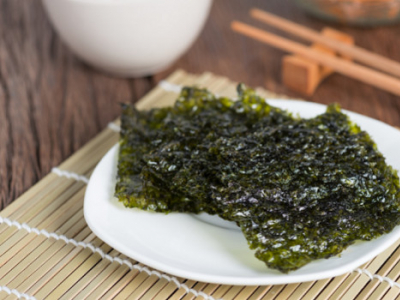
Nori (reddish-purple algae) is the seaweed used in Japanese makis. Ground into powder, it provides a subtle marine flavor and a beautiful green-black color to the salt. With about 30% protein, it is also an excellent nutritional supplement.
Dulse is our favorite for seaweed salt: mild and slightly smoky flavor, up to 35% protein, less iodine-rich than kombu and wakame (thus suitable for those sensitive to iodine). It is easily used in tartares, sauces, and pasta. Available in-store as Organic Dulse Seaweed.
Sea Lettuce: Rich in Magnesium, Delicate Flavor
Sea lettuce (Ulva lactuca) is the most commonly used green algae in French cuisine. Its vibrant color and delicate flavor make it an excellent introduction to algae for beginners. Particularly rich in magnesium, it blends discreetly into flavored salts and spice mixes. Our Organic Dehydrated Sea Lettuce is ideal for preparing your own homemade seaweed salt.
How to Use Seaweed Salt in Cooking?
Seaweed salt naturally integrates into all uses of classic salt — with a much richer taste and nutritional profile.
As a Finishing Seasoning
Use it after cooking, directly on the plate, to preserve the marine flavor of the algae and their heat-sensitive nutrients. It particularly enhances:
- Grilled or raw fish (tataki, sashimi, tartare)
- Steamed or roasted vegetables (zucchini, carrots, broccoli)
- Avocados, hummus, plant-based tarama
- Salads and carpaccios
- Softened butter for homemade seaweed butter
In Marinades and Sauces
Incorporate seaweed salt into your vinaigrettes, pestos, homemade soy sauces, or marinades for meats and tofu. It provides a natural umami flavor that reduces the need for added flavor enhancers. Try it also for lacto-fermentation: some practitioners use finely ground algae in their lacto-ferments.
Recipe: Make Your Own Homemade Seaweed Salt
Making your own seaweed salt is child's play. Here is the basic recipe inspired by our practices at Biovie:
Ingredients (for a 75g jar):
- 60g of sea salt (coarse salt or fleur de sel, depending on use)
- 4g of nori seaweed flakes
- 4g of dulse seaweed flakes
- 4g of wakame seaweed flakes
- 3g of kombu seaweed flakes
Preparation (5 minutes):
- Grind the seaweed into a fine powder with a spice grinder or mixer
- Mix with the sea salt in a bowl
- Transfer to an airtight jar
- Store in a dry place, away from light and moisture
- Use as a finishing touch on all your dishes
Seaweed salt can be stored for several months without loss of quality if the jar is well sealed.
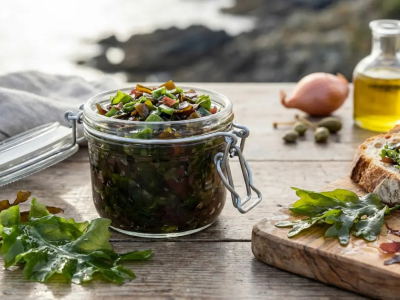
"I recommend sea lettuce for excellent tartares with capers, olive oil, and pickles: a protein-packed delight."
— Barbara W., Biovie customer ⭐⭐⭐⭐⭐
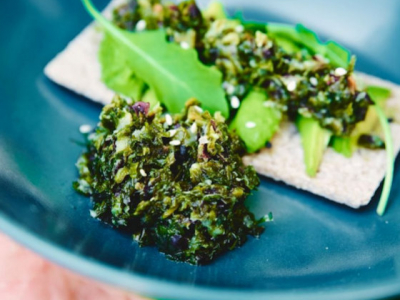
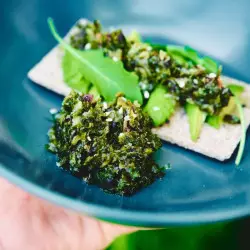
For more, discover our recipe for dulse seaweed tartare with hazelnuts, a raw, healthy, and flavor-packed marine appetizer.
Precautions and Contraindications
Seaweed salt is a natural condiment, generally well tolerated. However, some precautions should be taken:
- Hyperthyroidism or thyroid pathology: Brown algae (kombu, wakame) are very rich in iodine. Consult your doctor before consuming them regularly. For those sensitive to iodine, prefer blends based on dulse or sea lettuce, which are less iodized — see our article on algae and the thyroid.
- Iodine allergy: contraindicated without prior medical advice
- Pregnancy: Iodine intake should remain within the limits of the RDA (150µg/day). Avoid excessive kombu.
- Anticoagulant treatment: Green algae (sea lettuce) contain vitamin K — inform your doctor if you are taking anticoagulants.
- Strict low-sodium diet: Algae salt always contains sodium — reduce doses, do not use as a total replacement without medical supervision.
Frequently Asked Questions about Algae Salt
Which algae can replace salt?
Algae such as wakame, nori, and dulse can partially replace salt due to their naturally salty and iodized flavor. They contain up to 10 times less sodium than table salt while providing an intense marine flavor. In flakes, they can be used directly as a condiment or integrated into homemade algae salt.
What is algae salt?
Algae salt (or salt with algae) is a mixture of sea salt and ground dried algae (nori, dulse, wakame, kombu, sea lettuce). It offers a more complex iodized and umami flavor than ordinary salt while reducing sodium content. It is available in coarse (cooking) or fine (finishing) versions, plain or flavored.
How to use algae salt daily?
Algae salt is used like regular salt, but preferably as a finishing touch (after cooking) to preserve its nutrients. It pairs perfectly with fish, steamed vegetables, avocados, tartares, and salads. It can also be incorporated into dressings, sauces, and marinades. Prepare your own mix by combining 60g of sea salt with 15g of dried algae flakes.
Is algae salt healthier than regular salt?
Algae salt provides additional minerals (iodine, potassium, magnesium) and antioxidants absent in refined salt. It contains less sodium per serving if a mix rich in algae is used. Studies from 2023 confirm its benefits for reducing hypertension. However, it remains a seasoning to be consumed in moderation, even though it is a more nutritious alternative than regular table salt.
Where to buy quality organic algae salt?
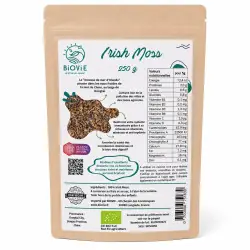
To make your own organic algae salt, choose certified organic dried algae from controlled harvests in Brittany. At Biovie, you will find dehydrated organic kombu, dehydrated organic wakame, and dehydrated organic sea lettuce in flakes, ready to mix.
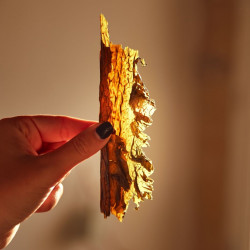
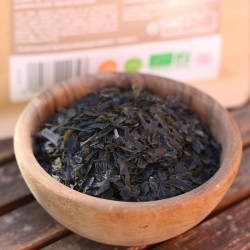
In Practice: The Opinion of Eric Viard, ISTOM
"Seaweed salt is one of my favorite culinary innovations — simple, accessible, and remarkably effective for enhancing daily nutrition. At Biovie, we have been using blends of kombu, wakame, and dulse for years, and it is one of the first recommendations I make to people looking to reduce their salt intake. In 'Seaweed Daily,' we dedicated an entire chapter to seaweed as natural flavor enhancers — an approach that has been praised by both the Gourmand World Cookbook Award and the National Academy of Cuisine." — Eric Viard, founder of Biovie.
Update: April 2026. Article validated by Éric Viard, founder of Biovie and ISTOM engineer, co-author of "Seaweed Daily" (Gallimard, 2024) — Best Cookbook in the World, Gourmand Cookbook Awards 2025, and Best Cookbook in France, National Academy of Cuisine 2025.
Disclaimer: The information presented in this article is provided for informational purposes only and does not constitute medical advice. Consult a qualified healthcare professional before making any significant changes to your diet or supplementation. As part of a varied and balanced diet and a healthy lifestyle.