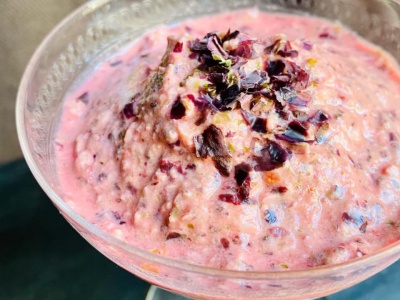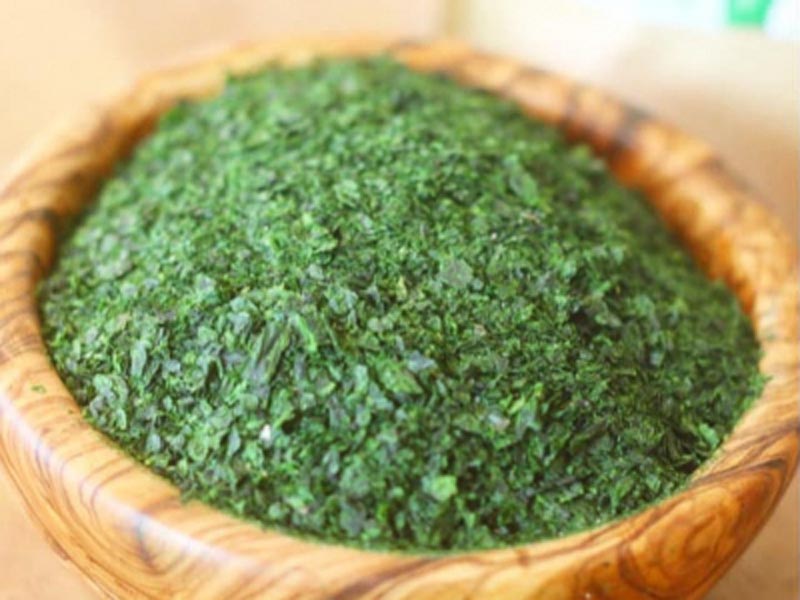

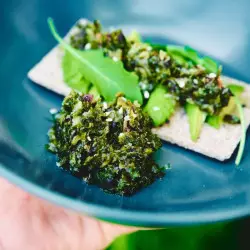
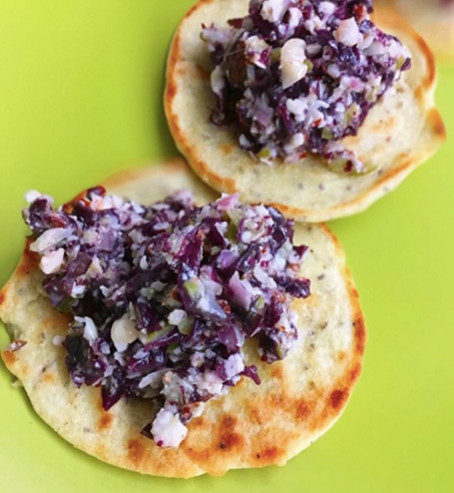

The dulse seaweed tartare with hazelnuts is one of the simplest and most iodine-rich raw recipes that can be prepared in less than ten minutes. Far from the pasteurized jarred tartares available in stores, this 100% fresh version combines fresh Breton dulse — the red seaweed nicknamed "bacon of the sea" — with the rich and crunchy roundness of activated hazelnuts. A signature recipe that highlights a treasure from the Roscoff coast and can be enjoyed as an appetizer or as a main dish over a bowl of quinoa. In this article, you will find the step-by-step recipe, the documented nutritional benefits of dulse, the chef's variations, the precautions to know, and a complete FAQ to become an expert on consuming seaweed at home.
Why this dulse seaweed tartare with hazelnuts is a game changer
Most seaweed tartares sold in supermarkets are pasteurized, preserved in oil, and made with rehydrated dried seaweed. Our homemade version makes three radical choices:
- Fresh dulse, not dried — to retain all the heat-sensitive polyphenols and the characteristic juicy texture of the seaweed.
- Activated hazelnuts (soaked for 8 hours then drained) — an ingredient absent from all industrial recipes, providing crunch, fat, and a complementary mineral profile.
- No cooking, no pasteurization — a 100% raw and vegan tartare, in line with the philosophy of living food.
The result: an easy seaweed tartare recipe, ready in ten minutes, which can be enjoyed immediately or kept fresh for a few days. A marine spread as spectacular as an appetizer on a crunchy toast as it is as a side to a buddha bowl.
Dulse: what exactly is it?
Palmaria palmata, the red seaweed of the Breton coasts
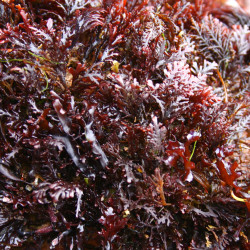
Dulse, scientifically known as Palmaria palmata, is an edible red seaweed that grows on the rocky coasts of the North Atlantic and the English Channel. In Brittany, it is mainly harvested between Roscoff and the Sept-Îles archipelago, where the quality of the waters and the tidal range of the large tides promote dense growth and a vivid pinkish-purple color. To learn more about the diversity of Breton edible seaweeds, the complete guide to dulse, wakame, sea lettuce, and sea beans details the culinary uses of each species.
Why it's called the "bacon of the sea"
In 2015, researchers from Oregon State University (team of Prof. Chris Langdon) made waves by demonstrating that a variety of cultivated dulse, when lightly pan-fried, developed an aromatic profile very similar to smoked bacon. Since then, the nickname "bacon of the sea" has stuck and popularized its use in plant-based cooking. Its natural flavor, without cooking, is milder: both iodine-rich, slightly sweet, and mineral.
€9.50
Back in stock on September 15
Organic Fresh Dulse Seaweed
Nutritional Benefits of Dulse
A Plant Protein Equivalent to Soy (18-35%)
Dulse is among the most protein-rich seaweeds in the world. According to the work of Maehre et al. published in 2014 in the Journal of the Science of Food and Agriculture, it contains on average 21.9% protein in dry matter, with a complete profile of essential amino acids — a score that few terrestrial plants achieve. Depending on the seasons and harvesting conditions, this rate can rise to 35%, equivalent to soy. For a broader comparison, read our article on algae proteins as a complete alternative to meat and the one that reminds us that dulse seaweed contains as much protein as soy.
Iodine, Iron, Potassium, Calcium: The Exceptional Mineral Profile
Data from the Ciqual table of ANSES and scientific literature on Palmaria palmata document a remarkable mineral profile for 100 g of dehydrated dulse: about 50 mg of iron (one of the best-known plant sources), 7,300 mg of potassium, 560 mg of calcium, 610 mg of magnesium, and about 55 mg of iodine. On the subject of iron, the article dedicated to plant-based iron from algae compared to red meat puts these figures into perspective.
Antioxidants and Marine Fibers
According to the synthesis by Joël Fleurence (Seaweed in Health and Disease Prevention, Academic Press, 2016), red algae like dulse contain antioxidant phycoerythrins and xylans, soluble marine fibers that contribute to digestive comfort and the proper functioning of the intestinal microbiota. Dulse also provides a fraction of rare trace elements (copper, zinc, selenium), as explained in the article on dulse, seaweed rich in trace elements.
"The seaweed tartare I often hesitated to buy is a pure marvel, so important for the thyroid. An exceptional nutritional contribution."
— Marinella CESCHI KREMER, Biovie customer (Trustpilot review ★★★★★)Recipe: Dulse Seaweed Tartare with Hazelnuts (for 4 people)
Ingredients
- 80 g of fresh dulse desalted (or 20 g of dried dulse rehydrated for 10 min in cold water)
- 50 g of activated hazelnuts (soaked for 8 hours then drained and dried)
- 1 new shallot finely chopped
- 4 salt-fermented pickles chopped
- 1 tbsp of rinsed capers in salt
- 2 tbsp of organic extra virgin olive oil
- 1 tbsp of gluten-free tamari
- The juice of half an organic lemon
- A pinch of freshly ground black pepper
- A few sprigs of coriander or nasturtium for garnish (optional)
Step-by-step Preparation (10 minutes)
- Desalt the dulse: if using fresh dulse, immerse it for 1 minute in clear water to desalt, then gently wring it out between two clean towels.
- Chop the dulse with a knife: lay the seaweed flat on a wooden board and cut it into thin strips like grass. Avoid using a blender, which would turn the seaweed into a puree.
- Coarsely crush the hazelnuts with a knife to retain crunchiness.
- Mix the dulse, hazelnuts, shallot, pickles, and capers in a salad bowl.
- Season with olive oil, tamari, lemon juice, and pepper. Gently mix with a wooden spoon.
- Let rest for 5 minutes in the fridge before serving to allow the flavors to meld. Garnish with fresh coriander or nasturtium flowers.
Time, Storage, Equipment
- Active time: 10 minutes — Rest: 5 minutes
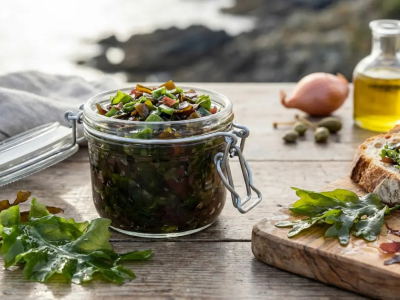
- Storage: 3 to 4 days in the refrigerator in an airtight glass jar
- Equipment: a wooden board, a sharp knife, a salad bowl, a storage jar
Indicative Nutritional Value (per 50 g serving)
Approximately 95 kcal — 4 g of protein — 7 g of fat (mostly unsaturated fatty acids from hazelnuts and olive oil) — 4 g of carbohydrates — 2 g of fiber — significant coverage of daily iodine and iron intake for a modest portion. These values are indicative and vary depending on the hydration level of the dulse.
How to Enjoy and Pair It?
As an Appetizer: Toasts, Crackers, and Endives
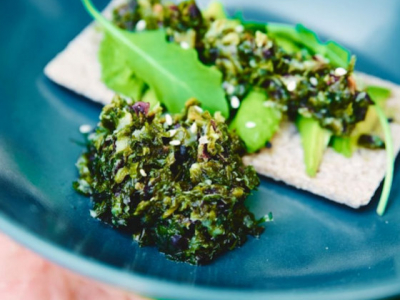
The seaweed tartare appetizer is the most immediate use. Spread it on sourdough toast, sprouted seed crackers, or crunchy endive leaves. For a festive touch, add some candied lemon zest or toasted sesame seeds on top.
As a Starter: Avocado, Cucumber, Zucchini
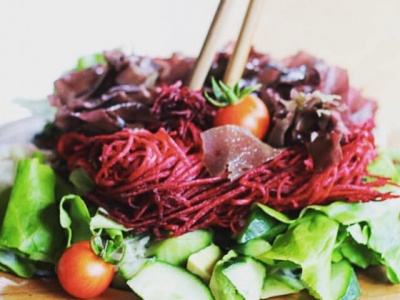
Fill a hollowed-out half avocado, a scooped-out cucumber section, or a zucchini ribbon with a few spoonfuls of tartare: you get a refined raw starter in less than five minutes. Our dulse-beet salad offers an equally simple variation for those who prefer land-sea combinations.
Main Course: Quinoa, Brown Rice, Buddha Bowl
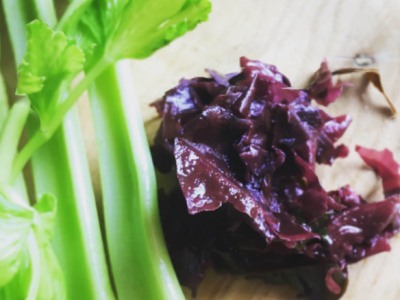
Add two generous spoonfuls of tartare to a bowl of cooked quinoa, brown rice, or warm sprouted grains. The iodized seaweed immediately enhances the flavor of the dish while compensating for any potential lack of minerals. It's also a simple trick to increase your portion of plant-based proteins in one easy step, in line with the celery-dulse seasoning we previously shared.
"I love seaweed tartare: fresh, just seasoned the way I like it, it goes with everything (cucumber, zucchini, bread...)."
— Suzanne CALVARIN, Biovie customer (Trustpilot review ★★★★★)Chef's Variations & Tips
"Classic Breton" Version (Sea Lettuce + Dulse)
Replace half of the dulse with finely chopped sea lettuce. You gain in color (bright green), texture (softer), and mildness. This combination is reminiscent of the organic fresh seaweed tartare recipe by Eric Viard, inspired by the seaside.
"Smoky" Version (Dulse Toasted for 30 Seconds in a Dry Pan)
For those who enjoy grilled flavors, toast the dulse for a maximum of 30 seconds in a hot pan without oil, then chop it and mix it with the other ingredients. You get the famous "bacon of the sea" note popularized by Oregon research. Note, this version is no longer 100% raw.
"Greenery" Version (Nasturtium, Wild Garlic, Capers)
In spring, add a handful of chopped wild garlic leaves, a few nasturtium flowers and leaves, and double the amount of capers. The flavor becomes more complex, almost like a marine pesto.
Home Preservation
Pack the tartare into a glass jar, cover with a drizzle of olive oil, seal tightly, and store in the fridge for 3 to 4 days. The flavor intensifies after 24 hours.
Precautions: Who Should Moderate Their Consumption?
People with Thyroid Disorders
Dulse is very rich in iodine. People with hypothyroidism, hyperthyroidism, Hashimoto's thyroiditis, or Graves' disease should seek medical advice before regularly incorporating seaweed into their diet. For more on this specific topic, read the article seaweed, iodine, and thyroid: a study based on solid evidence.
Pregnant and Breastfeeding Women
According to ANSES (2020 opinion on seaweed consumption), pregnant or breastfeeding women should ensure not to exceed their recommended daily iodine intake (250 µg/day during pregnancy and breastfeeding, compared to 150 µg/day for adults). An occasional portion of seaweed tartare remains compatible with these recommendations, provided that iodine sources are not multiplied in the same day.
Recommended Daily Intake of Iodine
The EFSA established in 2014, in its Scientific Opinion on Dietary Reference Values for iodine, a satisfactory intake of 150 µg/day for adults and an upper safety limit of 600 µg/day. A 50 g serving of homemade seaweed tartare provides around 220 µg of iodine, which is well below the limit but should be considered if you consume other iodine-rich foods (fish, iodized salt, other seaweeds).
Shellfish Allergies and Other Profiles
People allergic to shellfish should introduce seaweed gradually, as cross-sensitivities are possible. Young children can taste the tartare in small amounts, but it is better to wait until they are 3 years old for regular consumption. As with any raw food, ensure the freshness of the dulse and impeccable preparation conditions.
FAQ: Your Questions About Dulse Seaweed Tartare
What are the benefits of seaweed tartare?
Dulse-based seaweed tartare provides, in a small portion, a significant part of the recommended intake of iodine, iron, calcium, magnesium, and potassium. According to the work of Maehre et al. (2014), dulse also contains complete proteins in dry matter and marine fibers (xylans) that contribute to the proper functioning of the intestinal microbiota. It's a simple way to enrich a plant-based diet with marine minerals, provided the recommended doses are respected.
How to eat seaweed tartare?
The simplest way is to spread it on a crispy toast as an appetizer, or use it as a topping on avocado, cucumber, or a Buddha bowl. It can also be served as a side with low-temperature cooked fish or integrated into a vinaigrette for raw salads. Count 1 to 2 tablespoons per person, enough for a pronounced taste without overloading on iodine.
How to make homemade seaweed tartare?
The simplest method is to desalinate fresh dulse, finely chop it with a knife, then season it with olive oil, tamari, lemon juice, shallot, pickles, and activated hazelnuts. The tartare is ready in ten minutes and keeps for three to four days in an airtight jar in the refrigerator. The detailed step-by-step recipe can be found earlier in this article.
Is seaweed tartare healthy?
Yes, as part of a varied and balanced diet. Homemade seaweed tartare provides plant proteins, iron, iodine, and antioxidants while being very low in calories. Red seaweeds like dulse also contain phycoerythrins with antioxidant properties (Fleurence, 2016). This article does not constitute medical advice: individuals with thyroid disorders, pregnant or breastfeeding women should seek advice from a healthcare professional before regular consumption.
Can you consume seaweed every day?
Yes, for most healthy individuals, provided you vary the species and stick to a modest portion of 2 to 5 g of dried seaweed (equivalent to 8 to 20 g of fresh seaweed) per day. Iodine intake should remain below the upper safety limit set by the EFSA at 600 µg/day for adults. In case of thyroid pathology, consult a doctor before incorporating seaweed daily into your diet.
What is the difference between fresh dulse and dried dulse?
Fresh dulse retains all its moisture, suppleness, and all of its heat-sensitive compounds (phycoerythrins, certain vitamins). It is delivered vacuum-packed in a light brine. Dried dulse has lost its water: it rehydrates in a few minutes in cold water and concentrates minerals per gram but loses some of its texture and volatile aromas. For a raw tartare, the fresh version is clearly preferable.
How long does homemade seaweed tartare keep?
Three to four days in the refrigerator, in an airtight glass jar covered with a drizzle of olive oil. Beyond that, the texture deteriorates and the flavors become too intense. If you want to extend the preservation, you can freeze the tartare in a silicone ice cube tray and use it portion by portion by incorporating it directly into warm sauces.
"Fresh seaweeds like sea lettuce or dulse are delicious in tartare: desalinate them, cut them finely, add nuts, garlic, and lemon, and marinate in olive oil."
— Catherine, Biovie customer (Trustpilot review ★★★★★)In practice: Eric Viard's opinion, tropical agronomist
"Dulse accompanied my early years of living cuisine in Brittany, and it is still the seaweed I recommend to everyone discovering marine flavors. This hazelnut tartare is our signature recipe: it combines two simple ingredients, without cooking, with a result as spectacular as a gastronomic preparation. In Seaweeds Daily, we dedicated an entire chapter to these raw preparations because they preserve the nutritional integrity of the seaweeds and tell a story of a terroir, ours. Make it once, and you'll never look at store-bought jars the same way again." — Eric Viard, founder of Biovie.
Update: April 2026. Article validated by Éric Viard, founder of Biovie and ISTOM engineer, co-author of "Seaweeds Daily" (Gallimard, 2024) — Best Cookbook in the World, Gourmand Cookbook Awards 2025, and Best Cookbook in France, National Culinary Academy 2025.
Disclaimer: The information presented in this article is provided for informational purposes only and does not constitute medical advice. Consult a qualified healthcare professional before making any significant changes to your diet or supplementation. As part of a varied and balanced diet and a healthy lifestyle.
Find all our organic ingredients for living food on https://www.biovie.fr/en/
Main Scientific Sources: Maehre H.K. et al. 2014, Journal of the Science of Food and Agriculture — PubMed 24942659; Fleurence J. 2016, Seaweed in Health and Disease Prevention, Academic Press; EFSA 2014, Scientific Opinion on Dietary Reference Values for iodine — efsa.europa.eu; ANSES 2020, opinion on seaweed consumption — anses.fr; Ciqual Table ANSES — ciqual.anses.fr.