


These kale chips take their character from a tangy coconut vinegar marinade and a fresh dill paste, for a result that recalls the flavours of a pickle without ever leaving raw food behind. The recipe calls for patience on the drying side, but the real work takes a few minutes. A classic to keep within reach for nibbling.
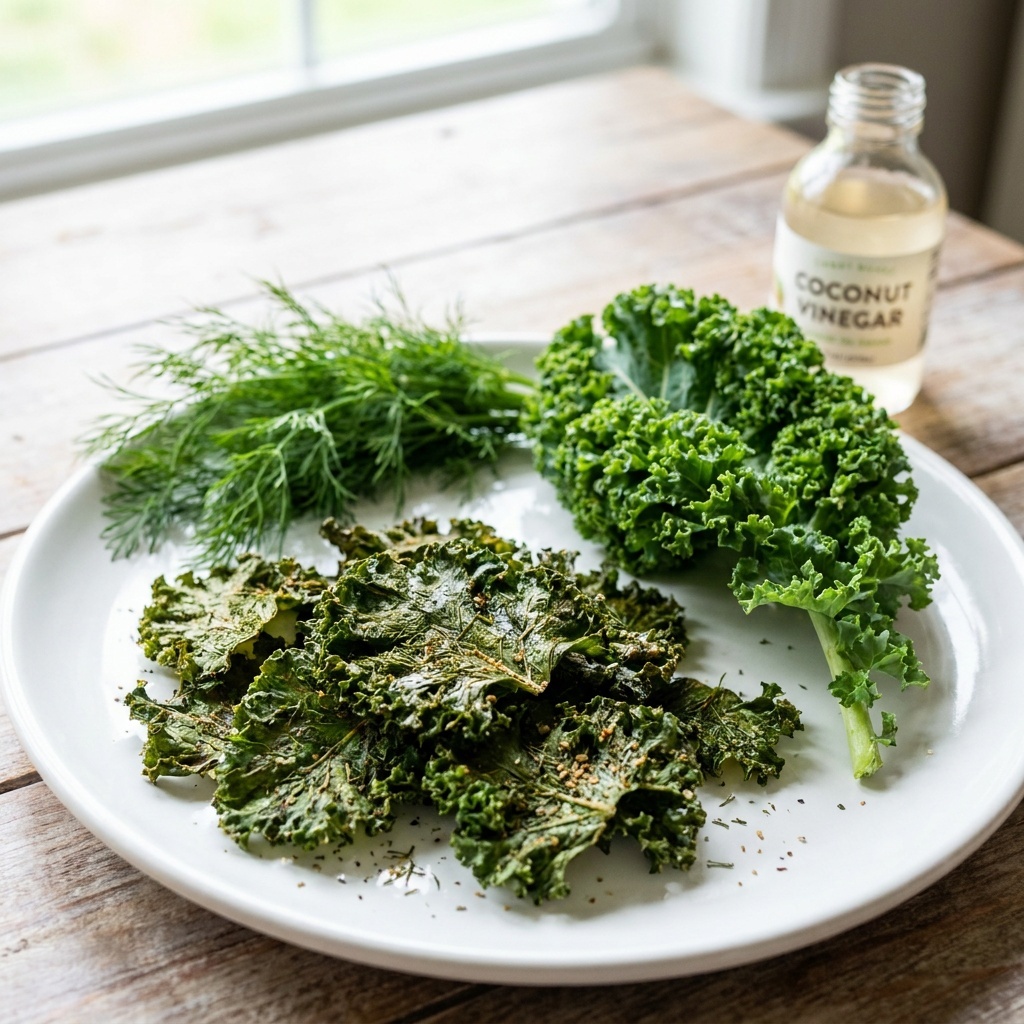
Dill kale chips, pickle style

Share this article
Ingredients
- 1 head of curly kale
- 1 small bunch of dill
- 60 ml coconut vinegar
- 1 tablespoon coconut oil
- 1 pinch of Himalayan salt (or the equivalent of 1 tablespoon - 15 ml - of seawater)
Method
- Remove the ribs from the kale leaves, wash them and shake off the excess water. Tear the leaves into pieces that are not too small, as they shrink while drying.
- Put the kale into a bowl and pour over the coconut vinegar. Mix by hand so every piece is coated.
- Leave to marinate for about 30 minutes, longer if you can. Drain, pressing lightly to remove the excess vinegar.
- Blend the dill and the coconut oil in a food processor until you have an almost smooth paste.
- Massage that paste onto the kale leaves by hand, until it is evenly spread. Sprinkle with salt.
- Dehydrate until the chips are properly crisp, usually a whole night, turning them halfway through.
Tip
Without a dehydrator, an oven at its lowest setting with the door ajar does the job, but watch more closely: kale goes from crisp to burnt in a matter of minutes. And do not crowd the leaves on the tray: air must circulate everywhere, otherwise some stay limp.
The full range Sprouted seeds
46 products
Discover the full range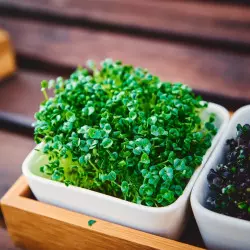
FAQ: your questions about dill kale chips
How do you dehydrate kale chips?
Spread the massaged leaves in a single layer, without overlapping, and dry them between 42 and 46 °C. Allow eight to twelve hours depending on how thick the coating is: a fatty marinade lengthens the time noticeably. Turn them halfway through and stop as soon as a leaf snaps cleanly instead of bending.
What is vinegar used for in cooking?
Beyond vinaigrette, vinegar mainly serves to tenderise and to preserve. On a tough leafy vegetable like kale, half an hour of marinating breaks down the fibres and does what cooking would do with heat. It also lifts rich preparations - nut butters, creamy sauces - which a touch of acidity makes far less heavy.
What is nut vinegar used for?
Fruit or nut vinegars, like walnut vinegar or the coconut vinegar used here, are softer and rounder than wine vinegar. They suit marinades of raw vegetables, savoury fruit salads and sauces based on nut butters. Use them wherever you do not want the acidity to dominate.
Share this article