




A coconut curry soup built without a single pan: the broth is blended raw from the flesh and water of a young coconut, with carrot, garlic, galangal, curry powder and a touch of chilli, then poured over a bed of julienned cucumber, red bell pepper and coriander. Running the blender for a good two minutes builds enough friction heat to serve the soup warm, but it can just as easily be left as it is and enjoyed cold - either way, the spice blend stays front and centre against the natural sweetness of the coconut. Cucumber noodles stand in for rice noodles and hold their crunch even once the broth is poured over, so the bowl keeps a contrast of textures instead of turning uniform. Galangal gives a sharper, more citrusy edge than plain ginger if you can track it down, though fresh ginger makes a perfectly honest substitute. The date and lemon juice, both optional, round out the broth with a little more sweetness and brightness when the chilli feels too sharp on its own. Serve it as a light lunch or a first course before a bigger raw meal, alongside something like a spiralised pad thai to compare two very different ways of handling a noodle.
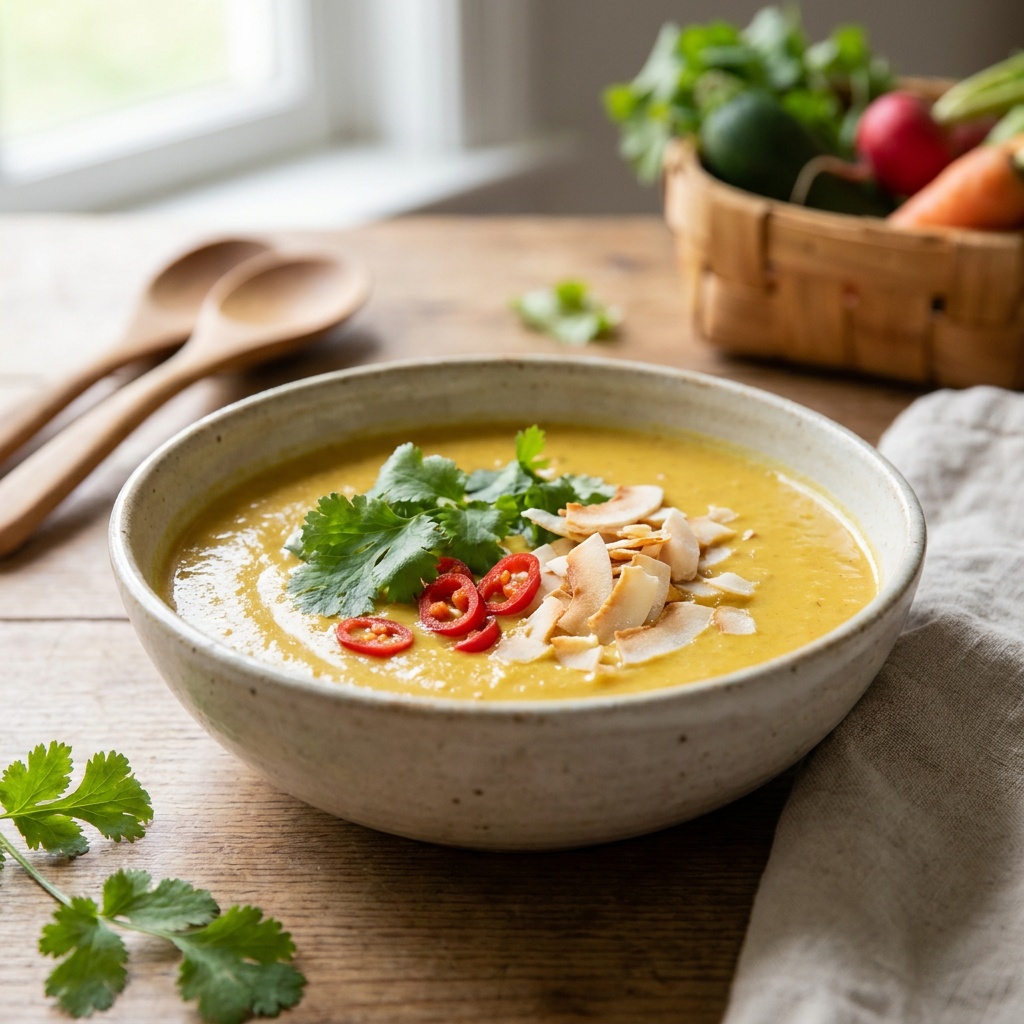
Raw coconut curry soup with cucumber noodles

Share this article
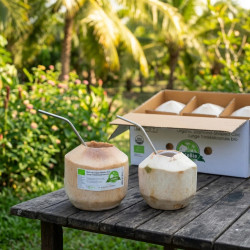
Certified organic fresh coconuts
€33.90 NEXT SHIPMENT ON SEPTEMBER 14
Ingredients
- 1 young Thai coconut (the flesh and the water - roughly 1 cup flesh and 1½ cups water)
- 1 thin carrot, cut into chunks
- 1 small clove of garlic
- 1.5 teaspoons galangal (or 1 teaspoon fresh ginger if you cannot find it)
- 2 teaspoons curry powder
- 1/2 Thai chilli, minced (start with less if you are sensitive to heat)
- 2 tablespoons chopped spring onion
- 2 Persian cucumbers, julienned into noodles
- 1 red bell pepper, cut into matchsticks
- A handful of coriander
- 1/2 cup water (adjust to taste)
- Optional: 1/2 tablespoon lemon juice
- Optional: 1 pitted medjool date
Preparation
- Place the sliced vegetables - bell pepper, cucumber noodles and coriander - in a medium bowl.
- Blend all the remaining ingredients together. For a warm soup, run the blender for about 2 minutes so friction heats it; otherwise blend just until creamy.
- Pour the blended mixture over the vegetables and serve at room temperature, with a little extra coriander.
Tip
The optional lemon juice and date answer each other: better to include both or leave both out than to pick just one. If you cannot find galangal, fresh ginger is the better substitute rather than ground ginger, which turns the broth muddy instead of keeping it bright. If making the soup ahead, keep the blended base and the vegetable noodles in separate containers: combined, the cucumber softens and the peppers lose their snap within a few hours. Assemble just before eating, to keep the contrast between warm broth and crisp vegetables.
The full range Fresh coconut
Enjoy a gourmet and nutritious coconut flesh thanks to these Thai organic green coconuts, proposed with its machete for easy opening, 5 products


Coconut machete CoCoBio
€20.95
-10%

Organic fresh coconut pallet (18 cartons of 9 coconuts)
€24.90 €27.66
FAQ: your questions about raw coconut curry soup
How do you make a coconut curry soup?
The classic version sweats the aromatics then simmers everything in coconut milk. The raw version, as here, replaces the cooking with the blender: fresh coconut flesh is blended with its water, which gives a homemade coconut milk, then the raw aromatics and spices go straight in. Curry powder is enough to perfume without being heated, provided you let the soup rest for five minutes before serving so the spices can spread.
What can you do with fresh coconut in the kitchen?
A young coconut gives two quite distinct ingredients. The water is drunk as it is or serves as the liquid base of a smoothie. The flesh, tender and gelatinous, blends into creams, desserts and soups like this one, or is cut into strips to imitate noodles or sheets of pasta. Compared with mature coconut, far firmer and fattier, the young one is noticeably milder and easier to work in the blender.
What are the benefits and drawbacks of coconut for health?
On the plus side, coconut water brings water and minerals, notably potassium, while the flesh provides fibre and medium-chain fatty acids. On the limits side, the flesh remains a fatty, calorie-dense food: about 350 kcal per 100 g for a mature coconut, less for a young one, which is richer in water. Its fats are mostly saturated, which invites treating it as a regular but not daily ingredient rather than a dietary staple.
How long does a coconut milk soup keep?
A raw soup of this type keeps two to three days in the refrigerator, in an airtight container - noticeably less than a cooked soup, since no heat has come to reduce its microbial load. Separate the broth from the cut vegetables for storage without fail: cucumber noodles release their water and lose all their crunch within a few hours in contact with the liquid. The broth on its own freezes well, which is not the case for raw vegetables.
Share this article