


Most kale smoothies come out thin and grassy. Here, frozen banana blended with raw cashews pushes the texture towards a milkshake: it is thick, and no ice is needed at all. Kale supplies the green colour and a mild vegetal note, but it is heavily outnumbered in the blender by banana, cashews, agave and vanilla, so the bitterness common to kale drinks stays well in the background. The cashews do more work than they are usually given credit for: they are what gives the shake its creamy, almost dairy-like body, standing in for both cream and ice. If you keep pre-portioned frozen banana chunks on hand, this comes together in the time it takes the blender to run, with a splash more plant milk for anyone who prefers it looser. Finished with a scatter of crushed cashews and dried berries, it reads more like a treat than health food, which makes it far easier to sell to anyone usually put off by a green drink.
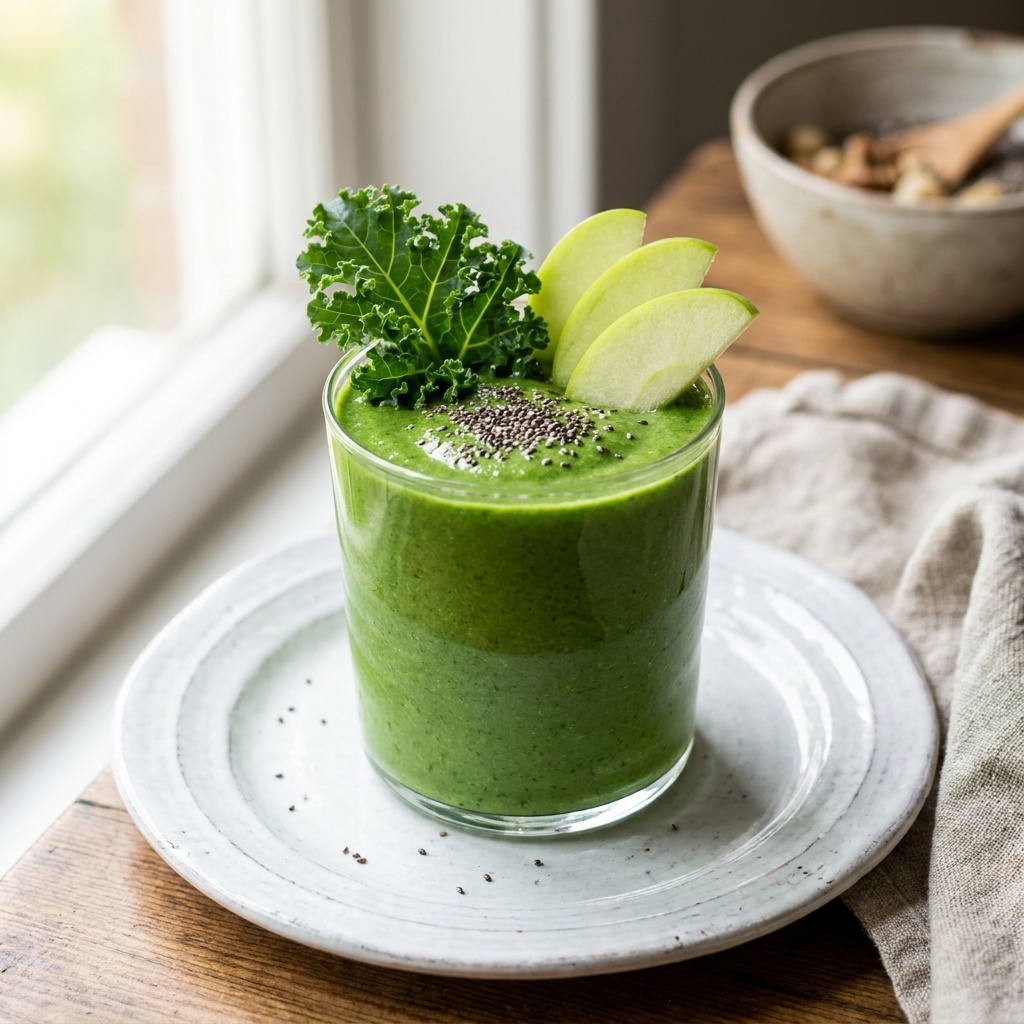
Green kale and banana milkshake

Share this article
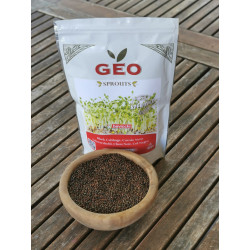
Organic black cabbage seeds
€31.80
Ingredients
- 1 1/2 frozen bananas
- 1/2 cup plant milk
- 2 to 3 large kale leaves
- 1/4 cup raw cashews
- 1 tablespoon agave nectar
- 1 teaspoon vanilla extract
Preparation
- Take the frozen banana chunks out and load them into the blender along with the kale, the cashews, the agave, the vanilla and the plant milk.
- Blend on high until completely smooth, adding a splash more milk if you prefer a thinner texture.
- Pour into a glass and drink straight away. For a nicer presentation, scatter a few crushed cashews and some dried berries over the top, acai or cranberries for example.
Tip
If the shake comes out thicker than you would like, loosen it a spoonful at a time with plant milk rather than water, which dilutes the flavour faster than it loosens the texture. Lightly toasting the crushed cashew topping adds a deeper contrast against the cold, sweet base underneath.
The full range Sprouted seeds
46 products
Discover the full range
FAQ: your questions about the green kale milkshake
What are the benefits of kale juice?
Kale is one of the most nutrient-dense leafy greens: vitamins K, C and A, calcium, magnesium, fibre and the sulphur compounds typical of brassicas. Blended rather than juiced, as here, it keeps all its fibre, which makes a real difference to satiety and to how fast the sugars in the banana are absorbed. Paired with a fat source, the cashews in this recipe, it also releases its carotenoids better, since those are fat-soluble. One more good reason not to drink your kale on its own in water.
What makes a good morning smoothie?
A morning smoothie works best when it brings together three things: a liquid base, a fruit for sweetness and texture, and a source of fat or protein so that satiety holds until the next meal. That is exactly the structure of this recipe, plant milk, frozen banana and cashews, with kale on top for fibre and minerals. Avoid reducing it to blended fruit juice, which passes through very quickly and leaves you hungry by mid-morning.
How do you freeze bananas for a smoothie?
Choose very ripe bananas with speckled skin: they are sweeter and blend better. Peel them, cut them into slices or two to three centimetre chunks, spread them on a tray without letting them touch and freeze for two hours. Then transfer them to a box or bag: the pieces will stay separate instead of forming one block. Allow up to three months in the freezer, and always keep the equivalent of two or three bananas ready.
How do you make a good smoothie with frozen fruit?
The main rule is the loading order: liquid first, soft ingredients next, frozen fruit last, closest to the blades. That way the blender catches the mixture from the start instead of spinning in the air. Start on low speed for a few seconds to break up the chunks, then switch to full power. And go easy on the liquid at first: it is always easier to add more than to rescue a smoothie that is too thin.
Share this article