 Fast delivery
.png) Rating 4.8/5
Rating 4.8/5
 Fair prices
| | |
| Fast delivery | Rating 4.8/5 | Fair prices |


 0
0
Exceptional cold-pressed oil
Certified organic farming
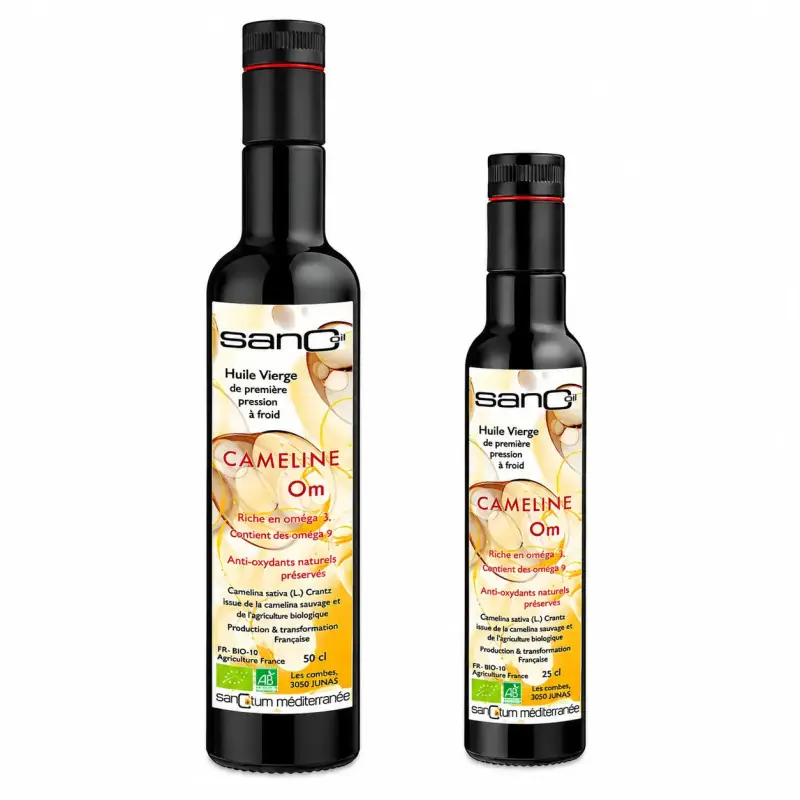
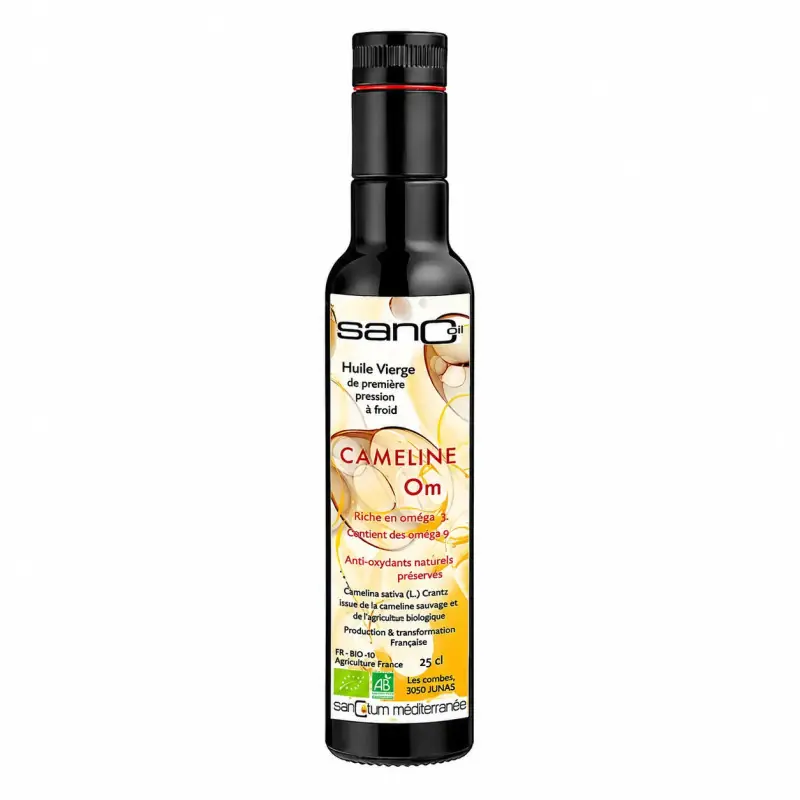
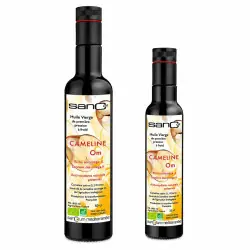
Bottle of 25cl or 50cl
Origin and processing in France
For culinary and cosmetic uses
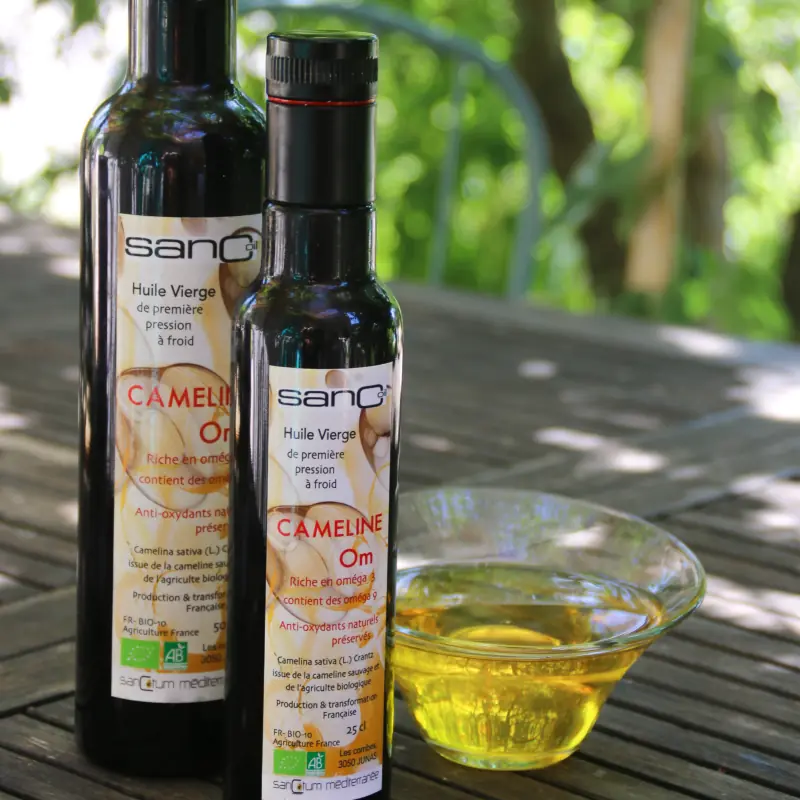
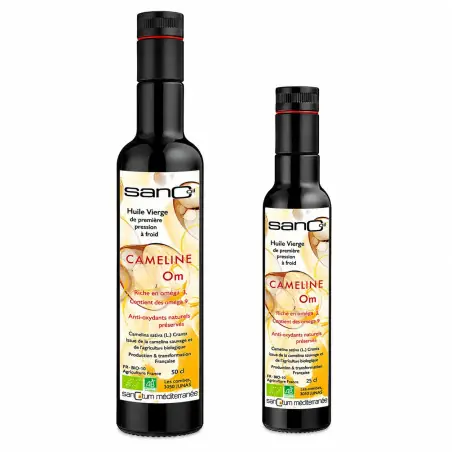
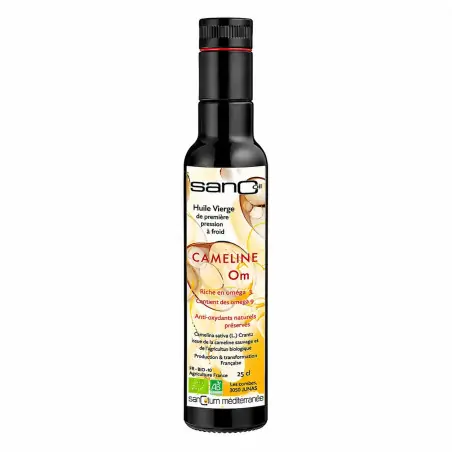
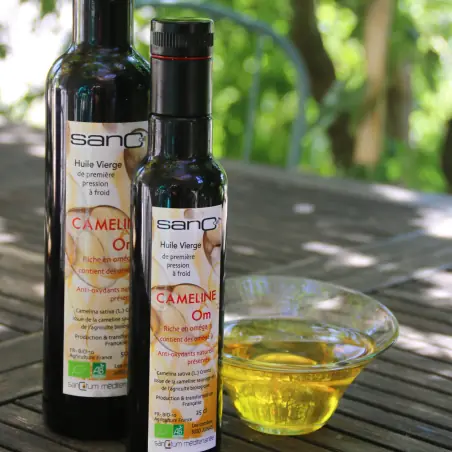
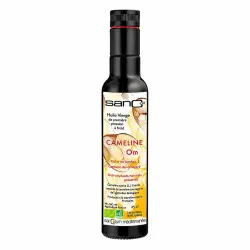
Organic camelina oil is a cold-pressed vegetable oil extracted from the seeds of Camelina sativa grown in France, and is one of the most concentrated plant sources of omega-3: 39 g of alpha-linolenic acid per 100 ml. It is used exclusively raw, as a seasoning. Half a tablespoon - about 5 ml - provides the 2 g of ALA set by European regulations as the daily reference intake. At Biovie, we offer it in 25 cl or 50 cl bottles, in violet-tinted glass.
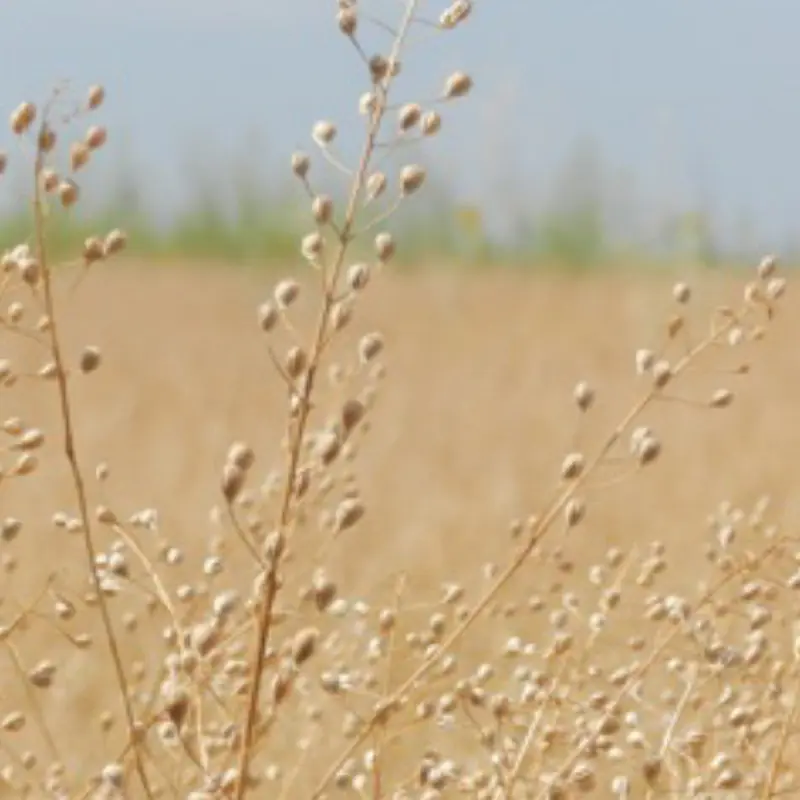
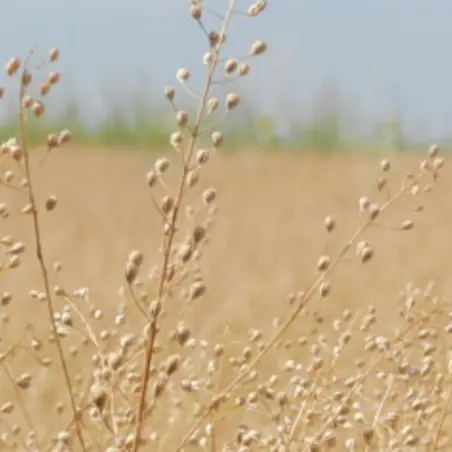
Camelina (Camelina sativa), also known as "false flax" or "German sesame," is one of the oldest known oilseed plants. Native to Northern Europe and Central Asia, camelina has been cultivated for over 3,000 years for its vegetable oil and as a food source for humans and animals.
Already in the Iron Age, its seeds, combined with flax seeds and other cereals, were used for bread making. From the Roman Empire until the discovery of gas and electricity, camelina oil was a favored fuel for oil lamps and a common consumer product (food, soap making, paints...). The recent discoveries of its exceptional agronomic and nutritional qualities present camelina cultivation as a suitable response to current ecological challenges and an essential component for the food of the future.
Honestly, it's a plant that we had almost forgotten. It disappeared from French fields during the 20th century.and Century, replaced by higher-yield crops. And then it returns - for good reasons.
🌿 The "Cameline om" used for this oil is an annual or biennial plant from the Brassicaceae family (mustard, broccoli, cabbage, rapeseed...). Originating from a wild camelina, it has been adapted by our supplier after several consecutive years of organic farming production., to the terroir of southern France for its development on the Mediterranean and Europe.
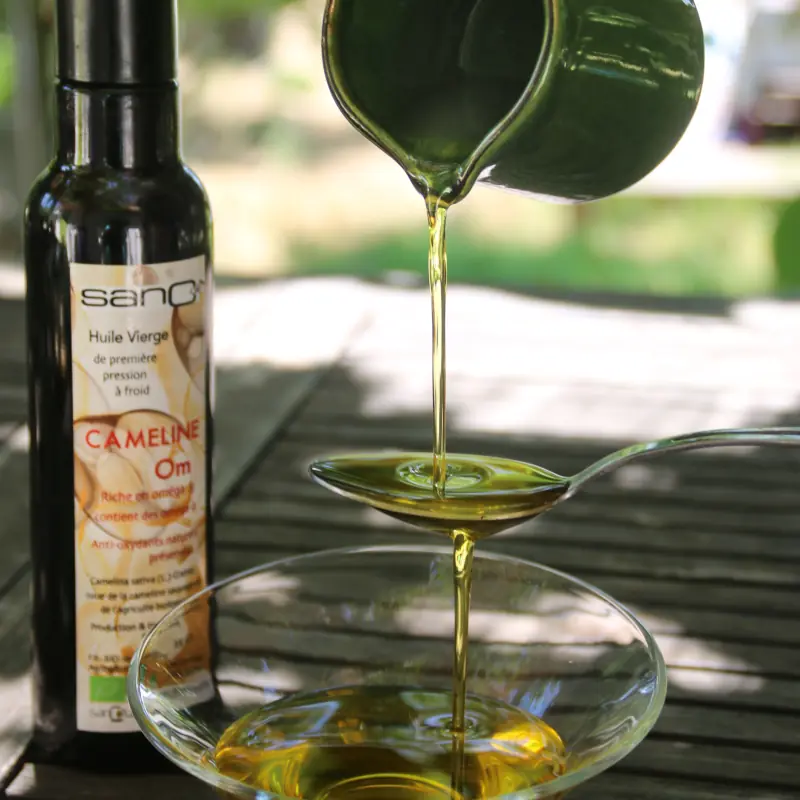
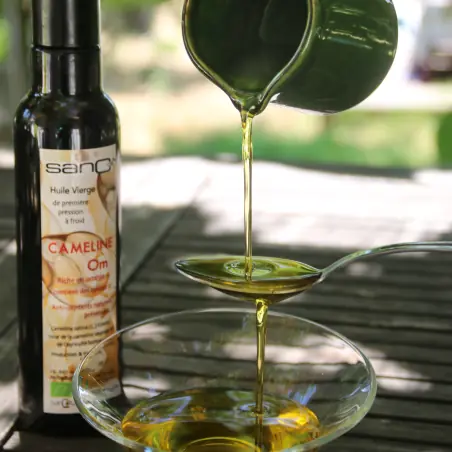
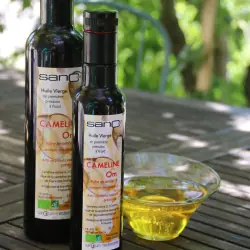
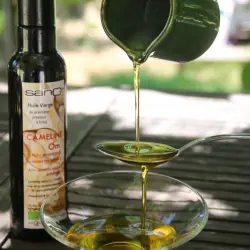
🌿 The taste. With its typical vegetal flavor, sweet and fresh, this camelina oil has a Fluid, clear, and shiny appearance with a beautiful golden yellow color. Endowed with remarkable versatility, it can elegantly integrate into various culinary preparations. For example, you can sprinkle it on raw vegetables or add it to your vegetable pâtés or seaweed tartares for a refined touch and a truly unique finish.
It is often compared to linseed oil. In reality, it is much milder: where linseed quickly becomes bitter and somewhat fishy, camelina retains a note of hazelnut and raw asparagus that is much more appealing to children. This is actually the first thing people tell us when they try it after giving up on linseed.
🌿 How to use it ? Raw, only. Omega-3 fatty acids are fragile: heat degrades them and alters both the taste and the nutritional value of the oil. Specifically, it works very well on:
- the Crudités and salads - grated carrot, raw beetroot, young sprouts ;
- the Seaweed tartares and vegetable pâtés, where its sweetness allows the iodine of wakame or dulse to come through ;
- the purees and soups, added at the last moment to the plate ;
- the green smoothies and plant-based yogurts - A drizzle of oil is enough, you can hardly taste it.
🌿 How much ? A tablespoon corresponds to about 10 ml. Personally, I pour the equivalent of half a tablespoon - 5 ml - onto my lunch plate, and that's it for the day. The easiest way, at first, is to measure once with the spoon: after three or four meals, the action becomes second nature and you don't think about it anymore.
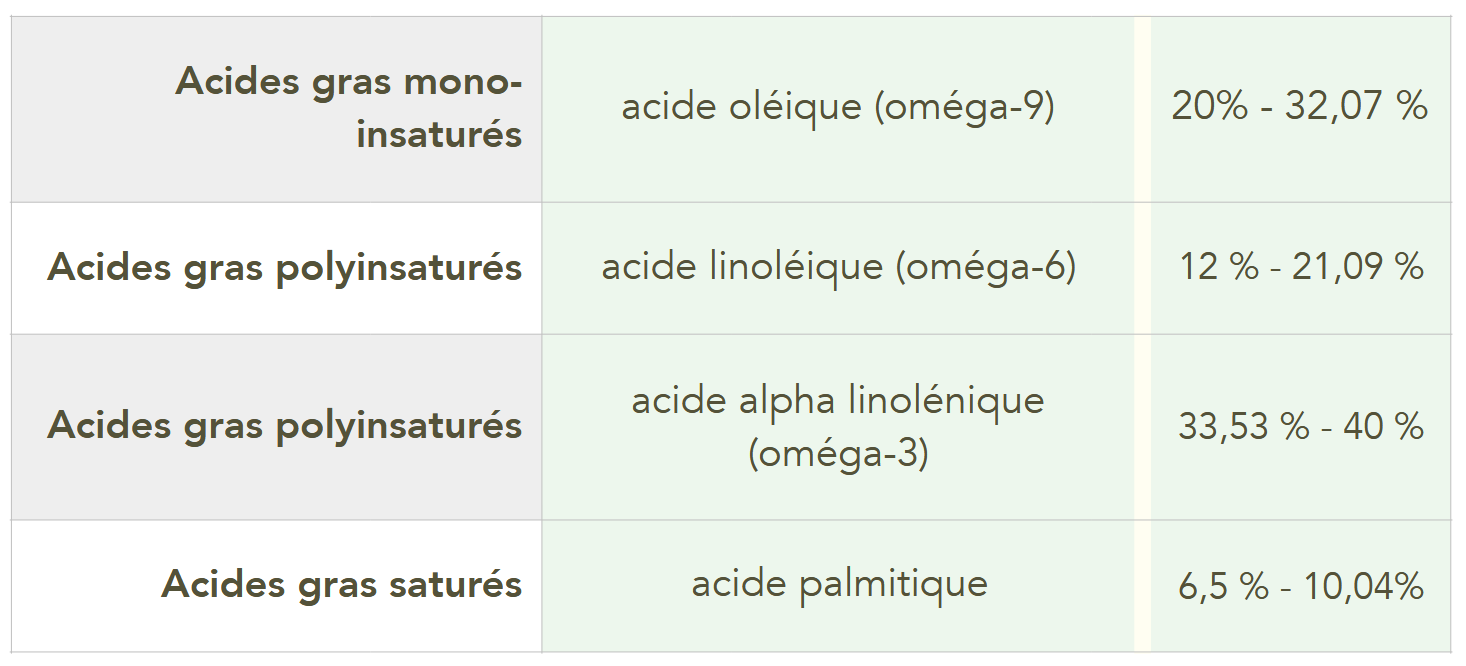
🌿The fatty acid profile: This is where everything is at stake. The camelina seeds used by our supplier contain more than 40% oil, composed of approximately 90% unsaturated fatty acids. For 100 ml, this oil provides 39.09 g of alpha-linolenic acid (ALA)., the plant-based omega-3, 17.4 g of linoleic acid (omega-6), and 15.9 g of oleic acid. Saturated fatty acids, on the other hand, peak at 9.7 g.
In other words, it has an omega 6 / omega 3 ratio of about 1 to 2 - in favor of omega 3. This is rare. Most common oils show the opposite, often by a large margin: sunflower oil has a ratio beyond 100 to 1 in favor of omega 6. The contemporary Western diet is generally unbalanced in this regard, and the benefit of an oil like camelina is precisely to restore some balance to the diet.
Alpha-linolenic acid contributes to the maintenance of normal cholesterol levels. The beneficial effect is obtained by the daily consumption of 2 g of alpha-linolenic acid, as part of a varied and balanced diet and a healthy lifestyle. To make it concrete: with 39.09 g of ALA per 100 ml, About 5 ml of this oil - half a tablespoon - is enough to reach these 2 g.. A 25 cl bottle thus covers about fifty days.
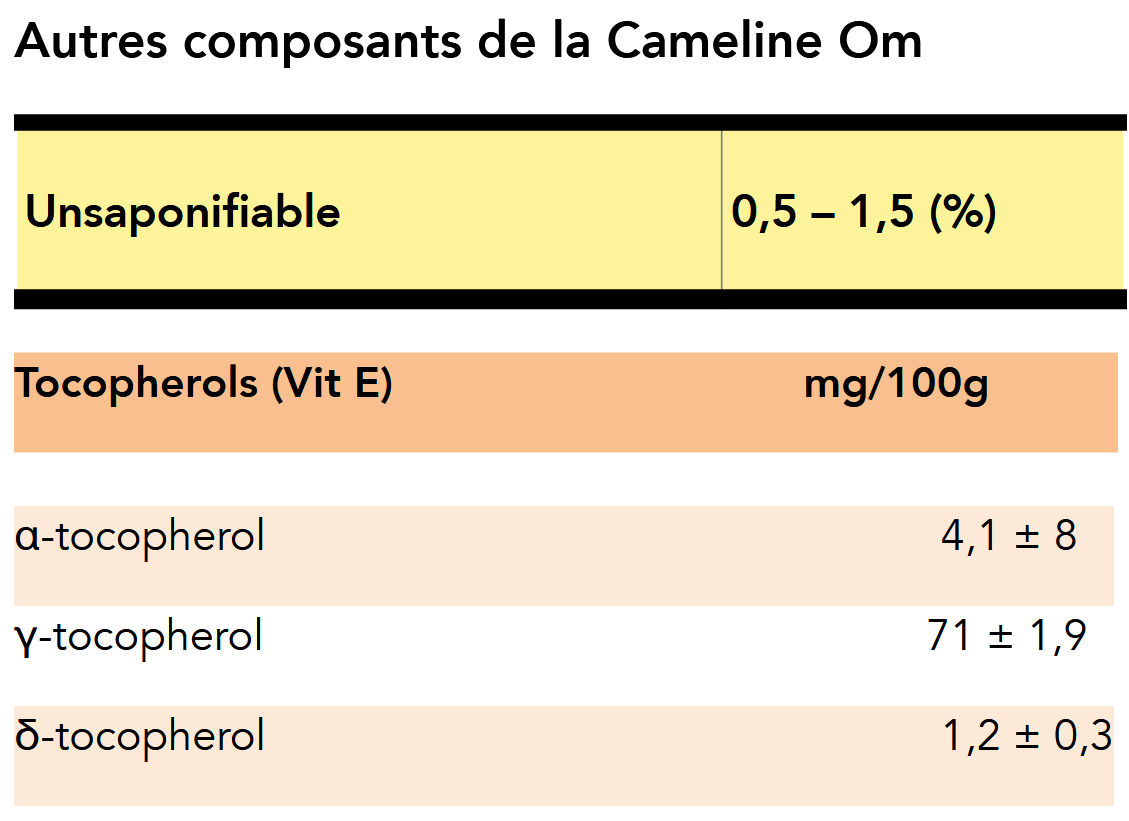
🌿 Vitamin E: 7 mg per 100 ml. It is more than half of the reference intake, which allows this oil to be considered a source of vitamin E according to European regulations. Vitamin E helps protect cells against oxidative stress. - always as part of a varied and balanced diet. These tocopherols also play a dual role: they also contribute to the stability of the oil itself.
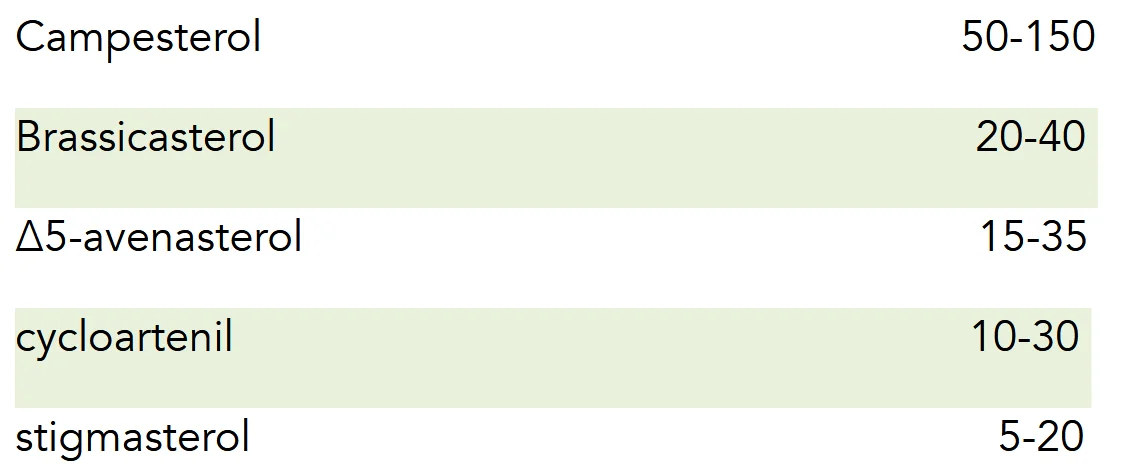
🌿 Natural antioxidants and preservation. Camelina oil also contains phytosterols and polyphenolic compounds. Combined with tocopherols, they provide it with good resistance to oxidative rancidity - this is what distinctly sets it apart from linseed oil, known to be fragile and often disappointing after a few weeks of being opened. An oil rich in omega-3 that lasts over time is quite uncommon.
A point of honesty, because it seems important to me. There is a lot of information about omega-3 and health, and some of these claims go far beyond what European regulations allow to be written. Therefore, we stick to what is established and verifiable: the analytical profile of the oil, and the two authorized claims mentioned above. As for the rest, the composition speaks for itself.
🌿 On the skin: Dry oil, quickly absorbs without leaving a greasy feeling on the skin. Aurélie uses it at the end of the day on her hands and forearms after a day in the garden. A few drops are enough.
To learn more, check out our blog post: Organic camelina oil: a nutritional treasure for health
Also read on the Biovie blog:
sanCoil
The 'om' camelina oil produced and distributed by sanCtum méditerranée, due to its richness and balance in polyunsaturated fatty acids, omega 3 and omega 6, has remarkable qualities and a unique taste. Committed to defending biodiversity, the brand sanCoil is part of the mission of sanCtum Mediterranean to sustainably create value in new sectors and contribute to better nutrition for humans and animals, as well as the preservation of the planet. It is the strategic subsidiary for the local valorization of raw materials, transformations, and associated know-how.
Why we chose this producer. Three reasons, in order. First, varietal selection: Camelina is not a seed bought from a catalog; it has been adapted over several successive campaigns to the terroir of southern France. Next, the pressing, conducted cold under 35°C, with the modest yield that this implies. Finally, the location of the crops - Gard, Southwest, Dijon region. An oil rich in omega-3 that travels 8,000 km before reaching your kitchen doesn't make much sense.
Camelina itself has a high antioxidant content, which makes its oil more resistant to oxidative rancidity. The high vitamin E (tocopherols) content also provides great stability and a longer shelf life, complemented by the phytosterols and polyphenols naturally present in camelina oil.
Ecology From the multiplication and offering of seeds and plants to the finished product, the sanCoil brand is committed to an ethical approach to promote a fairer and more ecologically sustainable organic agriculture. Its activities and investments focus on the valorization of aromatic, medicinal, and food plants (PPAMA) and on collective development around utility plants (green fertilizers, biological treatments...) for research in agro-biodiversity.
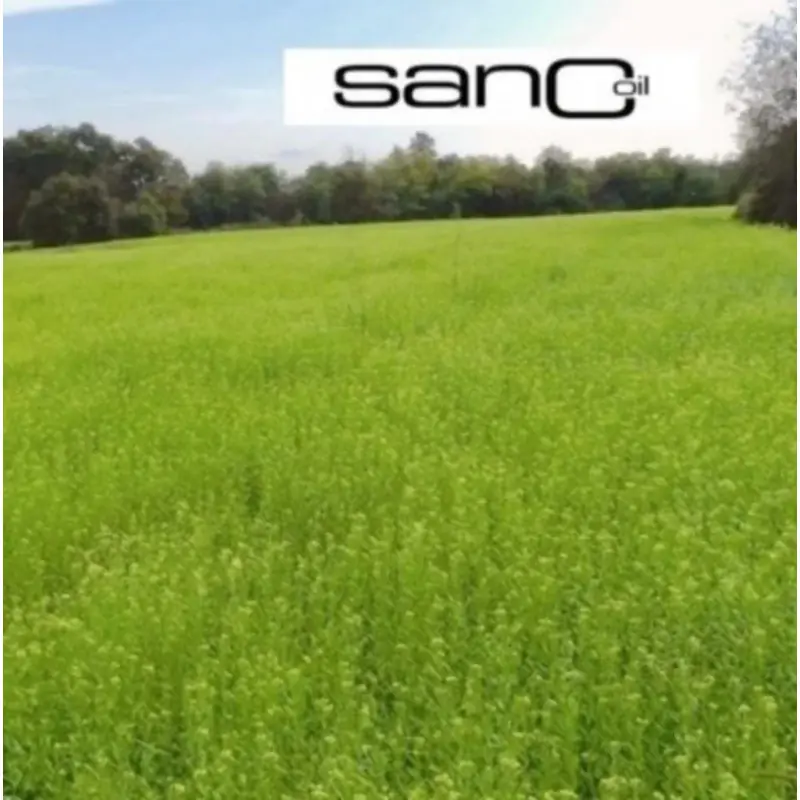
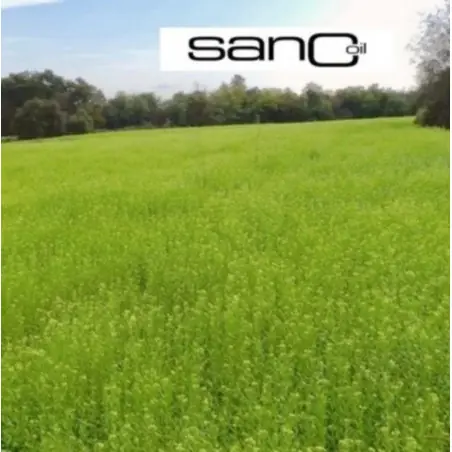
Field of the future Recent research has shown that Camelina (Camelina sativa L. Crantz) possesses exceptional agronomic characteristics. With very low requirements for soil preparation (plowing) and weed control (allelopathic effects), camelina easily adapts to any type of soil and climate, with increased resistance to drought, diseases, and pest attacks. Its cultivation aligns with the goals of reducing energy consumption, chemical treatments (pesticides, insecticides, chemical fertilizers), and protects soils against erosion. The agro-biological qualities of camelina cultivation open new perspectives in terms of sustainable development and ecology.
Its pale yellow bloom, which is very rich in nectar, lasts about three weeks. This is not insignificant: in a cereal rotation, a plant that feeds pollinators in the spring and requires neither irrigation nor treatment is exactly the type of crop that Mediterranean soils need. That's why we talk about it as a sector of the future, and not just another oil in the catalog.
Packaging: Bottle 25cl or 50cl
- violet-tinted glass bottles sufficiently capable of protecting sensitive products from the harmful effects of light on quality
Origin of seeds : Cultures Gard, Southwest, Dijon France
Cold pressing < 35° which allows all the nutritional qualities of the oil to be extracted (yield: approximately 30/35%)
Optimal shelf life : 24 months in the original unopened packaging
Storage method Camelina oil should be stored in a closed place, away from light and air, at a stable and moderate temperature (5 to 15°C). Once the bottle is opened, the refrigerator is the best place to keep it - omega 3s do not like heat or light. Do not store it near a stove or on a windowsill.
Recommended use : exclusively raw, for seasoning and finishing. One tablespoon is approximately 10 ml; half a tablespoon, about 5 ml, provides 2 g of alpha-linolenic acid.
A word about bottle bottoms: vegetable oil should never be poured down the drain. We wrote an article on the recycling of cooking oils. if the subject interests you.
- Product identity card :
| Characteristic | Value |
| Botanical species | Camelina sativa - variety "Cameline om" |
| Family | Brassicaceae (cabbage, mustard, rapeseed) |
| Origin of seeds | France - Gard, Southwest, Dijon |
| Mode of cultivation | Certified organic agriculture |
| Extraction | Cold pressing < 35 °C (yield 30 to 35%) |
| Omega 3 (ALA) | 39.09 g / 100 ml |
| Omega 6 / Omega 3 ratio | Approximately 1:2 |
| Vitamin E | 7 mg / 100 ml |
| Taste profile | Soft and fresh, notes of hazelnut and raw asparagus |
| Formats | Purple glass bottle 25 cl - Purple glass bottle 50 cl |
| Conservation | 24 months, original packaging unopened |
- Type of fatty acids and percentage :
 |
|
- Average nutritional values :
| Average nutritional values | 100 ml |
| Energy value
Energy |
900 kcal
3700 kJ |
| Lipids | 100 g |
| Saturated fatty acids | 9.7 g |
| Monounsaturated fatty acids | 30.5 g |
| oleic acid | 15.9 g |
| Polyunsaturated fatty acids | 56.4 g |
| Linoleic acid | 17.4 g |
| Alpha-linolenic acid | 39.09 g |
| Carbohydrates | 0 g |
| Fibers | 0 g |
| Proteins | 0 g |
| Salt | 0 g |
| Vitamin E | 7 mg |
Camelina oil is a vegetable oil extracted from the seeds of Camelina sativa, a plant from the Brassicaceae family that has been cultivated in Europe for over 3,000 years. It is also known as "false flax" or "German sesame." Its uniqueness lies in its omega-3 content: 39.09 g of alpha-linolenic acid per 100 ml, making it one of the highest concentrations among edible oils. It is consumed exclusively raw.
Approximately 5 ml, or half a tablespoon. This is the amount that provides the 2 g of alpha-linolenic acid retained by European regulations as the daily reference intake for this claim. A full tablespoon is about 10 ml, a teaspoon about 5 ml. The simplest way is to measure once with a teaspoon to set your gesture, then pour directly onto the plate.
No, and that's really the key takeaway. Omega-3 fatty acids are fragile: heat degrades them, and the oil loses both its taste and nutritional value. Reserve it for raw uses—dressings, finishes, drizzles on already served dishes—and use olive oil or another more stable oil for cooking.
Both are very rich in alpha-linolenic acid. The difference lies in two areas: taste and stability. Camelina is noticeably milder, with nutty notes, whereas flax quickly becomes bitter. Its natural content of tocopherols, phytosterols, and polyphenols makes it more resistant to oxidative rancidity. For daily family use, camelina is generally more suitable. The detailed comparison is in this blog article.
A mild and fresh vegetal flavor, with notes of hazelnut and raw asparagus. The oil is fluid, clear, and shiny, with a beautiful golden yellow color. It does not overpower dishes: it complements them. This is precisely what makes it easy to incorporate into daily use, even for people who haven't taken to flaxseed oil.
Because light is the enemy of unsaturated fatty acids. Violet glass filters a large part of the visible spectrum and protects the oil much better than clear glass or even traditional green glass. For an oil that is so rich in unsaturated fatty acids, this is not just a packaging detail: it is what preserves the nutritional profile between bottling and your plate.
The optimal shelf life indicated by the producer - 24 months - applies to the unopened original packaging. Once the bottle is opened, store it in the refrigerator and consume it without too much delay. The 25 cl format is specifically designed for this: at a rate of 5 ml per day, it is finished in about fifty days, well before oxidation becomes a concern.
Yes. The seeds come from crops located in the Gard, the Southwest, and the Dijon region, conducted in certified organic agriculture. The "Cameline om" variety has been adapted to the southern French terroir by our supplier, sanCoil (sanCtum méditerranée), after several successive organic production campaigns.
It is a dry oil: it absorbs quickly and does not leave a greasy feeling. Many use it for hand or body care, with just a few drops. That said, it is primarily a culinary oil - it truly shines in cooking.
Yes. It is a pure vegetable oil, obtained by simple cold pressing of seeds, without any animal-origin ingredients or auxiliaries. It is also certified organic. For people who follow a 100% plant-based diet, it is even one of the most interesting sources of omega-3 to have on the table - I often come back to it after thirty-four years of vegan practice.
Update: August 2026. Record validated by Éric Viard, founder of Biovie and engineer ISTOM, co-author of ""Seaweed in Everyday Life" (Gallimard, 2024) — Best cookbook in the world, Gourmand Cookbook Awards 2025, and Best cookbook in France, National Academy of Cuisine 2025.
Warning: The information presented on this sheet is provided for informational purposes and does not constitute medical advice. Consult a qualified healthcare professional before making any changes to your diet or supplementation. As part of a varied and balanced diet and a healthy lifestyle.
These products might interest you