



It is jicama that replaces the rice in this raw reading of the sushi roll: pulsed into grains then thoroughly pressed, it keeps a fresh, faintly sweet crunch that gets on surprisingly well with tamari-marinated shiitake strips, avocado, cucumber and a little red cabbage for colour. Rolled in raw nori and sliced, the whole thing makes a light, refreshing plate that asks for no grain of rice at all. The gesture that decides success is the pressing: badly wrung jicama releases its water inside the roll, and the nori softens within minutes. Put it through a nut milk bag and squeeze hard - the juice you recover is mild and worth drinking on its own. The mushroom marinade, by contrast, is quick: ten minutes is enough for the tamari and sesame oil to soften them without drawing out too much water. Plan to serve straight away, because a raw roll cuts well but does not take kindly to waiting in the fridge. One last detail that matters: choose nori sheets that are genuinely raw and untoasted, or the coherence of the dish falls apart.
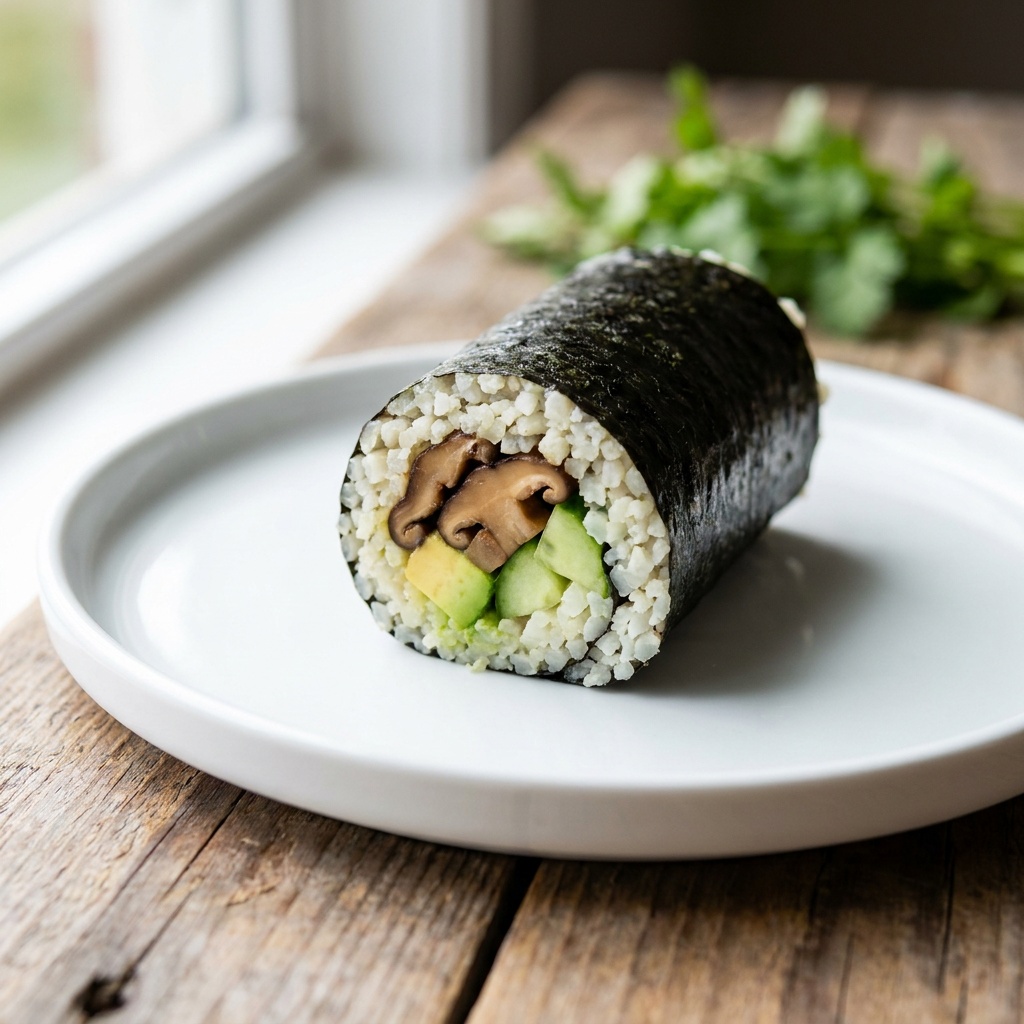
Raw sushi rolls with jicama and marinated shiitake

Share this article
Ingredients
- 1 medium jicama, peeled and roughly chopped
- 1 teaspoon sea salt
- 2 teaspoons rice vinegar
- 1 cup shiitake mushrooms, sliced into strips
- 1 1/2 tablespoons sesame oil
- 1 1/2 tablespoons tamari
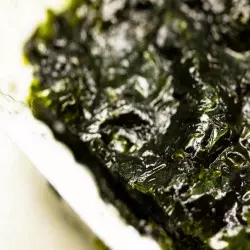
- 3 raw, untoasted nori sheets
- 2 cucumbers, julienned
- 1 avocado, sliced
- 1/8 head red cabbage, thinly sliced
- Sunflower sprouts
Preparation
- Pulse the jicama in a food processor or blender until it breaks down into rice-sized pieces.
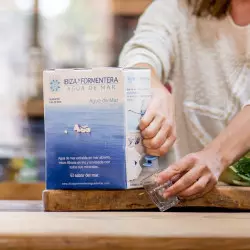
- Transfer to a nut milk bag and squeeze out as much water as you can.
- Move the jicama "rice" to a mixing bowl and stir in the salt and rice vinegar.
- In a separate bowl, toss the shiitake strips with the sesame oil and tamari, and let them marinate for at least 10 minutes.
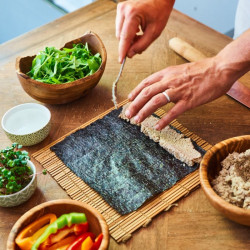
- Lay a nori sheet shiny-side down on a bamboo rolling mat.
- Spread a thin layer of the jicama rice over the bottom half of the sheet.
- Arrange the marinated mushrooms, cucumber, avocado, cabbage and sprouts over the top.
- Roll tightly using the bamboo mat to keep everything compact.
- Seal the edge of the nori with a little of the mushroom marinade.
- Slice each roll into 8 pieces with a sharp knife, and repeat with the remaining sheets.
Note: the liquid pressed out of the jicama is mild and naturally sweet - worth drinking on its own or stirring into a juice.
Tip
Press the jicama for longer than you think necessary: it is the residual water, not the rolling, that makes a raw roll give way. Slice at the last moment too, and serve immediately, since avocado and nori do not take well to a long wait in the fridge.
The full range ALGAE
26 products
Discover the full range
FAQ: your questions about raw jicama sushi rolls
What is sushi without rice called?
There is no established Japanese name, because rice is part of the very definition of sushi - the word refers first to the vinegared rice, not to the fish. What exists in practice are rolls called vegetable maki, rice-free temaki, or more simply nori rolls. In this recipe, jicama plays the role of the rice without being it: pulsed into grains and sharpened with vinegar, it takes on its function, its colour and its texture.
How do you use nori sheets to make sushi?
Lay the sheet shiny-side down on a bamboo mat, fill only the bottom half leaving a clear strip at the top, then roll tightly with the mat's help. The clear strip is what seals: dampen it lightly - here with a little marinade - and the roll will hold. One point often overlooked: nori absorbs moisture very fast, so fill and roll one sheet at a time, never all at once.
Which vegetables can you put in sushi?
Almost all of them, provided they are finely cut and do not release water. Cucumber, avocado, carrot, red cabbage, pepper and young shoots all work very well, raw and julienned. Very watery vegetables such as tomato are a problem, since they soak the nori from the inside. Mushrooms, for their part, are better marinated first, like the shiitake in this recipe, which softens them without cooking.
What is the difference between maki and uramaki?
In a classic maki, the nori is on the outside and wraps the rice and the filling. In an uramaki - the inside-out roll, of which the California roll is the best known - the rice goes on the outside and the nori ends up inside, against the filling. This recipe is a maki in the strict sense: the nori wraps, the jicama and vegetables stay inside. A raw uramaki would in fact be hard to pull off, since pressed jicama is not sticky enough to hold on the outside.
Share this article