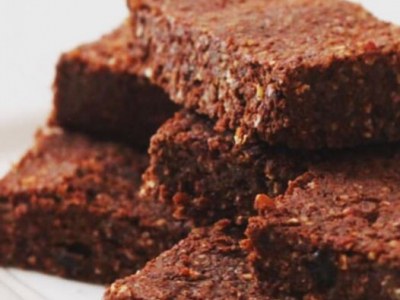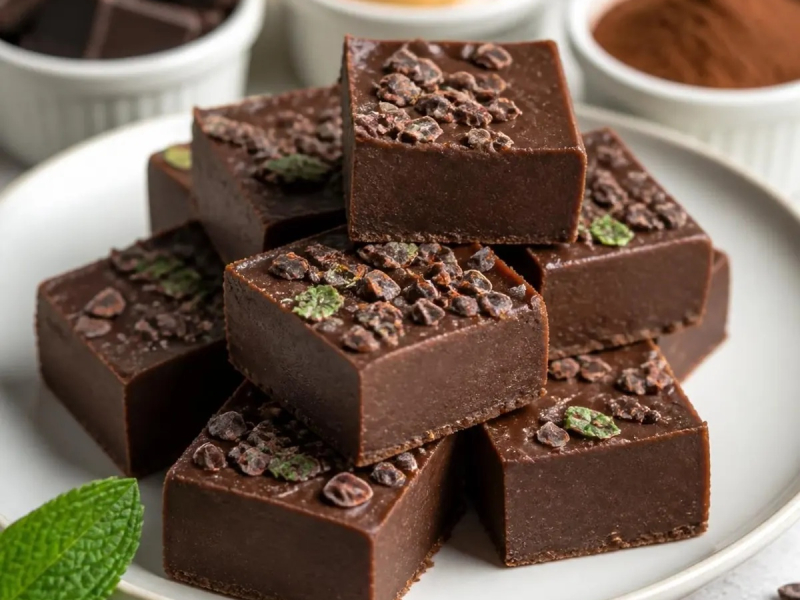



Traditional halvah is reimagined here in a raw, plant-based version, with a melt-in-the-mouth base of sesame and dates topped with a layer of glossy chocolate. The contrast between the dense, slightly grainy texture of the sesame and the meltingness of the chocolate makes it a surprisingly satisfying treat. Easy to prepare well ahead of time, it cuts into small squares, perfect alongside a tea or herbal infusion. An original way to treat yourself with no oven and no cooking.
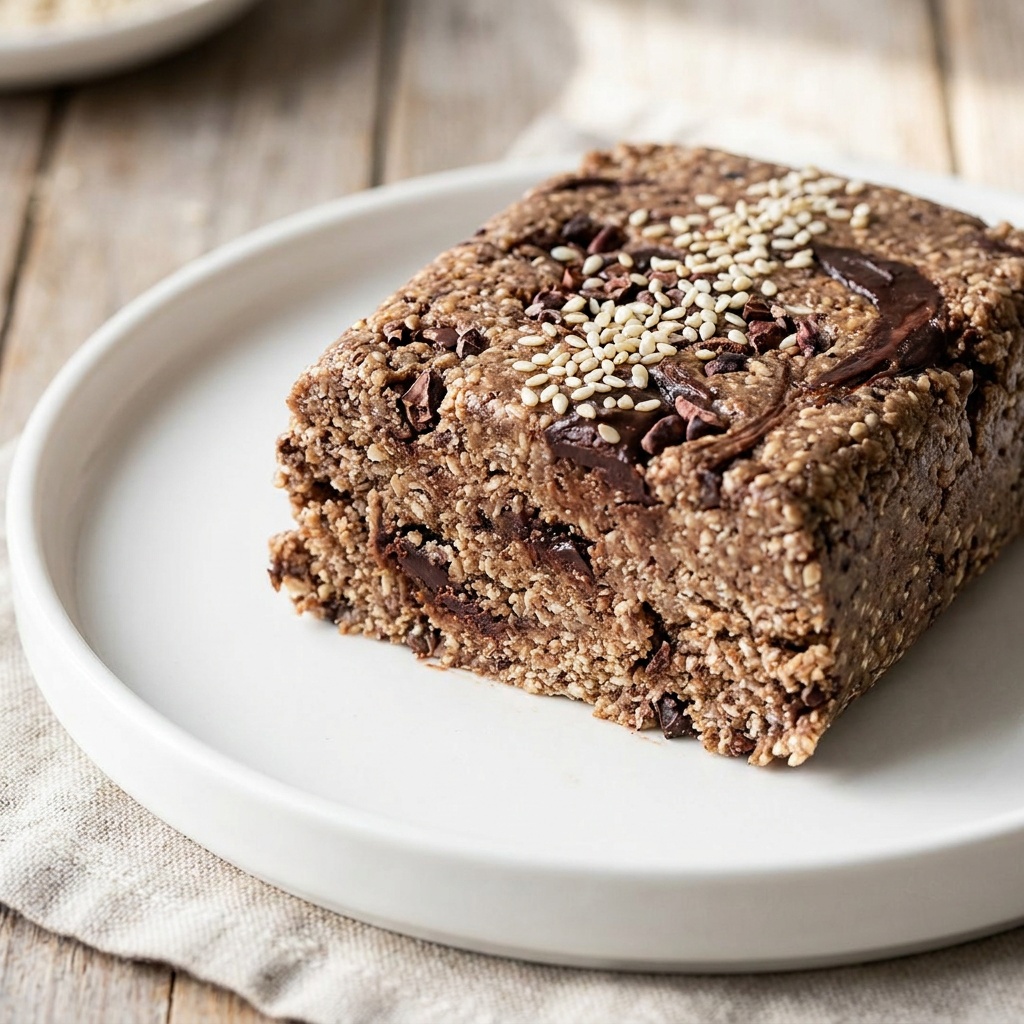
Raw Sesame and Chocolate Halvah
Share this article
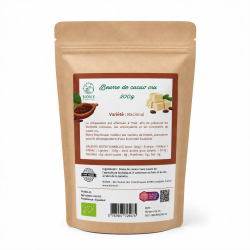
Organic raw cacao butter (Nacional variety)
€10.90 In stock
Ingredients
Halvah
- 2 1/2 cups sesame seeds, ground into a fine powder
- 1/2 cup chopped dates, soaked for at least 1 hour
- 1 to 2 tablespoons of the date soaking filtered and hydrogenated water
Chocolate
- 1/3 cup melted cocoa butter
- 1/2 cup raw cocoa powder
- 2 tablespoons raw honey (or liquid syrup of your choice)
- 1 teaspoon vanilla
Method
- Grind the sesame seeds into a fine powder using a coffee grinder, then transfer to a food processor.
- Blend the sesame powder with the soaked dates until smooth.
- Gradually add the reserved soaking water, until you reach the desired consistency (use less liquid for a firmer mixture).
- Spread the mixture into a glass dish, lined with baking paper if you like, and press down until the surface is smooth and even.
- Melt the cocoa butter, then whisk in the cocoa powder, honey and vanilla until smooth.
- Pour the chocolate over the halvah, spreading it evenly across the whole surface.
- Place in the freezer or fridge for at least 30 minutes to set.
- Cut into squares and serve.
Tip
Serve these squares with a plant milk or a herbal tea, for example a mix of plant milk and chaga tea for a comforting break.
The full range Cacao
6 products
Online only
FAQ: your questions about cocoa butter
How do you eat cocoa butter?
Rarely on its own, almost always as a structural fat. Gently melted in a double boiler, it's used to make homemade chocolate - its main use here - but also to bind a raw tart filling, to coat dried fruit, or to give body to a cream that needs to set when chilled. A spoonful in a smoothie or a warm plant milk also gives it a silky texture. It isn't used like a cooking oil: it sets solid as soon as it cools.
How do you recognise real cocoa butter?
Real cocoa butter is a pure fat pressed from the beans, with nothing else added. It comes in wafers or blocks of an ivory colour with a faint amber tinge, brittle and hard at room temperature, and it gives off a distinctly chocolatey smell when handled. Be wary of cosmetic products sold under the same name: they're often deodorised or blended with other plant fats. On a food product, the ingredient list should be just one word.
Where can you find cocoa butter in supermarkets?
That's exactly the difficulty: it's rare in mainstream supermarkets, which mostly stock chocolate bars and cocoa powders. The usual sources remain health food shops, specialist baking suppliers, and online retailers, where the choice of raw-quality cocoa butter is much wider. One thing worth checking if you're after raw: many cocoa butters are deodorised at high temperature, which removes the aroma. An explicit low-temperature claim is the only reliable clue.
At what temperature does cocoa butter melt?
It melts at around 34 to 36°C, just below body temperature - which is exactly why it melts so instantly in the mouth, the whole appeal of chocolate. In practice, this means a very gentle double boiler is more than enough, and you should avoid heating it further if you want to stay raw: past 42°C, you're no longer within that range. It also means your squares will melt in your fingers on a hot day: keep them cool.
Share this article
Related articles