


The base of this cheesecake presses into the tin in minutes: cashews and desiccated coconut blended to a fine flour, dates and salt to bind, and nothing to bake for it to hold once chilled. The filling is where the citrus comes through, soaked cashews blended with coconut oil, agave and a full lemon's worth of juice, thick enough to hold its shape when sliced but soft enough to feel genuinely creamy. Because the filling sets in the cold rather than the oven, the texture stays closer to a mousse than to a traditional baked cheesecake, with a cleaner, brighter lemon flavour than most cream cheese versions. A short stretch in the freezer speeds up the initial set before the cake finishes firming in the fridge for a few hours. Topped with blueberries or whatever berries are in season, it reads as a simple, bright dessert that asks for little more than patience while it chills.
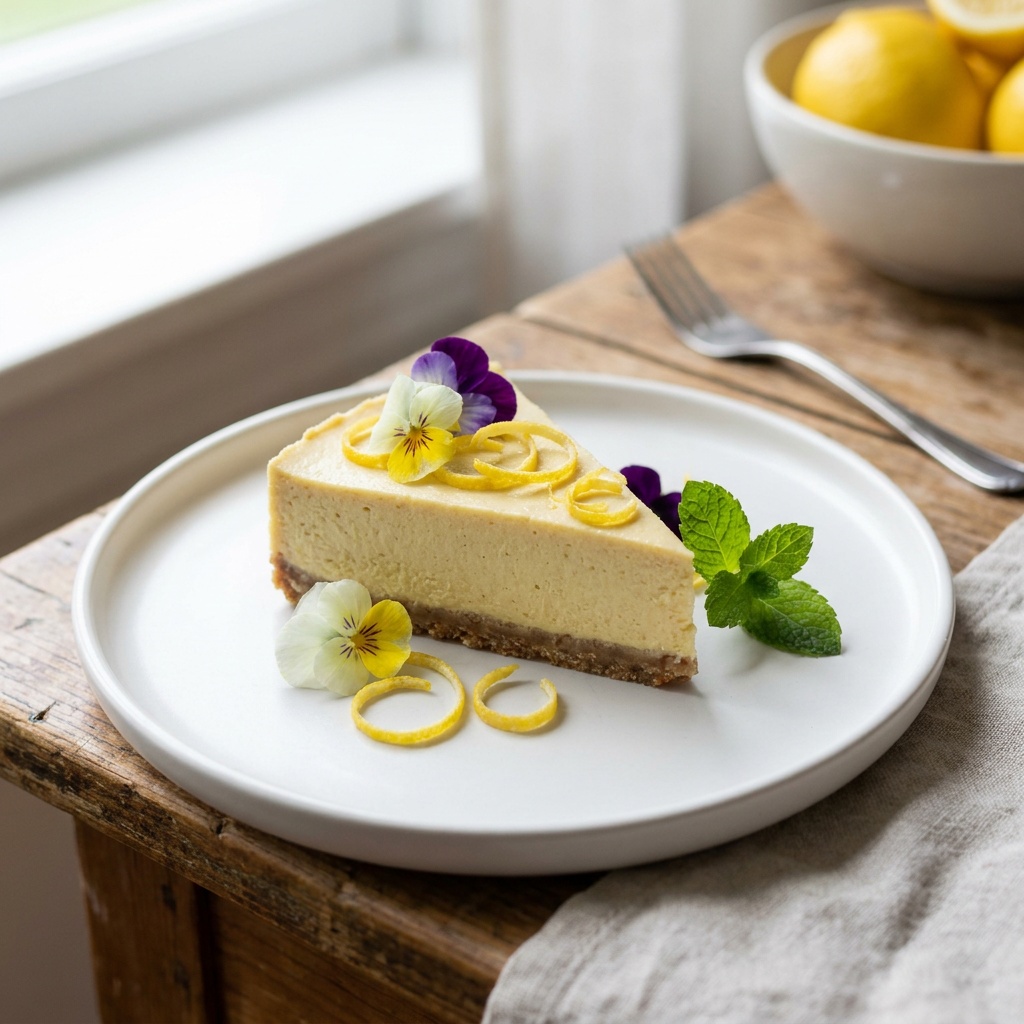
Raw lemon cheesecake

Share this article
Ingredients
Base
- 2 dl cashews
- 2 dl desiccated coconut
- 10 pitted dates
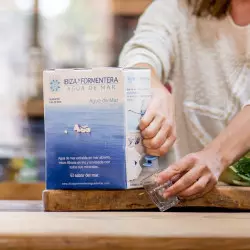
- 1 pinch of salt (equivalent to 1 tablespoon - 15 ml - of seawater)
Lemon filling
- 2 cups (4 dl) cashews, soaked for at least 2 hours
- 5 tablespoons agave syrup (honey also works if strict veganism is not a constraint)
- 5 tablespoons water
- 1/2 cup (1 dl) coconut oil
- The juice of one lemon
Preparation
- Blend the cashews and the desiccated coconut in a food processor until they resemble a fine flour.
- Add the dates and the salt, then keep blending until the mixture clumps together when pressed between your fingers.
- Press this base into the bottom of a lined springform tin and set aside.
- For the filling, put the soaked cashews, the agave, the water, the coconut oil and the lemon juice into the blender.
- Blend until you have a thick, smooth cream. Add more cashews if it is too loose, a little coconut oil or water if it is too stiff. Taste and adjust the lemon or the sweetener to your liking.
- Spread the filling evenly over the base and refrigerate for at least four hours. To speed things up, put the cake in the freezer for an hour then move it back to the fridge.
- Serve topped with blueberries or whatever berries are in season.
Tip
Taste the filling before pouring it over the base and adjust from there: more lemon juice sharpens it, while an extra spoonful of coconut oil or a few more cashews will firm up a cream that seems too loose. Respect the four hours of chilling minimum: cutting it short leaves the centre noticeably softer than the edges.
The full range Freeze Dried Fruits
Enjoy the flavor and nutrients of exotic fruits, harvested at maturity in Vietnam and preserved while respecting the nutritional qualities of the fruit., 11 products
-20%
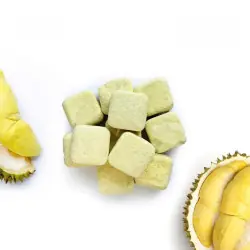
Freeze-dried durians - 200g
€12.24 €15.30
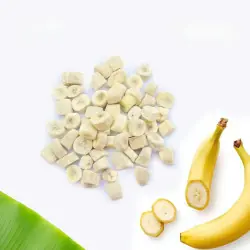
Freeze-dried bananas - 200g
€14.90
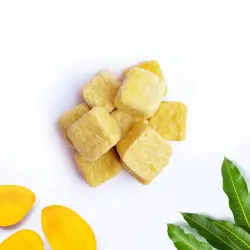
Freeze-dried mangoes - 200g
€15.30
FAQ: your questions about the raw lemon cheesecake
What is the difference in taste between a baked and a raw cheesecake?
A baked cheesecake develops caramelised notes and an acidity rounded off by the heat, with a dense, slightly springy texture from the coagulation of eggs and cheese. A raw cheesecake keeps cleaner, fresher flavours: the lemon comes through sharper, the nuts stay legible, and nothing tastes 'cooked'. The texture changes too: it holds thanks to coconut oil solidifying in the cold, which gives something meltier, somewhere between a mousse and a ganache.
What cheese can replace Philadelphia?
In a classic version, mascarpone, well-drained ricotta or a plain whipped soft cheese will do, with more or less rich results. In a raw version like this one, the question does not arise in the same way: it is the soaked cashews, blended for a long time, that reproduce the creaminess and light acidity of soft cheese, with the lemon juice for the lactic note. You will need a powerful blender and a minimum of two hours of soaking, otherwise the cream will stay gritty.
Does coconut oil go in the fridge?
It keeps very well there, but it is not compulsory: at room temperature, in a closed jar away from light, it lasts several months. The fridge simply makes it very hard and therefore difficult to scoop. In this recipe that property is exactly what is put to work: the melted coconut oil, once the cream is chilled, solidifies again and sets the filling with no gelling agent and no baking.
How do you soften coconut oil?
The simplest way is to stand the open jar in a bowl of hot water for a few minutes, or to take out the amount you need and melt it over a very low heat, or in a bain-marie. Avoid the microwave at full power, which overheats it in places. For this recipe, just melt it without heating it further: oil that is too hot poured onto blended cashews can split the cream.
Share this article