Proteins or Carbohydrates: The Truth About Plant-Based Foods
In modern nutrition, labels contradict each other and myths persist. A question often arises, especially in vegetarian diets: are legumes (chickpeas, lentils, beans) and pseudo-cereals (quinoa, buckwheat) primarily proteins or carbohydrates?
At Biovie, we don't settle for half-truths. We will analyze the composition of these plant-based dietary staples. We want to give you a clear answer. We also want to show you why this binary distinction is actually a false question. Hold on tight. It's time to set the record straight. We need to understand the real nutritional richness of these treasures of the earth. They are much more complex than animal proteins. They are too quickly compared to animal proteins.
Plant Proteins: The Myth of Incompleteness Debunked
For decades, the dogma was clear: meat, eggs, dairy products... these are the sources of complete proteins. What about plant proteins? They were considered "incomplete," requiring complex combinations (the famous rice and lentils) to provide all the essential amino acids (EAAs).
Quinoa, the Dogma Breaker
Let's start with the most emblematic case: quinoa. Technically, it is not a cereal, but a "pseudo-cereal," related to beets and spinach. And what a shock to nutritional orthodoxy! Quinoa is one of the rare plant sources to contain all nine essential amino acids, making it a complete protein, similar to animal products (and soy).
For 100g of raw quinoa, you have on average:
Proteins: about 14 to 16g
Carbohydrates: about 60 to 70g
So, protein or carbohydrate? If we look at the raw quantity, quinoa is clearly richer in carbohydrates. But it's the quality of the proteins (being complete) that makes it remarkable.
Legumes: The Strength of the Group
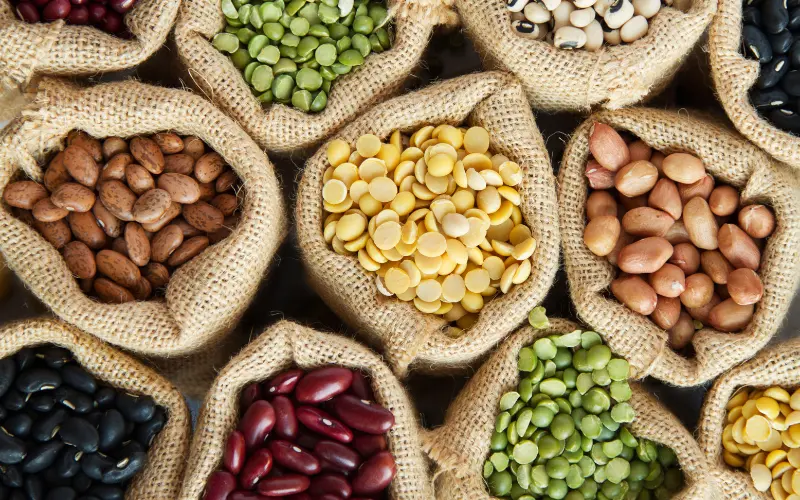
Let's move on to legumes: lentils, chickpeas, dried beans. They have been the pillar of global nutrition for millennia.
For 100g of dry legumes (before cooking):
Lentils: 25-30g of Proteins / 55-60g of Carbohydrates
Chickpeas: 19-25g of Proteins / 50-60g of Carbohydrates
Once again, the amount of carbohydrates is higher. However, their protein content is colossal!
As for the "incompleteness" argument, it's high time to discard it. Legumes are generally a bit lower in an essential amino acid called methionine. Grains (rice, wheat, spelt) are limited in lysine.
But here is the truth, the one that's hidden from you:
Complementarity does not need to be achieved within the same meal! Our body is an amazing recycling factory. It has an "amino acid pool." If you eat lentils at lunch and rice in the evening (or even the next day), the complementation happens naturally. The imperative of immediate association is an oversimplification.
Is your diet varied? If yes, you have absolutely nothing to worry about. The idea that vegans spend their time calculating their associations is an absurdity that discourages the shift to a more ethical and ecological diet.
Verdict: These foods are significant and high-quality sources of plant proteins. Their raw carbohydrate content takes nothing away from their interest as a source of protein.
And if we go further in this living logic, some of these legumes can reveal their full biological potential through germination. This is where life comes into play, and where the Biovie philosophy makes perfect sense.
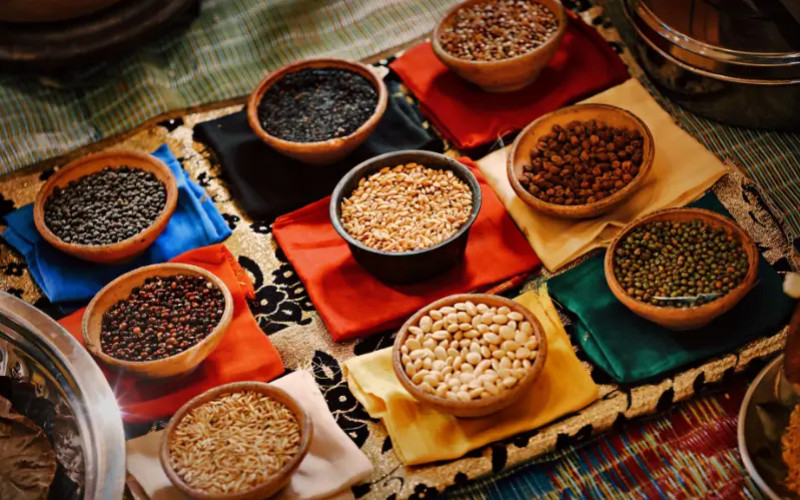
Biovie sprouting mung bean: a staple of Asian cuisine, it contains about 24g of protein per 100g dry. Sprouted, it becomes more tender and easier to cook, perfect for salads, bowls, or stir-fried dishes.
Organic sprouting azuki red bean: small but mighty, this Japanese bean contains 20 to 25g of protein per 100g. Sprouted or lightly cooked after pre-sprouting, it develops a sweet and mild taste, appreciated in Japanese cuisine (anko paste).
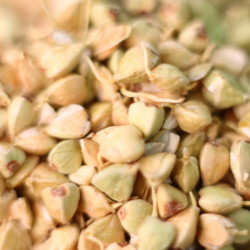
Biovie activated buckwheat: although technically a pseudo-cereal, it plays a key role in amino acid complementarity. Activated, that is, sprouted then dehydrated at low temperature, it contains all essential amino acids, including lysine, absent from traditional cereals. Crunchy, nourishing, it naturally balances meals based on legumes.
The great forgotten: The quality of carbohydrates (and fibers!)
Focusing only on the Protein/Carbohydrate binary hides the true richness of these foods. We especially ignore the quality of these carbohydrates.
Slow Carbohydrates vs. Fast Carbohydrates
When we hear "carbohydrates," we often think of white sugar, sodas, or industrial pastries, staples of an industrial diet that has stripped foods of their meaning and nutritional value.This confusion, maintained by the agro-industry, traps us in poor, simplistic, and unbalanced diets.
However, carbohydrates from whole grains, legumes, and pseudo-cereals like quinoa, lentils, or chickpeas have nothing to do with these fast sugars. They consist of complex carbohydrates, surrounded by a matrix rich in dietary fibers, both soluble and insoluble.
Soluble and insoluble fibers are also present in certain whole grains like oats or barley.
This is where the term "carbohydrate" takes on its full meaning:
```html
Low Glycemic Index (GI): Lentils (GI 30) and chickpeas (GI 35) have a low glycemic index.
Fibers, often forgotten. Legumes provide fibers: lentils contain about 11 g per 100 g dry.
The binary question is a trap. Labeling these foods as "proteins" or "carbohydrates" ignores that their strength comes from the intelligent combination of these two macronutrients. They contain proteins, slow carbohydrates, and fibers. It's a complete nutritional package that nature has designed for us.
The Biovie Assessment: Beyond Macronutrients
At Biovie, our advocacy for raw, living, and organic foods is not a whim, it's a necessity. Why? Because the answer is not only in the quantity (Protein vs. Carbohydrate), but also in the full range of micronutrients.
The micronutrients of legumes
Forget meat for a moment. Let's look at what 100g of plant-based foods like lentils or chickpeas provide:
Non-heme Iron: lentils and chickpeas contain it.
Magnesium and Potassium: minerals found in legumes.
B vitamins, notably folate (vitamin B9).
The Active Tip: Sprouting
If we talk about living nutrients, we cannot overlook sprouting.
Sprouting chickpeas or lentils (even slightly, a Biovie favorite) is not a health-guru whim, it's a cutting-edge nutritional strategy! Sprouting transforms these foods:
```
It reduces the content of anti-nutrients (like phytic acid) that can block mineral absorption.
Eating sprouted lentils is the Biovie approach: seeking to reveal the potential of life.
Conclusion: The Enlightened Choice
So, to frankly answer the question "Quinoa, chickpeas, lentils... protein or carbohydrate?", we must answer: both, and that's what makes them strong!
These are foods that are both rich in quality complex carbohydrates (their main energy source), while being a source ofcomplete or highly concentrated plant protein (their structural asset).
We do not measure their value by the dominance of one macronutrient. Their value comes from the whole of the nutrients they contain: fibers, proteins, vitamins and minerals.
By incorporating quinoa, chickpeas, and lentils into your plate, prioritizing organic quality (think aboutgermination!), you are not just adopting a varied diet. You are making a conscious act: that of preserving the planet (these plants fix nitrogen in the soil, limiting chemical fertilizers) and saying no to simplistic diets that reduce nutrition to boxes.
The choice is yours: the living and the complex, or the industrial and the simplified.
Fair trade tiger nut from Niger, Amazon nuts from Bolivia, activated buckwheat from Brittany, and activated oilseed purées made in Alsace by Kaly: this range brings together oilseeds and seeds of raw quality, most of them soaked then dehydrated at low temperature (activation). To get started with activation, an activated almond or hazelnut purée is easier to use than a whole oilseed you have to soak yourself. For everyday raw cooking, tiger nut (whole, sliced or as a purée) comes in several formats suited to different uses, from homemade plant milk to crunchy snacks., 19
products
Q1: Is quinoa considered a protein or a carbohydrate by nutritionists?
Among the most complete plant foods, quinoa holds a special place. Primarily rich in complex carbohydrates (about 60 to 70% dry), it also provides complete proteins (about 14-16% dry): it contains the nine essential amino acids, which is rare in the plant world.
Q2: Do lentils or chickpeas belong to the family of starches or proteins?
Lentils and chickpeas are legumes, and they belong to both the category of starches (because they are rich in complex carbohydrates) and plant protein sources. Their high fiber content goes hand in hand with a low glycemic index.
Q3: Is it absolutely necessary to combine legumes and grains to have complete proteins?
No, this rule is outdated. Although legumes are low in methionine and grains in lysine, your body maintains a "pool" of amino acids. A varied diet throughout the day or over a few days allows for protein completion. It is not necessary to consume them in the same meal.
Q4: How should chickpeas and lentils be prepared?
One option is sprouting: soaking and then lightly sprouting the legumes. This process reduces anti-nutrients (like phytic acid).