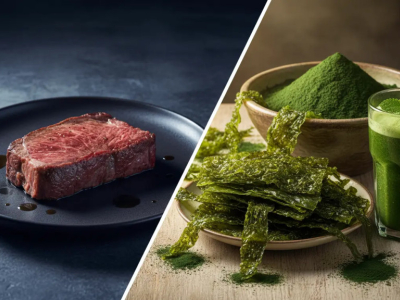


No, plant-based collagen does not exist — biologically speaking, no plant, fruit, or algae produces collagen. This structural protein is exclusively animal. However, some plants — particularly sea algae — provide the precursors and cofactors your body needs to produce its own collagen. As the founder of Biovie since 2007 and an ISTOM engineer, I have been working with algae for nearly twenty years, and it is precisely this nutritional angle that I wish to share with you today.
Frankly, when I see the marketing around "plant-based collagen" — from creams to supplements to powders — I understand the confusion. The term is everywhere. But it actually refers to two very different things: either extracts that mimic the effects of collagen on the surface (hydration, protective film), or — and this is much more interesting — endogenous synthesis boosters. Foods that provide your body with the building blocks and tools to construct its own collagen.
It is this second approach that interests me. And this is where sea algae change the game.
Does plant-based collagen really exist?
What exactly is collagen?
Collagen is the most abundant protein in your body — it accounts for about 75 to 80% of the dry weight of your skin (Varani et al., 2006). Essentially, it is the scaffolding that gives firmness to the skin, strength to the bones, and flexibility to tendons and joints. Without collagen, everything sags. Literally.
Its structure is very particular: three polypeptide chains coiled into a triple helix, composed mainly of three amino acids — glycine (about 33%), proline (about 13%), and hydroxyproline (about 9%). The latter, hydroxyproline, is almost exclusive to collagen. And this is where it gets tricky for the plant world.
Why don't any plants produce collagen?
The answer is simple: plants do not need collagen. Their structure relies on cellulose and lignin, not fibrous proteins. Hydroxyproline, this characteristic amino acid of collagen, is produced by an enzymatic reaction (the hydroxylation of proline) that requires vitamin C as a cofactor. This reaction occurs in animal cells — not plant cells.
So when you read "plant-based collagen" on a package, know that it is a marketing shortcut. Not a biological fact. It's not a problem in itself — as long as you understand what you're actually buying.
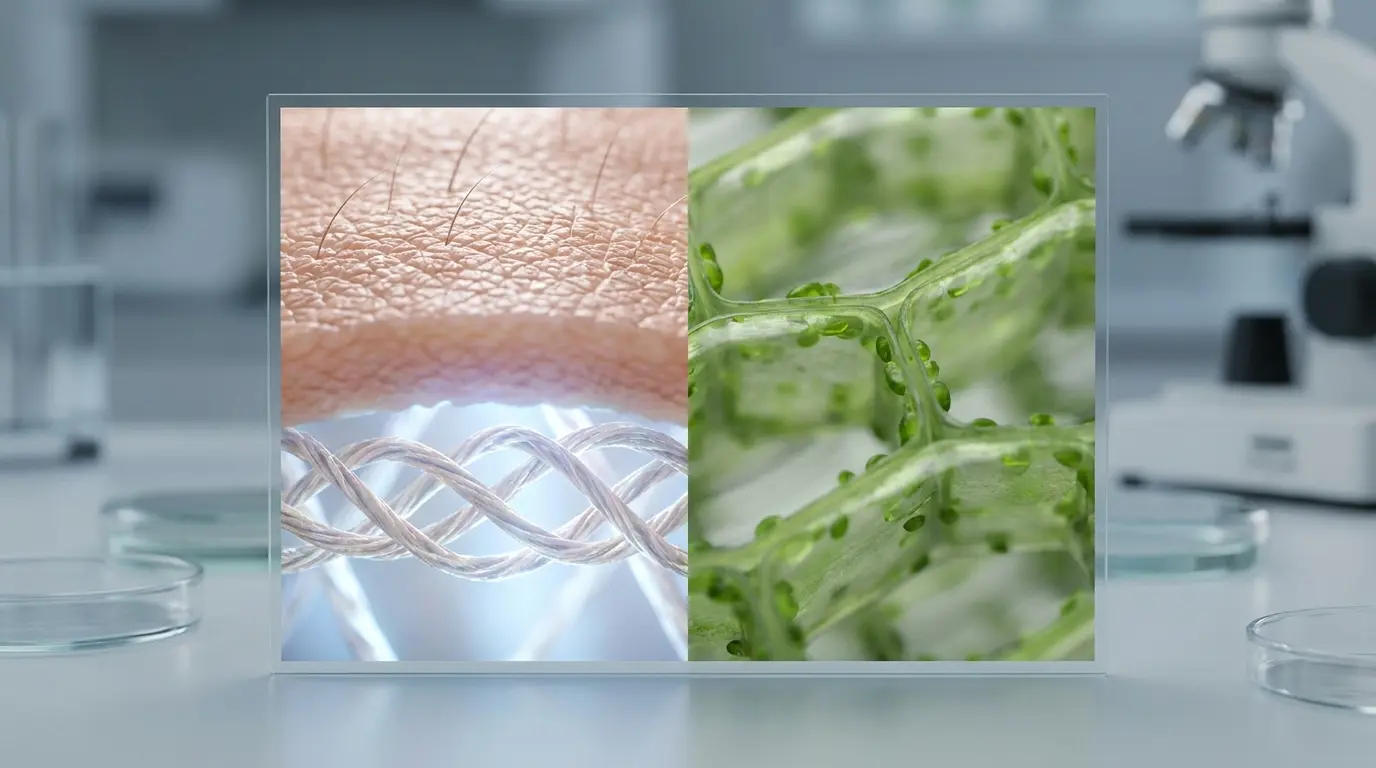
How does our body produce its own collagen?
The 5 essential cofactors for collagen synthesis
Your body knows how to produce collagen. It does so constantly — well, less and less with age, but I'll get back to that. For this production to work properly, it needs specific raw materials:
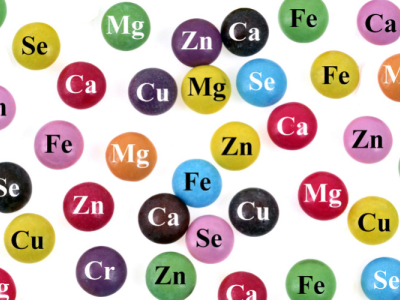
- Glycine and proline — the two amino acids that form the backbone of the collagen molecule. Without them, no construction.
- Vitamin C — an essential cofactor for the enzymes prolyl hydroxylase and lysyl hydroxylase, which transform proline into hydroxyproline. Without vitamin C, collagen does not stabilize into a triple helix. This is exactly what happens in scurvy (Peterkofsky, 1991).
- Zinc — necessary for the division of fibroblasts, the cells that produce collagen. Zinc contributes to the maintenance of normal skin (EFSA authorized claim).
- Copper — activates lysyl oxidase, the enzyme that creates cross-links between collagen fibers (cross-linking). Without copper, the fibers remain fragile.
- Sulfur — participates in the formation of disulfide bridges that stabilize the protein structure.
Do you see the picture? Collagen is not an ingredient you ingest — it is a construction that your body makes from these elements. And it is precisely this logic of precursors that makes the plant-based approach not only viable but frankly relevant.
Why does collagen production decrease with age?
Starting around the age of 25-30, collagen synthesis begins to decrease — this decline is estimated at about 1 to 1.5% per year (Sibilla et al., 2015). This means that by the age of 50, you may have potentially lost 25% of your skin collagen. In women, menopause further accelerates the process: up to 30% loss in five years, according to some dermatological studies.
The mechanisms are twofold. On one hand, fibroblasts age: researchers from the University of Michigan have shown that fibroblasts from subjects over 80 years old produced significantly less type I procollagen than those from young adults (Varani et al., 2006). On the other hand, the enzymes that degrade collagen (matrix metalloproteinases, or MMPs) become more active over time and with UV exposure.
In practical terms, this translates in the mirror to wrinkles, less firm skin, stiffer joints — it's largely this equation: less production + more degradation = progressive deficit.
Which plants provide collagen precursors?
The key amino acids: where to find them in the plant kingdom?
For my part, after 34 years of a plant-based diet where I didn't really adhere to the sacred grain-legume combinations, I can assure you that sources are plentiful. Glycine is found in good quantities in seaweed (notably Palmaria palmata, dulse), sesame seeds, and soy. Proline is present in green algae, sprouted legumes, and cabbages.
But what no terrestrial vegetable can offer is the complete combination — amino acids + mineral cofactors — in a single food. This is exactly where marine algae stand out. And not just any kind.
Vitamin C, zinc, copper, and sulfur: the essential cofactors
We often tell our clients: it's not the isolated ingredient that makes the difference, it's the synergy. Vitamin C without amino acids is useless for collagen. Zinc without proline, the same. That's why we favor a holistic dietary approach rather than chasing isolated supplements.
Some concrete pointers:
- Vitamin C contributes to normal collagen formation to ensure the normal functioning of the skin (EFSA authorized claim). It is found in camu-camu, acerola, citrus fruits, and peppers.
- Zinc contributes to the maintenance of normal skin. Marine algae, pumpkin seeds, and raw cocoa are excellent sources.
- Copper, often forgotten, is nonetheless essential for collagen cross-linking. Raw cocoa is a remarkable source — about 3.8 mg per 100 g, well above the recommended daily intake.
Marine algae: the best plant source of collagen precursors?
Irish Moss (Chondrus crispus): natural gel and amino acids
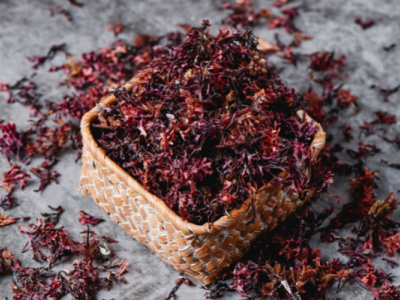
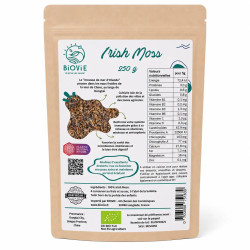
This is the algae that changed my perspective on the subject. Irish Moss, this red Atlantic algae, is unique in the plant world. Its amino acid composition was documented as early as 1958 by Young and Smith, and confirmed by more recent studies: glycine, proline, arginine, serine, threonine — in short, a range of amino acids directly involved in collagen synthesis (Young & Smith, 1958; Aryee et al., 2024).
But that's not all. Irish Moss is rich in carrageenan, a polysaccharide that forms a natural gel. This gel has a fascinating property: it mimics the texture and behavior of collagen at the level of the skin and intestinal mucosa. Studies have shown that the sulfated carrageenans present in Chondrus crispus can inhibit the expression of MMP-1, the enzyme that degrades existing collagen. In other words, Irish Moss not only provides the building blocks — it also protects the construction site.
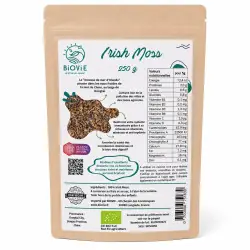
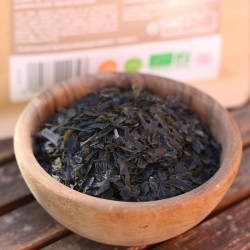
At Biovie, we offer Irish Moss powder — 5 to 10 g in a smoothie or broth is enough for a significant daily intake. Moreover, if you are not yet familiar with this seaweed, I invite you to read our full article: Irish Moss, the marine superfood with numerous health benefits.
Spirulina, chlorella, and wakame: the complementary trio
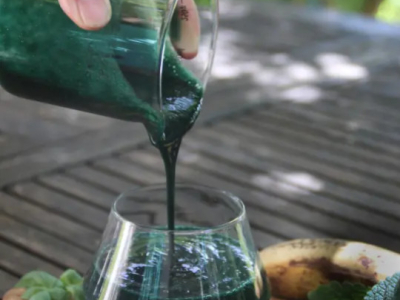
Spirulina (Arthrospira platensis) is a concentrated source of glycine and proline, as well as iron and zinc — two direct cofactors in collagen synthesis. With about 60 to 70% protein by dry weight and an almost complete amino profile, 3 to 5 g per day cover a significant part of the precursor needs.
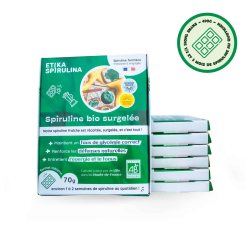
Personally, I have been using spirulina daily for over fifteen years. What still strikes me is the consistency of its nutritional contributions — no surprises, no variation from one batch to another when you choose your producer well.
Chlorella provides the CGF growth factor and B vitamins that participate in cellular metabolism. Wakame (Undaria pinnatifida), on the other hand, is an excellent source of zinc, copper, and sulfur — the three mineral cofactors of collagen cross-linking.
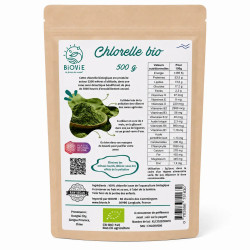
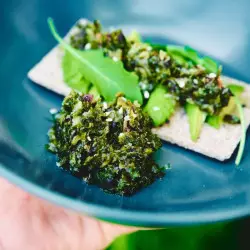
Are you starting to see the logic? Each seaweed provides a piece of the puzzle. Irish Moss provides the amino acids and protective gel. Spirulina completes the amino profile and provides iron. Wakame provides the catalyst minerals. Together, they form a complete nutritional strategy — and that's precisely what I detailed in our recipe for vegetable broth with Irish Moss, our alternative to bone broth.
Plant-based collagen vs marine collagen: what to choose when you're vegan?
The question comes up constantly. So let's make things clear:
- Marine collagen (animal) — Derived from fish or shellfish. It's hydrolyzed collagen, so directly absorbable. Effective according to several clinical studies (Shaw et al., 2017), but incompatible with a vegan or vegetarian diet. And an important nuance that marketing often omits: when you ingest collagen, your body digests it and breaks it down into individual amino acids. It doesn't absorb it "as is" to stick it into your skin. And really, behind the word "marine," there is no seawater or seaweed, but crushed fish (which is rarely explained on the packaging).
- Plant precursors (seaweeds) — No direct collagen, but the raw materials and cofactors for your body to produce it. Vegan compatible. And above all, this approach supports the endogenous mechanism rather than bypassing it.
- "Plant-based collagen" cosmetics — Often moisturizing extracts (hyaluronic acid, plant polysaccharides) that act on the surface. Useful for hydration, but it has nothing to do with collagen synthesis.
My opinion as an Engineer and practitioner of living food for 34 years? Stimulating your own production is more logical — and probably more sustainable — than compensating with an exogenous supply. Especially when you know that seaweeds simultaneously provide the precursors, cofactors, AND antioxidants that protect existing collagen from oxidative stress.
Moreover, to better understand the role of seaweeds on the skin, our article seaweeds for healthy skin delves into this topic.
How to Naturally Boost Collagen Production?
Daily Diet
Here's what I have observed concretely, after all these years, in people who adopt a diet rich in collagen precursors:
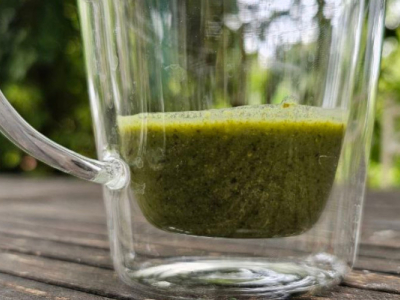
- In the morning: a smoothie with 5 g of rehydrated Irish Moss, half a squeezed lemon (vitamin C), a teaspoon of spirulina (about 3 g). In five minutes, you have covered a good part of your needs for precursors and cofactors.
- As a seasoning: wakame or dulse flakes on your salads — a pinch is enough for a supply of zinc and sulfur. Also discover the secrets of seaweeds for radiant skin.
- As a snack: a few squares of raw cacao for copper and antioxidant flavonoids.
- As a treatment: the Irish Moss broth we have developed — a concentrate of precursors in a comforting bowl.
What I like about this approach is that it doesn't rely on a miracle product but on a coherent diet. Gradually, at your own pace. This is actually the philosophy we have been advocating at Biovie from the start: living food as a transition, not as a dogma.
Complementary Actions
Diet is the foundation. But there are aggravating factors that need to be known:
Sun protection is essential. UV rays are responsible for up to 80% of visible skin aging — mainly through the activation of MMPs that degrade collagen. No need to stay indoors, but reasonable protection makes a real difference.
Sleep also plays a role. Collagen synthesis follows a circadian rhythm, with a nighttime peak. Poor sleep also means producing less collagen.
And then there's an aspect we often forget: iron. Iron participates in the hydroxylation of proline — thus in the stabilization of collagen. Seaweeds, especially spirulina, are excellent sources of plant-based iron. Our article plant-based iron: why seaweeds beat red meat details this advantage. And for hair beauty specifically, our guide spirulina and hair health is a good complement.
Another useful read if you want to understand the role of trace elements in these mechanisms: trace elements, the essential catalysts.
FAQ — Plant-Based Collagen
Does plant-based collagen really exist?
No. Collagen is an exclusively animal protein, composed of glycine, proline, and hydroxyproline in a triple helix. What marketing calls "plant-based collagen" actually refers to plant extracts that mimic certain effects of collagen (hydration, protective film) or foods that provide the necessary precursors for its synthesis by the body. Marine algae like Irish Moss (Chondrus crispus) are among the best plant sources of these precursors.
Which plant foods stimulate collagen production?
The most effective foods are those that combine amino acids (glycine, proline) and cofactors (vitamin C, zinc, copper, sulfur). Marine algae — Irish Moss, spirulina, chlorella, wakame — stand out for their complete nutritional profile. Citrus fruits, acerola, and camu-camu provide the essential vitamin C for the hydroxylation of proline. Raw cacao is an excellent source of copper. As part of a varied and balanced diet and a healthy lifestyle, these foods can contribute to maintaining normal skin.
Can Irish Moss Replace a Collagen Supplement?
Irish Moss does not contain collagen—no plant does. However, it provides amino acids (glycine, proline, arginine) and minerals (zinc, sulfur) that contribute to the endogenous synthesis of collagen. Its natural gel, rich in carrageenan, mimics some of the texturizing properties of collagen. This approach is different from an animal collagen supplement: rather than providing pre-formed collagen (which will be digested into amino acids anyway), it supports your body's ability to produce it on its own.
What Are the Signs of Collagen Deficiency?
The most common signs include: skin losing firmness and elasticity, more pronounced wrinkles and fine lines, more fragile hair and nails, less flexible joints, and slower recovery after exertion. Collagen production naturally decreases by about 1 to 1.5% per year starting from ages 25-30. In women, menopause accelerates this decline. A diet rich in collagen precursors (amino acids, vitamin C, zinc, copper) can help support endogenous production.
How to Naturally Boost Collagen After 40?
After 40, the strategy is based on three pillars: providing precursors through diet (seaweed, fruits rich in vitamin C, raw cocoa for copper), protecting existing collagen (sun protection, antioxidants, quality sleep), and limiting degradation factors (smoking, excess sugar, oxidative stress). A daily smoothie with 5 g of Irish Moss, 3 g of spirulina, and lemon juice is a simple and effective ritual to support collagen synthesis. Of course, this should be part of a varied and balanced diet.
Is Vegan Collagen in Dietary Supplements Effective?
"Vegan collagen supplements" do not contain collagen—they usually contain blends of vitamin C, plant-based amino acids, and minerals. Their effectiveness depends on their composition and dosage. The alternative: directly consuming whole foods rich in these same nutrients—seaweed, sprouted seeds, fresh fruits—which also offer antioxidants and protective polysaccharides absent from isolated supplements.
What is the Difference Between Marine Collagen and Plant Precursors?
Marine collagen is hydrolyzed animal collagen (fish, crustaceans), directly assimilable in the form of amino acids after digestion. Plant precursors (from seaweed, fruits rich in vitamin C, etc.) provide the raw materials and cofactors for your body to synthesize its own collagen. Marine collagen is not compatible with a vegan diet. Plant precursors, on the other hand, support the endogenous production mechanism—a complementary approach that can be integrated into any diet.
In Practice
This list is, of course, not exhaustive—but it covers the essentials of what you need to know about collagen and plant alternatives. Strictly speaking, plant collagen does not exist, it's true. But plant collagen precursors are very real. And seaweed—led by Irish Moss—offers a unique combination that neither fruits, terrestrial vegetables, nor isolated supplements can match.
To try it is to adopt it!
References
- Young, E.G., & Smith, D.G. (1958). "Amino acids, peptides, and proteins of Irish Moss, Chondrus crispus". Journal of Biological Chemistry, 233(2), 406-410.
- Aryee, A.N., et al. (2024). "An Update on the Chemical Constituents and Biological Properties of Selected Species of Chondrus". Marine Drugs, 22(1), 47.
- Varani, J., et al. (2006). "Decreased Collagen Production in Chronologically Aged Skin". American Journal of Pathology, 168(6), 1861-1868.
- Sibilla, S., et al. (2015). "Skin collagen through the lifestages: importance for skin health and beauty". Plastic and Aesthetic Research, 2, 153.
- DePhillipo, N.N., et al. (2018). "Efficacy of Vitamin C Supplementation on Collagen Synthesis and Oxidative Stress After Musculoskeletal Injuries: A Systematic Review". Orthopaedic Journal of Sports Medicine, 6(10).
- Peterkofsky, B. (1991). "Ascorbate requirement for hydroxylation and secretion of procollagen". American Journal of Clinical Nutrition, 54(6), 1135S-1140S.
- Shaw, G., et al. (2017). "Vitamin C–enriched gelatin supplementation before intermittent activity augments collagen synthesis". American Journal of Clinical Nutrition, 105(1), 136-143.
- Choi, J.W., et al. (2019). "Molecular Mechanisms of Dermal Aging and Antiaging Approaches". International Journal of Molecular Sciences, 20(9), 2126.
Update: April 2026. Article validated by Éric Viard, founder of Biovie and engineer at ISTOM, co-author of "Algues au quotidien" (Gallimard, 2024) — Best Cookbook in the World, Gourmand Cookbook Awards 2025, and Best Cookbook in France, Académie Nationale de Cuisine 2025.
Disclaimer: The information presented in this article is provided for informational purposes only and does not constitute medical advice. Consult a qualified healthcare professional before making any changes to your diet or supplementation. As part of a varied and balanced diet and a healthy lifestyle.