

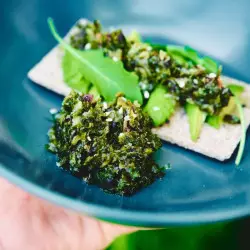
Kelp noodles have a quality few other bases share: they have almost no flavour of their own and soak up whatever you give them. That's exactly what's needed against a pesto as bold as this one, where fresh mint, ginger and a touch of jalapeño replace the usual basil and parmesan. Where most pestos are heavy and rich, this one stays light, with a distinctly Asian lean. That leaves the question of the noodles' texture, which come out of the packet firm and a bit rubbery: working them by hand in a mix of lemon juice and baking soda softens them within a few minutes. They then need a good rinse before seasoning, or the taste of the baking soda lingers. Around them, grated carrot and fresh corn cut straight off the cob with a knife bring crunch and colour, with a drizzle of avocado oil and the rest of the lemon juice. The pesto goes on at the last moment, and a few mint leaves and crushed almonds finish the plate.
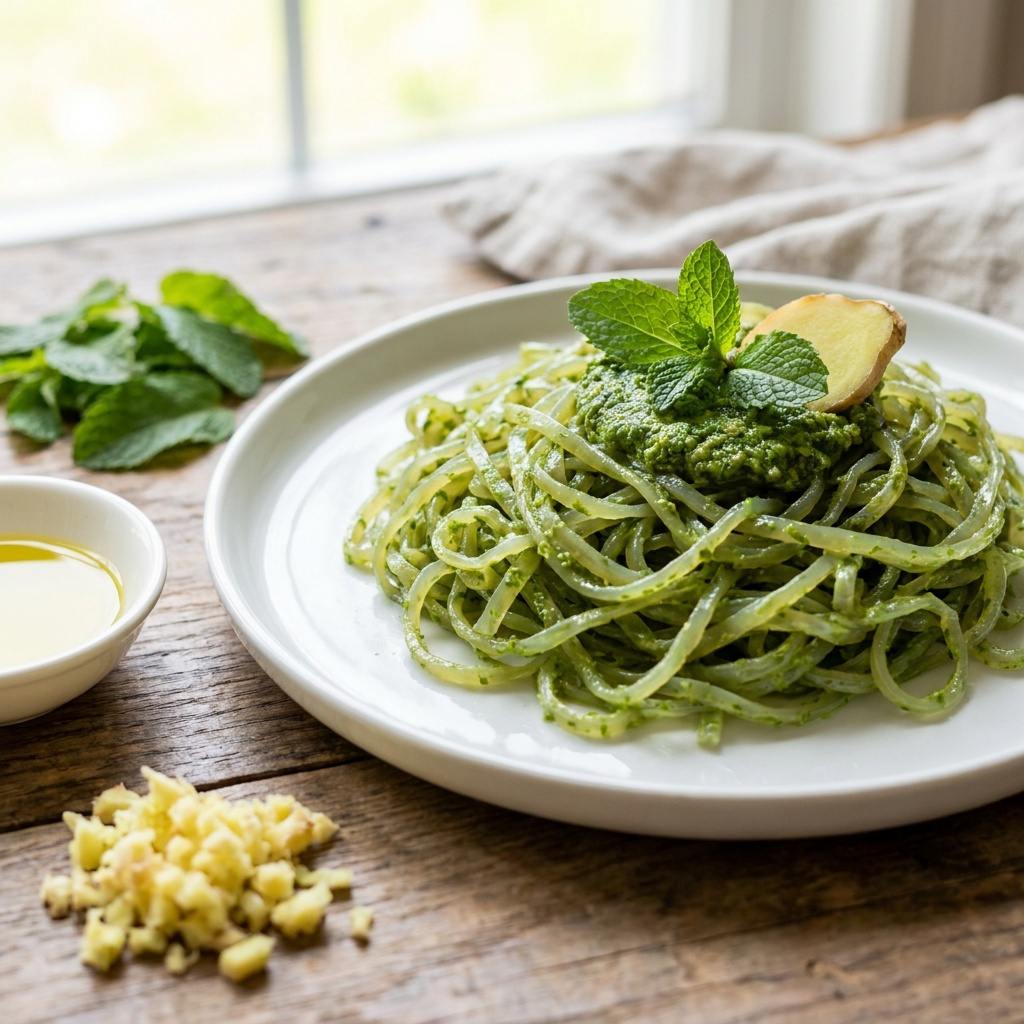
Kelp Noodles with Mint-Ginger Pesto

Share this article
Ingredients
For the pesto
- 3/4 cup fresh mint leaves, loosely packed
- 3 tablespoons avocado oil
- 1 teaspoon chopped fresh ginger
- 35 g raw almonds
- 3 to 4 whole garlic cloves
- 1 teaspoon chopped fresh jalapeño, or less if you're worried about heat
- 1 teaspoon raw honey
- 1/2 teaspoon sea salt
For the noodle salad
- 1 pack of 340 g kelp noodles
- 1 teaspoon baking soda
- 1 lemon, juiced
- 1/2 cup grated or julienned carrots
- 1/2 cup fresh corn kernels, cut straight off the cob
- 1 teaspoon avocado oil
- 1 pinch sea salt
Method
- For the pesto, put all the ingredients in the bowl of a food processor.
- Pulse for about a minute, scrape down the sides and set aside.
- In a medium bowl, mix the kelp noodles with the juice of half a lemon and the baking soda.
- Work them by hand until well coated, then let them rest while you prepare the rest, coming back to toss them from time to time so they keep softening. Rinse them thoroughly and pat dry before seasoning.
- Prepare the carrots and corn, then add the avocado oil, salt and the juice of the remaining half lemon. Toss to coat well.
- Combine this mixture with the rinsed, dried noodles.
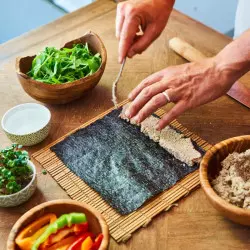
- Top with mint pesto, serve, and garnish with extra mint and crushed almonds.
Tip
Don't skip the rinse after the baking soda soak: otherwise the noodles keep a soapy aftertaste that stands out even more against such a fresh pesto. If the jalapeño worries you, add a small amount anyway: it mostly brings fragrance, not just heat.
The full range Dry algae
10 products
FAQ: your questions about sea beans
What are sea beans?
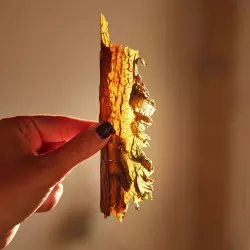
It's a brown seaweed, Himanthalia elongata, abundant on the coasts of Brittany, also called sea spaghetti or sea thong. The name comes from its shape: long, dark green strands that recall green beans, or indeed spaghetti. It's one of the few seaweeds that stands as a main ingredient on a plate, not just a condiment — hence its appeal as a noodle substitute.
How do you eat sea beans?
Fresh and desalted, it's served as is in a salad, with a good sharp vinaigrette, or cut into pieces in a bowl of raw vegetables. Dehydrated, allow about ten minutes to rehydrate in a little water: it takes up four to five times its volume, which makes the packet very economical. Its flavour is distinct but less briny than you might fear, with a touch of sweetness. Start with small amounts if you're new to seaweed.
What are the benefits of sea beans?
Both bring fibre, minerals — magnesium, calcium, iron — and iodine, in a very low-calorie food. Sea beans are particularly interesting for their vitamin C content, unusual for a seaweed. Like all brown seaweeds, it concentrates iodine: which is why moderation is wise rather than large daily amounts, especially if you're monitoring your thyroid.
What's the difference between samphire and sea beans?
These are two very different plants, often confused because they look alike on the plate. Samphire is a land plant, with fleshy, jointed stems, growing in salt marshes and coastal meadows — it isn't a seaweed at all. Sea beans, on the other hand, are truly a marine seaweed, harvested on the shoreline. In the mouth, samphire is noticeably saltier and crunchier, while sea beans are softer and more marine in flavour.
Share this article