


Kabocha squash is often called Japanese pumpkin for its colour and shape, but the resemblance stops at the market stall: it does not taste like a real pumpkin, and its flesh is much denser and sweeter. Here, a little raw kabocha, blended into a very fine purée, melts into the avocado: it brings an even creamier texture, a light sweetness reminiscent of chestnut and a lovely golden hue. Lime, coriander, garlic and spring onion keep all the character of the dish. A quick recipe for autumn aperitifs, to serve with raw vegetable sticks.
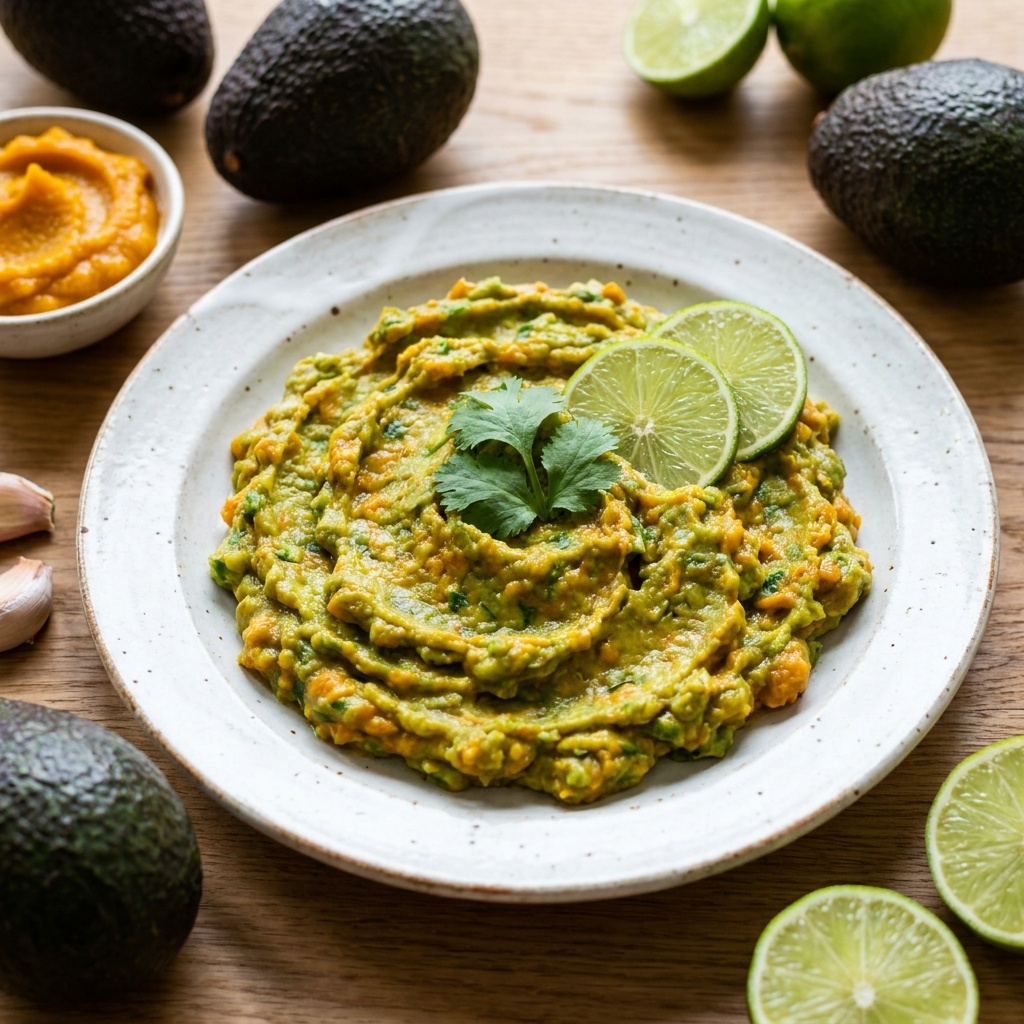
Kabocha squash and lime guacamole
Share this article
Ingredients
- 2 ripe avocados
- 60 g raw kabocha squash, peeled and blended into a fine purée
- 2 cloves of garlic, crushed
- 1.5 g salt (i.e. 1/4 tsp)
- 1 handful of fresh coriander, chopped
- 1 spring onion, sliced
- the zest and juice of 1 lime
Preparation
- Halve the avocados, remove the stone and scoop the flesh into a large bowl.
- Add the kabocha purée, garlic, salt, coriander, spring onion, lime zest and juice.
- Mash everything with a fork until you reach the desired texture, more or less rustic.
- Taste, adjust the lime and salt, then serve straight away.
Tip
To get a very fine raw kabocha purée, grate the flesh as finely as possible, then run it for a few seconds in the food processor or with a hand blender. No kabocha to hand? A red kuri squash works perfectly, with the same chestnut flavour. For a smoother guacamole, finish in the food processor with a few quick pulses. If you make it a little ahead, cover it with cling film or a plate in direct contact: the less air it sees, the better it keeps its colour.
The full range Organic Fresh Fruit
Enjoy a refreshing and nutritious coconut water thanks to these Thai organic green coconuts, proposed with its machete and STAINLESS STEEL straws, 16 products


FAQ: your questions about kabocha squash guacamole and Japanese pumpkin
What does kabocha squash taste like?
Kabocha, often called Japanese pumpkin, has dense, bright orange, distinctly sweet flesh with a pronounced chestnut flavour. Its texture is floury and less watery than that of a large pumpkin, which makes it a squash enjoyed both raw as a fine purée and cooked. The red kuri squash, a close cousin, has a fairly similar taste.
How do you cook kabocha squash?
Kabocha lends itself to many preparations: roasted, steamed, in soup or purée, but also raw, very finely grated or blended, as in this guacamole. Halve it, remove the seeds, then cut it into wedges before peeling it or not, depending on the recipe. Raw, prefer small amounts worked very finely, as the flesh is quite firm.
Which squashes do not need peeling?
Several squashes have skin thin enough to eat: red kuri, kabocha, delicata and young butternut. Once cooked, the skin becomes tender and is eaten without difficulty. For a raw preparation like this guacamole, however, it is best to remove the skin, which stays firm and slightly fibrous until cooked.
Can you replace kabocha squash with a real pumpkin in this guacamole?
A real pumpkin is much more watery and less sweet than kabocha: blended raw, it would give a runnier guacamole without the little chestnut taste that makes the recipe worthwhile. It is for this dense, almost floury texture that kabocha is preferred here.
Pumpkin, large pumpkin, kabocha squash: what is the difference?
In everyday language, pumpkin and large pumpkin are often confused, and that is no coincidence: both belong to the big squash family, like kabocha, red kuri or butternut. The classic pumpkin, the Halloween one, has more watery and blander flesh; kabocha is a Japanese squash with dense, sweet flesh, which is why it blends so well into avocado here.
Share this article
Related articles