You probably know the scene. The meal was simple, nothing fancy, and twenty minutes later the belly swells, pulls, ties itself in knots. A vague discomfort that comes back, week after week, without your ever really understanding why. If you live with this, you're not alone: irritable bowel syndrome is thought to affect roughly one person in ten worldwide, and far more women than men.
So, can lacto-fermented foods - raw sauerkraut, kimchi, jarred vegetables - really help when you have IBS? The honest answer: they're among the most interesting dietary avenues for supporting digestive comfort day to day, but they're neither a treatment nor a magic wand. Research shows encouraging signals on the microbiota and low-grade inflammation, with more nuanced results on pain and bloating themselves. And above all, everything depends on how you introduce them.
I've been practising living food for more than thirty years, and lacto-fermentation is one of the subjects that come up most often in my exchanges with you. Let's untangle it together, without dogma, looking at what the science says - and what it doesn't say yet.
Irritable bowel syndrome: what are we actually talking about?
Let's start by naming things, because words matter. Irritable bowel syndrome - IBS, sometimes called spastic colon or functional bowel disorder - is not an inflammatory disease like Crohn's, and it's not "all in your head" either. It's what researchers now call a disorder of gut-brain interaction (Bonaz et al., 2018). Put plainly: the communication between your digestive system and your brain goes off balance, and the gut becomes hypersensitive. A bit of bloating that would go unnoticed in someone else becomes, in you, real pain.
In practice, this shows up as recurring abdominal pain, bloating, and a transit that goes all over the place - diarrhoea, constipation, or the two alternating. IBS symptoms vary enormously from one person to the next, and that's exactly what makes the topic so confusing. Two people with the same diagnosis can experience radically different things.
One important point, and I'd rather be direct: IBS is a medical diagnosis. It's reached by ruling out other causes, with a doctor. Nothing you read here replaces that advice. My focus is food - the ground on which, frankly, we do have real room to manoeuvre day to day.
If you want to understand in detail how your flora is populated and fed, we've laid out the list of fermented foods and their role on the intestinal flora in another article.
The gut-brain axis: the key we too often forget
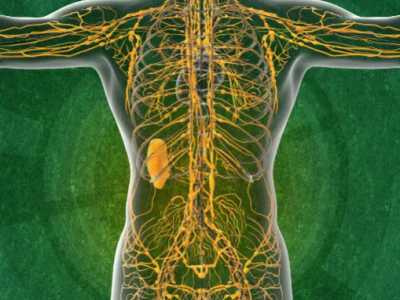
If I had to keep just one idea to understand IBS, it would be this one. Your gut and your brain are linked by a genuine nerve highway, whose main axis is the vagus nerve. This connection works both ways: the brain talks to the gut, but the gut answers back - and it has plenty to say, since it alone hosts hundreds of millions of neurons.
That's why stress so often worsens IBS. A stretch of tension, an upset, a sleepless night, and the belly takes the hit. Translated into everyday experience, it's that feeling everyone knows: a "knot in your stomach" before an important meeting. In someone with IBS, this normal mechanism loops and races out of control. The link between IBS and stress is therefore anything but anecdotal: it sits at the very heart of the mechanism.
What does that change in practice? Caring for your irritable bowel isn't only about watching your plate. It's also about calming the nervous system: slow breathing, sleep, walking, everything that gently stimulates the vagus nerve and puts the gut back into "rest and digest" mode. This is a subject I raise often, because we tend to think only about food while forgetting that the belly listens first to our inner state.
In this logic of a calmed terrain, some appreciate a gentle intake of marine minerals. Seawater / marine plasma, rich in trace elements in a naturally assimilable form, fits easily into a morning remineralising hydration routine - around 10 ml first thing on an empty stomach is enough. We stay here in the realm of overall support for the body, not a targeted promise on IBS.
Lacto-fermented foods and digestive comfort: what the science really says
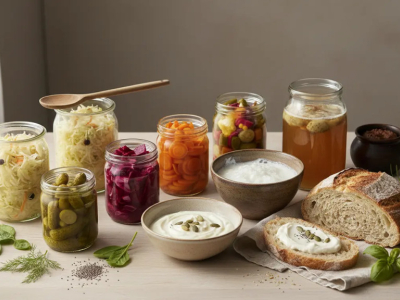
Now we reach the heart of the matter. Lacto-fermentation is an ancestral process: lactic bacteria are left to turn a vegetable's sugars into lactic acid. The result is a living, tangy food that keeps well - sauerkraut, kimchi, lacto-fermented pickles, brined beetroot - and that brings both bacteria and their metabolites.
What does research say for IBS? A review published in 2024 in Frontiers in Nutrition looked at fermented foods and digestive disorders. The overall signal points in the right direction, with a relative risk of around 1.22 in favour of a felt improvement in comfort. But - and I want to be honest, because this is where too many shortcuts appear - the effect was not statistically significant on specific symptoms such as bloating or pain, and it varied a great deal depending on the bacterial strains present. In other words: it helps some people, on some aspects, without our being able to promise anything to everyone yet.
Where the ground is firmer is on the microbiota itself. A Stanford University study (Wastyk et al., 2021) showed that a diet rich in fermented foods increased the diversity of the intestinal microbiota and lowered several markers of low-grade inflammation. Translated into perception: what participants reported, beyond the figures, was often a belly that "settles", a digestion that becomes more regular and less unpredictable again. And a more diverse microbiota is precisely one of the grounds we try to cultivate when the gut is fragile.
Why does this diversity matter so much? Because a rich microbiota is more stable, more resilient in the face of the small daily aggressions - a meal that's too heavy, an antibiotic, a stressful week. It's a bit like a meadow: the more species it has, the better it withstands bad weather. An impoverished flora, on the other hand, reacts at the slightest thing.
My conviction, after all these years: lacto-fermented foods deserve a real place in an IBS-friendly diet - not as a remedy, but as a terrain food, provided you introduce them with a light touch. And that "light touch" is no detail. It's actually the whole question.
To go further into the process itself, I've explained why lacto-fermentation is a genuine health asset - beyond digestive comfort alone.
Introducing ferments without making things worse: the rule of gradualness
Here's the mistake I see most often. Someone reads that raw sauerkraut is excellent for the gut, dives into a full plate on day one… and spends a dreadful evening. The upshot: they conclude that "ferments aren't for me". Whereas the problem was never the food. It was the dose and the speed.
Fermented foods are concentrated - in bacteria, in acids, and sometimes in fermentable compounds (the famous FODMAPs) which, in too large a quantity at once, can make an irritable bowel react. The logic is the same as training a muscle: you go gradually. The literature on introducing fibre in sensitive people echoes this caution - start low, build slowly.
In concrete terms, here's how I suggest going about it:
The first week, one small spoonful. Around 15 g of lacto-fermented vegetables, no more, once a day, preferably at the start of the meal.
Observe. For a few days, simply note how your belly reacts. That's your real compass, far more than any article.
Build up gently. If all goes well, you increase little by little over two to three weeks. The goal isn't quantity, it's regularity.
Choose truly living ferments. Unpasteurised, unheated, ideally organic. Shop-bought pasteurised versions have lost most of their interest.
The master idea: a small daily portion beats a big bowl once a week. The microbiota loves consistency, not jolts. And if one specific fermented food doesn't sit well despite the gradual approach, that's fine - there are dozens of them, and it's up to you to find the ones your belly accepts.
When digestion needs a helping hand: enzyme cures
There are moments when the gut is so overloaded that introducing new foods, even gentle ones, seems complicated. That's often where I suggest starting by "making room" - giving the digestive system a gentle pause before repopulating it.
That's the philosophy of enzyme cures such as Zencleanz ONE and Zencleanz FORGIVE, inspired by Dr Shinya's work on gut health. Rather than forcing, you support the body with enzymes and ferments to lighten the digestive workload over a short period. Many people use them as a reset before gradually reintroducing lacto-fermented vegetables into their daily routine.
If you want to try a "make room, then gently repopulate" approach over three to four weeks, a cure of this kind can be a good starting point - it's a framed process, not one more constraint.
Torn between the formulas? We compare which Zencleanz kit to choose depending on your goal.
A gentle routine for everyday digestive comfort
Let's gather all this into something liveable. Because the best diet for an irritable bowel is first and foremost the one you can keep up without it turning into an obsession.
In the morning, I'm a fan of gentleness: a glass of lukewarm water, possibly with a marine mineral intake, to wake the body without assaulting it. Lacto-fermented birch sap finds its place here nicely - light, subtly tangy, it accompanies a spring cure or a simple craving for digestive freshness.
What is marine plasma ?
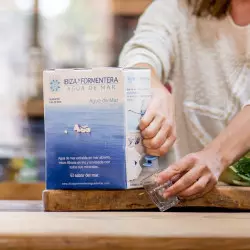
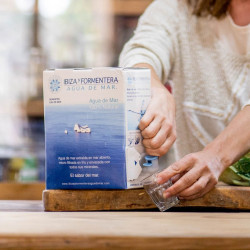
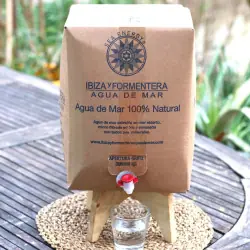
So-called hypertonic marine plasma is simply seawater harvested and filtered under very specific conditions.
Our supplier Ibiza Agua de Mar collects sea water from a depth of 25 meters off the coast of Ibiza in a UNESCO listed area.
Concerning the harvest, here are the different physico-chemical parameters measured during the search for an optimal place for the harvest of hypertonic marine plasma, first on the radar with reading of the currents and according to the marine weather (wind, swell, rain. ..) and then by local measurement of these different parameters: taste of seawater, dissolved O2 level, PH level, redox level (ORP), salinity level (TDS), conductivity level ( PSU), alkalimetric title (TA), Pressure. It is the empirical practice of the harvesters and the reading of the various measuring instruments that makes it possible to decide on the best complex combination of these measures together to decide whether the harvest is triggered on the site or whether another location is sought.
Where does marine plasma come from ?
The marine plasma is collected in the high seas, off the coast of Ibiza, in a specific area classified as UNESCO with high planktonic activity and with a presence of tens of square kilometers of Posidonia. It is indeed in this specific area that lives the largest living organism listed on Earth, a posidonia herbarium of 80,000 to 200,000 years extending over 15 kilometers in length.
Source: Sophie Arnaud-Haond, Carlos M. Duarte, Elena Diaz-Almela, Núria Marbà, Tomas Sintes, Ester A. Serrão: Implications of Extreme Life Span in Clonal Organisms: Millenary Clones in Meadows of the Threatened Seagrass Posidonia oceanica
When is it best to take marine plasma ?
The ideal is to consume marine plasma, which contains, let's remember, all the elements that make up Mendeleev's periodic table, in the morning when you get up, on an empty stomach. take 1/4 of hypertonic marine plasma to mix 3/4 of spring water or filtered water.
What are the benefits of marine plasma ?
Minerals are the "fuel" used primarily by our body, which is necessary for our cells to perform their functions optimally. They are also essential for the absorption of vitamins and are responsible for enzymatic processes in cells. Cells perform all their functions with maximum vitality and the precise capacity for organic, bioavailable, alkaline cellular nutrition. Thus, sea water becomes the best mineral drink since it contains all the elements of Mendeleev's periodic table.
Another of the great benefits of seawater is its pH. As Otto Warbürg, father of cellular respiration and two-time Nobel laureate, said, “all diseases are acidic and where there is oxygen and alkalinity there can be no disease”. Due to the quality of our raw material, the hyper-oxygenated waters of Posidonia meadows (recognized by UNESCO as a World Heritage Site in 1999) and sea currents providing purity and clarity: Ibiza and Formentera Agua de Mar have an alkaline pH , between 8.1 and 8.4, which will help the body maintain a neutral pH through homeostasis. The ingestion of sea water is advised to control and maintain our PH, as well as an exceptional supplement for alkaline diets.
The antioxidant and anti-acidity power produced by seawater is due to the alkalinity provided by the minerals.
Drinking filtered seawater in a direct and controlled way is very beneficial for your health, because seawater is an excellent nutrient, containing most of the minerals of the periodic table and all of them dissolved in the best universal solvent available: l 'water.
Seawater contains all the minerals of the periodic table of elements in a bioavailable way. It is thanks to this that foods cooked in seawater are rehydrated and remineralized to make foods with high nutritional power. The problem today is that our intake of minerals through food has dropped dramatically and what is causing this? The answer is very simple: pollution, soil depletion due to intensive agricultural production and our stressful pace of life have considerably reduced the quality of food and its mineral intake, drastically reducing the minimum contribution necessary for the proper functioning of the body.
Seawater also helps us stay young, for a simple reason: the body regularly and cyclically regenerates all its cells, because their lifespan is limited in time. As we age, one of the first faculties the cell loses is the ability to hydrate. We know that the older we get, the less we drink, so drinking and ingesting seawater can help us "wake up" this ability to hydrate ourselves., 4
products
Through the day, the watchword is regularity rather than performance. A "comfort" plate is often gently cooked vegetables - well tolerated when the gut is sensitive - with, alongside, your small portion of raw ferments. The warm-cooked and raw-living contrast is rather pleasant, and above all it spares the system. As for the foods to avoid with an irritable bowel, everyone has their own: very fatty meals, excess alcohol and coffee, large amounts of FODMAPs at once come up often - but nothing replaces observing your own triggers.
And then there's everything that isn't on the plate. Eating slowly, chewing properly, not gulping your meal down in front of a screen holding your breath. It sounds trivial - yet it's one of the things that changes the most, because we come back to that famous vagus nerve, to that calmed dialogue between belly and brain. Each at their own pace, without guilt if one day it goes off the rails. And remember: no need to be vegan or to overturn everything. You can add a portion of ferments at lunch and eat something entirely different in the evening. The irritable bowel loves nothing so much as kind consistency.
When should you see a doctor? The signals not to ignore
I'll finish with the most important part, and I'll say it plainly: food is a wonderful field of action, but it never replaces medical advice. Certain signals should lead you to consult without delay, rather than to adjust your plate.
Go and see a doctor, ideally a gastroenterologist, if you notice blood in the stools, unexplained weight loss, a fever that drags on, symptoms appearing after 50, anaemia, or waking at night because of pain. These are red flags: they don't necessarily mean anything serious, but they fall outside the frame of simple IBS and deserve examination.
And even without these signals, if your symptoms are poisoning your life, speak up. Getting a clear diagnosis already means regaining some control - and after that, living food and ferments take on their full meaning as travelling companions.
FAQ - IBS and lacto-fermented foods
Are fermented foods good for irritable bowel syndrome?
They can contribute to digestive comfort by supporting the diversity of the microbiota, but effects vary between people and bacterial strains. Research is encouraging on the microbiota, more nuanced on pain and bloating. The key is to introduce them gradually.
Where should you start when you have IBS?
With a small quantity - around 15 g of raw lacto-fermented vegetables a day - while observing your tolerance over one to two weeks before increasing. Regularity matters more than quantity.
Which foods should you avoid with an irritable bowel?
It depends a great deal on the individual, but very fatty meals, alcohol, excess coffee and large amounts of FODMAPs all at once are often poorly tolerated. The best approach is to identify your own triggers, ideally with a professional.
Does stress really worsen IBS?
Yes, via the gut-brain axis and the vagus nerve. Calming your nervous system - sleep, breathing, walking - is an integral part of managing IBS.
Is a probiotic enough for an irritable bowel?
A probiotic for irritable bowel can help some people, but it doesn't replace a suitable diet or medical follow-up. Lacto-fermented foods offer a complementary, more holistic approach, through everyday eating.
Updated: July 2026. Article written by Éric Viard, founder of Biovie and ISTOM
The information presented in this article is provided for informational purposes only and does not constitute medical advice. Irritable bowel syndrome is a diagnosis that falls to a healthcare professional. Consult a doctor or gastroenterologist before making any change to your diet, particularly in the case of persistent symptoms or warning signals.