
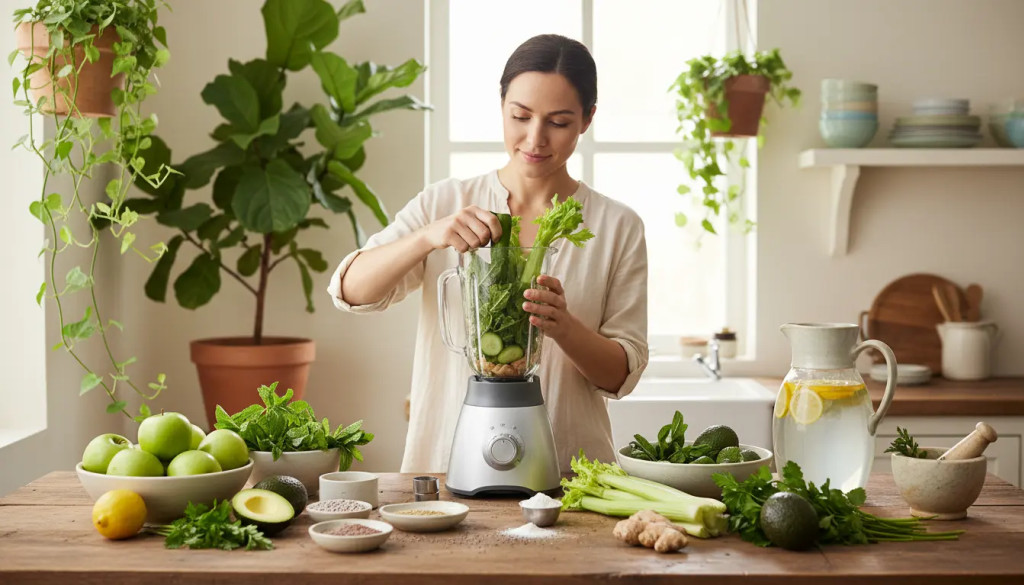

Here is a topic that has fascinated me for years and that I really wanted to share with you! Enzymes, we have been studying and using them for a few years, and they are truly at the heart of living food. And honestly, when you understand their fundamental role in the natural detoxification of the body, you wonder why they aren't talked about more.
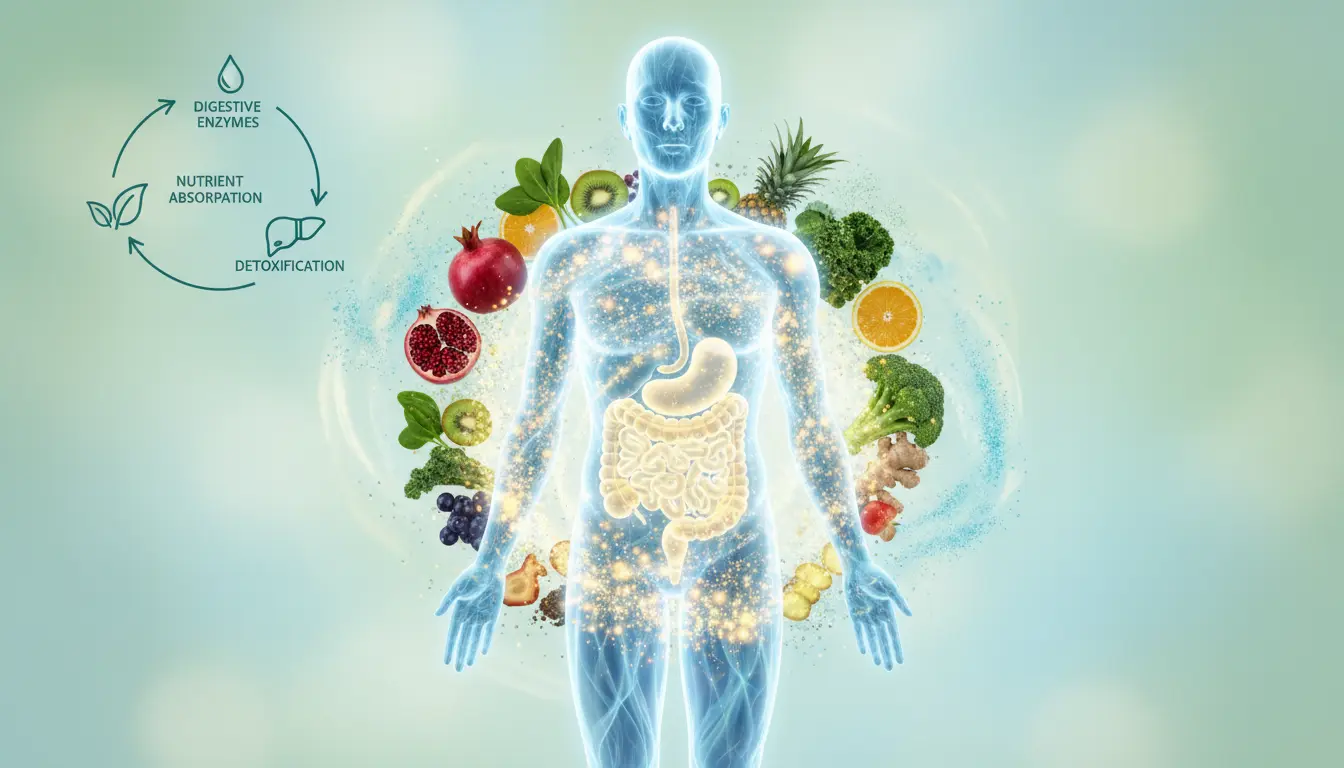
Digestive enzymes play a key role in the natural elimination of toxins by the body. By facilitating the complete digestion of food, they allow the liver and intestines to focus their energy on elimination functions rather than managing poorly digested food residues. It is a virtuous circle that science is just beginning to fully document.
In this article, I will concretely explain how the link between enzymes and detox works, which enzymes to prioritize, and how to incorporate an enzymatic detox regimen into your daily life to support your body's natural elimination functions.
Summary
- Understanding the link between enzymes and detoxification
- The two phases of liver detoxification
- Key enzymes to support natural elimination
- Symptoms of an enzyme deficiency
- Natural sources of enzymes in raw food
- Detox enzyme therapy protocols
- How to optimize your detoxification daily
- Frequently Asked Questions About Enzymes and Detox
Understanding the link between enzymes and detoxification
Let's start at the beginning. Why do we talk about digestive enzymes when discussing natural detoxification? The answer is both simple and fascinating.
Our body naturally produces thousands of different enzymes. Some are dedicated to digestion — these are digestive enzymes — while others, called metabolic enzymes, are involved in all the chemical reactions in the body, including the processes of eliminating undesirable substances.
In reality, these two families of enzymes are closely linked. Here's why: when your digestive system lacks enzymes to properly break down food, your body draws from its reserves of metabolic enzymes to compensate. The result? There are fewer enzymatic resources available for detoxification functions.
Dr. Edward Howell, a pioneer in enzyme research, demonstrated as early as the 1930s that our enzyme capital is not unlimited. This fundamental discovery explains why targeted supplementation can be so beneficial, particularly after the age of 40 when our natural enzyme production declines by 20 to 30%.
In practical terms, incomplete digestion generates partially degraded food residues that clog the digestive system. The liver, already burdened by environmental, dietary, and metabolic toxins, becomes overloaded. It's a bit like asking a wastewater treatment plant to process sewage while also having to manage solid waste — its efficiency inevitably decreases.
The two phases of liver detoxification
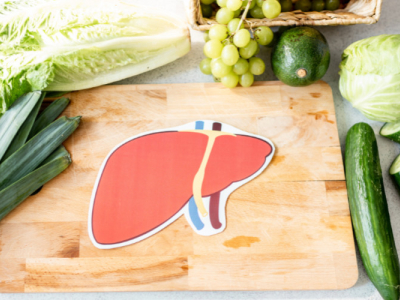
To fully understand how enzymes support natural detoxification, one must know the mechanisms of the liver. This extraordinary organ — the largest internal organ in the human body, weighing about 1.5 kg — works in two distinct phases to neutralize and eliminate toxins.
Phase I: The Transformation
During this first stage, specific liver enzymes (notably cytochromes P450) transform liposoluble toxins into intermediate compounds. This is an essential step but presents a paradox: these intermediate metabolites are often more reactive and potentially more harmful than the original toxins.
That is why Phase II is absolutely crucial.
Phase II: Conjugation
This second phase uses other enzymes to "conjugate" the Phase I metabolites with molecules that make them water-soluble. Once this transformation is completed, the toxins can be eliminated by the kidneys (via urine) or by the bile (via feces).
This is why an imbalance between these two phases can be problematic. If Phase I operates faster than Phase II, intermediate metabolites accumulate. It's a bit like a production line where the first station works faster than the second — semi-finished products pile up.
Digestive enzymes play an indirect but crucial role here: by ensuring optimal digestion, they release essential cofactors (vitamins, minerals, amino acids) that the liver needs to support these two phases of detoxification. Without proper nutrient absorption, even the healthiest diet cannot fully support your liver functions.
Key enzymes to support natural elimination
Not all enzymes are equal when it comes to supporting natural detoxification. Some play a particularly important role. Let me introduce the main ones:
Proteases
These enzymes break down proteins into amino acids. They are fundamental because certain amino acids (such as cysteine, glycine, and glutamine) are precursors of glutathione, considered the "master antioxidant" of the body and a major player in Phase II of liver detoxification.
A study published in BMJ Open Sport & Exercise Medicine (2017) demonstrated that supplementation with proteolytic enzymes helps reduce systemic inflammatory markers.
Lipases
They break down fats into fatty acids and glycerol. This is particularly important because many environmental toxins (pesticides, endocrine disruptors, heavy metals) are liposoluble and are stored in our adipose tissues. Proper digestion of lipids helps the body mobilize and eliminate these undesirable substances.
Amylases
These enzymes convert complex carbohydrates into simple sugars. Incomplete digestion of starches can lead to intestinal fermentations that produce endogenous toxins (such as alcohol and aldehydes) and overload the liver.
Bromelain and papain
These plant enzymes, extracted from pineapple and papaya respectively, have remarkable properties. They not only aid in the digestion of proteins but also support joint comfort and tissue recovery.
At Biovie, we worked for two years with experts to formulate Assimilate, our synergy of digestive enzymes. It combines proteases, lipases, amylases, and plant enzymes for comprehensive action at every meal — a true support for your daily detoxification.
Symptoms of an enzyme deficiency
How to know if your enzyme production is insufficient and affecting your elimination functions? Here are the signals your body may send you:
- Bloating after meals : one of the most common signs, especially after meals rich in proteins or fats
- Digestive heaviness : this sensation of "a weight in the stomach" that persists for hours after eating
- Postprandial fatigue : if you consistently feel sleepy after lunch, your digestion might be using up too much energy
- Excessive gas : sign that food is fermenting in the intestine instead of being properly digested
- Alternating constipation/diarrhea : irregular transit may reflect incomplete digestion
- Undigested food in the stool : direct observation of an enzyme deficiency
- Increasing food intolerances : when more and more foods "don't sit well"
Frankly, if you recognize yourself in several of these symptoms, an enzymatic detox cure can really change your digestive comfort. This is what we regularly observe with feedback from our clients.
The French market for enzyme-based dietary supplements experienced a 15% growth in 2024 according to Synadiet, reflecting a collective awareness of the importance of these molecules for digestive health and natural detoxification.
Natural sources of enzymes in raw food
Before talking about supplementation, let's talk about nutrition. Because that's where it all begins, and it's at the heart of our philosophy at Biovie since 2007.
Enzymes are naturally present in raw and living foods. The problem? Cooking beyond 42°C destroys almost all food enzymes. This is why living food — which we have been promoting since our beginnings — is so valuable for your enzyme capital and natural detox functions.
Fruits rich in digestive enzymes
- Fresh pineapple : source of bromelain, particularly concentrated in the stem
- The papaya: contains papain, a powerful proteolytic enzyme
- The mango and the ripe banana : rich in natural amylases
- The kiwi : contains actinidin, which aids in the digestion of proteins
Vegetables and sprouted seeds
The sprouted seeds are true enzymatic concentrates for detox. The germination process increases the enzyme content by 10 to 100 times compared to the dry seed. This is precisely why we were among the first in France to market the Easygreen automatic sprouter in 2007.
Fermented foods
Fermentation naturally produces enzymes:
- Raw sauerkraut
- Kimchi
- Miso
- Kefir
- Kombucha
The fermented foods bring not only enzymes but also probiotics that support the balance of your gut microbiota.
Algae: An Enzymatic Treasure for Detoxification
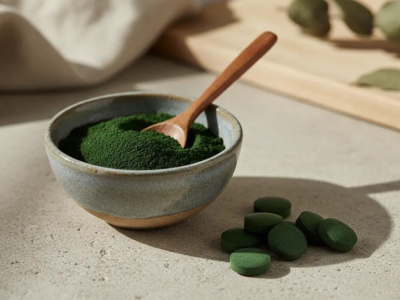
The organic spirulina and the organic chlorella are particularly interesting. Beyond their enzymes, they provide chlorophyll which supports cellular oxygenation processes and contributes to digestive comfort.

Chlorella also has the ability to bind to certain heavy metals, making it a valuable supplement in an enzymatic detoxification regimen. This is why we often recommend it in conjunction with enzymatic treatments.
Detox enzyme therapy protocols
Let's move on to practice. How to organize an enzyme cleanse to support your body's natural detoxification ?
The short cure: 7 days of digestive reset
A week is often enough to feel the first benefits of an enzymatic detox. This is the format we offer with ZenCleanz ONE, our flagship treatment imported from leading laboratories in enzyme therapy.
The ZenCleanz ONE protocol works on the entire digestive system — stomach, small intestine, colon — with concentrated enzymatic formulations. Many of our clients report a feeling of lightness and a boost of energy by the end of the first week.
The progressive cure: 14 to 21 days
For a deeper detox action, especially if you have chronic digestive symptoms, a 2 to 3-week treatment allows you to go further. You can combine ZenCleanz FLOW, focused on transit and elimination, with daily supplementation of Assimil.

The daily maintenance
After an intensive detox, it is ideal to maintain the benefits of detoxification with a regular intake of enzymes at each meal. One to two capsules of Assimil before main meals are usually sufficient.
The particular case of ZenCleanz FORGIVE
I wanted to mention ZenCleanz FORGIVE because it illustrates well our holistic approach to detoxification. This treatment includes an emotional support dimension, as Aurélie and I are convinced that digestive well-being is closely linked to emotional balance. Repressed emotions can literally "tie up" the stomach and disrupt digestion.
How to optimize your detoxification daily
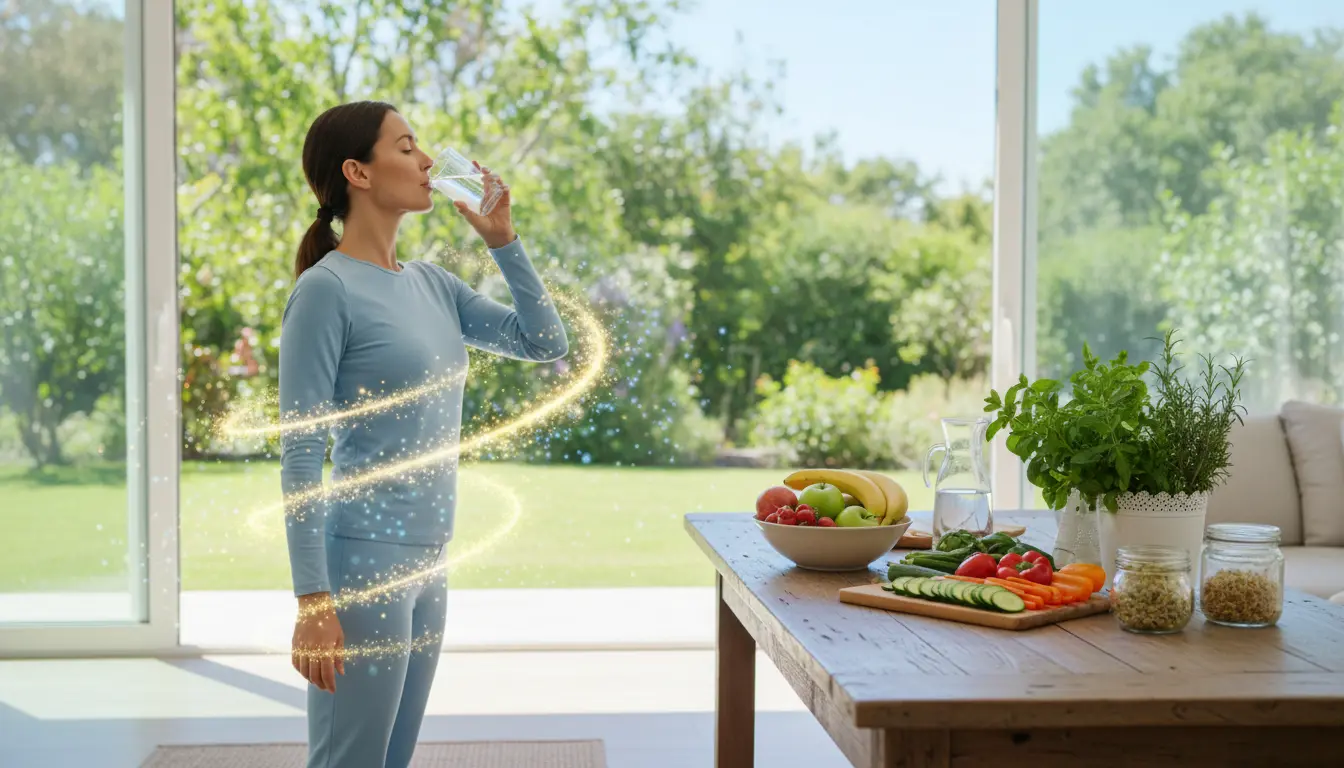
Beyond occasional enzyme treatments, here are my recommendations to support your natural elimination functions on a daily basis:
1. Chew, chew, chew !
Digestion begins in the mouth. Saliva contains salivary amylase which pre-digests starches. By chewing thoroughly (20 to 30 times per bite), you significantly reduce the workload of your stomach and pancreas.
2. Respect food combinations
Some combinations complicate digestion and detoxification:
- Avoid mixing fruits and proteins in the same meal.
- Starches and animal proteins together require antagonistic enzymes.
- Fruits digest better on their own, outside of meals.
3. Incorporate raw foods rich in enzymes into each meal.
Even if you cannot adopt a 100% raw diet, starting each meal with a salad or raw vegetables provides enzymes that aid in the digestion of the rest of the meal and support your natural detoxification.
4. Support your emunctories
The Emunctories — liver, kidneys, intestines, skin, lungs — are your elimination organs. Think about:
- Drink enough pure water (1.5 to 2 liters per day)
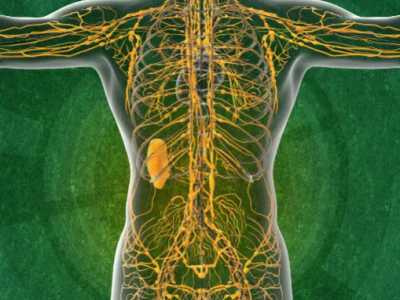
- Engage in regular physical activity that stimulates lymphatic circulation
- Sweat regularly (sauna, exercise)
- Promote daily transit
5. Take care of your liver
The liver is your detoxification powerhouse. Certain foods naturally support its functions: artichoke, black radish, milk thistle, lemon in the morning on an empty stomach. In fact, we have written a complete article on the best foods to support your liver health.
6. Restore your intestinal lining
A porous intestinal lining (the infamous "leaky gut") allows undesirable molecules to pass into the bloodstream, overloading the liver and compromising detoxification. L-glutamine, zinc, and digestive enzymes help maintain the integrity of this barrier. To learn more, check out our article on how to restore the integrity of your intestinal lining.
Frequently Asked Questions About Enzymes and Detox
What is the role of digestive enzymes in detoxification ?
Digestive enzymes facilitate the complete breakdown of food into absorbable nutrients. By preventing the accumulation of poorly digested food residues, they allow the liver to dedicate its enzymatic resources to the processes of toxin elimination (Phases I and II of hepatic detoxification) rather than managing incompletely degraded food molecules.
Do digestive enzymes really help eliminate toxins ?
Yes, indirectly but significantly. Digestive enzymes release essential nutrients (amino acids, vitamins, minerals) that the liver needs for its natural detoxification functions. Furthermore, a clinical study by Mahajan et al. (2023) showed that a multi-enzyme complex significantly improves markers of digestive function, which indirectly supports the body's elimination capabilities.
How long does an enzymatic detox cure last ?
Three main formats exist: the short 7-day cleanse for a quick digestive "reset," the intermediate 14-day cleanse for a deeper action, and the long 21-day cleanse for chronic issues. The choice depends on your personal situation and detoxification goals. After the cleanse, daily maintenance with enzymes at each meal helps to sustain the benefits.
What are the best enzymes to support natural detoxification ?
The most relevant enzymes for detoxification are: bromelain (pineapple) and papain (papaya) for proteins, lipases for fats, and amylases for carbohydrates. Plant-based formulations are generally preferred because they act over a wider pH range than animal-derived enzymes, making them effective throughout the digestive tract.
Is it possible to do an enzymatic detox without supplements ?
Theoretically yes, by adopting a 100% raw and living diet, rich in enzymatic foods (pineapple, papaya, sprouted seeds, fermented foods). In practice, it is difficult to maintain on a daily basis. Supplementation offers a practical and measured solution for detoxification, particularly useful after the age of 40 when natural enzyme production decreases by 20 to 30%.
What are the signs of a deficiency in digestive enzymes ?
The most common symptoms include: bloating after meals, persistent feeling of heaviness, post-meal fatigue, excessive gas, alternating constipation/diarrhea, and sometimes visibly undigested food in the stool. If several of these signs are familiar to you, an enzymatic detox cure can significantly improve your digestive comfort and elimination functions.
Are there any contraindications for digestive enzymes for detox ?
Certain precautions are necessary. People on anticoagulants should consult their doctor because bromelain can potentiate these treatments. In the case of active digestive pathology (ulcer, acute gastritis, Crohn's disease flare-up), medical advice is required. During pregnancy and breastfeeding, prioritize natural dietary enzymes over concentrated supplements, and seek advice from your healthcare professional.
In summary
Digestive enzymes are much more than just "aids to digestion." They are a crucial link in our natural ability to eliminate undesirable substances and optimize our detoxification. By facilitating complete digestion, they free up metabolic enzymatic resources for liver detoxification functions.
Whether you choose to enrich your diet with raw and fermented foods, undergo a periodic detox enzyme cure, or incorporate daily supplementation, you are providing your body with the tools it needs to function optimally.
With Aurélie, we have personally experienced the benefits of enzymatic detoxification treatments for years. It is this conviction, born from experience, that led us to develop our range and become the exclusive distributors of ZenCleanz in France.
Here you go, I hope this article has shed light on this fascinating subject for you. Feel free to contact us if you have any questions—our team of naturopaths will be happy to assist you in your natural detoxification process.
Ready to optimize your natural detoxification with enzymes ?
Discover our ZenCleanz range of enzymatic cleanses and our Assimil digestive enzymes to support your daily elimination functions.
A varied and balanced diet and a healthy lifestyle are important for your overall well-being.