Is Drinking Sea Water Good for You? Can It Really Remineralise You?
Anyone who has swallowed a mouthful while swimming knows that harsh taste that stings the throat. So, is drinking sea water good for you? I would not advise swallowing it on purpose, and any benefit comes down to a small dose: 10 ml of marine plasma provide about 13 mg of magnesium, around 4% of the reference for an adult woman, but also 108 mg of sodium. At Biovie, we did this calculation from the reference composition of sea water and the EFSA values.
What does sea water really contain?
Let's start with the label the sea doesn't have. Oceanographers have fortunately done the work for it: in 2008, Millero and colleagues published the reference composition of standard sea water, at salinity 35 (Millero et al., 2008). In one kilo of sea water you find 10.78 g of sodium, 19.35 g of chloride, 2.71 g of sulfate, 1.28 g of magnesium, 0.41 g of calcium and 0.40 g of potassium, for a total of 35.17 g of dissolved salts.
Try a thought experiment: let a litre of sea water evaporate in a pan in the sun, like a miniature salt marsh on your terrace. At the bottom you would be left with about 35 g of crystals, and almost all of it would be table salt. Sodium and chloride together weigh 30.1 g out of 35.2 g, or about 86% of the salts in sea water (Biovie calculation). Magnesium and calcium? They would fit in a pinch.
The rest is measured in traces, like strontium (0.008 g per kilo) or fluoride (0.0013 g per kilo). You will sometimes read, here and there, a precise number of elements, put forward without the slightest source. I stick to what the reference measures: it is less spectacular, but it is quite enough to say what matters. Sea water provides the whole marine spectrum, but in proportions dominated by salt by a very wide margin.
As an ISTOM engineer and founder of Biovie since 2007, I have made a habit of redoing the calculations before believing a promise (for the big seaweed articles on the blog, I spent days and days looking for studies that hold water). Type "is drinking sea water good for you" into a search engine: you will mostly land on spa or holiday pages, rarely on a figure in milligrams. Really, are these figures secret? Not at all, they are public. Today, ignorance is a choice, and I chose to give them to you. Here, we do the maths.
10 ml of sea water, or of hypertonic marine plasma, provide about 13 mg of magnesium, around 4% of the reference, but also 108 mg of sodium. Their interest lies elsewhere: the whole marine range, in its original proportions, in a small dose.
Here is the detail for 10 ml, calculated on 10 g from the reference composition (Millero et al., 2008) and compared with the EFSA references for magnesium (EFSA, 2015) and sodium (EFSA, 2019).
Mineral
Per 10 ml (about 10 g) of sea water
Share of the adult reference
Magnesium
12.8 mg
4.3% of 300 mg (women), 3.7% of 350 mg (men)
Sodium
108 mg
5.4% of the 2 g a day reference
Calcium
4.1 mg
A few milligrams
Potassium
4.0 mg
A few milligrams
An engineer's detail, for the nitpickers (I am one): 10 ml of sea water weigh a little more than 10 g, so the real figures are slightly higher. Nothing that changes the order of magnitude. Four percent of the reference is a mouthful in a big meal. Over a whole day, nobody notices it.
The real subject is the ratio. In sea water, there is about 8 times more sodium than magnesium, and the two travel together. Picture a train where every magnesium passenger necessarily boards with eight sodium passengers, without ever being able to book a seat all to itself. Let's do the maths: to reach 300 mg of magnesium, you would have to drink about 234 g of sea water, close to a quarter of a litre, which means about 2.5 g of sodium; for 350 mg, about 273 g and 2.9 g of sodium (Biovie calculations). In both cases, you go past the 2 g a day sodium reference before having eaten anything at all.
A quarter of a litre of sea water is a big glass. A single mouthful swallowed by accident while swimming is already enough to make you grimace!
It remains to see what these 300 or 350 mg represent, and here a clarification is needed. EFSA speaks of an "adequate intake": it is the average intake observed in healthy populations, not a vital minimum below which you would necessarily run short.
So, can you remineralise with sea water? Yes, but not with it alone. The benefits of drinking sea water come from its marine diversity (and I am not talking here about trace elements) far more than from its quantity: mineral intake comes through the plate, with green vegetables, nuts and seeds, seaweed and sprouted seeds, as part of a varied and balanced diet and a healthy lifestyle. Marine plasma comes on top of it without replacing it, and I have detailed elsewhere what marine magnesium really provides.
Why we don't drink sea water by the big glass
Can you drink pure sea water? Diluted and in small amounts, yes. By the big glass, no, and the mechanism is ruthlessly logical: the salt in a large volume has to be eliminated by the kidneys, which need water to do it. In short, you drink to hydrate, and you end up having to supply water to flush out what you just drank. That is why pure sea water, drunk in quantity, does not hydrate.
A systematic review published in 2025 gathered 22 studies carried out in coastal regions where the drinking water itself is becoming salty (Costopoulos et al., 2025). Long-term consumption of very salty water is associated there with more hypertension, more cardiovascular and kidney damage and more pregnancy complications, with eight studies remaining inconclusive. Careful not to mix everything up: the scope has nothing to do with a few millilitres of marine plasma, since this is water drunk every day, over the years. The dose matters.
Is too much sea salt bad for you? Even so, sodium is not the enemy it is sometimes made out to be: EFSA retains 2 g a day as an intake that is both safe and adequate for adults, pregnant or breastfeeding women included (EFSA, 2019). If you have high blood pressure, kidney or heart failure, a prescribed low-salt diet or a pregnancy, ask your doctor for advice before adding marine plasma. The full detail is in our article on precautions for using marine plasma.
Hypertonic or isotonic marine plasma: what dilution changes
On the bottles, two words keep coming up, and they are a little intimidating: hypertonic and isotonic. Nothing complicated, though. Hypertonic marine plasma is sea water as it is, cold micro-filtered, and it is the one that matches the contents of standard sea water. Isotonic is diluted to come closer to the concentration of blood: its minerals are proportionally less concentrated there, millilitre for millilitre.
Think of the syrup from your childhood. The same bottle, more or less topped up with water, keeps the same base flavour, but not the same intensity. That is exactly what separates the two forms, which start from the same sea water and differ only by dilution. Both fall under marine plasma following the protocol of René Quinton, whose name remains attached to the approach.
For a drink, hypertonic poured into a glass of water amounts to making your own dilution, at the dose you choose. If you hesitate, here is how to choose well between isotonic and hypertonic depending on the use.
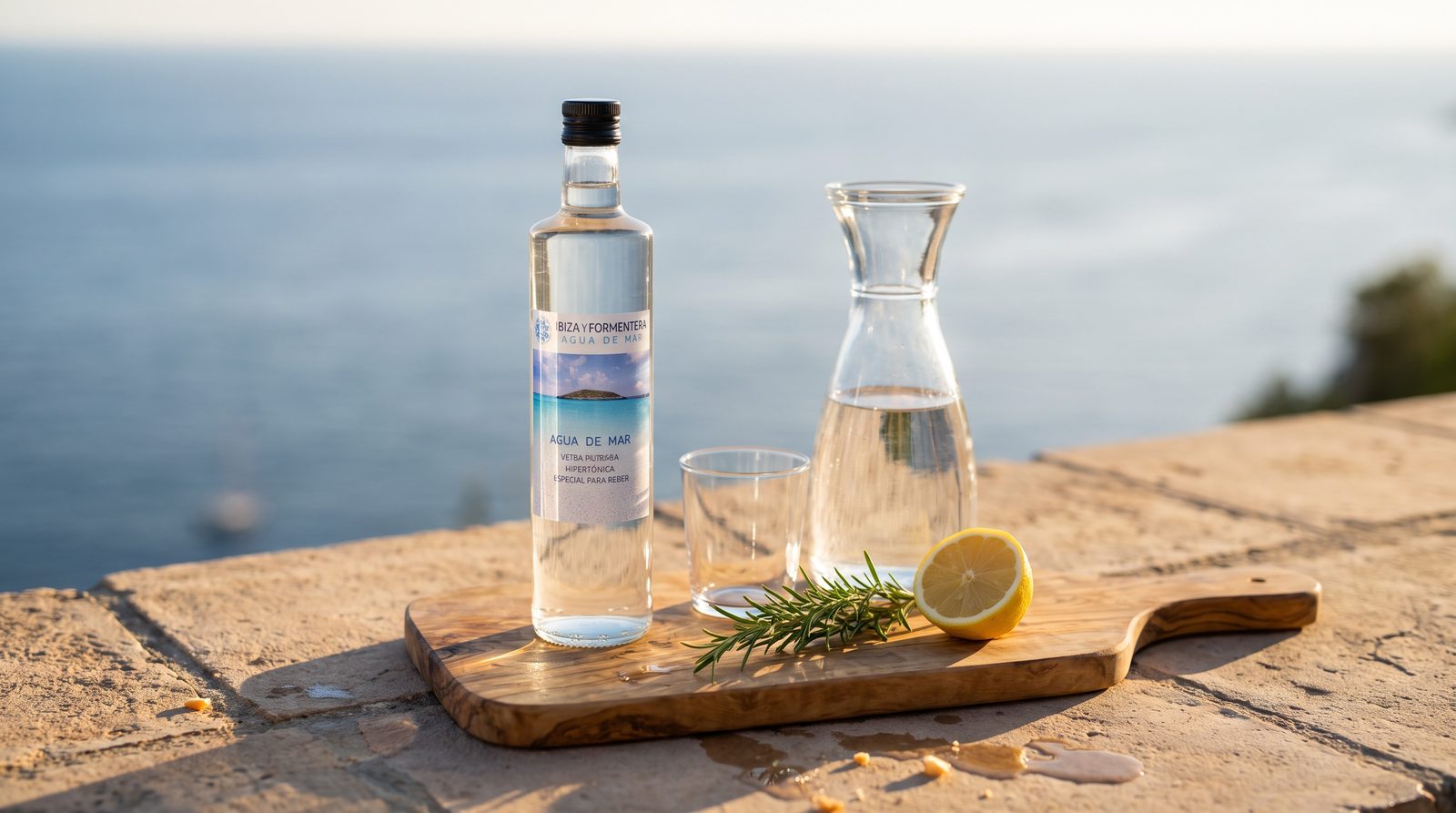
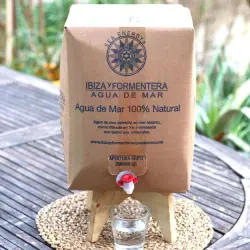
At Biovie, the hypertonic marine plasma from Ibiza comes in a 3-litre Bag-in-Box, a practical format for pouring a few millilitres over the days.
Is drinking sea water good for you? What human studies say
Before opening a study, an image helps a lot. Toss a coin eight times: if it lands on heads more often, that does not prove it is rigged, chance is enough to explain it. A trial run on 8 people looks like those eight tosses, and the bigger the sample grows, the more chance gets diluted (pun intended) and the more solid the result becomes. In a randomised trial, you also draw lots for who receives which drink, so as not to put the most enduring people on the same side without meaning to.
The human study closest to our question is precisely on 8 participants dehydrated by exercise, until they lost 3% of their weight (Keen et al., 2016). Losing 3% of your weight in sweat, you probably know it: it is the state after a long outing in the sun, dry mouth and heavy legs. After drinking a deep-sea mineral water, drawn from 915 m off Hawaii and then desalinated, the participants rehydrated faster (their salivary osmolality, in other words the concentration of their saliva, returned to normal sooner) and recovered better muscle-wise than with a spring water or a sports drink.
Two limits, however, and they weigh heavily. The sample is tiny, and it is a desalinated water enriched with its minerals, not marine plasma: this result remains a research lead specific to this study, not a claim validated by EFSA.
To date, I have not identified any human trial measuring the effect of drunk marine plasma on mineral status. It is a gap you rarely read about, and I would rather tell you than embroider. What can be said remains valuable: marine plasma provides all the minerals of sea water, in their marine proportions (Millero et al., 2008).
Using marine plasma day to day
The first step is low, very low: a few millilitres of marine plasma in the glass of water you already drink, or in a raw preparation like a vinaigrette or a gazpacho. No equipment, no ritual. For quantities and rhythm, everything is detailed in our article on marine plasma dosage and directions.
And the morning salt water, which so many people praise? Should you add salt to your water? If you like the habit, nothing stands in the way, provided you count that sodium in your day, keeping the EFSA 2 g reference in mind.
For my part, I add rather than remove, and it is toward the plate that I look first: seaweed, sprouted seeds, green vegetables, nuts and seeds. An avocado with seaweed tartare, and I have a fifteen-minute meal that satisfies me. Marine plasma slips in as a small marine note, as part of a varied and balanced diet and a healthy lifestyle. We are not here to fill a stomach, but to nourish an organism, and everyone goes at their own pace. My glass of hypertonic in the morning is part of my routine.
Marine plasma also has a place outside the kitchen: our 100 ml Marine Plasma Spray, which can replace the salt shaker, is also meant for external use, and I have gathered the dilutions for marine plasma in skin care.
What is marine plasma ?
So-called hypertonic marine plasma is simply seawater harvested and filtered under very specific conditions.
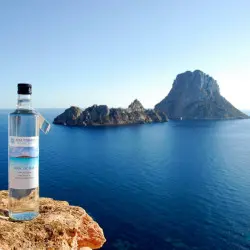
Our supplier Ibiza Agua de Mar collects sea water from a depth of 25 meters off the coast of Ibiza in a UNESCO listed area.
Concerning the harvest, here are the different physico-chemical parameters measured during the search for an optimal place for the harvest of hypertonic marine plasma, first on the radar with reading of the currents and according to the marine weather (wind, swell, rain. ..) and then by local measurement of these different parameters: taste of seawater, dissolved O2 level, PH level, redox level (ORP), salinity level (TDS), conductivity level ( PSU), alkalimetric title (TA), Pressure. It is the empirical practice of the harvesters and the reading of the various measuring instruments that makes it possible to decide on the best complex combination of these measures together to decide whether the harvest is triggered on the site or whether another location is sought.
Where does marine plasma come from ?
The marine plasma is collected in the high seas, off the coast of Ibiza, in a specific area classified as UNESCO with high planktonic activity and with a presence of tens of square kilometers of Posidonia. It is indeed in this specific area that lives the largest living organism listed on Earth, a posidonia herbarium of 80,000 to 200,000 years extending over 15 kilometers in length.
Source: Sophie Arnaud-Haond, Carlos M. Duarte, Elena Diaz-Almela, Núria Marbà, Tomas Sintes, Ester A. Serrão: Implications of Extreme Life Span in Clonal Organisms: Millenary Clones in Meadows of the Threatened Seagrass Posidonia oceanica
When is it best to take marine plasma ?
The ideal is to consume marine plasma, which contains, let's remember, all the elements that make up Mendeleev's periodic table, in the morning when you get up, on an empty stomach. take 1/4 of hypertonic marine plasma to mix 3/4 of spring water or filtered water.
What are the benefits of marine plasma ?
Minerals are the "fuel" used primarily by our body, which is necessary for our cells to perform their functions optimally. They are also essential for the absorption of vitamins and are responsible for enzymatic processes in cells. Cells perform all their functions with maximum vitality and the precise capacity for organic, bioavailable, alkaline cellular nutrition. Thus, sea water becomes the best mineral drink since it contains all the elements of Mendeleev's periodic table.
Another of the great benefits of seawater is its pH. As Otto Warbürg, father of cellular respiration and two-time Nobel laureate, said, “all diseases are acidic and where there is oxygen and alkalinity there can be no disease”. Due to the quality of our raw material, the hyper-oxygenated waters of Posidonia meadows (recognized by UNESCO as a World Heritage Site in 1999) and sea currents providing purity and clarity: Ibiza and Formentera Agua de Mar have an alkaline pH , between 8.1 and 8.4, which will help the body maintain a neutral pH through homeostasis. The ingestion of sea water is advised to control and maintain our PH, as well as an exceptional supplement for alkaline diets.
The antioxidant and anti-acidity power produced by seawater is due to the alkalinity provided by the minerals.
Drinking filtered seawater in a direct and controlled way is very beneficial for your health, because seawater is an excellent nutrient, containing most of the minerals of the periodic table and all of them dissolved in the best universal solvent available: l 'water.
Seawater contains all the minerals of the periodic table of elements in a bioavailable way. It is thanks to this that foods cooked in seawater are rehydrated and remineralized to make foods with high nutritional power. The problem today is that our intake of minerals through food has dropped dramatically and what is causing this? The answer is very simple: pollution, soil depletion due to intensive agricultural production and our stressful pace of life have considerably reduced the quality of food and its mineral intake, drastically reducing the minimum contribution necessary for the proper functioning of the body.
Seawater also helps us stay young, for a simple reason: the body regularly and cyclically regenerates all its cells, because their lifespan is limited in time. As we age, one of the first faculties the cell loses is the ability to hydrate. We know that the older we get, the less we drink, so drinking and ingesting seawater can help us "wake up" this ability to hydrate ourselves., 4
products
As a drink, sea water is used in the form of marine plasma, in small amounts: a few millilitres diluted in a glass of water or in a raw preparation like a vinaigrette. For external use, it is applied to the skin, as a spray or diluted. The quantities are detailed in our article on marine plasma dosage and directions.
Does sea water purify the body?
No, sea water does not purify the body. It provides salt, which the kidneys then have to eliminate: 10 ml contain about 108 mg of sodium, against a reference of 2 g a day for adults according to EFSA. Its interest remains a small mineral intake, as part of a varied and balanced diet and a healthy lifestyle.
Is it good to wash with sea water?
Yes, washing with sea water is a traditional skin use, at the seaside as well as at home with diluted marine plasma or a spray. It is a gesture of hygiene and comfort. No promise of care. The possible dilutions are detailed in our article on marine plasma applied to the skin.
How many minerals does sea water contain?
Sea water contains about 35 g of dissolved salts per kilo, at standard salinity. Sodium and chloride make up about 86% of it, magnesium 1.28 g per kilo and calcium 0.41 g, according to the reference composition published by Millero and colleagues in 2008. The rest is measured in traces, like strontium.
Can you drink pure sea water?
In small diluted amounts, yes; by the big glass, no. Ten millilitres of sea water already provide about 108 mg of sodium, whereas EFSA retains a reference of 2 g a day for adults. Drunk in large quantity, pure sea water forces the kidneys to eliminate a lot of salt and does not hydrate.
Is drinking sea salt water good for you in the morning?
No effect specific to the morning has been shown. Drinking a little water with marine plasma on waking remains possible if you like the habit, provided you count that sodium in your day, keeping in mind the 2 g a day reference retained by EFSA for adults.
The information presented in this article is provided for informational purposes and does not constitute medical advice. Consult a healthcare professional before making any change to your diet or supplementation.