Fast delivery
.png)
 Fair prices


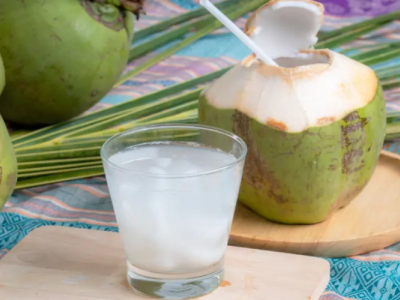

Fresh coconut water is indeed a remarkable drink — rich in natural electrolytes, with nearly 350 mg of potassium per 100 ml, magnesium, calcium, and only 15 to 20 kcal. This nutritional profile makes it a serious alternative to industrial recovery drinks. But here is the point that almost all the articles overlook. : not all coconut waters are the same. The industrial pasteurized form and fresh coconut are biologically two different products. Here, I explain — based on available studies and eighteen years of experience in living foods — what coconut water can truly offer, and especially how not to miss out on its best benefits. If you have already read our Article on Fresh Organic Coconut Water, this article goes further into the science and the comparison between fresh and pasteurized.
What exactly is coconut water ?
Coconut water, coconut milk, coconut water: why everyone gets confused
The confusion is real — and it's costly in supermarket aisles. I regularly see people grabbing a carton of "coconut milk" thinking they are buying coconut water. It's not the same thing at all, neither in taste nor nutritionally.
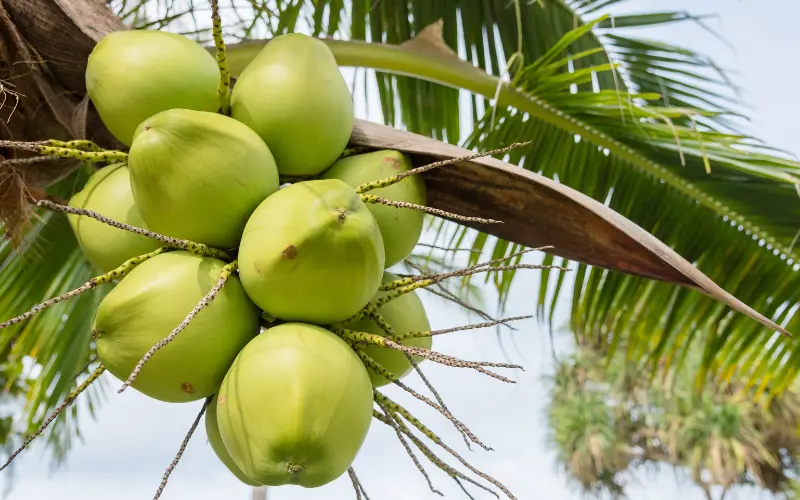
Coconut water — the liquid naturally present inside the green coconut, before full maturity. Transparent to slightly cloudy, very fluid. Approximately 17 kcal, 3.7 g of carbohydrates, and 350 mg of potassium per 100 ml. Usage: refreshing drink, sports recovery, smoothie base.
Coconut milk — an emulsion obtained by pressing the white flesh of the ripe coconut. Opaque white, creamy texture. Approximately 180 to 220 kcal, 17 to 20 g of fat per 100 ml. Usage: cooking, curries, desserts. Not to be confused with coconut water, neither in taste nor in nutritional profile.
Coconut water — simply another name sometimes used in France to refer to coconut water. It's the same product.
Concretely: coconut water is the liquid naturally present in the cavity of the green coconut, before full maturity. It contains almost no fat. Coconut milk is a completely different story — obtained by grinding and extracting the flesh of the mature coconut. Two nutritional worlds that only have the coconut in common.
The nutritional composition of fresh coconut water: what 100 ml really contains
Here is what fresh coconut water actually contains, according to ANSES/Ciqual and USDA FoodData Central data:
- Calories: ~17 kcal (< 1% of the NRV)
- Carbohydrates: 3.7 g — including 2.6 g of natural sugars
- Proteins: 0.7 g
- Lipids: < 0.2 g
- Potassium: 250–350 mg (7 to 18% of the NRV)
- Magnesium: 25 mg (7% of the NRV)
- Calcium: 24 mg (3% of the NRV)
- Sodium: 105 mg (5% of the NRV)
- Vitamin C: 2.4 mg (3% of the NRV)
- pH: 4.7–5.5 (slightly acidic)
What fascinates me about this profile is the combination of K/Mg/Na. It is biologically coherent with what the body needs after exertion — potassium for muscle contraction, magnesium for nerve recovery, and sodium to compensate for sweat losses. This formula wasn't "optimized" in a laboratory. The nut did it, after millions of years of evolution.
Discover our fresh organic coconut — the same one Eric has been consuming for years.
What are the real health benefits of coconut water ?
Is coconut water really better than a sports drink for recovery ?
This is the question that comes up most often — and the study by Kalman et al. (2012), published in the Journal of the International Society of Sports Nutrition, provides a nuanced response. Among 12 athletes trained, fresh coconut water proved to be as effective as a standard sports drink for post-exercise rehydration, with participants reporting better gastric tolerance.
Organic fresh coconut water — ~350 mg of potassium, 105 mg of sodium, 0 added sugar, natural electrolytes, no additives.
Standard sports drink — ~50 mg of potassium, 400 to 600 mg of sodium, 14 to 20 g of added sugars, synthetic electrolytes, colorings, and flavors.
Still water — 0 electrolyte, 0 sugar. Sufficient for short efforts.
To be honest — and this is the stance we try to maintain at Biovie — fresh coconut water is not a panacea for high-level sports. Its sodium content (105 mg/100 ml) is lower than what athletes lose during intense or prolonged efforts. For a short session, still water, or hydrogenated still water enough. For an effort lasting more than an hour, fresh coconut water provides quality rehydration without the added sugars and additives found in industrial drinks. For very intense efforts or in high heat, you can supplement with a pinch of sea salt.
And to delve even deeper into the topic of natural electrolytes, I refer you to our article on the Marine plasma and electrolytes — two complementary approaches, not competing ones.
Is coconut water good for the heart and blood pressure ?
An observational study by Pinto et al. (2015) explored the effect of coconut water consumption on certain cardiovascular markers. The results are encouraging — but I want to clarify the level of evidence: this is an observational study, not a randomized clinical trial. It does not have the same scientific value.
What can be said with certainty, because it is a claim validated by the EFSA (ID 3731): Potassium contributes to the maintenance of normal blood pressure. Coconut water, with its potassium content, can therefore be integrated—within the context of a varied and balanced diet—into an overall approach to supporting cardiovascular health. That's it. That's what can be said. No more, no less.
Does coconut water raise blood sugar levels ?
Its glycemic index is estimated to be between 40 and 55, which is considered moderate. In practice, this means that coconut water does not cause a sharp glycemic spike like a typical sugary drink, thanks to its low sugar content (2.6 g per 100 ml) and the presence of trace amounts of fiber.
That said, beyond 500 ml per day, the intake of natural sugars becomes significant. In practice, 200 to 300 ml is the reasonable amount for the vast majority of healthy adults. If you have diabetes, I encourage you to discuss it with your doctor before incorporating coconut water into your daily routine — it's not my place to give you this type of medical advice.
Coconut water and digestion: what can we really expect ?
The magnesium in coconut water contributes to the normal functioning of muscles — which includes intestinal muscles (EFSA claim ID 374). This is a precise and honest formulation that describes a real physiological mechanism without overselling a spectacular digestive effect.
Its slightly acidic pH (4.7 to 5.5) is well tolerated by the vast majority of people. Frankly, among natural drinks, it is one of the gentlest on the digestive system. And if you are into homemade fermentations, coconut water is an excellent base. Our recipe for homemade coconut water kefir is the best demonstration of it.
The antioxidants in coconut water: an often underestimated benefit
Vitamin C — even in modest amounts — is a recognized antioxidant. The authorized EFSA claim: vitamin C helps protect cells against oxidative stress. Nothing revolutionary at 2.4 mg per 100 ml, but it is consistent with the overall profile.
What is truly specific to fresh coconut, however, are the Cytokines — including zeatin, a bioactive compound found in early mature green coconut. These molecules are heat-sensitive. They disappear during pasteurization. They are what make the fresh form irreplaceable — and that is precisely what we are going to discuss now.
Why fresh form changes absolutely everything
Pasteurization and coconut water: what heating destroys
HTST pasteurization (High Temperature Short Time) involves heating the liquid to about 72°C for 15 seconds — sometimes longer depending on the process. This is sufficient to denature natural enzymes and degrade heat-sensitive cytokines.
It's like freshly squeezed orange juice in the morning versus long-life carton orange juice: the composition changes radically. The same goes for coconut.
Let's be precise: pasteurization preserve the electrolytes (potassium, magnesium, sodium — they resist heat). But she alters thermosensitive bioactive compounds — cytokines, enzymes, and a portion of vitamin C. This is not alarmism: it's chemistry. Fragile molecules do not withstand heat. And our article on the Enzymes and raw food Develop this point in detail.
Fresh coconut water vs. pasteurized: a point-by-point comparison
Organic fresh coconut water:
- Potassium: ~350 mg / 100 ml
- Cytokines / zeatin: present
- Vitamin C: 2.4 mg
- Added sugars: none
- Preservatives: none
- Flavor: sweet, slightly sugary, vegetal
- Storage: 2-3 days in the refrigerator
Industrial pasteurized coconut water:
- Potassium: ~250 mg / 100 ml (estimated loss ~30%)
- Cytokines / zeatin: destroyed
- Vitamin C: significantly reduced
- Added sugars: often present (depending on the brand)
- Conservatives: sometimes present
- Flavor: sometimes bland, artificial acidity
- Shelf life: 12–24 months
Sources: USDA FoodData Central + thermal stability data (Bhargava et al., 2009)
What industrial coconut water really contains (the list of ingredients decoded)
Return any carton of coconut water in the supermarket. Just read the list of ingredients. You will often see: sugar, synthetic ascorbic acid, natural coconut flavors (when coconut water needs to be "flavored," it means the original taste has disappeared during pasteurization), acidity regulators. Some products add water to dilute and increase the volume.
The ideal list of ingredients? One only: coconut water.
This is exactly the standard we apply at Biovie. One ingredient, zero compromises.

How to consume coconut water to get the most out of it ?
What is the best time to drink coconut water ?
Three moments stand out, and they meet different physiological needs:
- In the morning on an empty stomach — gentle rehydration after the 7 to 8 hours of overnight fasting. The body has lost water and electrolytes during the night (breathing, light sweating). 200 ml of fresh coconut water is a smooth transition.
- Before, during, or after physical exertion — natural electrolyte supply, without added sugars or additives. Particularly relevant for sessions between 45 minutes and 1 hour 30 minutes.
- In case of extreme heat — Coconut water can partially replace plain water on very hot days, especially during outdoor activities.
There you go. It's not more complicated than that. Coconut water doesn't need to be turned into a ritual to be beneficial.
How much coconut water should you drink per day ?
For a healthy adult: 200 to 500 ml per day is a relevant window. Below 200 ml, the intake of electrolytes remains negligible. Beyond 500 ml, the cumulative intake of natural sugars and potassium deserves attention — especially for individuals with kidney conditions, for whom medical advice is recommended before any regular consumption.
Coconut water on an empty stomach: good idea ?
Personally, I consume it in the morning upon waking, and when breaking a fast. It's a gentle transition between the night's fast and the first meal of the day. 200 ml, no more. The slightly acidic pH (4.7 to 5.5) is well tolerated by most people — including those with a sensitive stomach.
This consumption on an empty stomach has become a habit for Aurélie and me for several years. It is not attributed with any magical virtue — but it's a good way to hydrate intelligently before starting the day.
Coconut water and sports: before, during, or after exercise ?
Kalman et al. (2012) tested fresh coconut water, concentrated coconut water, and a standard sports drink on rehydration parameters after exercise. Result: all three drinks are equivalent for standard rehydration. However, coconut water is the only one that does not contain any added sugars or additives.
Important nuance: for efforts lasting more than 1.5 hours or high-intensity sports, the sodium in coconut water (105 mg/100 ml) becomes insufficient to compensate for significant sweat losses. In this case, a pinch of sea salt in 300 ml of fresh coconut water corrects the issue. Simple. Effective.
Does coconut water help with weight loss ?
What studies really say about coconut water and weight
No. Coconut water does not cause weight loss on its own. There is no serious study demonstrating a direct effect on body weight. There you have it—it's stated clearly, because I prefer to tell you myself rather than let you read articles that would sell coconut water to you as a slimming product.
On the other hand, it can be very naturally integrated into a weight management approach for three concrete reasons:
- It is very low in calories: about 17 kcal per 100 ml — far ahead of fruit juices, sodas, and even some flavored waters.
- It can replace much sweeter drinks, thereby reducing the overall caloric intake for the day.
- Its light fiber content can contribute to satiety, even though the effect remains modest.
That's all. "Can be part of a varied and balanced diet." That's the honest wording. And that's already good.
Are there any dangers or contraindications to coconut water ?
Is it good to drink coconut water every day ?
For the vast majority of healthy adults, 200 to 300 ml of fresh coconut water per day is safe and potentially beneficial. This is a direct answer because the question deserves a direct response.
Four situations, however, deserve special attention:
- Kidney failure — The potassium content in coconut water (250 to 350 mg/100 ml) can be problematic for individuals whose kidneys do not filter potassium properly. Consult your doctor for advice.
- Hypotension — Coconut water can slightly accentuate already low blood pressure in some people. To be monitored.
- Coconut allergy — rare, but real. If you have ever reacted to coconut-based products, be cautious.
- Diabetes — The moderate glycemic index and low sugar content are not problematic at 200–300 ml/day for most people, but the advice of a healthcare professional is still recommended to adjust your overall diet.
The information presented in this section is provided for informational purposes only and does not constitute medical advice. Consult a qualified healthcare professional before making any significant changes to your diet.
How to choose a truly quality coconut water ?
What differentiates fresh organic coconut water from an industrial product
Six concrete criteria — and nothing else:
- List of ingredients: a single ingredient. Coconut water. Any longer list is a signal.
- EU Organic Farming Certification. It guarantees the absence of synthetic pesticides on the nuts, which concentrate agrochemical residues in their water.
- Unpasteurized or HPP (High Pressure Processing). HPP treatment uses pressure instead of heat — it better preserves bioactive compounds. It is the least damaging alternative to traditional thermal processes.
- No flavoring, no added sugar, no acidity regulator. If the label mentions it, put the product back.
- Packaging protecting against oxidation — opaque packaging, protected atmosphere.
- Traceability of origin. The best organic coconuts come from Thailand, Sri Lanka, and Vietnam, where organic supply chains are structured and certified.
Labels to identify and marketing traps to avoid
"100% natural" is not an official label. It does not mean organic, additive-free, or unpasteurized. Any product can claim this without any regulatory constraints.
"Reconstituted coconut water" — this means that coconut powder has been taken and rehydrated with water. It is not at all equivalent to fresh coconut water, neither in taste nor in nutritional profile.
"Green coconut water" — the marketing plays on the color of the green shell on the outside. It doesn't tell us anything about what's inside. Look at the ingredients, not the packaging.
At Biovie, our fresh organic coconut water meets all of these criteria. It's the same one that Aurélie and I use daily in our smoothies and fermentations.
Discover our fresh organic coconut
In practice: incorporating coconut water into a raw food diet
5 simple ways to use fresh coconut water daily
No need to complicate. Here are the five uses that have naturally become part of our daily lives:
- Morning smoothie — 200 ml of fresh coconut water as a liquid base, with half a frozen banana and a small teaspoon of spirulina (3 g). This has been our standard for years. Quick, complete, no added sugar.
- Homemade coconut water kefir — Coconut water is an exceptional base for fermentation. Our article homemade coconut water kefir detail the complete protocol.
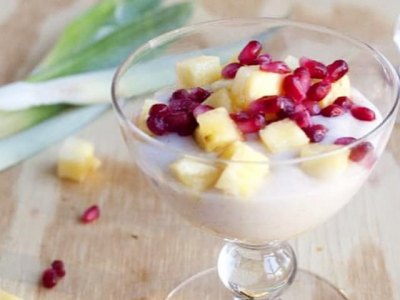
- Homemade coconut yogurt — for lovers of creamier fermentations, our coconut pomegranate yogurt is one of our community's favorite recipes.
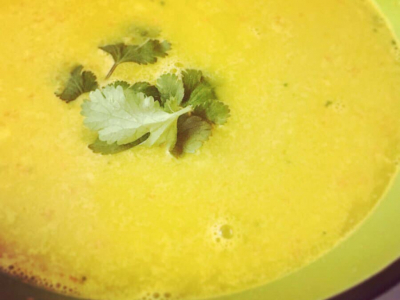
- Base for gazpacho or raw soup — Coconut water replaces broth in raw preparations. Our raw curry and fresh coconut soup illustrates this idea well.
- Natural post-exercise drink — 300 ml of fresh coconut water + the juice of half a lemon + a pinch of gray sea salt. As simple as that. And it works. To vary the pleasures, our Coconut and lemon balm cocktail is another refreshing option.
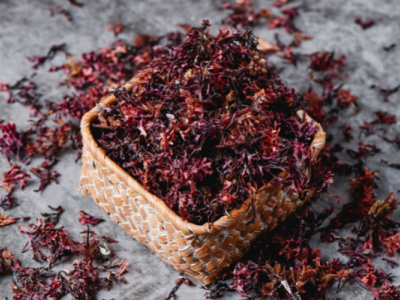
And then — here's an aspect we often forget — coconut water and theIrish Moss pair very well in a smoothie. Irish Moss provides marine minerals and iodine, while coconut provides continental electrolytes. An interesting mineral combination that I use regularly.
Update: April 2026. Article approved by Éric Viard, founder of Biovie and engineer ISTOM, co-author of " Seaweed in everyday life "(Gallimard, 2024) —" Best cookbook in the world, Gourmand Cookbook Awards 2025, and Best cookbook in France, National Academy of Cuisine 2025.
Warning: The information presented in this article is provided for informational purposes only and does not constitute medical advice. Consult a qualified healthcare professional before making any changes to your diet or supplementation. As part of a varied and balanced diet and a healthy lifestyle.
FAQ — Coconut Water
Is it good to drink coconut water every day ?
See the answer
Yes, for the vast majority of healthy adults, 200 to 300 ml of fresh coconut water per day is safe and potentially beneficial. It provides natural electrolytes (potassium, magnesium, sodium) without added sugar or additives. Some precautions are necessary in cases of kidney failure (high potassium content), hypotension, or diabetes — in these cases, consult your doctor before making it a daily consumption.
What are the benefits of coconut water ?
See the answer
Fresh coconut water aids in hydration due to its natural electrolyte content — potassium (250–350 mg/100 ml), magnesium (25 mg), sodium (105 mg). Potassium contributes to the maintenance of normal blood pressure (EFSA claim ID 3731). Magnesium contributes to normal muscle function and the reduction of fatigue (EFSA ID 374 and 244). Vitamin C helps protect cells against oxidative stress. These benefits are part of a varied and balanced diet.
What is the best time to drink coconut water ?
See the answer
Three moments are particularly relevant: in the morning on an empty stomach (200 ml for gentle rehydration after the night), before or after physical exercise (natural electrolyte supply for sessions of 45 minutes to 1.5 hours), and in case of high heat to supplement daily hydration. Fresh coconut water is the most interesting option in these contexts, as it retains its thermosensitive bioactive compounds (cytokines, enzymes) that the pasteurized version has lost.
Does coconut water raise blood sugar levels ?
See the answer
Its glycemic index is estimated to be between 40 and 55 — considered moderate. With 2.6 g of natural sugars per 100 ml, coconut water does not cause a sharp glycemic spike. At 200–300 ml per day, the glycemic load remains low for a healthy adult. Beyond 500 ml, the intake of natural sugars becomes more significant. Diabetic individuals are advised to consult their doctor before incorporating coconut water into their diet.
How much coconut water should an adult drink per day ?
See the answer
Between 200 and 500 ml per day for a healthy adult. Below 200 ml, the intake of electrolytes remains anecdotal. Beyond 500 ml, the cumulative intake of potassium and natural sugars deserves attention, especially for people with kidney conditions. In daily practice, 200 to 300 ml constitutes a reasonable dose well-suited to the majority of profiles.
Is coconut water not recommended for heart problems ?
See the answer
Not necessarily. The potassium it contains contributes to maintaining normal blood pressure (EFSA claim ID 3731), making it an asset in a balanced cardiovascular diet. However, individuals undergoing medical treatment for the heart or suffering from low blood pressure should consult their doctor before consuming it regularly. As with any potassium-rich food, moderation and medical advice are required in specific situations.
What is the difference between fresh coconut water and boxed coconut water ?
See the answer
The difference is significant. Fresh coconut water (non-pasteurized) retains its thermosensitive bioactive compounds — cytokines, enzymes, vitamin C — and contains no additives. Boxed coconut water has been pasteurized (heated to at least 72°C), which destroys these fragile compounds and reduces the potassium content by about 30%. Additionally, some industrial brands add sugar, natural coconut flavors, and acidity regulators. The ingredient list should contain only one item: coconut water.
Does coconut water help with weight loss ?
See the answer
No, coconut water does not cause weight loss on its own. No serious study demonstrates a direct effect on body weight. However, it can be part of a weight management approach because it is very low in calories (about 17 kcal/100 ml), can replace sweeter drinks, and its slight fiber content modestly contributes to satiety. It fits within a varied and balanced diet and does not replace an overall dietary approach.
References
- Kalman, D.S., et al. (2012). "Comparison of coconut water and a carbohydrate-electrolyte sport drink on measures of hydration and physical performance in exercise-trained men." Journal of the International Society of Sports Nutrition, I'm sorry, but the text you provided does not contain enough context or information to be translated. Could you please provide more details or a complete sentence?. (clinical trial, n=12)
- Bhargava, K., et al. (2009). "Coconut water: an isotonic fluid for rehydration." ISRN Pharmacology. . (literature review on electrolytic properties)
- Pinto, I.F., et al. (2015). "Effects of coconut water supplementation on cardiovascular risk factors." International Journal of Health Sciences and Research, I'm sorry, but the text you provided does not contain any words or sentences to translate. Could you please provide more context or a complete sentence for translation?. (observational study)
- ANSES (2025). Ciqual food nutritional composition table. National Agency for Food Safety.
- EFSA (2011). Register of authorized health claims. Autorité européenne de sécurité des aliments.