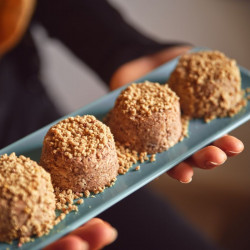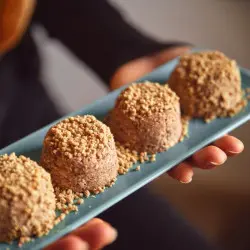



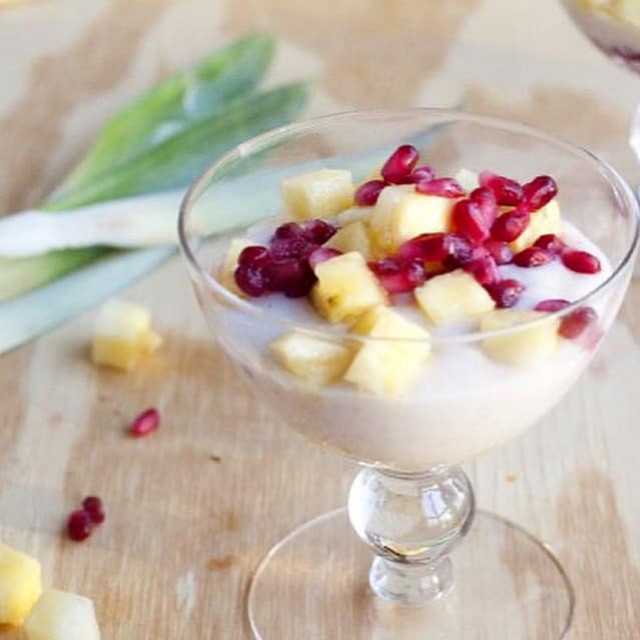
A homemade plant-based yogurt, it doesn't require a yogurt maker. You need a dehydrator set to 40°C, a fresh coconut, and a spoonful of powdered cultures. That's literally it. In 15 minutes of preparation and 6 hours of gentle fermentation, you get a live, creamy yogurt rich in active probiotics - without thickeners, added sugar, or anything unnecessary. This is what living food allows you to do, simply.
Why make your own plant-based yogurt at home ?
Honestly, the question deserves to be asked. Commercial plant-based yogurts have made progress - but turn over the label: modified corn starch, agar-agar, natural flavors, chickpea gelatin. For a product sold at 2 or 3 euros per pot. Making your own homemade plant-based yogurt, it is first about regaining control over what we put on our plate.
There is also an aspect that I greatly appreciate: live cultures. A homemade yogurt consumed within 48 hours contains active microbial cultures, not denatured by industrial preservation processes. That's what living food is - foods that bring life, not just macronutrients.
And then, in terms of budget, the difference is significant. Fresh coconut and a dose of powdered cultures allow for the production of 4 pots of 150 ml at a much lower cost than store-bought plant-based yogurts.
Our clients confirm it:
"I have been ordering from Biovie for years, my fresh algae, yogurt and plant-based cheese cultures, and many other delicious products. I have always been delighted with the quality of the products and the service."
- Florence Demay ⭐⭐⭐⭐⭐
"The kit to get started in making plant-based yogurts. I love the products they offer, as well as their approach, the care they take in sourcing, quality, and ethics."
- Maiwenn O ⭐⭐⭐⭐⭐
Plant-based yogurt without a yogurt maker: what methods ?
There are three ways to ferment a plant-based yogurt at home, depending on the equipment you have:
The dehydrator method - the ideal solution for raw food
The dehydrator maintains a stable temperature between 38 and 42°C. This is exactly the temperature range that lactic bacteria need to multiply effectively without being destroyed. Specifically: set to 40°C - and not 60°C like for drying fruits! Here we ferment, we do not dehydrate. The microorganisms transform the natural sugars in the coconut into lactic acid. It is this acidification that thickens the preparation and gives it its characteristic slightly tangy taste.
The additional advantage is the versatility of the device. If you practice raw food preparation, your dehydrator already serves you for drying crackers, fruits, and sprouting. It now also makes your yogurt. Zero additional investment.
The refrigerator method
Slow fermentation at low temperatures (8 to 12°C). The result is milder, the texture less firm, and the duration longer - expect 12 to 24 hours depending on the strains used. It's an option if you don't have a dehydrator, but the fermentation is less active and less reproducible.
The yogurt maker method
Reliable, efficient, but single-use. If you already have a Seb yogurt maker or equivalent, it works very well for plant-based yogurts. Check out our detailed guide on how to make homemade yogurt with a yogurt maker.
Coconut-Pomegranate Yogurt Recipe with a Dehydrator
For 4 jars of 150 ml - Preparation: 15 min - Fermentation: 6 hours at 40°C - Storage: 3 to 5 days in the refrigerator
Ingredients
- 135 g of fresh organic coconut flesh (about 2 coconuts)
- 30 cl of fresh coconut water
- 1 c.c. powdered probiotics (vegan lactic ferments)
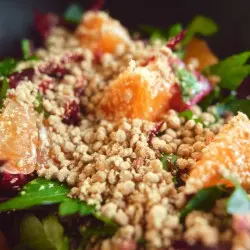
- Topping: 1 pomegranate, a few slices of fresh pineapple
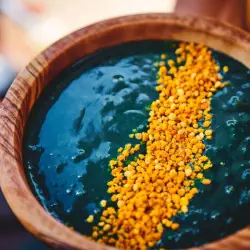
- Optional: 1 c.c. fresh chestnut pollen - to add only at the time of service
Step-by-step preparation
- Mix the coconut flesh with the coconut water until you achieve a perfectly smooth cream. Take your time - the final texture largely depends on this mixing.
- Let the mixture cool to room temperature if the blender has heated the preparation. Important: the cultures do not tolerate heat.
- Incorporate the powdered probiotics by gently mixing with a spatula. Do not remix - this preserves the live cultures.
- Pour into airtight glass jars.
- Place in the dehydrator at 40°C for 6 hours.
- Transfer to the refrigerator for at least 2 hours before tasting.
- At the time of serving: garnish with pomegranate seeds, fresh pineapple, and a spoonful of fresh chestnut pollen.
Storage tips
These yogurts can be stored 3 to 5 days in the refrigerator in their airtight jars. Do not freeze: live cultures do not withstand freezing, and it is precisely for their vitality that they are prepared at home.
The benefits of fresh coconut in this yogurt
Why fresh coconut, and not coconut milk in a carton? The answer lies in the composition. Fresh coconut flesh contains medium-chain triglycerides (MCTs) - specific fatty acids (lauric acid, caprylic acid) that the body quickly uses as a source of energy, according to the data from the composition table. Ciqual ANSES. These lipids also contribute to the naturally creamy texture of this yogurt - without agar-agar, without starch.
Coconut water, on the other hand, provides potassium and magnesium. It hydrates the preparation while giving it a slight natural sweetness.
Result: a homemade coconut yogurt with remarkable creaminess, without any additives. To learn all about this basic ingredient, check out our dedicated article on the Benefits of fresh coconut.
Choosing the right powdered probiotics for a successful plant-based yogurt
The powdered probiotics are the heart of the recipe - and the choice of strains is not trivial. These living microorganisms, kept at 40°C, will transform the sugars in coconut milk into lactic acid. This natural acidification thickens the preparation and gives it the slightly tangy taste characteristic of yogurt.
For a plant-based yogurt, the most suitable strains are Lactobacillus acidophilus, , Bifidobacterium spp. and Streptococcus thermophilus. Always store your powdered probiotics in the refrigerator, away from light and moisture - live cultures are fragile.
To delve deeper: our article on the lactic ferments for plant-based yogurts.
Fresh chestnut pollen: a natural probiotic superfood
It's the ingredient that truly sets this recipe apart. With Aurélie, we've been using fresh pollen for years - and its role in this yogurt is far from decorative.
Fresh pollen contains active enzymes, essential amino acids, B-group vitamins, polyphenols, and carotenoids. A scientific review published in the Journal of the Science of Food and Agriculture (Denisow & Denisow-Pietrzak, 2016, review) documents its richness in bioactive compounds - tocopherols, niacin, thiamine, folic acid, phytosterols (1). This nutritional density makes fresh pollen an excellent supplement in a living diet.
Unlike dried pollen, fresh pollen retains its microorganisms and natural enzymes. This is why it is considered to have a prebiotic role - it nourishes the beneficial bacteria already present in the intestinal flora. As part of a varied and balanced diet, it is a natural way to enrich a lively breakfast.
A crucial technical point: Never add pollen before or during fermentation. At 40°C, its fragile compounds begin to denature. Add it only at the time of serving, on yogurt taken out of the refrigerator. Its floral and slightly tangy flavor contrasts perfectly with the sweetness of coconut and the crunchiness of pomegranate seeds.
To learn more: Fresh pollen or dried pollen, which one to choose ?