



You eat fairly well, you pay attention, and yet. In February 2026, ANSES published a figure that gave me pause: 47.6% of adults aged 18 to 60 already exceed the critical urinary threshold for cadmium set by health authorities. Almost one adult in two. And what's most unsettling is the path this metal takes to reach us: in a non-smoker, nearly 98% of cadmium exposure comes from the plate. Not from the air, not from water — from what we eat every day, believing we're doing the right thing.
So before you panic, take a breath. Cadmium has been part of the landscape forever, it's in the soil, and no one reaches zero. The good news is that France has just legislated to act at the source (more on that shortly), and your plate is a real lever. This article isn't another anxiety-inducing list. It's a toolkit: understanding where cadmium comes from, what the 2026 law changes, and above all seven concrete habits — some of which I've applied at home myself for years — to reduce your exposure without turning your meals into a headache.
What exactly is cadmium?
Cadmium (Cd) is a heavy metal naturally present in the earth's crust. It has no biological role — your body doesn't need it, it simply endures it. Plants draw it up from the soil indiscriminately, and it moves up the food chain to reach us.
Two characteristics explain why we talk about it so much. First, the International Agency for Research on Cancer (IARC) classifies it as a confirmed carcinogen, Group 1 — the highest category. Second: its biological half-life is 10 to 40 years. Some of the cadmium you absorb today will still be there by the time your grandchildren are born. It accumulates quietly, especially in the kidneys — around 30% of the body's burden settles there. It's a bit like a tap dripping into a bathtub with no plug: every drop counts, because very little drains away.
EFSA has set a clear reference value: 2.5 µg per kilogram of body weight per week, based on a kidney marker (beta-2-microglobulin). That weekly threshold is the compass to follow.
That's why I talk about reducing your exposure, and never "eliminating" it. The cadmium already lodged in your kidneys doesn't vanish with a wave of a wand — be wary of anyone selling you a "miracle cadmium detox." What really matters happens upstream: limiting what comes in, day after day.
The new 2026 law: acting at the source
On June 3, 2026, the French National Assembly adopted (by 144 votes to 22) a bill introduced by MP Benoît Biteau, aimed at reducing the health risks linked to cadmium in food.
The heart of the text targets one of the main gateways for cadmium into farmland: phosphate fertilizers. Today, these fertilizers can contain up to 90 mg per kilogram of P₂O₅. The law imposes a two-step reduction: a cap of 40 mg/kg from January 1, 2027, then 20 mg/kg from January 1, 2030.
Less cadmium spread on fields means less cadmium taken up by wheat, potatoes and vegetables ten years from now. The law takes care of the soil; you can already take care of your plate tonight.
Where does cadmium hide in your diet?
First surprise: the main contributors aren't "suspicious" foods. They're everyday foods, the ones we eat in large quantities.
Leading the list, bread and wheat-based products — not because wheat is especially contaminated, but simply due to volume. Next come potatoes, organ meats (liver and kidneys, where cadmium accumulates), and shellfish and mollusks, which concentrate the metal from seawater.
A word on dark chocolate: yes, cocoa can contain cadmium, especially certain South American origins. But at a reasonable dose (a few squares), its contribution stays modest compared with daily bread. The real issue is the silent accumulation from ordinary foods.
Finally, plant hyperaccumulators: sunflower, flax, rice. Worth knowing, without banning them: it's all a matter of frequency and variety.
The 7 habits to reduce your cadmium exposure
These seven habits don't require overhauling everything — just gently rebalancing. Everyone at their own pace.
- Diversify your sources and origins. This is ANSES's number-one piece of advice. By varying your grains, origins and brands, you spread the risk instead of stacking it up. Dietary monotony is cadmium's best friend.
- Ease up on wheat, and explore other starches. Buckwheat, rye, chestnut. And above all, make more room for legumes — lentils, chickpeas, beans.
- Moderate (without cutting out) concentrated sources. Organ meats once a month rather than once a week. Seaweed, yes — but in the right amount: these are powerful foods eaten in small quantities.
- Wash, peel, and pay attention to where your vegetables come from. The French dietitians' association (AFDN) urges caution for home gardens on unknown soil. If you garden, a soil test costs little.
- Look after your iron and zinc levels. An iron or zinc deficiency mechanically increases your cadmium absorption (they share the same intestinal transporters). Make sure you're getting enough — legumes, seeds, leafy greens.
- Cut down or quit smoking. The tobacco plant is a major cadmium accumulator, and smoking nearly doubles the body's cadmium burden. By far the heaviest additional source.
- Strengthen your allies from the living world. Several families of foods naturally support your body's defenses and may help limit the intestinal absorption of metals.
A closer look at this seventh habit:
- Fibers and pectins (fruits, vegetables, legumes), which help bind some unwanted substances in the gut;
- Alginate-rich seaweed (kombu, wakame, dulse) — I cover this in full in my guide to alginate-rich seaweed;
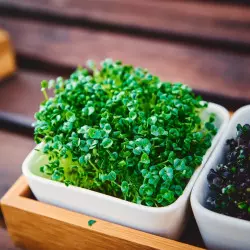
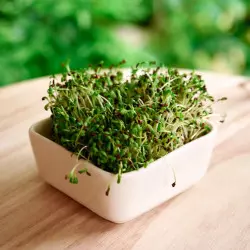
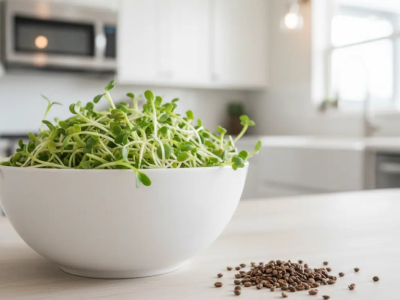
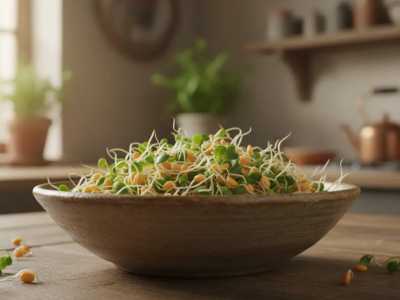
- Sprouted brassicas, particularly sprouted broccoli seeds, rich in glucoraphanin, a precursor of sulforaphane. Work by Talalay and Fahey (Johns Hopkins) showed that sulforaphane activates the Nrf2 pathway, and that young sprouts contain 10 to 100 times more of it than mature broccoli. I go into this in my full guide to sulforaphane;
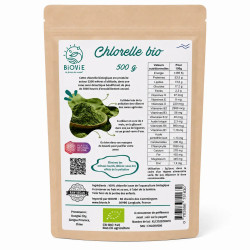
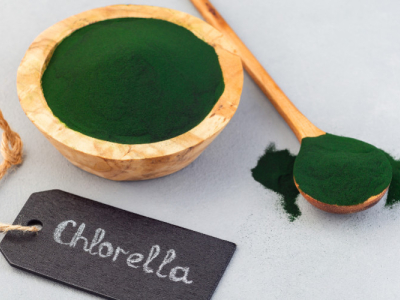
- Chlorella, which animal studies (Kim et al., Nutrition Research and Practice, 2009) suggest may reduce tissue cadmium accumulation and support its excretion in rats. This work is preliminary and conducted on animals, not a clinical promise. See the benefits of chlorella.
Honestly, this family of foods took up a good part of my research when Aurélie and I wrote "Algues au quotidien." Living foods don't "detoxify" in some magical sense — they support, they accompany. If you'd like to try chlorella for three or four weeks, we offer it in flakes, with heavy-metal testing on every batch.