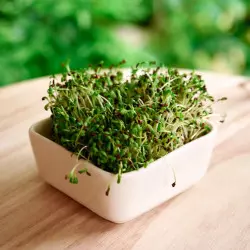
FenugreekTrigonella foenum-graecum) is one of the best-studied natural allies for men's health. According to a 2020 meta-analysis involving 206 participants, Supplementation with fenugreek extract is associated with a significant increase in total serum testosterone. Beyond testosterone, this legume with curry notes can help support libido, muscle mass, fertility, and blood sugar levels - as part of a varied and balanced diet. And at Biovie, we have an angle you won't find anywhere else: Sprouted fenugreek, which multiplies its benefits.
I have been working with living foods for 33 years. I know fenugreek in all its forms - as a spice in a curry, as seeds soaked in a sprouter, as powder added to a smoothie. In this article, I will share the available scientific evidence, the recommended dosage, essential precautions, and why sprouting changes everything in the equation.
What is fenugreek and why does it interest men ?
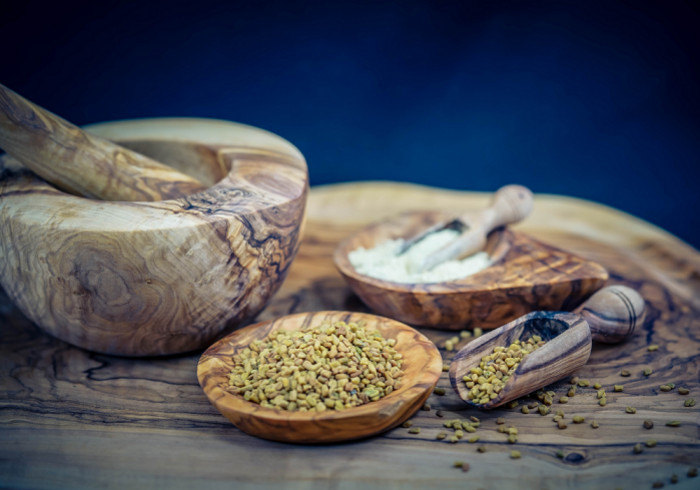
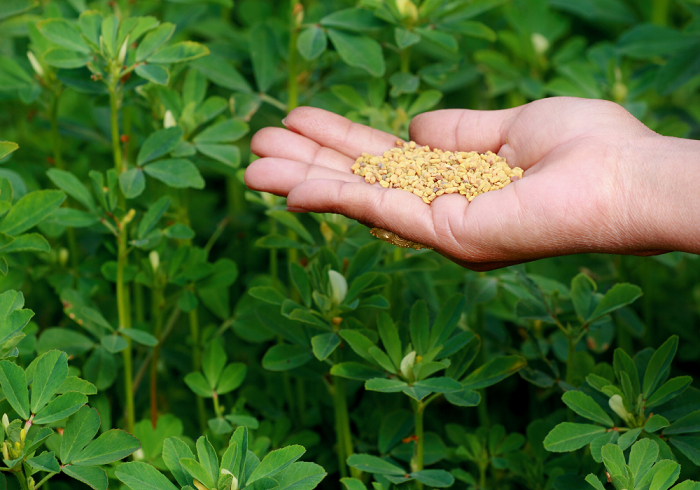
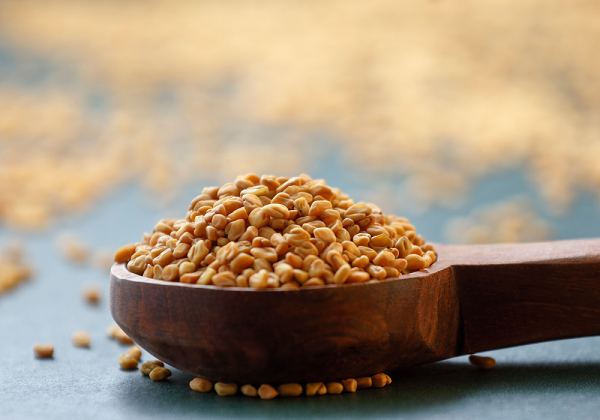
Fenugreek - also known as trigonella, sénégrain, or Greek hay - is an annual plant from the Fabaceae family, cultivated for over 4,000 years in Asia and the Mediterranean basin. Its small golden seeds, with a slightly bitter taste and a distinctive curry-like undertone, serve as a culinary spice, a dietary supplement favored by athletes, and a medicinal plant recognized in several traditions.
What makes fenugreek particularly interesting for men is its rather remarkable bioactive composition:
Steroidal saponins (protodioscin) - the key molecules directly involved in male hormonal support
Flavonoids - documented antioxidant and anti-inflammatory properties
Mucilaginous fibers - digestive support and regulation of carbohydrate absorption
Alkaloids (trigonelline, carpaine) - metabolic and protective effects
Complete proteins : 23 to 30g per 100g, which is more than many animal sources
Iron: 33.5mg/100g (262% of the recommended daily intake), magnesium at 191mg/100g, vitamins A, B1, B3, C
In Ayurvedic tradition and traditional Chinese medicine, fenugreek is classified among the "rasayana" - rejuvenating plants believed to enhance energy and male vigor. Modern science is beginning to document why.
Does fenugreek really support testosterone ?
This is the question everyone is asking. And frankly, the available data is encouraging - provided it is interpreted correctly.
What clinical studies say
Four works deserve to be known because they are methodologically sound:
2020 Meta-analysis (PubMed, PMID 32048383) - the reference study. Analysis of 4 randomized clinical trials, 206 participants. Conclusion: supplementation with fenugreek extract is associated with a significant increase in total serum testosterone compared to placebo control groups.
Rao et al., 2016 (Aging Male, PMID 26791805) - Double-blind randomized clinical trial on 120 men aged 43 to 70. 600mg/day of standardized Testofen extract for 12 weeks. Result: increased testosterone, improved libido, enhanced sexual function.
PLoS One Study 2024 - 95 men aged 40 to 80 years divided into four groups (placebo, 600, 1200, and 1800mg/day) for 12 weeks. Significant dose-dependent increase in salivary testosterone, particularly at 1800mg/day.
Bagchi et al., 2017 (Functional Foods in Health and Disease, DOI 10.31989/ffhd.v7i4.326) - 50 hommes sous 500mg/j d'extrait enrichi en protodioscine pendant 12 semaines. Testostérone libre en hausse chez 90% des participants. Qualité du sperme améliorée chez 85,4% d'entre eux.
The mechanism of action
How does fenugreek affect testosterone? Several avenues are emerging in the literature:
Partial inhibition of the enzymes 5-alpha-reductase and aromatase - these enzymes convert testosterone into other hormones (DHT, estrogens). The saponins in fenugreek appear to slow down this conversion.
Protodioscin is believed to indirectly stimulate the synthesis of androgens in the testes through an action on the hypothalamic-pituitary axis.
Upregulation of certain enzymes involved in steroidogenesis.
An important clarification, because I want to be honest with you: the EFSA (European health authority) has not validated any official health claims regarding fenugreek and testosterone. These data come from clinical studies, not from a regulatory consensus. What can be said is that the results are consistent across several independent trials - which is already significant. For a confirmed hormonal deficiency, consult a doctor.
Fenugreek and libido: a natural aphrodisiac for men ?
Here is a topic where the studies are truly interesting. Fenugreek is one of the best-documented natural aphrodisiacs in scientific literature - and not just in traditional medicine.
A 2011 study conducted on 60 healthy men (aged 25 to 52) over 6 weeks compared a group taking fenugreek extract to a placebo group. Result: significant increase in sexual desire, arousal, and satisfaction in the men who received fenugreek, with no comparable effect in the placebo group.
The clinical trial of Rao et al. (2016) out of 120 men confirmed an overall improvement in sexual function of about 23% among participants taking fenugreek - including orgasm, energy, and endurance. These effects were measured with validated tools, not subjective impressions.
The most plausible mechanism involves the hormonal balance we just described: better-maintained levels of available testosterone → better energy → better libido. It is logical, and biology confirms it.
Moreover, fenugreek is among the Natural foods to support libido which we have been recommending at Biovie for a long time. Trying it often means adopting it.
Fenugreek and bodybuilding: what do clinical trials show ?
Athletes who incorporate fenugreek into their diet are not all following a trend. Some have simply read the studies.
An 8-week clinical trial on trained men (500mg/day + a workout program with 4 sessions per week) is particularly telling:
The fenugreek group lost about 5 times more body fat than the placebo group
The strength gains in the bench press and leg press were approximately 2 times higher
How to explain this? Two aspects. First, steroidal saponins have natural anabolic properties - they contribute to a hormonal environment that is favorable for muscle synthesis. Secondly, the anti-inflammatory effects of fenugreek promote better recovery between sessions.
Concretely: it is not a substitute for training or a protein-rich diet. But as a natural nutritional support, the data clearly supports it. A serious alternative to industrial sports supplements loaded with additives.
Fenugreek and male fertility
It is perhaps the least known angle, yet one of the most documented. Fenugreek has a real clinical interest in male fertility, particularly in men with oligospermia.
The study of Bagchi et al. (2017) - already mentioned above for testosterone - provides valuable data here on 50 men supplemented for 12 weeks:
Free testosterone increased by up to 46% in 90% of participants.
Improvement in sperm count in 85.4% of men
Improvement in cardiovascular health, mental sharpness, and reported mood
Further clinical research also indicates that fenugreek seed oil can improve sperm quality in men suffering from primary hypogonadism, with a notable increase in free testosterone.
For men experiencing fertility issues, fenugreek deserves serious consideration-of course, as part of medical supervision. It is not a miracle solution, but the data is there.
Fenugreek, blood sugar, and cardiovascular health in men
Beyond the hormonal sphere, fenugreek protects men's metabolic health - an often underestimated aspect. However, metabolic health is directly linked to vitality, physical performance, and even erectile function (a fact that endocrinologists regularly emphasize).
Glycemic regulation: The mucilaginous fibers of fenugreek slow down the absorption of carbohydrates in the small intestine. Studies document that regular consumption (about 4 teaspoons of powder per day for 8 weeks) can contribute to a significant reduction in fasting blood sugar levels, as part of a balanced diet. Note: if you are taking antidiabetic medications, talk to your doctor before supplementing.
Cardiovascular support: Rich in potassium, fenugreek may have a hypotensive effect. A 2023 study observed a measurable decrease in systolic blood pressure in men consuming 15g or more of seeds per day.
Cholesterol: Several studies document a positive effect on LDL cholesterol and triglycerides with regular consumption of whole seeds or powder.
This is what I call a "systemic" food: it acts on multiple levers at the same time, which distinguishes it from a simple targeted supplement.
The secret of Biovie: sprouted fenugreek multiplies the benefits
This is where our approach diverges from almost everything else on the market. While other brands offer you capsules, extracts, and standardized powder, we recommend fenugreek in its living form: sprouted.
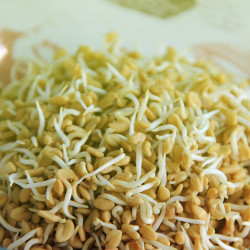
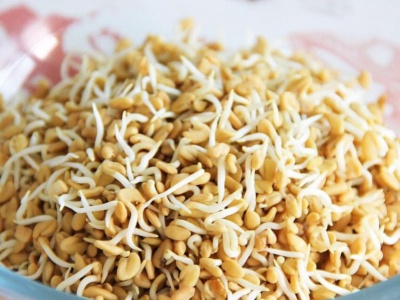
Why? Because germination is an extraordinary biological process. When a fenugreek seed begins to grow, it mobilizes all its resources to become a plant: it releases its nutrients, activates its enzymes, and synthesizes vitamins. Studies on the germination of fenugreek show that antioxidants increase by 56 to 76% compared to dry seeds. This is not a marketing metaphor - it's documented biochemistry.
Specifically, sprouted fenugreek offers:
Highly bioavailable proteins - the proteins are pre-hydrolyzed into free amino acids (leucine, isoleucine), directly available for muscle synthesis
Active enzymes which facilitate the digestion and assimilation of the entire meal
Vitamins A, B1, B3, C multiplied compared to the dormant seed
An enhanced antioxidant and anti-inflammatory profile
And an anecdote I like to share: after consuming sprouted fenugreek, sweat takes on a pleasant curry smell in the hours that follow. It's a bit surprising the first time - but it's anything but a problem. It's a sign that the characteristic sulfurous volatile compounds of fenugreek are actively circulating in the body.
Moroccan halba: seeds simmered with semolina, honey and olive oil, served for breakfast.
Red lentil dahl: a handful of fenugreek sprouts added off the heat at the end of cooking.
Minute condiment: sprouted seeds, olive oil, lemon juice, salt - perfect on a tomato salad.
Green smoothie: a teaspoon of fenugreek powder with banana, spinach, plant-based milk and dates, which mask its bitterness.
The organic fenugreek seeds for sprouting remain our favourite form: it's the cheapest, the most versatile, and sprouting clearly improves digestibility.
And for women? Libido, breastfeeding and digestion
This article focuses on men, but fenugreek is just as much - and for longer - a plant used for women's health. Here is what we know, with the same standards of caution.
Female libido
A randomised trial published in Phytotherapy Research (Steels et al., 2017) followed 80 pre-menopausal women receiving 600 mg per day of a standardised fenugreek extract for eight weeks. The authors report a rise in free testosterone and estradiol, and an improvement of about 28% in sexual desire scores compared with placebo. The proposed mechanism is the same as in men: the seed's steroidal saponins and phytoestrogens modulate hormone production. A single trial doesn't prove the case, but the signal is consistent with traditional use.
Breastfeeding: the most common use, and the most debated
Fenugreek is the most widely used galactagogue in the world. The LactMed database, a National Institutes of Health reference, lists eight clinical trials on this use, at doses of 1 to 6 g of powder per day: results are mixed depending on the protocol, with increases in milk production measured mainly above 3 g per day.
The same source also reports around 45% of adverse effects in the mother - diarrhoea, a maple-syrup smell in sweat, urine and milk - and one isolated case of maple syrup urine odour syndrome reported in a newborn. For this reason, using fenugreek while breastfeeding should be discussed with a midwife or a lactation consultant, never decided alone on the strength of an article.
Digestion and gut comfort
Galactomannans - mucilages that make up nearly half the seed's fibre - swell on contact with water and form a soft gel that soothes the digestive lining and regulates transit. This is a longstanding traditional use against bloating and heaviness after meals, and it applies to everyone, men and women alike.
Rinse thoroughly, then let germinate. 2 to 4 days (rinse morning and evening)
Consume the sprouts raw: in a salad, in a green juice, in a smoothie, as a topping on a hot dish.
Tip for softening natural bitterness: pair sprouted fenugreek with green apple, cucumber, or mild spices (cumin, coriander). Our Methi salad recipe with fenugreek is a beautiful entrance. And for an overview of sprouted seeds, the Complete guide on sprouted seeds that I have written will give you all the basics.
In powder form
Dosage used in clinical studies: 300 to 600mg of standardized extract per day, for 8 to 12 weeks. In practice: ½ to 1 teaspoon in a smoothie, juice, or soup. The powder also integrates very well into curries and stews - it's its natural territory in Indian and North African cuisine.
In infusion
Simple and effective for daily consumption without capsules: 1 teaspoon of seeds in 250ml of hot water (not boiling, at 70-80°C to preserve sensitive compounds), steep for 10 to 15 minutes. 1 to 2 cups per day. You can add a bit of honey or a lemon zest to sweeten.
In capsules or tablets
The standardized extracts in capsules (300-600mg/day) are convenient, especially for protocols aiming to replicate the conditions of clinical studies. They are less bioavailable than sprouted forms but easier to dose precisely. This is the form used in the majority of clinical trials mentioned in this article - keep this in mind when interpreting the results.
In treatment, the recommended rhythm: 3 to 4 weeks of supplementation, 1 week of break, 2 to 3 cycles per year.
Contraindications and precautions for men
Fenugreek is generally very well tolerated at dietary doses. However, there are a few important points to know:
Legume allergies: Fenugreek belongs to the Fabaceae family (like soy, peanuts, lentils). In the case of a known allergy to these plants, a prior medical consultation is necessary.
Drug interactions: Fenugreek can amplify the effect of anticoagulants (aspirin, warfarin) - a hemorrhagic risk to monitor. It can also potentiate antidiabetic drugs and cause hypoglycemia. Medical supervision is essential if you are taking these treatments.
Excessive doses: At very high and prolonged doses, an excessive increase in androgens can cause acne, increased hair growth, and mood variations. Adhere to the recommended dosages.
Pregnant women: Fenugreek is contraindicated in high doses during pregnancy (uterotonic effects documented in animals). For women, we have a dedicated article on the dedicated section on female libido and breastfeeding.
Associations to avoid: Garlic, ginkgo biloba, horse chestnut, ginseng, red clover, saw palmetto - these plants share effects on blood coagulation. The cumulative association can be problematic.
Fenugreek and gynecomastia in men: The question often arises because fenugreek contains phytoestrogens. At normal dietary doses-sprouted seeds, infusion, culinary powder-no effect on the development of the male chest is documented in the scientific literature. The phytoestrogens in fenugreek do not have the activity of endogenous estrogens at common doses. Consult a doctor if you notice any unusual changes.
FAQ - Your questions about fenugreek and men's health
What are the effects of fenugreek on men ?
Fenugreek may help support testosterone, libido, muscle mass, sperm quality, and blood sugar levels in men. These effects are attributed to its steroidal saponins, particularly protodioscin. Several randomized clinical trials confirm these benefits, especially for sexual function and body composition. This is within the context of a varied and balanced diet and a healthy lifestyle.
How long does it take for fenugreek to take effect in men ?
Most clinical studies observe the initial effects after 4 to 8 weeks of regular supplementation. More pronounced benefits on libido, energy, and testosterone are generally documented after 8 to 12 weeks. Results vary depending on your initial health condition, initial testosterone level, and overall lifestyle (sleep, exercise, diet).
Does fenugreek have an effect on testosterone ?
According to the available data, yes. A 2020 meta-analysis (PubMed, PMID 32048383) regarding 4 clinical trials and 206 participants concludes that fenugreek extract is associated with a significant increase in total serum testosterone. The mechanism involves steroidal saponins that may inhibit testosterone conversion enzymes. These results from clinical studies do not constitute a health claim officially authorized by the EFSA.
Is fenugreek effective against erectile dysfunction ?
Specific studies on erectile dysfunction remain limited. However, several well-conducted clinical trials show an improvement in Overall sexual satisfaction, arousal, and energy in men using fenugreek. These effects appear to work by supporting hormonal balance and blood circulation. For confirmed erectile dysfunction, a medical consultation is necessary - fenugreek can be part of a comprehensive approach, but it should not replace treatment.
What happens if a man takes fenugreek every day ?
At the recommended doses (300 to 600mg of extract per day, or the equivalent in sprouted seeds), daily consumption of fenugreek is well tolerated. Positive effects on libido, energy, and blood sugar levels are often reported after several weeks of regular use. At excessive doses, minor side effects may occur (acne, increased hair growth). Regular breaks are advised: 12 weeks of supplementation, followed by a 4-week break, for a maximum of 2 to 3 cycles per year.
Does fenugreek increase sperm volume ?
Clinical studies show that fenugreek can improve quality and quantity of sperm, particularly in men with oligospermia. The study by Bagchi et al. (2017) observed an improvement in sperm profile in 85.4% of participants supplemented with 500mg/day of protodioscin extract for 12 weeks. These data are promising; however, they do not constitute a treatment for male infertility, and medical follow-up remains necessary.
What should be avoided when taking fenugreek ?
Avoid combining fenugreek with natural or medicinal anticoagulants (garlic, ginkgo biloba, ginseng, horse chestnut, high-dose aspirin) due to potential interactions affecting blood coagulation. Be cautious if you are taking antidiabetic medications - risk of hypoglycemia due to potentiation. Pregnant women should avoid high doses of fenugreek. In case of doubt, always consult your doctor before starting supplementation.
What is the difference between fenugreek in powder form, in capsules, and in sprouted seeds ?
Capsules and standardized extracts offer precise dosing useful for replicating clinical study conditions. The powder is versatile in cooking. Sprouted fenugreek is the form recommended by Biovie: sprouting increases antioxidants by 56 to 76%, improves protein bioavailability, and multiplies the content of vitamins and active enzymes. It is the most vibrant, complete form, and the closest to what nature intended. It requires a bit more preparation - but it's worth the effort.
Can fenugreek increase breast size in men ?
At normal dietary doses (sprouted seeds, infusion, culinary powder), no effect of gynecomastia (development of male breast tissue) is documented in the scientific literature. Although fenugreek contains phytoestrogens, their concentration and activity at common doses are insufficient to induce this type of effect in a healthy man. If you observe any unusual changes, consult your doctor.
Rao et al., 2016 (Aging Male, PMID 26791805) - essai clinique randomisé en double aveugle sur 120 hommes de 43 à 70 ans. 600mg/j d'extrait standardisé de Testofen pendant 12 semaines. Résultat : testostérone en hausse, libido améliorée, fonction sexuelle renforcée.
Bagchi M, et al. (2017). Effects of a novel protodioscin-enriched fenugreek seed extract (Trigonella foenum-graecum L.) on sperm quality. Functional Foods in Health and Disease, 7(4), 235-245. DOI 10.31989/ffhd.v7i4.326. (clinical trial)
Warning: The information presented in this article is provided for informational purposes only and does not constitute medical advice. Consult a qualified healthcare professional before making any changes to your diet or supplementation, especially if you are undergoing medical treatment. This should be part of a varied and balanced diet and a healthy lifestyle.