









This juice celebrates the generosity of the vegetable garden in full summer, between the sweetness of tomatoes and carrots, the hydrating freshness of cucumber and the lively note of pepper. Whatever fresh herbs you have to hand, dill, parsley, coriander, mint or oregano, sign each pressing with a personal touch. A simple, living juice, different every time depending on what the garden offers.
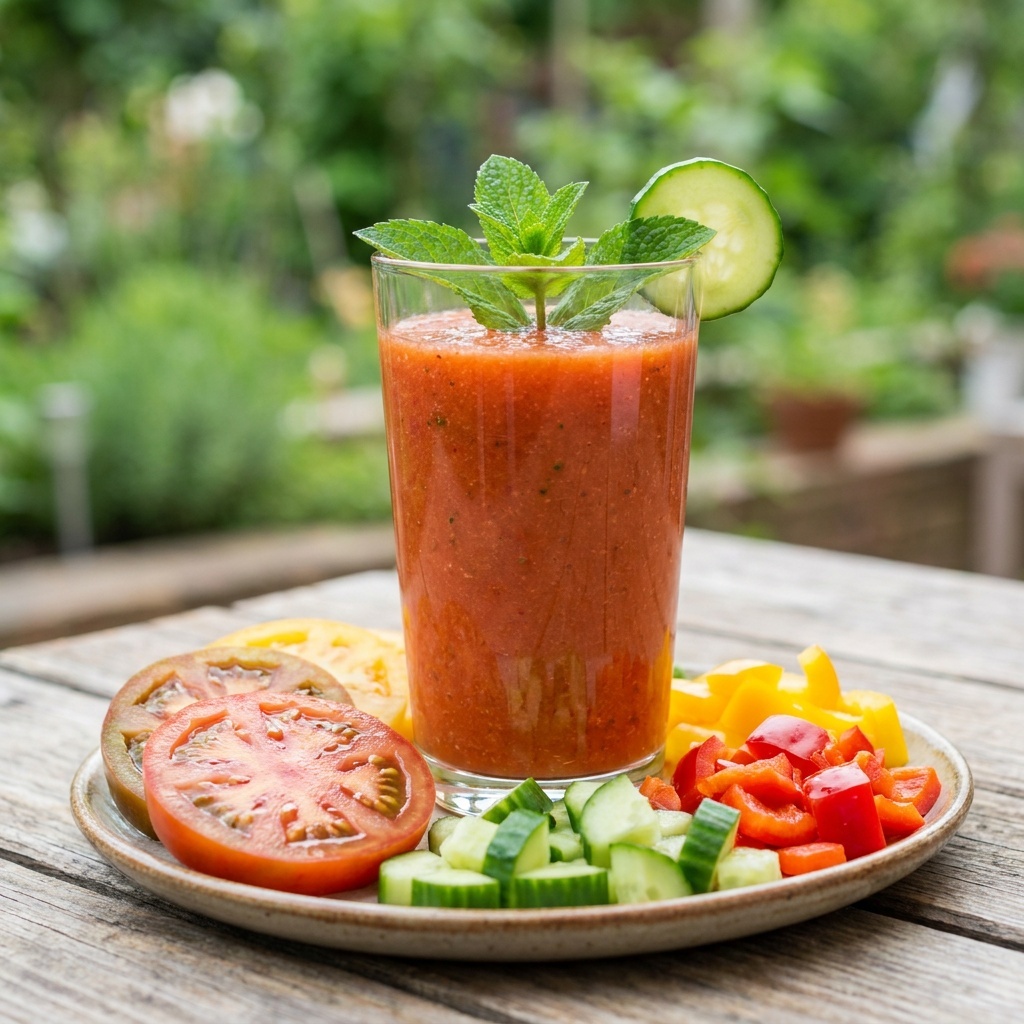
Garden juice from the slow juicer, tomato and summer vegetables

Share this article
Ingredients
- Summer tomatoes
- Cucumbers
- Pepper
- Celery
- Carrots
- Fresh herbs of your choice (dill, parsley, coriander, mint, oregano...)
- Sea salt, freshly ground black pepper, and spices of your choice
Method
- Preferably use a slow juicer (single or twin auger), better suited than centrifugal models to this kind of preparation.
- Put the vegetables and herbs through, alternating soft and hard textures, using the fruit attachment if your machine has one.
- Season with salt, pepper and the spices of your choice just before drinking.
Tip
The proportions are not fixed: adjust them according to what your garden or your market offers at the time. Start and finish with a hard vegetable, carrot or celery, which pushes ahead of it the herbs and tomato pulp left in the auger. A dash of lemon juice at the end of the pressing helps the juice keep its colour if you are not drinking it straight away.
The full range EQUIPMENT
41 products
Discover the full range

FAQ: your questions about the garden juice from the slow juicer
How do you keep fresh juice made with a juicer?
Fresh juice oxidises from the moment it is pressed: ideally you drink it within half an hour. If you must keep it, fill a glass bottle to the brim to drive out the air, seal it tightly and put it in the fridge. A slow juicer, which heats and aerates little, lets you hold for 24 to 48 hours where a centrifugal machine peaks at a few hours. A dash of lemon slows the oxidation further.
How do you make tomato juice without a juicer?
Without a machine, blend the tomatoes cut into pieces, then strain the resulting purée through a nut milk bag or a fine cloth, pressing well. The yield is a little lower than with a juicer and the juice slightly frothier, but the result is still excellent. Let it stand for ten minutes before straining: the pulp separates better and the juice comes out clearer.
What can I do with fresh tomato juice?
Fresh tomato juice is not limited to the glass: it forms the base of a raw gazpacho, lengthened with cucumber and pepper then blended, or of a cold sauce for courgette noodles. It replaces water in a raw soup, slips into a marinade for vegetables, or freezes into cubes to flavour a preparation later. The remaining pulp thickens a sauce or a dehydrated cracker very well.
Share this article