



Five vegetables - bell pepper, spinach, courgette, carrot and red cabbage - are wrapped here in softened rice paper, so each bite mixes crunch and give rather than one dominant texture. The colours already do much of the work: yellow, green, orange and deep purple show through the translucent wrapper before you have even cut into the first roll. It all gets dipped in a cashew sauce built around curry, turmeric and a smaller amount of cayenne, so the heat builds gradually rather than hitting all at once, and a whole carrot blended into the sauce gives it body and a light sweetness that balances the spice. Nothing is cooked here: the rice paper simply needs a quick dip in warm water to turn pliable, and the sauce comes together in the blender in the time the wrappers take to soak. That makes it a fast option for a summer lunch or a light starter before a bigger meal, closer in spirit to a fresh Vietnamese-style roll than to a loaded wrap. Serve the rolls whole or sliced on the diagonal, the sauce in a small bowl alongside.
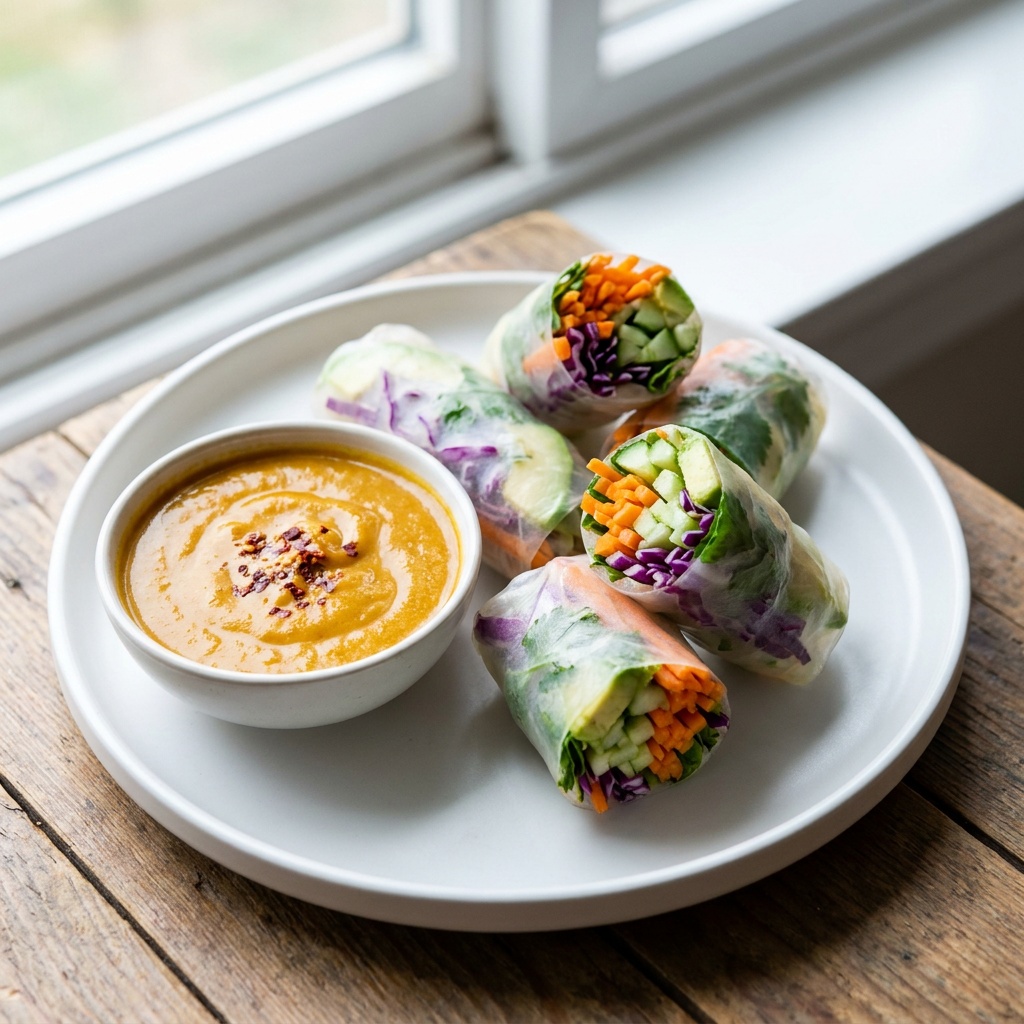
Five-vegetable spring rolls with curry-turmeric sauce

Share this article
Ingredients
Rolls
- 1 yellow bell pepper, cut into strips
- 3 cups baby spinach
- 1 courgette, julienned
- 2 carrots, julienned
- 3 leaves of red cabbage, cut into strips
- 8 rice paper rounds
Curry-turmeric sauce
- 1/2 cup raw cashews, soaked
- 1 carrot, cubed
- Juice of 1 lemon
- 1 teaspoon curry powder
- 1 teaspoon turmeric
- 1/3 teaspoon cayenne pepper
Preparation
- Prepare all the vegetables for the rolls before you start wrapping.
- Fill a wide bowl with warm water.
- Dip a rice paper round into the water for about 5 seconds, until it turns pliable.
- Lift it out and lay it flat on your work surface.
- Arrange a portion of spinach across the bottom third of the wrapper, pressing gently, then layer on the bell pepper, courgette, carrot and red cabbage.
- Fold the left and right edges in over the filling, then lift the bottom edge and roll tightly, away from yourself, until sealed.
- Set the finished roll seam-side down and repeat with the remaining wrappers and filling.
- For the sauce, blend the soaked cashews, cubed carrot, lemon juice, curry powder, turmeric and cayenne until smooth.
- Slice each roll crosswise to the size you prefer and serve with the curry sauce alongside, for dipping.
Tip
Keep a clean, damp kitchen towel over the finished rolls as you work: rice paper exposed to the air dries out and turns tough within minutes. If wrapping ahead, lay them seam-side down in a single layer, cover tightly and refrigerate; they hold for a few hours but are far better on the day they are made, before the wrapper starts to stiffen.
The full range Plant-based oils and spices
11 products
FAQ: your questions about raw spring rolls
Which vegetables can go in a spring roll?
Almost any, provided they hold up raw and can be cut finely. The great classics are carrot, cucumber, lettuce and fresh herbs; this version adds bell pepper, courgette, red cabbage and baby spinach, mostly for the colours and the different textures. Simply avoid vegetables that release a lot of water once cut, such as tomato, which would soak the wrapper from the inside.
Are spring rolls good for a diet?
Fresh, unfried rolls are among the lightest preparations in Asian cooking: the rice paper is thin, the filling is essentially raw vegetables, and nothing goes near a fryer. What weighs the whole thing down is almost always the dipping sauce, often sweet or heavy on oil. Here the sauce is cashew-based: more nourishing than a thin sauce, but with no added sugar, and you control the quantity by serving it separately.
How do you prepare rice paper?
Nothing could be simpler: warm water in a wide bowl, about five seconds of dipping, and lift the wrapper out before it is fully pliable - it keeps softening on the work surface. The most common mistake is soaking it too long: it then turns sticky, tears as you roll and sticks to itself. Work one wrapper at a time, on a slightly damp rather than dry surface.
Share this article