Barley grass: benefits, composition, dosage, and side effects
Barley grassHordeum vulgareIt is one of the most scientifically documented superfoods: rich in vitamins A, B, C, E, and K, in 20 amino acids including the 8 essential ones, in chlorophyll, in antioxidant enzymes (SOD), and in GABA, it contributes to overall vitality, acid-base balance, and digestive health as part of a varied and balanced diet. At Biovie, we have been offering and using it for over 15 years - it is one of the few foods on which research and field experience truly converge.
In this article, I share everything I've learned about this remarkable superfood: its complete composition, its 8 scientifically documented benefits, how to choose between dehydrated barley grass and powdered juice, the dosage, the side effects to be aware of - and yes, the question of gray hair, because many of you have been asking me about it.
A bit of history: how barley grass became a global superfood
Everything begins with Ann Wigmore, pioneer of raw food. This remarkable woman achieved through the barley grass juice impressive results on bedridden and elderly people - which motivated her to found the famous Hippocrates Institute. She then distributed this juice in Indian health camps affected by malnutrition, with results that caused a sensation at the time.
Research then took over, particularly in Japan. Dr. Yoshihide Hagiwara, after studying and comparing more than 200 plants, concludes that barley grass provides the highest concentration of active ingredients. The Dr. Schnabel for his part, estimated that1 kg offresh barley grass equivalent in nutritional value to 22 kg of vegetables - a figure that is striking, and reflects the extraordinary density of this seedling. The Japanese from Okinawa, whose longevity is well-documented, have incorporated young cereal sprouts into their diet for centuries. Coincidence? I don't think so.
Nutritional composition: why is barley grass so complete ?
Vitamins, minerals, and amino acids
Specifically, here is what barley grass contains. According to Dr. Hagiwara's analyses, its nutritional density surpasses most known plants:
7× more vitamin C than the oranges
11× more calcium than milk
5× more iron than spinach
4× more vitamin B1 whole wheat flour
The set of the vitamins A, B (including B9 - folates), C, E, K
20 amino acids including the 8 essential ones - this protein profile is frankly rare in the plant kingdom
This profile makes it an excellent addition to vegan and vegetarian diets, to compensate for soil depletion, and for people who want to ensure they are not deficient in nutrients. Pregnant women, athletes prone to mineral loss, people with anemia or osteoporosis: this is THE superfood to include in your daily routine.
The unique active compounds of barley grass
Beyond vitamins and minerals, barley grass contains bioactive compounds that most common foods do not provide:
Chlorophyll - with a structure similar to human hemoglobin, antiseptic, contributes to the body's natural elimination functions
Superoxide dismutase (SOD) and Cytochrome oxidase - two of the most powerful known antioxidant enzymes, which help protect cells against oxidative stress
GABA (gamma-aminobutyric acid) - neurotransmitter involved in relaxation and sleep quality
Saponarin and lutonarin - specific barley flavonoids, being studied for their anti-inflammatory properties
Proanthocyanidins - polyphenolic antioxidants
Tryptophan - precursor of serotonin and melatonin, involved in mood and sleep
The digestive enzymes deserve special mention. According to the work of Dr. HowellEnzyme NutritionThe enzyme deficiency is believed to be directly involved in many metabolic imbalances - including obesity. Barley grass, harvested at its peak of enzymatic vitality (before it goes to seed), is an exceptionally concentrated source.
What science says in 2026
Research on barley grass has significantly developed over the past ten years. A comprehensive review published in the journal Nutrients (Zeng et al., 2018 - https://pubmed.ncbi.nlm.nih.gov/30042362/) documented the role of functional compounds in barley grass - GABA, flavonoids, SOD, vitamins - in the prevention of chronic diseases. More recent studies explore its effects on lipid profile and blood sugar levels (Thatiparthi et al., 2019). Research is progressing. Let's be cautious about definitive conclusions, but the foundations are solid.
Dehydrated barley grass or barley grass juice powder: which one to choose ?
This is the question our clients ask me most often. And frankly, the distinction is important - the two products are not interchangeable.
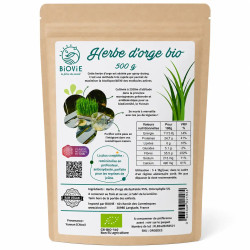
TheDehydrated barley grass comes directly from young shoots dried at low temperatures (less than 42°C) and ground. It retains the entirety of the plant, including the fibers. The barley grass juice powder, It is obtained by extracting the juice from fresh shoots, then dehydrating it at a low temperature. The result: a much higher concentration of active nutrients, but without cellulose.
Dehydrated barley grass → Ideal for daily use, during seasonal changes, to support a weight management approach (fiber contributes to satiety and helps regulate postprandial blood sugar levels)
Barley grass juice powder → more suitable as a complement during a treatment detox, of a fasting, or during periods requiring maximum nutritional density (burnout, convalescence, weakened thyroid)
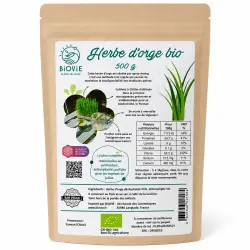
In both cases, the recommended dosage isone teaspoon to one tablespoon per day. In both cases, the cold drying process preserves the integrity of the enzymes - this is what makes the difference compared to powders treated at high temperatures.
"Barley grass juice powder... These are rare products that I can only find at Biovie!" - Samantha M. ⭐⭐⭐⭐⭐
The 8 benefits of barley grass documented by science
1. A nutritional bomb against deficiencies
This is undoubtedly the most immediate and well-documented benefit. The profile of vitamins, minerals, and essential amino acids in barley grass makes it a particularly valuable ally for vegans and vegetarians, the pregnant women (iron and vitamin B9 richness), and the athletes (mineral loss during exertion). Good results are observed in cases of anemia - iron contributes to the normal functioning of the immune system and the reduction of fatigue as part of a varied and balanced diet.
2. Support for the natural elimination functions
Chlorophyll and enzymes in barley grass support the body's natural elimination functions. Dr. Hagiwara demonstrated that barley grass juice can help deactivate the carcinogenic effects of benzopyrene (found in grilled meats). Dr. Lai, on the other hand, observed antimutagenic and antiplastic properties. More recent studies (Kawka et al., 2019 - Institute of Rural Health in Lublin) are exploring its chemopreventive properties in vitro on colon cells. Research is progressing - cautiously, but in an interesting direction. For a spring detox cure, barley grass is a must-have.
3. Acid-base balance and immune protection
Barley grass is an alkalizing food. Its chlorophyll, which has a structure similar to hemoglobin, oxygenates the body and contributes to acid-base balance. The two key enzymes - superoxide dismutase and cytochrome oxidase - help protect cells against oxidative stress, with a documented impact on the normal functioning of the immune system. The magnesium it contains helps reduce fatigue and supports the normal functioning of the nervous system.
4. Support for healthy weight and blood sugar levels
Barley grass promotes satiety, drains intestinal mucus, and contributes to the relaxation of the nervous system, which improves nutrient assimilation. Its enzymatic richness supports the normal metabolism of fats. A 2010 study (Venugopal & Iyer, International Journal of Green Pharmacy) observed an improvement in diabetic dyslipidemia with dehydrated barley grass powder. ⚠️ If you are diabetic and undergoing medication treatment, consulting your doctor is essential before starting any regimen.
The chlorophyll cleanses and contributes to the repair of the intestinal mucosa. It helps fight against pathogenic bacteria and fungi such as Candida albicans. A tangible result for many users: less chronic constipation, less bloating, less bad breath. The impact on the skin and hair becomes visible quite quickly - often in just a few weeks of regular treatment.
6. Cardiovascular support and contribution to normal cholesterol levels
The specific flavonoids of barley grass - saponarin and lutonarin - contribute to the protection of vascular walls. Studies have observed that regular consumption (about 15 g/day for 4 weeks) can help maintain normal LDL cholesterol levels. An animal model study (Thatiparthi et al., 2019) showed an improvement in the overall lipid profile. Again: within the context of medical supervision and a varied and balanced diet.
7. Benefits for hair: strengthening, shine, and white hair
(Detailed section below - it deserves a full development.)
8. Support for mood, sleep, and vitality
This is an often underestimated aspect. Barley grass maintains stable energy throughout the day and helps reduce the consumption of stimulants (sugar, coffee, cigarettes). It optimizes athletic and intellectual performance. The GABA it contains contributes to the normal functioning of the nervous system-relaxation, quality of sleep. Tryptophan, on the other hand, is a precursor of serotonin and melatonin. A study from Chiba University, Japan (Yamaura et al., 2012 - https://pubmed.ncbi.nlm.nih.gov/22884198/), observed antidepressant effects of young barley leaves in an animal model. Human clinical studies are still necessary, but the biochemical mechanisms are consistent.
"I have been consuming barley grass juice, among other things, for years... I also recommend their products to my clients as a naturopath." - Amélie Bourdeleau, naturopath ⭐⭐⭐⭐⭐
Barley grass and white hair: what do we really know ?
I will be honest with you. No, no clinical study has proven to date that barley grass "makes white hair grow back." It would be too simple - and that's not how we communicate at Biovie.
On the other hand, here is what we know. Premature depigmentation of hair is often associated with deficiencies in copper, zinc, B vitamins (including B9 and B12), iron, and sulfur-containing amino acids. Barley grass precisely covers several of these nutrients-in a concentrated and bioavailable form. Regular users and naturopaths like Amélie Bourdeleau report visible changes after several months of continuous use. Is it a cause-and-effect relationship? Correcting pre-existing deficiencies likely plays a role. It's not magic-it's nutritional.
Both internally and externally, barley grass juice is renowned for its hair benefits:
Strengthening of hair follicles : vitamins A, B, C, E + zinc + essential amino acids contribute to normal hair growth
Nutrition and hydration : more supple, shiny hair, less prone to frizz and breakage
Scalp pH balance : the alkalizing property promotes a healthy capillary microenvironment
Contribution to microcirculation : best nutritional support for hair follicles
Purifying and softening mask made with barley grass (skin and hair) - the recipe we have been using at home for years:
Mix: • 2 tablespoons ofDehydrated barley grass • 1 tablespoon of honey • ½ teaspoon ofcastor oil • 6 drops of Ylang Ylang essential oil • 1 large tablespoon of lukewarm spring or filtered water
How to consume barley grass? Dosage and practical advice
Recommended dosage
The recommended dose isone teaspoon to one tablespoon per day (about 3 to 10 g). If you are a beginner or have a sensitive nature, start with ½ teaspoon and gradually increase over one to two weeks. The body adapts better this way - and you avoid any potential minor digestive discomforts in the first few days. In case of any medical condition, the advice of your healthcare practitioner is essential before starting a regimen.
When to take barley grass ?
Three moments work well according to feedback from our clients:
In the morning on an empty stomach : maximum nutrient absorption, a good way to start the day right
30 minutes before meals : prepares the digestive system, supports appetite and satiety
As a snack between meals : hydration + nutritional intake, helps reduce cravings
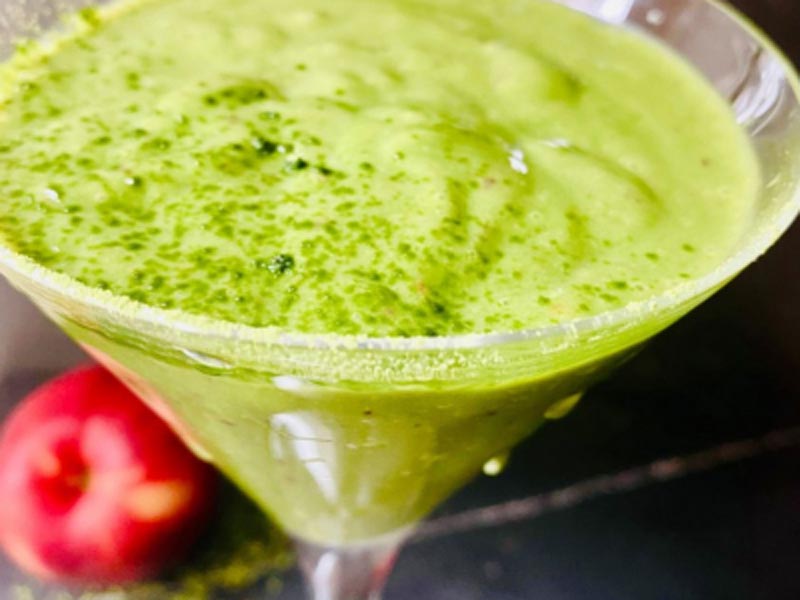
Personally, I take it in the morning in a large glass of water, sometimes in a alkalizing smoothie when I have the time. Aurélie, on the other hand, prefers it in a vegetable juice - the mild flavor of barley grass blends in without overpowering.
Growing your own barley grass and pressing its juice at home
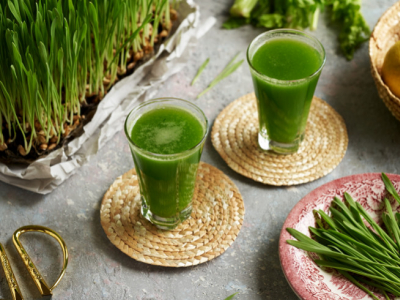
Powder gets you through the year, but nothing replaces a freshly extracted juice. Growing your own barley grass takes a week, a tray and two minutes of attention a day - it is within reach of any flat, and it is the best way to know exactly what you are drinking.
Sowing: on soil or in a sprouter
Start by soaking the barley seeds for sprouting for about twelve hours in a jar of filtered water. For a first attempt, one or two tablespoons is enough: better to succeed with a small quantity than fail with a whole tray.
From there, two options:
On soil: spread 1 to 2 cm of untreated soil in a garden tray (60 to 80 cm long, with a leak-proof base indoors), moisten it, sow the seeds without crowding them, then cover with an upturned tray or dark plastic. As soon as roots appear, after two to three days, remove the cover and let the light in - never direct sunlight. It is the alternation of shade and light that gives a nicely green grass.
In an automatic sprouter: with an Easygreen sprouter, soil becomes unnecessary - programmed misting does the work and the crop stays perfectly clean. It is the simplest solution if you grow grass all year round.
Aim for a temperature of 20 to 25°C, circulating air, and constant humidity kept up with a spray bottle morning and evening. In winter, set the tray up in the warmest room: cold slows germination down considerably.
Harvesting at the right time
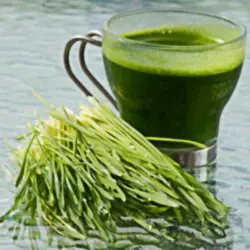
The grass is cut between day seven and day eight, when it is 8 to 15 cm tall. Cut close to the base: that is where the nutrient concentration is highest. Rinse in good-quality water and spin dry (a salad spinner works very well). If you don't press it straight away, cut grass keeps for a week in the fridge in an airtight box - but the juice itself should be drunk within half an hour of extraction.
Extracting the juice: the right equipment and quantities
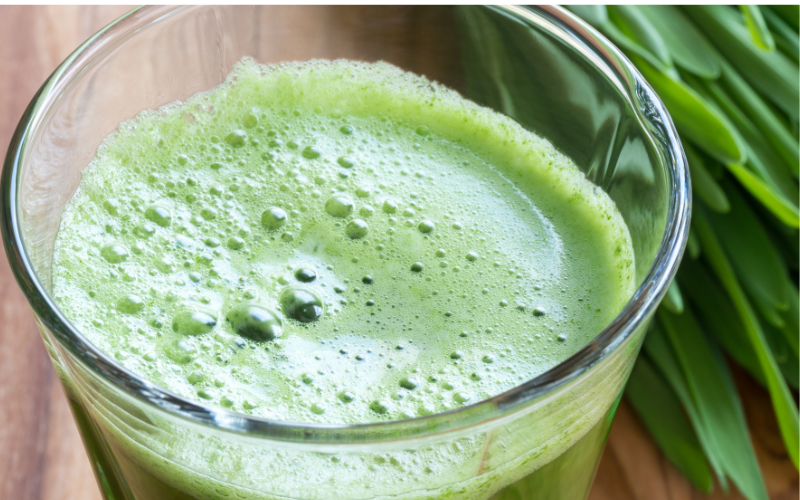
Barley grass is too fibrous for a standard centrifugal juicer: you need a slow masticating juicer, manual or electric, such as the Juice Me Up. Useful benchmarks to plan your sowing: 1 kg of grass yields about 300 g of juice, and a bunch about one and a half centimetres in diameter yields roughly 3 cl.
On quantities, gradual increase matters most: start with 3 cl of juice, neat or diluted with a carrot juice to soften the bitterness, then work up to 6 to 12 cl a day depending on your tolerance. As part of a varied and balanced diet and a healthy lifestyle, this small daily dose is more than enough. Without a juicer, chewing the grass also works - spit out the fibres, swallow only the juice - but the yield is low.
Barley grass or wheatgrass?
Both are grown in exactly the same way and pressed with the same equipment. Barley grass is a little milder in the mouth and better tolerated by sensitive stomachs, whereas wheatgrass has a more pronounced taste. If you are just starting out, begin with barley. And if growing your own puts you off, barley grass juice powder remains an honest solution for busy days.
Does barley grass contain gluten ?
Barley grass harvested before the grains do not form is naturally gluten-free. It is precisely at this stage - the young shoot - that the plant is harvested by our producers. It is also free from the modifications that modern wheat or corn have undergone. Discover our high-energy gluten-free alternatives →
Important nuance: some products on the market may be contaminated with gluten during the manufacturing process if the facility also processes gluten-containing grains. This is why traceability matters.
Slight fatigue or headaches at the very beginning of a treatment - often a sign of an adaptation reaction, temporary and benign.
These effects generally disappear by reducing the dose and gradually increasing it over 1 to 2 weeks.
Contraindications and special precautions:
Diabetes under medication treatment : Barley grass contributes to the regulation of blood sugar levels - risk of interaction with antidiabetic medications. Medical advice is essential.
Pregnancy and breastfeeding : insufficient data to date - despite its interesting nutritional contributions (iron, B9), consult your doctor or midwife before any treatment
Children under 12 years old : not recommended without pediatric advice
Drug interactions : anticoagulants, antidiabetics, immunosuppressants - talk to your doctor about them
Grass allergy : recommended precaution even if the product is gluten-free
For any questions about the recommended daily intake, you can consult the data from theANSES (National Agency for Food Safety). This information does not replace the advice of a healthcare professional.
FAQ - Your questions about barley grass
What are the benefits of barley grass ?
Barley grass is a superfood rich in vitamins (A, B, C, E, K), minerals (iron, calcium, magnesium, zinc), 20 amino acids including the 8 essential ones, and bioactive compounds (chlorophyll, SOD, GABA, tryptophan). As part of a varied and balanced diet, it contributes to overall vitality, acid-base balance, normal functioning of the immune system, digestive and hair health. It is particularly recommended for vegans, athletes, and pregnant women.
When to take barley grass ?
Barley grass can be consumed in the morning on an empty stomach (for maximum absorption), 30 minutes before meals (for digestive preparation), or as a snack between meals. The recommended dosage is one teaspoon to one tablespoon per day (3 to 10 g). In case of any medical condition or treatment, consult your healthcare practitioner.
Can I consume barley grass every day ?
Yes, barley grass can be consumed daily as part of a balanced diet. Start with a small dose (½ teaspoon) and gradually increase over one to two weeks. A course of 4 to 12 weeks during the change of seasons is common. If you are undergoing medical treatment, seek your doctor's advice.
Is barley grass good for the intestines ?
Yes. The chlorophyll in barley grass helps to cleanse and repair the intestinal lining, with a natural antiseptic action. Its digestive enzymes support normal metabolism, and its fibers (in the dehydrated version) contribute to regular transit. It is used to support cases of constipation, bloating, and intestinal dysbiosis - as part of a comprehensive nutritional approach.
Can barley grass help with white hair ?
No clinical study has yet proven that barley grass eliminates gray hair. However, its richness in copper, zinc, B vitamins (B9, B12), and amino acids addresses several nutritional deficiencies associated with premature depigmentation. Regular users and naturopaths report positive changes after several months of continuous treatment. Used internally and as an external hair mask, it contributes to the strengthening and nourishment of hair follicles.
What is the difference between barley grass and barley grass juice ?
Dehydrated barley grass comes from dried and ground young shoots-it retains the fibers, making it ideal for daily maintenance and weight management. Barley grass juice powder is obtained by dehydrating the juice extracted from fresh shoots: it is more concentrated in active nutrients, without cellulose, and is recommended for therapeutic treatments, fasting, and periods of intensive recovery.
Does barley grass contain gluten ?
Barley grass harvested before grain formation is naturally gluten-free. Biovie's barley grass products are guaranteed gluten-free and are laboratory tested. Some commercial products may be contaminated during manufacturing - always check for the "gluten-free" label and the absence of cross-contamination on the packaging.
What are the side effects of barley grass ?
Barley grass is generally well tolerated. At the beginning of a treatment or in case of too rapid introduction, transient digestive disorders (mild nausea, softer stools) may occur. Start with a low dose and gradually increase. Diabetic individuals under treatment, pregnant or breastfeeding women, or those taking anticoagulants should consult their doctor before starting any treatment.
Venugopal, S., & Iyer, U. (2010). "Management of dyslipidemia in patients with metabolic syndrome using dehydrated barley grass powder". International Journal of Green Pharmacy, 4(4), 234–238.
Kawka, K., Lemieszek, M.K., & Rzeski, W. (2019). "Chemopreventive properties of young green barley extracts in in vitro studies on colon cancer cell lines". Acta Biochimica Polonica, 66(2).
Warning: The information presented in this article is provided for informational purposes only and does not constitute medical advice. Consult a qualified healthcare professional before making any changes to your diet or supplementation. As part of a varied and balanced diet and a healthy lifestyle.