- New
 Fast delivery
.png) Rating 4.8/5
Rating 4.8/5
 Fair prices
| | |
| Fast delivery | Rating 4.8/5 | Fair prices |


 0
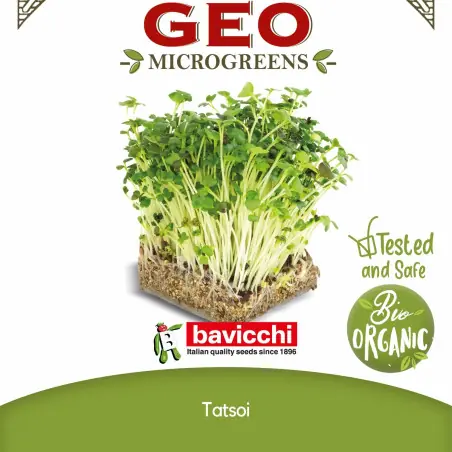
0 Organic Tatsoi seeds to grow as microgreens
Available in 15g or 150g
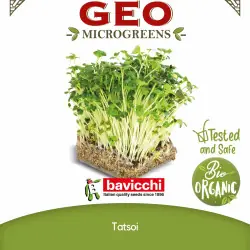
TatsoiBrassica rapa var. Narinosa) is a traditional Asian variety, originally from China and widely adopted in Japanese cuisine. Nicknamed "mustard spinach" or "rosette pak-choi," it belongs, like mizuna, to the Brassicaceae family (the Crucifers) and to the species Brassica rapa - the same as turnip, pak-choi, or Chinese cabbage. In its mature stage, its leaves are arranged in a characteristic flat rosette, forming a small "bouquet" close to the ground. In the microgreens stage, this same elegance is expressed, in a miniature version.
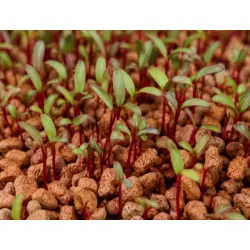
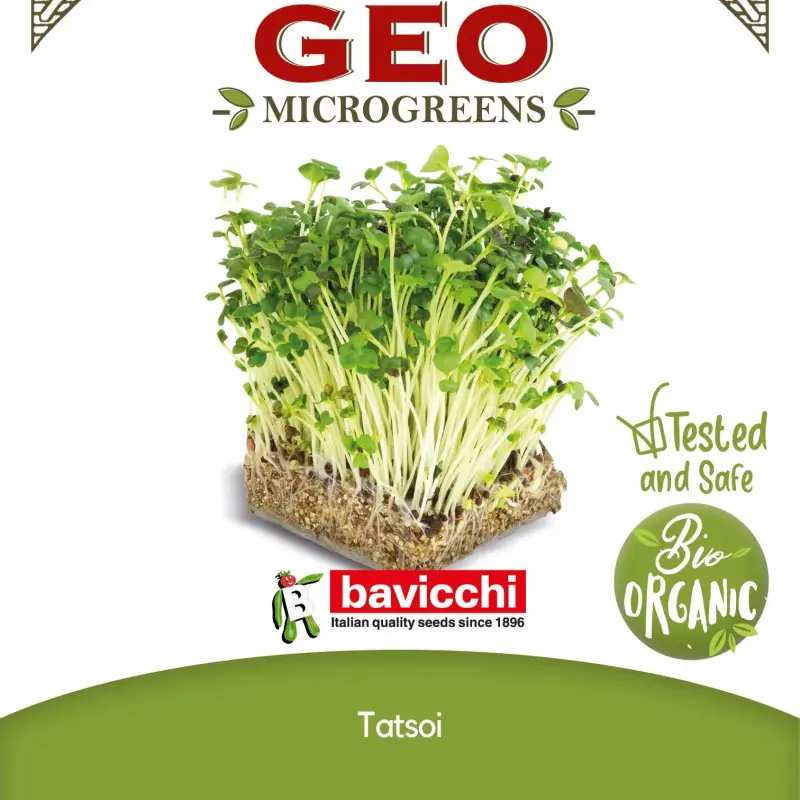
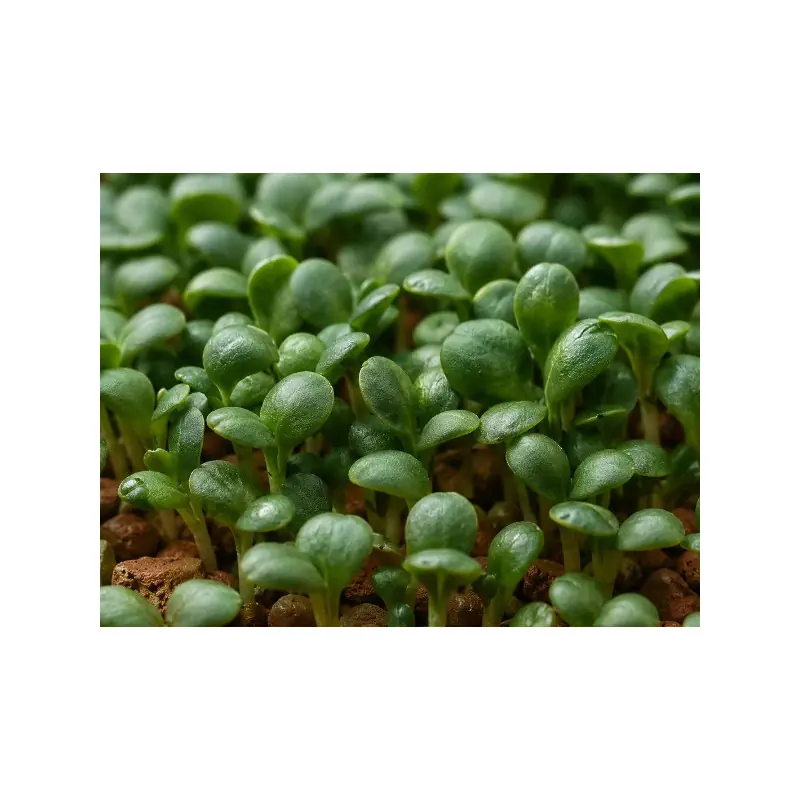
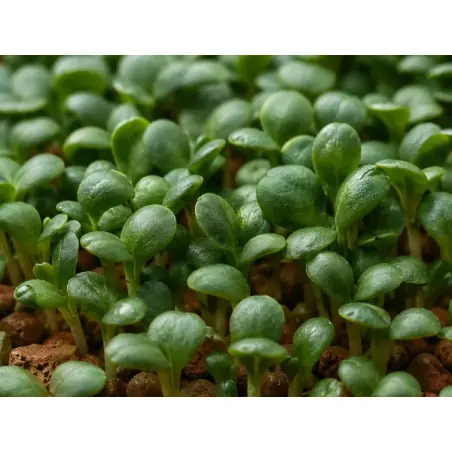
🌱 Its uniqueness is its unique silhouette. Cotyledons are round, shiny, shaped like a small spoon, a deep intense green - no other variety in our catalog has this appearance. Visually, it's almost like a mini pak-choi leaf, in perfect miniature. In terms of taste, the flavor is Sweet, herbaceous, in the realm of raw spinach, with a mustard note so subtle that it is barely noticeable. It is the The sweetest brassicaceae in our selection - perfect for those who don't like too much spiciness, for children, or as a first microgreen introduction to the world of Crucifers.
Specifically, it pairs wonderfully with mild raw salads (cucumber, avocado, raw zucchini in spaghetti form), fresh seaweed salads (wakame, dulse, samphire) where it perfectly complements the marine nuances, Asian-style raw bowls (avocado, seaweed, sesame, lime), vegetable tartares like "Asian carpaccio" (thinly sliced zucchini, sesame-lime sauce), avocado toasts sprinkled with gomasio, raw sauces made with tahini and citrus juice, salad leaf wraps filled with mild raw vegetables, homemade hummus with seaweed, or even mild green smoothies for a fresh herbal touch. A few fresh sprouts just before serving, and the dish instantly gains an Asian elegance without any effort.
Harvest at : 5 to 7 cm in height
Cycle : 6 to 10 days (quick harvest!)
Quantity per tray : 8 to 9 g of seeds
🌱 How to grow your tatsoi microgreens at home ?
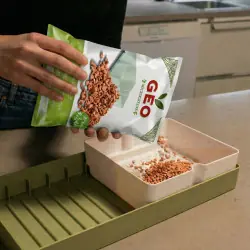
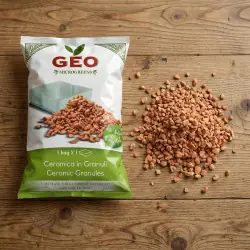
Microgreens are grown on a light and well-draining substrate, and not by misting as with traditional sprouted seeds. For optimal and reproducible results, we recommend our sprouter. GEO Smart Greens from Geo Bavicchi associated with the GEO ceramic pellets (100% natural and reusable substrate).
🌱 The principle is simple:
- Pour the ceramic pellets in the perforated growing tray.
- Evenly distribute 8 to 9 g of tatsoi seeds on the surface, without pressing them in. Good news: no soaking is necessary for Brassicaceae seeds, which are small and germinate easily.
- On the first day, generously spray with water to properly hydrate the seeds.
- Place the container in a bright location, sheltered from direct sunlight.
- Then pour the water into the lower tray: thanks to bottom watering, The substrate absorbs moisture through capillarity, without drowning the shoots or promoting mold.
- Monitor surface humidity (use a supplementary spray if the air is dry).
- Harvest with scissors as soon as your shoots reach 5 to 7 cm. It's ready - and it's quick: only 6 to 10 days.
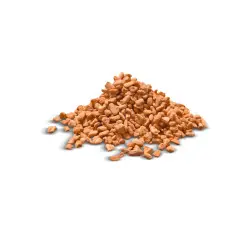
🌱 The advantages of ceramic pellet substrate: porous structure that retains just the right amount of water, very little water consumed, clean environment, no potting soil that dirties the kitchen, and above all 100% natural and reusable from one culture to another.
🌱 Discover our 8 varieties of microgreens
We offer a complete range of organic seeds for growing microgreens, carefully selected from Geo Bavicchi. From aromatic flavors to spicy and mild, earthy flavors, here is the full list of varieties available in our Biovie catalog:
| Variety | Color of the shoots | Dominant flavor |
|---|---|---|
| Dill (Dill) | Light green, thin stems | Aniseed, fresh |
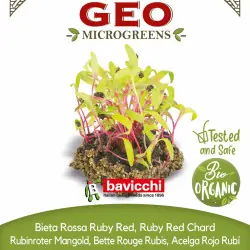
| Red Swiss chard (Bette à carde rouge rubis) | Purple stems, green cotyledons | Sweet, slightly earthy |
| Chioggia Swiss chard | Pale pink striped stems, green cotyledons | Sweet, subtle |
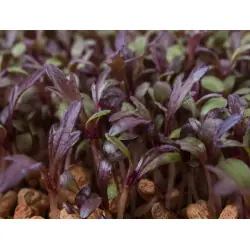
| Bull's Blood red beet | Bordeaux red, intense purple | Earthy, sweet, sugary |
| Purple kohlrabi | Purple stems, green cotyledons | Sweet, raw cabbage type |
| Green mizuna | Light green, serrated | Slightly spicy, mustard-flavored |
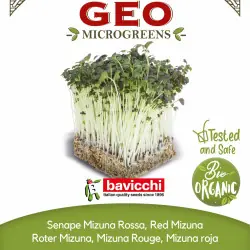
| Red mizuna | Red-green serrated | Spicier, arugula type |
| Tatsoi | Bright dark green, spoon-shaped | Sweet, spinach type |
All our varieties are organic, guaranteed with a germination rate above 95%, and selected at Geo Bavicchi in Perugia, Umbria.
🌱 Below is a behind-the-scenes video at our supplier Geo Bavicchi:
🌱 And the interview we had the pleasure of filming with Dario Bavicchi, who represents the third generation of this Italian family business founded in 1896:
🌱 Why are tatsoi microgreens nutritionally interesting ?
Honestly, what struck me when I became interested in this variety is that it combines two qualities rarely found together in a single small sprout: a very sweet flavor (ideal for sensitive palates or beginners) and a remarkable nutritional richness typical of the Brassicaceae family. Particularly, tatsoi is known for its high content of beta-carotene and carotenoids - the intensity of the dark green leaves is no coincidence, it visually reflects this density of pigments.
🌱 At what time does the plant concentrate the most nutrients ?
At the microgreens stage, the plant concentrates all the nutrients and vitamins it needs for its own development. Once this stage is surpassed, the plant redirects its energy towards structural growth - leaves, stems, roots - and the concentration of vitamins and antioxidants gradually decreases.
The cultivation durations vary depending on the species, from just a few days to a maximum of two weeks. It is precisely during these very early stages of growth that young shoots concentrate their highest nutritional value, surpassing that of the mature vegetable. Concretely, this nutritional richness is transmitted to your body through the regular consumption of raw sprouts: very small foods with remarkable nutritional density.
The diversity of available varieties - dill, Swiss chard, beetroot, kohlrabi, mizuna, tatsoi... - offers varied flavors and nutritional profiles, perfect for enriching a vibrant daily diet.
- Presence of glucosinolates. Tatsoi microgreens contain Glucosinolates, sulfur compounds characteristic of the Brassicaceae family. In tatsoi, they are present in a more moderate concentration than in mizuna or radish, which explains the particularly mild flavor of this variety.
- Source of vitamin A (in the form of beta-carotene). Tatsoi microgreens are particularly rich in beta-carotene, which is converted into vitamin A by the body. Vitamin A contributes to the maintenance of normal vision, the normal functioning of the immune system, and the maintenance of normal skin and mucous membranes, as part of a varied and balanced diet and a healthy lifestyle.
- Source of vitamin C. Vitamin C contributes to the normal functioning of the immune system, the normal formation of collagen for the normal functioning of the skin, gums, cartilage, and blood vessels, and the reduction of fatigue.
- Source of vitamin K. Tatsoi naturally contains vitamin K, which contributes to normal blood clotting and the maintenance of normal bone structure.
- Source of calcium. Like many young shoots of deciduous trees, tatsoi contains calcium. Calcium contributes to normal muscle function, normal transmission of nerve impulses, and the maintenance of normal bones and teeth.
- Presence of chlorophylls and carotenoids. Like all young green shoots - and particularly those of a dark green like tatsoi - microgreens contain plant pigments (chlorophylls, carotenoids) characteristic of fresh and living foods.
- Nutritional density of microgreens in general. A landmark study from the USDA laboratory (Xiao et al., 2012, Journal of Agricultural and Food Chemistry) compared 25 varieties of microgreens to their mature versions and observed on average vitamin and carotenoid contents 4 to 5 times higher to those of adult plants. Microgreens from the Brassicaceae family particularly stand out in this comparison.
- Mineral intake. Tatsoi naturally contains minerals such as iron, magnesium, and potassium. Iron contributes to the normal formation of red blood cells and hemoglobin, magnesium to the normal functioning of the nervous system and the reduction of fatigue, and potassium to the maintenance of normal blood pressure - as part of a varied and balanced diet and a healthy lifestyle.
Here it is. In my view, the decisive argument is not a particular "superpower," but rather the idea that a spoonful of freshly cut sprouts, added to an already healthy dish, naturally enriches your plate with micronutrients - without any transformation, without cooking, without transport. You harvest, you cut, you consume. This is the very definition of living food. And with tatsoi, you also benefit from its mild flavor, which allows it to be integrated absolutely everywhere without ever disturbing the other ingredients in the dish.
Note: Like all Brassicaceae (cabbage, broccoli, radish, turnip...), tatsoi contains compounds called "goitrogens" which can, in very high raw consumption, interfere with iodine absorption. For consumption at the microgreens stage (a few sprouts per dish), no particular restrictions are documented. People with thyroid disorders can simply moderate the very regular consumption of raw cruciferous vegetables.
🌱 To learn more about home-growing sprouts, check out our blog articles:
What is the benefit of sprouting seeds ?
What are the benefits of sprouted seeds ?
- Packaging : available in doypack of 15 g (approximately 1 culture) or 200 g (economic format, approximately 22 to 25 crops)
- DDM : 3 years after the production date
- Origin : seeds selected and packaged in Italy by Geo Bavicchi (Perugia, Umbria), a family business specializing in sprouting seeds since 1896, certified organic. Tatsoi is a traditional variety originating from China, widely adopted in all Asian cuisine.
- Botanical variety : Brassica rapa var. Narinosa (family Brassicaceae)
- Guaranteed germination rate : greater than 95% (each batch tested before commercialization)
- Conservation : away from light, in a cool, dry place
🌱 Packaging quality that matches the quality of the seeds: all our bags are made from materials certified for food contact, moisture-resistant, and indicate the optimal use-by date, weight, and production batch number for complete traceability. The instructions for use are printed in five languages: Italian, English, French, German, and Spanish.
🌱 Frequently Asked Questions About Tatsoi Microgreens
TatsoiBrassica rapa var. NarinosaIt is a traditional vegetable plant of Chinese origin, widely used in all Asian cuisine (Chinese, Japanese, Korean). It is sometimes nicknamed "mustard-spinach" or "rosette pak-choi," which aptly summarizes its nature: a close cousin of pak-choi, with a mild flavor reminiscent of raw spinach. In its mature stage, it forms a characteristic flat rosette at ground level, with round and shiny leaves. In the microgreens stage, you find this same elegance in miniature, with cotyledons shaped like small spoons.
The flavor is sweet, herbaceous, in the realm of raw spinach. A mustardy note typical of Brassicaceae remains present, but it is so subtle that it is barely noticeable - it is the The sweetest brassicaceae in our catalog. If you find arugula or mustard too spicy, or if you are introducing children or people with sensitive palates to microgreens, tatsoi is the ideal choice. It is also an excellent "all-purpose" green that blends into any dish without ever overpowering it.
The two varieties belong to the same botanical species (Brassica rapa), but to different varieties: Narinosa for the tatsoi, nipposinica for mizuna. The difference is striking: tatsoi has leaves round, shiny, spoon-shaped, a deep dark green. Mizuna has leaves finely cut, almost feathery, tender green. In terms of flavor, tatsoi is noticeably milder (similar to spinach), while mizuna is spicier (similar to mild mustard or arugula). In terms of cultivation, both varieties are grown in the same way: 6 to 10 days, 8 to 9 grams of seeds per tray, no soaking.
Sprouted seeds are harvested very early (2 to 5 days), at the radicle stage, and are grown in a jar or sprouter with daily rinsing. Microgreens, on the other hand, go further: they are harvested at the cotyledon stage (the first embryonic leaves), between 6 and 10 days for tatsoi, and only the aerial part is consumed, cut with scissors. The cultivation is done on a light substrate - in our case, 100% natural ceramic granules. And with tatsoi microgreens, you get the added bonus of that characteristic spoon-like shape that the sprouted seed does not reveal.
Count about 8 to 9 grams of seeds for a standard tray of the sprouter. GEO Smart Greens. The 15 g packet allows for 1 cultivation, and the 200 g format provides approximately 22 to 25 cultivations - enough to have fresh tatsoi microgreens continuously for over five months.
Specifically, allow 6 to 10 days between sowing and harvesting. It is one of the fastest crops in our selection - Brassicaceae (tatsoi, mizuna, kohlrabi, radish, broccoli) generally have a shorter cycle than Amaranthaceae (chard and beets) which require 10 to 14 days. Harvest when the shoots reach 5 to 7 cm.
No, it is not necessary. Unlike chard or beet seeds (which are hard clusters requiring several hours of soaking), tatsoi seeds are small, smooth, and germinate quickly without any special preparation. Simply sprinkle them directly onto the substrate, spray generously on the first day, and you're good to go.
Yes, particularly. Tatsoi is probably the mildest and most accessible microgreen in our catalog - its raw spinach flavor, without a strong bite, makes it very easy to incorporate into children's dishes. A few sprouts on a plate of raw vegetables, in an avocado toast, or discreetly blended into a green smoothie: it's a natural way to add botanical and nutritional diversity to their diet, without a battle over taste.
For microgreens, it is not ideal. Easygreen sprouters are perfect for classic sprouts (alfalfa, broccoli, lentils, fenugreek...) that are grown by misting or siphon effect, without a substrate. Microgreens, on the other hand, require cultivation on a substrate with bottom irrigation. This is precisely the function of the sprouter. GEO Smart Greens, designed for this process.
Yes, it is one of its major advantages. After harvesting, you remove the roots, you rinse the clear water pellets, and you can start a new culture. The porous structure of the ceramic retains its absorption capacity over the cycles - up to 5 reuses recommended by Bavicchi. It's frankly more environmentally friendly than a single-use substrate like peat or coco.
The ideal is to cut them just before serving - this way you benefit from all their freshness, crunchiness, and thermolabile vitamins. If you need to store them, place them in the refrigerator in an airtight container between two sheets of paper towel. They last 3 to 4 days, but their flavor is at its peak during the first 24 hours.
Some concrete ideas we use at home with Aurélie: in a mild raw salad (cucumber, avocado, raw zucchini in spaghetti form); in a fresh seaweed salad like wakame or rehydrated dulse - tatsoi finds its original Asian terroir here; in an Asian-style raw bowl (avocado, seaweed, sesame, lime); in a vegetable tartare like "Asian carpaccio" (thinly sliced zucchini, sesame-lime sauce); on an avocado toast sprinkled with gomasio (on sourdough bread or seed crackers); in a raw sauce made with tahini and citrus juice; in a salad leaf wrap filled with mild raw vegetables; as a garnish for homemade seaweed hummus; or in a mild green smoothie for a fresh herbal touch. Always add at the end of preparation, raw, to preserve the flavors and vitamins.
🌱 Notes for your first crops:
- Tatsoi likes light but hates direct scorching sunlight. A well-lit kitchen works perfectly. Good to know: The intensity of the dark green of the leaves is enhanced with good light exposure..
- The humidity must be constant but never excessive. This is the whole point of bottom watering in the sprouter. GEO Smart Greens : the substrate absorbs just the right amount.
- No need for pre-soaking the seeds, it's a practical advantage of this variety.
- It is an excellent microgreen to start with if you are a beginner - short cycle, easy germination, mild flavor that everyone likes.
- If you see mold appearing (rare with this system), it is usually a sign of excess water or lack of ventilation. Adjust and it will recover.
Warning: The information presented in this document is provided for informational purposes only and does not constitute medical advice. Consult a qualified healthcare professional before making any changes to your diet or supplementation. As part of a varied and balanced diet and a healthy lifestyle.
Update: May 2026. Article approved by Éric Viard, founder of Biovie and engineer ISTOM, co-author of ""Seaweed in Everyday Life" (Gallimard, 2024) - Best cookbook in the world, Gourmand Cookbook Awards 2025, and Best cookbook in France, National Academy of Cuisine 2025.
Ces produits pourraient vous intéresser