


Microgreens sprouter - GEO Bavicchi Smart Greens
Microgreens sprouter designed by Geo Bavicchi to grow your fresh young sprouts in your kitchen.
Bottom irrigation by capillarity · BPA-free · PFAS-free · No electricity · Harvest in 10 to 21 days.
Additional ceramic granules (substrate) sold separately. One bag is included with the kit.
No queries yet, leave the first!
Price:
€29.92
Product availability:
In stock
Tax included


Microgreens sprouter - GEO Bavicchi Smart Greens images


GEO Smart Greens Sprouter
Grow your microgreens directly in your kitchen
The microgreens sprouter designed for home cultivation
🌱 The GEO Smart Greens sprouter is our new offering for growing your microgreens directly in your kitchen - simply, cleanly, without messy soil, without tricky watering, and without constant monitoring.
You may have already heard of microgreens - these very young shoots harvested at the cotyledon stage, which concentrate a particularly interesting nutritional density. In practice, these are the shoots now found on the menus of starred chefs, as a garnish on an avocado toast, for example. They are not cultivated like traditional sprouted seeds: no glass jar, no rinsing morning and evening, no misting sprouter. They need a substrate to root into and watering from below, by capillary action.
That is precisely what this sprouter offers. Designed and manufactured by Geo Bavicchi, our historic Italian supplier of sprouting seeds (a family business established in 1896, in Perugia, Umbria), the Smart Greens ecosystem combines everything needed for successful cultivation into a single product: a green drainage tray, perforated white trays, and an ingenious capillary irrigation system.
🌱 The advantages of the GEO Smart Greens sprouter:
✓ Bottom irrigation and ingenious two-position system : Thanks to a patented 45° rotation mechanism, the white trays tilt between a soaking position (in contact with water to rehydrate the substrate) and an elevated position (sheltered, to promote the growth of shoots). No watering from above, no drowned shoots, no mold.
✓ Compact and elegant design : The sprouter can be set up on a standard countertop and fits in any kitchen, even small ones.
✓ BPA-free, PFAS-free : materials designed for food contact with complete peace of mind.
✓ Hygienic and easy to clean : smooth surfaces, can be disassembled in a few seconds, quick rinsing between two crops.
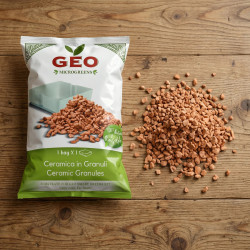
✓ Natural and reusable substrate : use of the GEO ceramic pellets (sold separately). No peat, no coco, no disposable potting soil. The pellets can be rinsed and reused up to 5 times, crop after crop.
✓ Rapid growth : harvest in 10 to 21 days depending on the seed variety.
✓ Two cultivation bins for continuous harvests : Thanks to the two perforated white trays, you can practice staggered sowing - start a crop in one tray, wait a few days, then start the second one in the other. This way, you have fresh microgreens to harvest continuously, without interruption.
✓ Versatile : compatible with a wide range of microgreens - dill, beet, Swiss chard, kohlrabi, mizuna, tatsoi, and many others.
✓ Transparent sector : designed and manufactured by Geo Bavicchi in Italy, in the same company that has been selecting our organic seeds for almost 130 years.
⚠️ Important: Ceramic pellets are sold separately.
To start your crops, you will need the packet of GEO ceramic pellets, which serves as a substrate in the perforated white trays. This 100% natural and reusable substrate is not included in the sprouter. Remember to add it to your order so you can start your first cultivation upon receipt.
🌱 How does the GEO Smart Greens sprouter work ?
The principle is ingenious. The sprouter consists of three elements : a lower green tray with parallel grooves that serves as a water reservoir, and two perforated white bins that are placed on top. You pour the ceramic granules into the white trays, fill the lower green tray with clear water (up to the side supports), then dip the white trays into the water to evenly hydrate the substrate before sowing.
In concrete terms, that is the whole point of this system: the mock exams have two positions, accessible with a simple 45° rotation. In the low position (the trays touch the bottom of the green container), the substrate rehydrates through direct contact with the water. In the elevated position (the trays rest on lateral supports, away from the water), the substrate remains moist but aerated, and the shoots grow upwards, towards the light. This way, the seeds receive exactly the amount of moisture needed for their germination, without excess or deficiency.
This logic ofbottom-controlled irrigation reproduces the natural way a plant draws water at the root level - much more respectful than watering from above, which can crush young shoots and promote mold on their leaves.
Ceramic pellets play a key role: their porous structure retains just the right amount of water, gradually releases moisture, and provides roots with a stable anchoring point. And of course, they are Reusable up to 5 times - a simple rinse between two sowings is sufficient.
🌱 Instruction manual: using the GEO Smart Greens sprouter in 5 steps:
It is one of the simplest homegrown cultures that exist.
1. Prepare the green bin. Pour clear water (filtered if possible) into the lower green tray, up to the side supports. No need for enriched water or nutrient solution - the seeds have all the reserves necessary for their germination.
2. Pour the substrate into the two white bins. Distribute the GEO ceramic pellets in the two perforated white trays, to a thickness of about 1 to 1.5 cm. Without packing.
3. Hydrate the substrate by soaking. Place the white bins in low position (so that they touch the bottom of the green container and soak in the water). Wait for the substrate to moisten evenly. Add water to the green container if necessary.
4. Switch to an elevated position and sow. Once the substrate is well hydrated, Rotate the bins by 45°. to place them in an elevated position (they then rest on the side supports, away from the water). Next, spread your seeds evenly on the surface, without pressing them in or piling them up. Use about 8 to 9 g of seeds per tray (for example, for Dill).
5. Monitor and maintain over the days. Place the sprouter in a bright location, away from direct sunlight (the indirect light of a well-lit kitchen is more than sufficient). Check the moisture of the substrate every 1 to 2 days: only if the substrate becomes dry, return the bins to the low position for a few minutes to re-wet them, then reposition them in the elevated position. And there you go.
In 10 to 21 days depending on the variety, once the first leaves appear, your sprouts will reach 5 to 7 cm. You cut them with scissors, just before serving. It's ready.
💡 Tip for continuous harvests: Thanks to the two mock exams, you can practice the staggered planting. Start a culture in the first tray, wait a few days, then start the second one in the other tray. This way, you will have fresh microgreens to harvest continuously, without interruption.
🌱 Some practical advice:
- To start, choose easy varieties like the ones we offer you: Dill, the Red beetroot, the Swiss chard, the Purple kohlrabi, the Red mizuna, the Green mizua, the TatsoiAre perfect for the first crops.
- The humidity must remain constant but never excessive. If you see persistent condensation, ventilate the room more.
- Harvest just before consuming: that's when freshness and vitamins are at their peak.
- Between two cultures, disassemble the sprouter, rinse the trays with clear water and mild soap. Reuse the ceramic pellets after a simple rinse.
🌱 Why did we choose the GEO Smart Greens sprouter ?
You know us: at Biovie, we have been offering sprouters since the store was established in 2007. The Easygreen Light and The Easygreen Sol are our historical references, perfectly suited for classic sprouted seeds (alfalfa, broccoli, fenugreek, lentils, mung beans...) grown by misting or siphon effect, without substrate.
But microgreens are a different crop. They require a substrate to root and bottom watering to avoid surface damage. That's why we looked for a sprouter specifically designed for this cultivation method - and we chose the one from Geo Bavicchi, for several reasons:
- The consistency of the sector. Our organic seed supplier since the beginning of the Biovie adventure is also the designer of this sprouter. You are purchasing the seed and the sprouter designed to work together, by the same Italian family business.
- Respect for materials. BPA-free, PFAS-free, designed for food contact. For a product that we use every day to produce fresh food, this is not a minor detail.
- The ecology of use. The ceramic pellet substrate is reusable from one crop to another, whereas most microgreens sprouters on the market rely on single-use supports (coco mats, felt, potting soil). Over time, this represents a real shift in the model.
- The ease of use. No electricity, no engine, no programming. Once the system is set up, it operates on its own.
🌱 Discover our 8 varieties of seeds to grow in your sprouter:
To accompany the GEO Smart Greens sprouter, we offer you a full range of 8 varieties from selected organic seeds at Geo Bavicchi - from aromatic flavors to spicy flavors, as well as sweet and earthy flavors. Enough to vary dishes, textures, and aesthetics throughout your crops.
| Variety | Color of the shoots | Dominant flavor |
|---|---|---|
| Dill (Dill) |
Light green, thin stems | Aniseed, fresh |
| Red Swiss chard (Blette Rouge Rubis) |
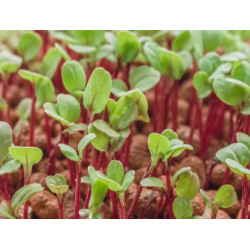
Purple stems, green cotyledons | Sweet, slightly earthy |
| Chioggia Swiss chard | Pale pink striped stems, green cotyledons | Sweet, subtle |
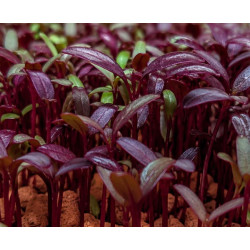
| Bull's Blood red beet | Bordeaux red, intense purple | Earthy, sweet, sugary |
| Purple kohlrabi | Purple stems, green cotyledons | Sweet, raw cabbage type |
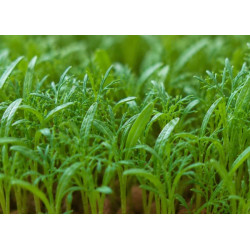
| Green mizuna | Light green, serrated | Slightly spicy, mustard-flavored |
| Red mizuna | Jagged red-green | Spicier, like arugula |
| Tatsoi | Bright dark green, spoon-shaped | Sweet, spinach type |
All our varieties are organic, guaranteed with a germination rate above 95%, and selected at Geo Bavicchi in Perugia, Umbria.
🌱 Packaging quality that matches the quality of the seeds: All our bags are made from materials certified for food contact, resistant to moisture, and indicate the optimal use-by date, weight, and production batch number - for complete traceability. The instructions for use are printed in five languages: Italian, English, French, German, and Spanish.
🌱 GEO Smart Greens sprouter vs Easygreen sprouters: which one to choose ?
It's a question we are often asked since we offer both. The answer is simple: they do not serve exactly the same purpose. Here is the comparison:
| Criterion | GEO Smart Greens Sprouter | Easygreen Light / Sol |
|---|---|---|
| Type of crop | Microgreens (young shoots) | Sprouted seeds (sprouts) |
| Necessary substrate | Yes - ceramic pellets | No (except mucilaginous seeds) |
| Irrigation system | Capillarity (from below) | Misting (Light) / siphon (Soil) |
| Harvest cycle | 10 to 21 days | 2 to 7 days |
| Harvested stage | Cotyledons (5-7 cm) | Radicle / sprout |
| Energy | No (gravity + capillarity) | Electric (Light) / none (Ground) |
| Compatible varieties | Dill, radish, broccoli, arugula, basil, mustard, sunflower... | Alfalfa, broccoli, fenugreek, lentils, mung beans, wheat, barley... |
Concretely: if you want some fresh young shoots to be cut with scissors to finish your dishes like chefs do, the GEO Smart Greens sprouter is made for you. If you want classic sprouted seeds to incorporate into your salads and daily dishes, go for theEasygreen Light or The Easygreen Sol. Many of our clients ultimately use both in parallel to have the entire range at their disposal.
🌱Frequently Asked Questions about the GEO Smart Greens Sprouter:
Does the GEO Smart Greens sprouter include ceramic pellets ?
No, the ceramic pellets are sold separately. They are a consumable that you can reuse many times, but they are not included with the sprouter itself. Consider adding at least one packet of GEO ceramic pellets to your order to be able to start your first cultivation.
Are ceramic pellets really reusable ?
Yes, it is one of their major advantages. After each harvest, remove the roots, rinse the pellets with clear water, and you can immediately start a new crop. Their porous structure maintains its absorption capacity over multiple cycles. It is frankly more environmentally friendly than a single-use substrate like peat or coco.
How long does it take to harvest microgreens ?
It depends on the variety: 10 to 21 days on average. Radish or arugula microgreens are among the fastest (10 to 14 days), while Apiaceae like dill take about 14 to 18 days. Harvest when the shoots reach 5 to 7 cm.
Does the GEO Smart Greens sprouter work for traditional sprouting seeds (alfalfa, fenugreek…) ?
No, this sprouter is specifically designed for microgreens, which are grown on a substrate with bottom irrigation. For traditional sprouted seeds (grown without substrate, by misting or siphon effect), we direct you to our sprouters. Easygreen Light or Easygreen Sol.
What seeds can I grow in the GEO Smart Greens sprouter ?
The sprouter is compatible with all organic seeds selected by Geo Bavicchi for growing microgreens: dill, radish, broccoli, arugula, basil, mustard, sunflower, and many other varieties to come in our catalog. All varieties are guaranteed organic, with a germination rate above 95%.
Does the sprouter require electricity ?
No. The GEO Smart Greens sprouter is a completely passive system, relying on gravity and capillarity. No pump, no motor, no connection. You can install it anywhere in your kitchen and move it easily.
How to clean the sprouter between two crops ?
Disassemble the trays, rinse them with clear water and mild soap, and dry them. Rinse the ceramic pellets separately with clear water, without detergent. Allow 5 minutes for a complete cleaning between two cycles.
Are the materials of the sprouter safe for food contact ?
Yes. The GEO Smart Greens sprouter is certified BPA-free and PFAS-free, designed for food contact. Geo Bavicchi is an Italian family-owned company with rigorous traceability and quality standards since 1896.
🌱 To learn more about growing sprouts, check out our blog articles:
What is the benefit of sprouting seeds ?
What are the benefits of sprouted seeds ?
Dimensions:
length = 38 cm
width = 19.5 cm
height = 7.5 cm
Net weight: 560 g
- BPA-free
- Without PFAS
- Food contact compatible
Full description of the package:
1 x Green drainage tray (with capillary grooves and side supports for elevated positioning)
2 x Perforated white trays for cultivation (compatible with 45° rotation between soaking position and elevated position)
1 x User manual
Note: GEO ceramic pellets are not included in the sprouter. They are sold separately.
Origin:
Designed and manufactured by Geo Bavicchi, in Italy
Maintenance and cleaning:
- Between each crop, disassemble the sprouter and rinse the trays with clear water and a mild soap. Dry before starting a new crop.
- The ceramic pellets are rinsed separately, with clear water, without detergent.
- Dishwasher compatibility: [À COMPLÉTER auprès de Bavicchi]
- Store the sprouter in a dry place between two prolonged uses.
Associated substrate (sold separately):
The sprouter works with the GEO ceramic pellets, a 100% natural and reusable substrate. For cultivation, plan to purchase at least one bag of pellets as a supplement.
About Geo Bavicchi:
Italian family business founded in 1896 in Perugia, Umbria. Three generations of expertise in the selection and production of organic sprouting seeds. All seed batches undergo germination tests before being marketed, with a quality threshold above 95%. Geo Bavicchi exports its seeds to more than 40 countries. We have been working with them since the creation of Biovie in 2007.
Update: May 2026. Article approved by Éric Viard, founder of Biovie and engineer ISTOM, co-author of ""Seaweed in Everyday Life" (Gallimard, 2024) -Best cookbook in the world, Gourmand Cookbook Awards 2025, and Best cookbook in France, National Academy of Cuisine 2025.
Wondering… ?
Everything you need to know before ordering.
Be the first to ask a question about this product!
Question about the product
Ask a question