


Ceramic pellets - Natural substrate for microgreens - GEO Bavicchi
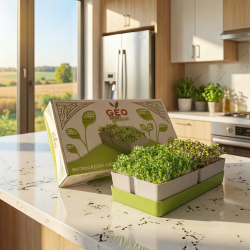
Ceramic pellets for microgreens - 100% natural and reusable substrate designed by Geo Bavicchi.
Pure clay · No additives · Reusable from one crop to another · Low water consumption · Designed for the GEO Smart Greens sprouter.
📦 1 bag (0.8 L / ~280 g) = 1 growing tray.
No queries yet, leave the first!
Price:
€7.91
Tax included
- Out-of-Stock


Ceramic pellets - Natural substrate for microgreens - GEO Bavicchi images


Ceramic pellets - Natural substrate for microgreens - GEO Bavicchi
The natural and reusable substrate for your microgreens
🌱 GEO ceramic pellets are the substrate designed to grow your microgreens simply, cleanly, and without disposable waste.
Concretely, these are small porous granules offired clay (3 to 7 mm in diameter), which act as the soil in the cultivation of seedlings - but better. No soil that dirties the kitchen. No coconut mats to repurchase for each cultivation. No disposable felts or imported peat. Just a 100% natural mineral material that retains water just enough and can be rinsed between sowings for reuse. There you go.
Distributed by Geo Bavicchi, our Italian supplier of organic seeds for almost 130 years, these pellets are made in Germany and designed to work with the sprouter GEO Smart Greens. But their structure also allows them to be used in any other cultivation tray compatible with capillary irrigation.
🌱 The advantages of GEO ceramic pellets:
✓ 100% natural : pure fired clay, without additives, without fertilizers, without chemical treatment. Inert substrate.
✓ Reusable up to 5 times : a simple rinse with clear water between two crops is enough to start a new sowing.
✓ Porous structure : the ceramic retains water in its micropores and gradually releases it to the roots, without excess.
✓ Low water consumption : thanks to this structure, you water much less than with a traditional substrate.
✓ Healthy cultivation environment : the mineral nature of the substrate naturally limits the development of mold, unlike organic supports that are permanently damp.
✓ Clean and easy to handle : no dust, no dirt on the work surface, no residues to clean.
✓ Designed for the sprouter GEO Smart Greens : perfectly compatible with white perforated trays, calibrated format for 1 sachet = 1 culture.
📦 How many bags to plan for ?
1 sachet = 1 filled growing tray. If you want to start multiple crops in parallel or move on to new varieties without waiting, plan to order several packets from your first purchase.
Good news: the pellets are Reusable up to 5 times by following the rinsing procedure. One sachet will therefore accompany you for 5 cultivation cycles - a true alternative to disposable substrates.
🌱 How does it work ?
The principle is simple and elegant. The pellets are composed of a porous ceramic which acts like a mineral sponge: they absorb water from the lower tray of the sprouter through capillarity, store it in their micropores, and gently release it to the roots of the young shoots as needed.
In concrete terms, it's the same principle as expanded clay pellets that gardeners use in hydroponic cultivation - except that GEO ceramic granules are calibrated for microgreens cultivation: sized from 3 to 7 mm to avoid crushing young seeds, with a porous structure to promote constant humidity, and a sufficient surface area to allow roots to anchor.
This mode of operation offers several decisive advantages: it prevents overwatering (the number one cause of mold on microgreens), maintains an aerated environment at the root level, and provides no nutrients-which is exactly what we want since the microgreen seed contains all the necessary reserves for its growth until harvest.
🌱 How to use GEO ceramic pellets ?
The use is ultra-simple and takes less than 2 minutes:
1. Pour the packet in the perforated white tray of the sprouter GEO Smart Greens, with a thickness of 1 to 1.5 cm.
2. Distribute by hand Uniformly, without packing. The granules should remain aerated.
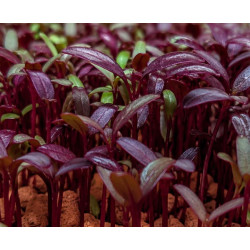
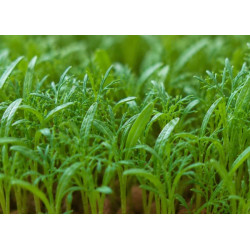
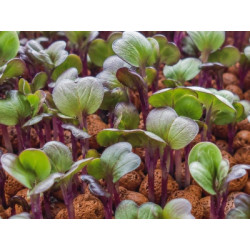
3. Sow your seeds on the surface (for example dill seeds, , Beetroot, , green mizuna, , red Swiss chard...), without pushing them in.
4. Spray generously With clear water on the first day to properly hydrate everything.
5. Place the bin on the lower green bin. filled with water. Capillarity does the rest.
And there you go. Your sprouts will develop in 10 to 21 days depending on the variety.
🌱 How to reuse pellets in 4 steps ?
This is the strong ecological argument of this substrate: one purchased sachet is a sachet that will serve you for up to 5 successive crops. Here is how to proceed between two sowings:
1. Remove the roots and seeds. After harvesting your microgreens (cut with scissors at the base), manually remove the tangle of roots and any ungerminated seeds. Most of them come off in a block, like a small mat.
2. Rinse the pellets with clear water. Pour them into a fine strainer and rinse under the tap for 30 seconds, removing all plant residues. No detergent is necessary. No soap either - it's best to avoid any chemical residue coming into contact with your next crops.
3. Drain and air dry. Spread the pellets on a clean cloth in a well-ventilated area until completely dry.
4. Reinstall them in the tray and start your new seedling. That's all.
Bavicchi recommends a maximum of 5 reuses to maintain optimal cultivation quality. Beyond that, the porous structure of the ceramic begins to accumulate fine organic residues, and it is time to switch to a new sachet.
Frankly, it is a real alternative to disposable substrates like coconut mats, felt, or potting soil, which need to be repurchased and discarded with each cultivation. In the long run, it is a real saving and an ecological gesture consistent with the spirit of living food.
🌱 Why did we choose these pellets ?
When the sprouter has been selected GEO Smart Greens for our Biovie catalog, we also chose to offer its companion substrate. For several reasons:
- System coherence. Pellets and sprouter are designed to work together under the GEO brand by Bavicchi. The size of the pellets (3 to 7 mm), the porosity, the recommended thickness: everything is calibrated to work as a duo. No tinkering, no unpleasant surprises.
- Zero waste approach. The vast majority of microgreens substrates on the market are single-use (coco mats, felt, paper, potting soil). GEO ceramic pellets can be reused up to 5 times, and then find a second life in the garden or in pots. It's rare, and it's valuable.
- Pure mineral material. 100% baked clay, without fertilizers, without added fertilizers, without treatment. For a substrate used to produce food that we eat raw, this is exactly what we are looking for.
- European pathway traced. Pellets made in Germany, selected and distributed by Bavicchi (Italy), our supplier since the very beginning of Biovie in 2007. A short and transparent supply chain, on which we have a lot of visibility.
🌱 Frequently Asked Questions about GEO Ceramic Pellets:
How many times can I reuse a packet of granules ?
Bavicchi recommends a maximum of 5 reuses provided that the granules are thoroughly rinsed between each cycle (rinsing with clear water, removal of all roots and seeds, complete air drying). Beyond that, the porous structure begins to accumulate fine organic residues, and the quality of cultivation may degrade. At that point, it is time to switch to a new bag - and give a second life to the old granules in the garden or in a pot.
How to rinse the granules between two crops ?
After the harvest, first remove the roots and ungerminated seeds by hand. Then pour the granules into a fine strainer and rinse with clear water for 30 seconds, removing all plant residues. No soap, no detergent: it's unnecessary and could leave residues that might come into contact with your next crops. Drain well, spread on a clean cloth in a well-ventilated area until completely dry, and you're ready to go again.
Are the pellets compatible with sprouters other than GEO Smart Greens ?
The GEO ceramic pellets are specifically designed to work with the sprouter. GEO Smart Greens, including the perforated trays and the bottom irrigation system, are calibrated for this substrate. That said, their structure technically allows them to be used in any other cultivation tray compatible with capillary irrigation - it's up to you to adapt according to your equipment.
What to do with pellets at the end of their life ?
After the recommended 5 cycles of reuse, you can mix the GEO pellets with potting soil for your indoor plants, or spread them directly in your garden soil. They will continue to retain moisture at the root level and to improve soil aeration. It's zero waste all the way - the inert mineral material does not degrade, but it becomes an excellent ally for your other crops.
How long does a bag of pellets last before opening ?
Indefinitely, provided it is stored in a dry place. As it is an inert mineral material, it does not expire and does not lose its properties over time.
Should nutrients be added to the pellets ?
No, and it is even strongly discouraged for microgreens. The seeds have all the necessary nutritional reserves for their growth until harvest (10 to 21 days). Adding fertilizers would be unnecessary and could risk altering the taste and nutritional quality of your sprouts. Clear water is sufficient.
Are pellets compatible with organic consumption ?
Yes. Pure fired clay contains no chemical additives, synthetic fertilizers, or treatments. The organic seeds you sow on it remain in a natural production logic, consistent with the spirit of organic farming.
🌱 To learn more about growing microgreens, check out our blog articles:
What is the benefit of sprouting seeds ?
Volume of the bag: 0.8 L (equivalent to ~280 g)
Quantity per bag: 1 sachet = 1 growing tray of the GEO Smart Greens sprouter
Composition:
100% fired clay (ceramic) - inert substrate, without additives, without fertilizers, without chemical treatment.
Shape and size of pellets:
Irregular granules measuring 3 to 7 mm in diameter (0.3 to 0.7 cm), with a visible porous structure. Orange to brick color.
Origin:
Granules made in Germany, selected and distributed by Geo Bavicchi (Divita S.r.l. / Bavicchi S.p.A., Ponte San Giovanni, Perugia, Italy) under the GEO brand.
Compatibility:
- Specifically designed for the sprouter GEO Smart Greens
- Compatible with any cultivation system using capillary irrigation
- Compatible with all varieties of microgreens offered in our catalog (Dill, , Bull's Blood beetroot, , red Swiss chard, , Tatsoi, Chioggia Swiss chard, , purple kohlrabi, , green mizuna, Red mizuna)
Reusability:
Up to 5 reuses recommended by Bavicchi, provided that it is thoroughly rinsed between each cycle.
Maintenance and cleaning:
- Between each crop, remove the roots and ungerminated seeds by hand.
- Rinse the pellets with clear water in a fine sieve for 30 seconds.
- Do not use soap or detergent (undesirable residues when in contact with future crops).
- Spread on a clean cloth in a well-ventilated area until completely dry before reuse.
Conservation:
Store the bag in a dry place, away from direct light. Since the granules are an inert mineral material, they do not expire.
End of life:
After the recommended 5 cycles of use, the pellets can be mixed with potting soil for indoor plants or directly integrated into your garden soil. They continue to retain moisture at the root level and to improve soil aeration - a truly useful second life for your crops.
About Geo Bavicchi:
Italian family business founded in 1896 in Perugia, Umbria. Three generations of expertise in the selection and production of organic sprouting seeds. Bavicchi exports its products to more than 40 countries. We have been working with them since the creation of Biovie in 2007.
Update: May 2026. Article approved by Éric Viard, founder of Biovie and engineer ISTOM, co-author of ""Seaweed in Everyday Life""(Gallimard, 2024)" - Best cookbook in the world, Gourmand Cookbook Awards 2025, and Best cookbook in France, National Academy of Cuisine 2025.
Wondering… ?
Everything you need to know before ordering.
Be the first to ask a question about this product!
Question about the product
Ask a question