


In a handful of garden soil run white threads, the filaments of soil fungi: do they change what your vegetables contain? In part. On Saturday 5 December 2026, World Soil Day reminds us that these fungi increase the zinc content of crops on average, and a 2026 decree lowers the cadmium allowed in fertilizers. At Biovie, we built this page on nine sources, from FAO texts to published meta-analyses.
The answer is nuanced, and that's a good thing: yes for some minerals, but not quite the way you read it almost everywhere. I spent about ten years at Bio Bourgogne helping farmers through organic conversion, and I first looked at the question of soil from the fields, not from a screen. As an ISTOM engineer, I have always worked in organic, and soil is my starting point for thinking. The "dead soils, empty vegetables" line, I have been hearing it for a long time. It deserves better than a slogan.
World Soil Day 2026: date, theme and origin
World Soil Day falls on 5 December every year, a Saturday in 2026. The 2026 theme, one that speaks to agronomists, is "Tackle soil compaction, boost food production", in other words fighting soil compaction to produce better. The FAO and its Global Soil Partnership lead the international celebration in Tashkent (Uzbekistan) on 3 December (FAO).
The campaign slogan fits on one line: "Our future is rooted in soil" (FAO). Nice. And, for once, a slogan that tells the truth.
The idea took more than ten years to mature, which is hardly surprising for a subject as slow as the life of a soil. The International Union of Soil Sciences (IUSS) proposed it in 2002, then the FAO Conference backed it in June 2013, at the initiative of Thailand (FAO Global Soil Partnership). The United Nations General Assembly set the date of 5 December with its resolution A/RES/68/232 of 20 December 2013, which also made 2015 the International Year of Soils (UN).
Each edition changes angle. The theme of World Soil Day 2025, "Healthy soils for healthy cities", was about urban soils and sealed surfaces (FAO). This year, we leave the concrete of cities for the wheels of farm machinery.
Compaction, a soil that can no longer breathe
Picture a kitchen sponge: full of tiny holes, it soaks up water and lets air through. A healthy soil is just that. When heavy machines pass over and over, these pores get crushed, and the sponge turns into a sole. Water runs off instead of soaking in, roots bump into a hard layer, and all the life that breathed in those gaps retreats. It's not a spectacular subject, you can't see it from a road, and that is exactly why the theme is well chosen.
Living soil: what is happening beneath your vegetables?
Pull a young carrot out of a lively garden soil and look closely at its roots: fine white filaments sometimes cling to them. Some of them belong to mycorrhizal fungi, which live in association with plant roots, as good neighbours.
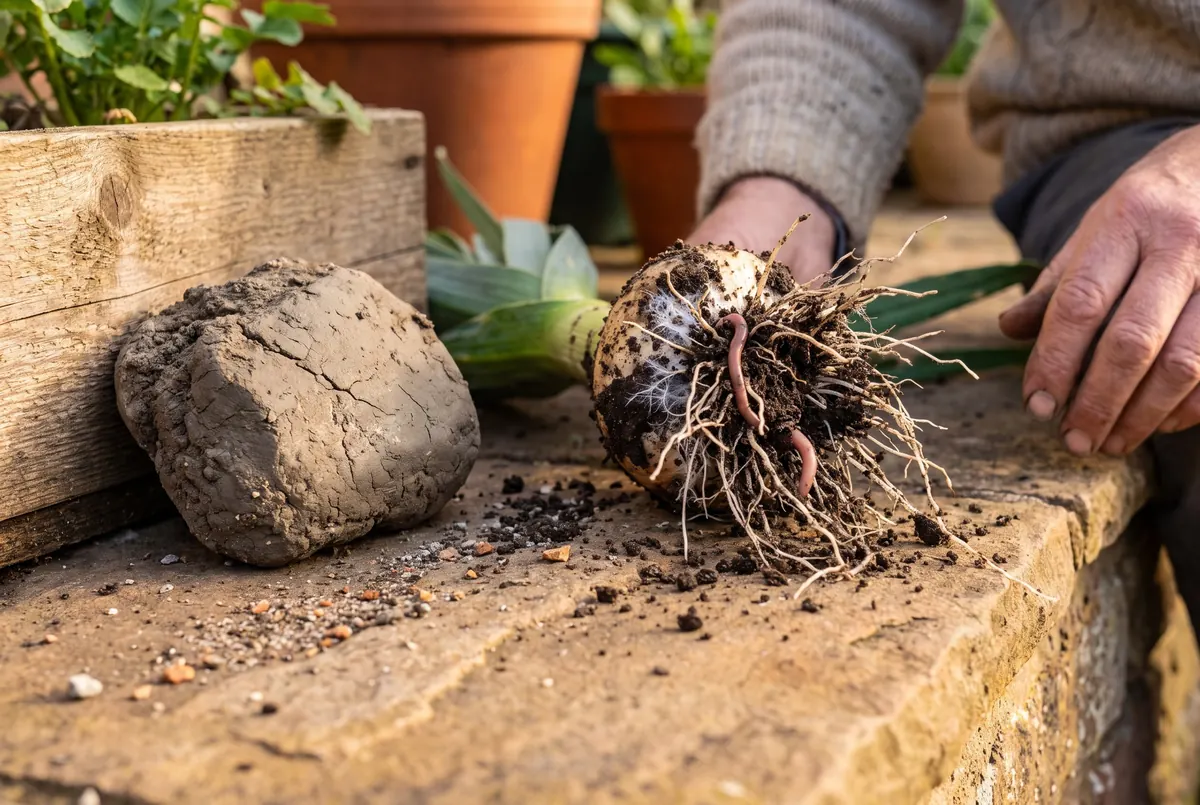
I picture them as extra arms lent to the plant. The network of filaments extends the roots and goes looking, in the nooks of the soil, for elements that the root alone struggles to reach. A bit like a very thin string that would fish out the coin fallen behind the radiator, where your hand can't go.
Still, we need to measure the effect in the field. A meta-analysis gathered 104 scientific articles, that is 263 trials run on cultivated plants (Lehmann et al., 2014). It finds an overall positive effect of mycorrhizae on zinc concentration, in all the tissues of the plant. And the main factor that makes this effect vary is the texture of the soil.
Two hundred and sixty-three trials means hundreds of comparisons made in very different conditions: this is far from the isolated observation of an enthusiastic gardener at the bottom of his vegetable patch.
One caveat, just one. It is an average effect, measured on varied crops (cereals, vegetables and others), which guarantees nothing for each vegetable in your garden.
The link with the 2026 theme then becomes obvious. These filaments need pores and air to spread, and a compacted soil leaves them much less. Crushing the soil also means cutting off the plant's arms.
Do our vegetables contain fewer minerals than they used to?
Our vegetables have supposedly become "empty"? You read it everywhere. The most frequently cited study compares the food composition tables of the US Department of Agriculture (USDA) for 1950 and 1999, for 43 garden crops, mostly vegetables (Davis et al., 2004). A useful precision: this is an analysis of composition data, not a field trial.
Taken as a group, six nutrients decline in a statistically reliable way: protein, calcium, phosphorus, iron, riboflavin (vitamin B2) and vitamin C. The medians fall from 6% for protein to 38% for riboflavin. To picture it, 6% is barely noticeable, whereas 38% amounts to a little over a third less.
But for each food taken on its own, the differences generally cannot be told apart from zero.
So, are our soils exhausted? The authors do not conclude that. We would like a simpler story, with an obvious culprit, and it isn't one. Their main explanation lies in the change in the varieties grown, with a trade-off between yield and nutrient content: the dilution effect. Imagine a syrup topped up with water to fill more glasses: the sugar is still there, but spread over a larger volume.
This is not proof of exhausted soils, it is first of all a story of variety selection. We selected to fill the crates, not necessarily the plates. Two limits to keep in mind, all the same: the data are American, and analytical methods changed over half a century. Yield, choice of varieties and the life of the soil remain three separate subjects, and the life of the soil acts on something else, such as the plant's uptake of zinc.
To the question "why do vegetables have fewer vitamins than before?", the best-supported answer therefore has less to do with the soil than with the seed sown. Nothing in these data says your vegetables are "empty": by varying them, as part of a varied and balanced diet and a healthy lifestyle, you benefit from what each one brings.
Cadmium in fertilizer: what the 2026 decree changes
Here, the soil is no longer about what is missing, but about what we add to it. In France, phosphate fertilizers account on average for more than half of the cadmium inputs to agricultural soils, and for non-smokers, food accounts for about 98% of exposure (Santé.fr). For someone who doesn't smoke, almost everything therefore goes through the fork.
The Esteban study (2014-2016) measured that 47% of adults and 18% of children exceed the urinary threshold of 0.5 µg/g of creatinine, with an impregnation almost doubled compared with the ENNS study of 2006. Nearly one adult in two. The subject goes well beyond the walls of laboratories.
And the foods that contribute most are the ones we eat every day: bread, potatoes, breakfast cereals, pasta, biscuits. As a baker's son, I won't advise you to ban bread: it is the frequency of these foods that gives them their weight, not their nature. For everyday habits, I covered the 2026 cadmium law in another article, and the case of cadmium in dark chocolate in yet another.
Decree no. 2026-919 of 18 September 2026 and two orders of the same day, which supplement decree no. 2026-357 of 7 May 2026, lower in stages the maximum cadmium content of phosphate fertilizers (Service-public.gouv.fr).
| Deadline | Maximum cadmium content (mg/kg of P2O5) | Benchmark |
|---|---|---|
| Until 31 December 2026 | 90 | Current limit |
| 1 January 2027 | 60 | European standard |
| 1 January 2028 | 40 | Intermediate step |
| 1 January 2030 | 20 | Level recommended by ANSES |
A cap is added: 3 g of cadmium per hectare per year for mineral fertilizers. Three grams is about the weight of a two-cent euro coin, spread over a hectare, roughly a football pitch.
Of course, it's progress, and I won't spoil my own pleasure: the 2027 threshold takes up the European standard of 60 mg. But ANSES recommended 2 g per hectare per year and 20 mg/kg of P2O5: the government keeps 3 g and will only reach 20 mg in 2030. We are moving forward, but more slowly than the health experts themselves advised.
Organic and cadmium
Given my line of work, you can guess what I was hoping to read here. Let's look at the numbers instead. A meta-analysis of 343 publications concludes that organic crops have lower cadmium concentrations on average (Barański et al., 2014). The authors' team put the gap at about 48% in the Newcastle University press release. Roughly half as much on average, then, an order of magnitude that doesn't hold carrot by carrot.
And let's be honest: a soil already loaded with cadmium stays that way, organic or not, the label does not erase the history of a field. On the other big subject, pesticide residues, I took stock in my piece on the European omnibus on pesticides.
Sprouted seeds and compost: what you can do at home
I have been sprouting seeds since my teens, at my parents' home, long before creating Biovie, and one thing has always struck me: you give them nothing but water. A sprouting seed grows in water, with no soil and no fertilizer during germination: its minerals therefore come from the seed itself, and from the soil where it was grown. Hence the interest of organic seeds, since organic crops have lower cadmium concentrations on average (Barański et al., 2014).
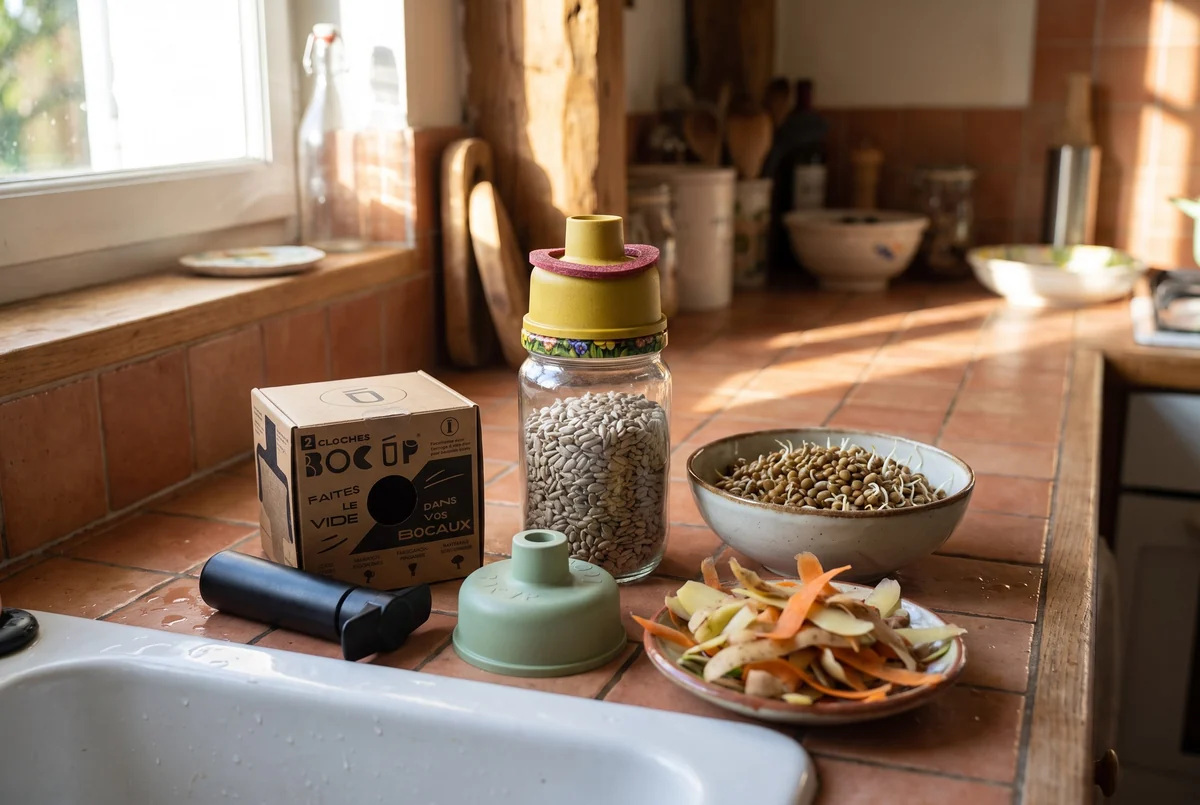
During germination, the seed wakes up its own enzymes, including phytase. This enzyme breaks down phytates, compounds that hold back part of the minerals, and these minerals become more available to digestion (Nkhata et al., 2018). I like the image of planks already sawn that are delivered to the workshop instead of tree trunks: part of the work is done before the plate.
Added over the course of the week, as part of a varied and balanced diet and a healthy lifestyle, sprouted seeds bring something fresh even in the depths of winter. For legumes, a few rules apply to everyone:
- Whole lentils or chickpeas: soaked overnight, or better, soaked overnight then sprouted for 48 hours.
- Coral lentils and split peas, which are hulled, do not sprout: simply soak them overnight.
- Kidney beans, other dried beans and soy are always cooked for a long time, even when sprouted.
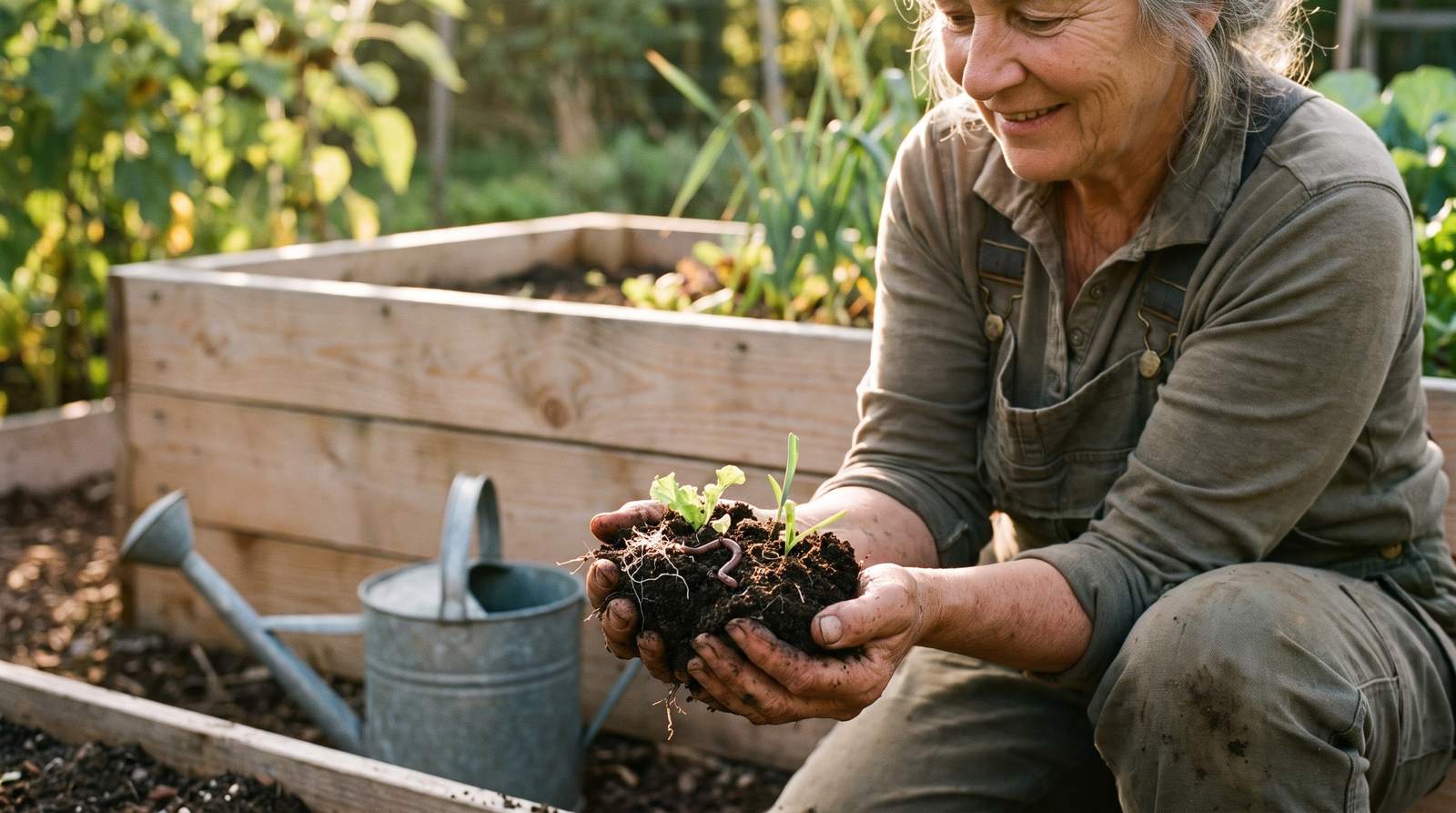
Then there's compost. Returning the organic matter of your peelings to the soil feeds its life, earthworms and fungi included. For my part, I have been composting for more than thirty years, and I haven't found anything simpler for giving back to the earth a little of what we take from it. And to go further, you can even grow your vegetables in the kitchen, some of them at least.
Keeping your sprouting seeds dry
A seed for sprouting is a living being asleep, and what it fears most is humidity. At Biovie, we recommend vacuum sealing in glass jars, which I detail in an article on vacuum sealing at home.
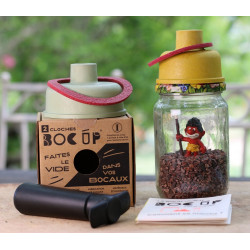
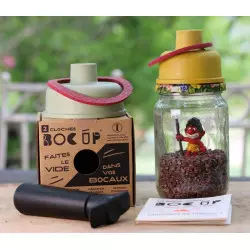
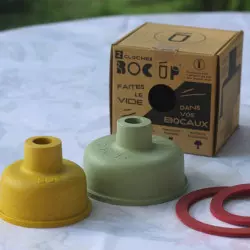
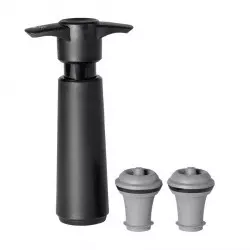
The complete BocUp kit combines a bell and a small manual pump, with no electricity and no plastic bag. It works with the glass jars you already have, if they have "shoulders" and a lid of 65 or 84 mm: reuse, nothing else to buy. Dry foods stay protected from humidity and moths, and for fresh products, the manufacturer claims storage up to 5 times longer (a vegetable soup 8 to 10 days instead of 2). Enough to make the weekend soup last until the following week.
Just keep in mind that the vacuum replaces neither the fridge nor the freezer, and that it does not sterilize.