Preservation of nutrients
Choosing a juice extractor instead of a traditional juicer means opting for an extraction method that better preserves the essential nutrients of your fruits and vegetables. Indeed, cold extraction, specific to extractors, allows for the retention of maximum vitamins, minerals, and enzymes, essential for healthy and balanced nutrition. Unlike juicers that operate at high speed, the extractor uses a slow process that reduces oxidation, thus keeping your fruit or vegetable juices fresher and tastier.
A study published in the Journal of Food Science demonstrated that the cold extraction method better preserves levels of vitamin C and other antioxidants, compared to more conventional methods. This preservation of nutrients results in richer and more beneficial juices for health, thus optimizing daily nutritional intake, a major asset for those who wish to maximize their well-being and vitality.
By reducing oxidation, the extractor also allows for the extended freshness of juices. You can thus prepare your drinks in advance without compromising their nutritional quality, which is a significant advantage for people with an active lifestyle. By integrating a juice extractor into your kitchen, you choose an approach that respects nutritional quality while adopting a more sustainable and responsible lifestyle.
Higher yield
In addition to its nutritional benefits, the juice extractor provides a higher yield. It extracts more juice from the same amount of fruits and vegetables compared to a juicer, which translates into long-term savings. A higher yield also means less waste, a crucial point for those concerned about the sustainability and efficiency of their diet.
The superior yield of the extractor doesn't stop at quantity. The quality of the juice is also remarkable, with a more pleasant texture and a more intense flavor. Thanks to the low oxidation during the extraction process, the juices obtained retain their freshness longer, allowing you to fully enjoy the benefits of raw and organic foods in your daily life.
For those concerned about sustainability, every extra drop of juice is a victory. With less wasted pulp, the juice extractor perfectly aligns with an eco-friendly approach, thus supporting your commitment to more conscious and sustainable consumption.

Vertical or horizontal: the question that comes up first
Even before power or warranty, it's the machine's architecture that steers the choice - and it's often the point explained worst in stores. Both families press slowly, at low speed; what separates them is the orientation of the auger, and therefore how the fibres travel through it.
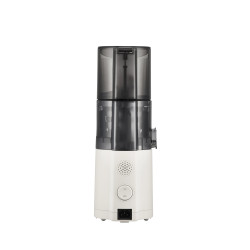
The auger is mounted vertically, and gravity does part of the work: the food descends on its own toward the pressing zone. As a result, the appliance takes up little counter space, doesn't need constant pushing to feed it, and handles juicy fruit and tender vegetables very comfortably - apples, citrus, carrots, beets, cucumber. It's the most convenient setup for everyday use, and the one most households choose.
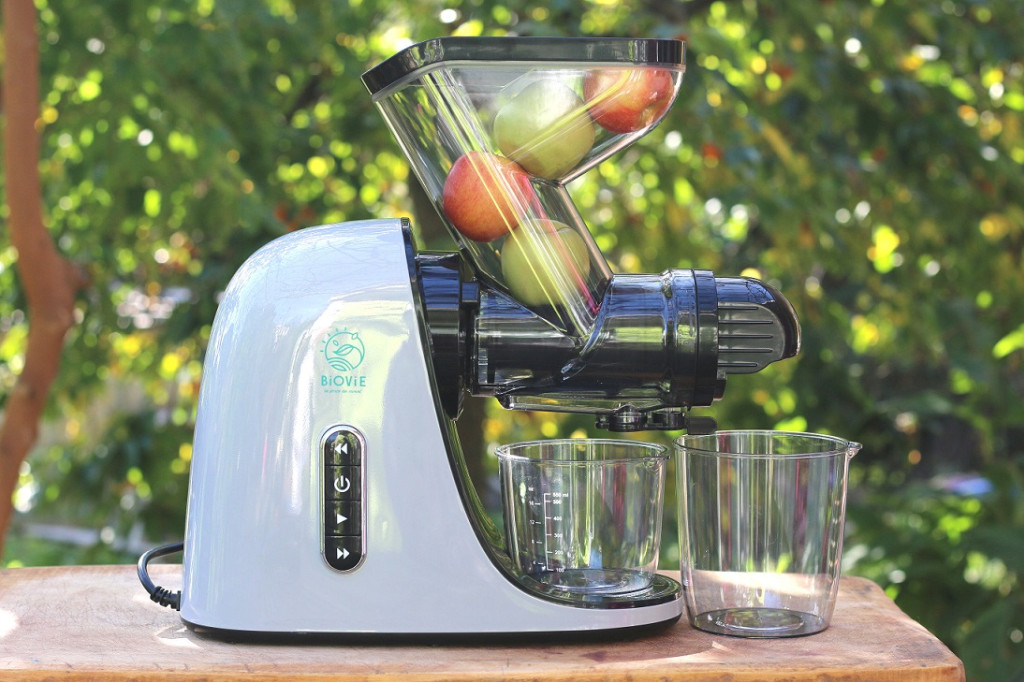
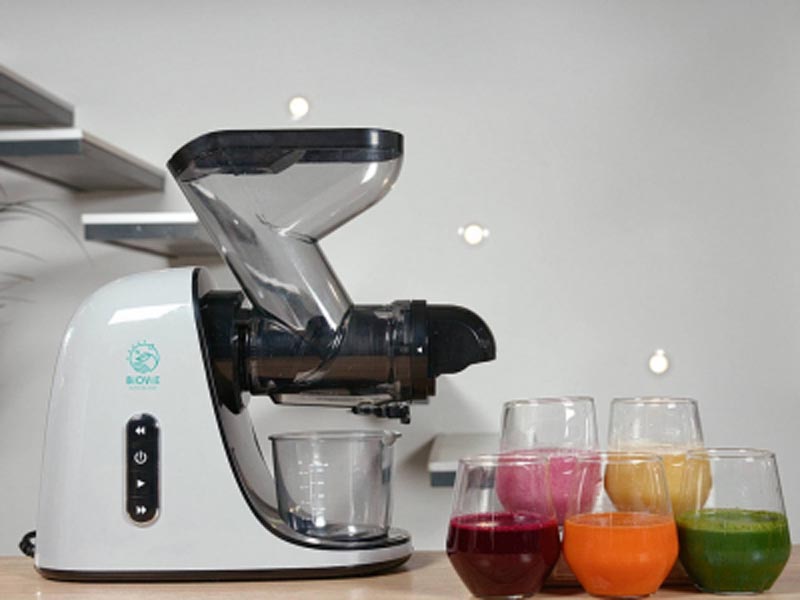
The auger lies horizontally, is longer, and the pressing path is extended accordingly. This is what gives it the decisive edge on fibrous produce: wheatgrass, young shoots, spinach, kale, celery stalks, aromatic herbs. Where a vertical model slips or wraps around itself, the horizontal one shears and wrings it dry. It's also more versatile beyond juice: plant-based milks, purées, frozen-fruit sorbets, depending on the accessories supplied.
What this means in practice
- You're mainly after green juices and wheatgrass: go for a horizontal model. This is the one case where the difference in yield is clear-cut, and it shows from the very first glass.
- You'll mostly be making fruit and root vegetable juices: a vertical model is more than enough, and you'll use it more often because it's quicker to get out and to clean.
- Still undecided, or your needs are likely to change: start from the cleaning criterion. An extractor you dread washing ends up in the cupboard, whatever its technology.
- On footprint, the vertical almost always wins; on versatility, the horizontal does. There's no single best machine - only the best machine for your habits.
One last point that's often misunderstood: rotation speed, typically between 40 and 80 rpm, matters more than auger orientation for limiting heat build-up and oxidation of the juice. A slow vertical preserves better than a fast horizontal. The criteria that follow therefore remain valid for both families.
When it comes to choosing the right juice extractor, several key factors come into play to ensure that the device meets your specific needs while harmoniously integrating into your lifestyle. Here are the essential criteria to follow:
The Motor Power
When choosing a juice extractor, the motor power is a fundamental criterion that should not be overlooked. A robust motor is essential to ensure effective and durable use of the device, especially if you plan to use it frequently. Indeed, a high-power motor will allow you to easily process hard vegetables like carrots or beets, as well as fibrous fruits such as pineapple and apples.
The motor power directly influences the extractor's ability to extract the maximum amount of juice while preserving essential nutrients. A powerful motor ensures consistent performance, even after intensive use. This means you can prepare your fresh juices daily without fearing that the device will overheat or wear out prematurely.
Moreover, a high-quality motor contributes to the durability of the juice extractor. This represents a wise long-term investment, as you will minimize the risks of breakdowns and costly repairs. Choosing a device with a robust motor means opting for reliable performance and optimal extraction, thus guaranteeing juices rich in vitamins and flavors, day after day.
The Rotation Speed
The rotation speed of a juice extractor is a determining factor for the final quality of the juice produced. Unlike high-speed centrifuges that generate heat and promote oxidation, slow-rotating extractors with gentle pressure help preserve the nutritional quality of the juices. Here's why:
- Preservation of Nutrients: By rotating at a reduced speed, these devices minimize the destruction of essential vitamins and enzymes contained in fruits and vegetables.
- Gentle Method: This gentle extraction ensures that the juices remain rich and flavorful, while also extending their shelf life.
Extraction and Nutrition
A slow-rotating extractor mimics a slow chewing extraction process, which allows for:
- Maximize nutrient extraction,
- Obtain a denser and more nutritious juice.
Healthy nutrition enthusiasts often prefer this option because it ensures that each glass of juice is a true concentrate of the benefits of raw foods.
Reduction of oxidation
Moreover, this method reduces oxidation, a key factor for those who wish to prepare their juices in advance without losing their beneficial properties. Choosing an extractor with a slow rotation speed proves to be a wise choice for anyone concerned about their health.
A choice aligned with your values
If you are still hesitating, remember that this investment perfectly aligns with a raw and organic diet, respecting both your well-being and your ecological values. For optimal efficiency, opt for a juicer that combines simplicity, robustness, and a good quality/price ratio.
The size of the feeding chute
When selecting a juicer, the size of the feeding chute is an often underestimated but crucial criterion for the practicality of the device. Here's why it is important:
Advantages of a large feeding chute
- Simplicity and speed: A large feeding chute allows you to insert whole fruits and vegetables or large pieces, significantly reducing preparation time.
- Time-saving: For people with an active lifestyle who are mindful of their time, this convenience turns juice preparation into a quick and enjoyable task.
Safety and ease of use
However, it is important to maintain a balance between the size of the chute and the safety of the device. Here are some elements to consider:
- Safety: A chute that is too wide might encourage neglecting necessary precautions when inserting ingredients, increasing the risk of accidents.
- Safety devices: Opt for an extractor with integrated safety systems, such as locks or finger guards, for a worry-free use.
In summary, choosing an extractor with a chute size suited to your personal use:
- Ensures faster juice preparation,
- Contributes to a more comfortable and secure user experience,
- Supports a healthy and sustainable lifestyle.

Ease of Use and Maintenance
When it comes to choosing a juicer, ease of use and maintenance is crucial to ensure a pleasant and encouraging long-term experience. A device that is easy to handle and maintain encourages regular use, thereby increasing your daily intake of fresh and nutritious juices. By incorporating these criteria into your selection, you ensure that your juicer becomes an indispensable ally in your healthy and organic diet.
Simplicity of Assembly
The simplicity of assembly is a crucial aspect when choosing a juicer. A well-designed device with few parts not only facilitates daily use but also enhances the overall user experience. Fewer parts mean quicker assembly, which is ideal for those who want to incorporate fresh juice into their routine without spending too much time.
By opting for a juicer with a reduced number of components, you significantly reduce the time needed to prepare your fresh fruit or vegetable juices. This allows you to spend less time focusing on assembling the device and more time enjoying the nutritional benefits of raw foods. Devices that are easy to assemble and disassemble also encourage you to use your juicer more regularly, thus maximizing the use of your organic products to create nutritious drinks.
Moreover, this type of design minimizes the risk of missing or mispositioned parts, ensuring that your device operates optimally every time you use it. This also simplifies the cleaning process, another major advantage for those who prefer a practical and efficient approach. By selecting a juicer that combines simplicity of assembly and efficiency, you ensure that you make a choice that perfectly fits your lifestyle dedicated to health and sustainability.
Easy Cleaning
Choosing a juicer that offers easy cleaning is essential to maintaining a healthy and enjoyable juicing routine. When devices are complicated to maintain, it can quickly become an obstacle to regular use, thus compromising your commitment to consuming fresh and nutritious juices.
The Juice Me Up brush makes cleaning your juicer easy, allowing you to remove residues in a flash and keep your device clean and efficient.
Importance of Detachable and Dishwasher-Safe Parts
A juicer with detachable parts, specifically designed to be dishwasher-safe, greatly simplifies the cleaning process. This feature saves you time and energy, allowing you to focus more on creating your juices rather than maintaining them. Look for models that include clear indications on which parts can be placed in the dishwasher for a deep and hassle-free cleaning.
Tips for Quick and Efficient Cleaning
For those who prefer manual cleaning or wish to extend the lifespan of their juicer, here are some tips for quick and efficient maintenance:
- Rinse Immediately After Use: Prevent fruit and vegetable residues from drying out. A quick rinse right after extraction prevents pulp buildup, making cleaning easier.
- Use Specialized Brushes: Many juicers come with brushes designed to reach difficult corners. Use them to effectively remove residues without damaging the parts.
- Soak the Filters: If your juicer has a filter, soaking it in warm soapy water can help remove stubborn deposits.
- Check Cleaner Compatibility: Use only products recommended by the manufacturer to avoid damaging the materials.
By adopting these methods, you will ensure optimal cleanliness of your device, thus extending its durability and guaranteeing consistent performance. Easy and quick cleaning is a major asset to encourage regular use, allowing you to fully enjoy the benefits of raw and organic juices.

Durability and Warranty
When investing in a juicer, it is essential to consider its durability and the warranty offered by the manufacturer. A device made with quality materials ensures not only increased longevity but also consistent performance, making each use pleasant and efficient. Enthusiasts of a raw and organic diet understand that the durability of a juicer is a key element to fully benefit from this investment. The book Mes Semaines Crues by Aurélie Viard offers a multitude of recipes and tips for adopting a raw diet with creativity and simplicity, allowing each meal to be transformed into a nutritious and tasty moment.
Quality Materials
When choosing a juicer, the quality of the materials is a determining factor to ensure its longevity and efficiency. Indeed, juicers made with stainless steel parts or BPA-free plastic offer notable advantages in terms of durability and safety.
Advantages of Robust Materials
- Corrosion Resistance: Stainless steel is known for its robustness and ability to resist corrosion, which is essential for prolonged and frequent use. This means your appliance will maintain its efficiency and appearance over time, even after repeated cleanings.
- Food Safety: BPA-free plastic ensures that your juices are not contaminated by harmful chemicals. This feature is crucial for health-conscious consumers, as it guarantees that the extractor preserves the purity of raw and organic foods.
Impact on the Longevity of the Appliance
High-quality materials not only increase the durability of the extractor but also its overall performance. An appliance designed with solid materials is less likely to experience structural failures, ensuring worry-free use for many years. This translates to a better value for money, as you minimize costs associated with repairs or replacement of the appliance.
By choosing an extractor with high-quality materials, you are making a smart and sustainable investment, aligned with your commitment to a healthy and environmentally friendly lifestyle. This allows you to fully enjoy the benefits of fresh juices while supporting an eco-responsible and sustainable approach.
Warranty and After-Sales Service
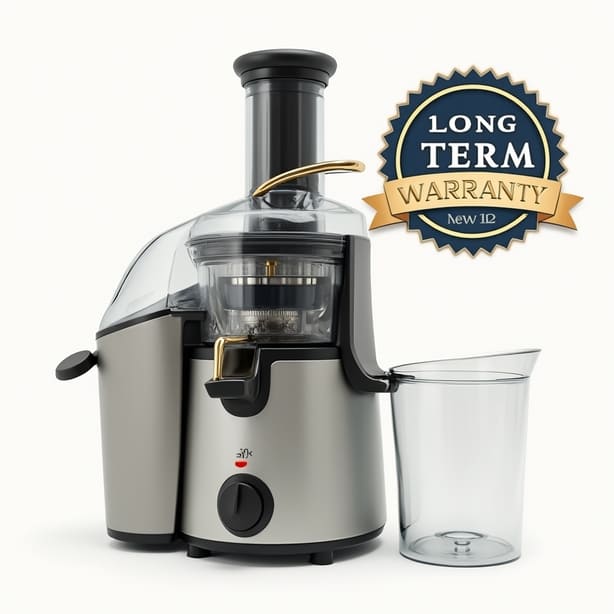
Investing in a juicer involves carefully considering the warranties offered by the manufacturer. A good warranty is more than just a formality: it represents a sign of the manufacturer's confidence in the quality and durability of their product. The warranty protects you against manufacturing defects and ensures that you receive assistance in case of any issues with your appliance.
In general, the longer the warranty period, the more reassuring it is for the buyer. This often reflects the manufacturer's commitment to customer satisfaction and the robustness of the offered extractor. Make sure to check not only the duration but also the scope of the warranty. Some warranties cover only certain parts of the appliance, like the motor, while others may include all components.
Additionally, the availability of spare parts is crucial for extending the life of your extractor. Opting for a model whose parts can be easily replaced saves you from having to buy a new appliance in case of a breakdown. This is not only economical but also environmentally friendly. Therefore, inquire about the accessibility of spare parts and the efficiency of after-sales service before making your choice.
With these elements in mind, you are better equipped to choose a juicer that not only meets your immediate needs but also fits into a perspective of sustainable and responsible use.
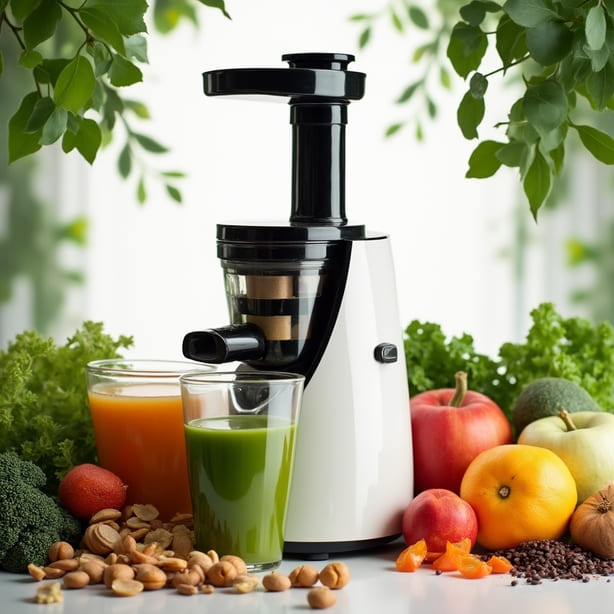
The juicer not only produces fresh and nutritious juices; its versatility makes it an indispensable ally in your kitchen. This appliance is capable of extracting juice from various ingredients, going well beyond classic fruits. Its ability to adapt to a variety of ingredients makes it a valuable tool for enriching your diet in an innovative and tasty way.
Types of Suitable Fruits and Vegetables
A quality juicer is designed to handle a wide variety of ingredients, making it an essential tool for those who adopt a raw and organic diet. Here are some types of fruits and vegetables particularly suited to this appliance:
Leafy Vegetables
These vegetables are rich in essential nutrients. Thanks to the juicer, these nutrients are preserved and easily accessible in your daily juices.
Soft Fruits
For fresh juice enthusiasts, these fruits provide natural sweetness and an incomparable flavor, while offering a wealth of vitamins and antioxidants for healthy and revitalizing drinks.
Juicer Versatility
The juicer is not limited to simple juice extraction. Its versatility also allows for the creation of:
- Refreshing Sorbets
- Creamy Purees
These preparations are perfect for healthy desserts that meet your nutritional standards.
Experimentation and Creativity
Using the juicer encourages you to experiment and explore new ways to incorporate raw and organic foods into your routine. This makes each meal both healthy and exciting. By diversifying your culinary preparations, you take a step towards a more creative and engaging lifestyle while respecting your ecological values.
Additional Functions
Modern juicers offer much more than simple juice extraction. Their versatility makes them valuable tools in a kitchen dedicated to raw and organic food. By opting for a multifunction juicer, you benefit from a variety of features that expand your culinary options, allowing you to experiment and diversify your recipes daily.
Advantages of Multifunction Juicers
A multifunction juicer is designed to go beyond simple juicing. Among the features often available is the ability to prepare nut butters, fresh pasta, and even fruit-based sorbets. These appliances allow you to explore a multitude of healthy and gourmet preparations while preserving the nutritional properties of raw ingredients.
This ability to create varied products from a single appliance not only reduces the need for other kitchen equipment but also optimizes your space while saving you time and energy.
Examples of Creative Uses
- Nut Butters: Turn almonds or hazelnuts into creamy and healthy butter, perfect for spreading or adding to your smoothies.
- Fresh Pasta: Use your extractor to make fresh pasta from zucchini or carrots, a delicious and gluten-free option.
- Sorbets: Create refreshing frozen desserts without added sugar by combining fresh fruits with a bit of lemon juice.
By integrating these additional functions, you transform your juicer into a true culinary assistant, capable of supporting your gastronomic ambitions while respecting your principles of healthy and sustainable eating. This versatility makes the juicer an even wiser investment, adding value to your journey towards a more balanced and responsible lifestyle.
Value for Money
When it comes to choosing a juicer, the value for money is an essential criterion. This parameter is not limited to the initial cost of the device but also includes its durability, performance, and the long-term savings. To evaluate this aspect, it is essential to consider the robustness of the juicer, its additional features, and the manufacturer's reputation for after-sales service.
Evaluating Value for Money
A good value for money means that the juicer offers high yield while being easy to use and maintain. It should include quality materials that ensure a long lifespan and optimal performance. By choosing a device that maximizes juice extraction, you ensure efficient consumption of your organic fruits and vegetables, thus reducing waste and optimizing each purchase. A device that stands out for its solid construction and replaceable parts also guarantees prolonged use without requiring frequent or costly repairs.
Long-term Investment
Beyond the initial cost, investing in a quality juicer can prove economical in the long run. By producing your own juices, you reduce your dependence on often expensive and sometimes less nutritious industrial products. Calculating the cost relative to the intended use is a crucial step: if you plan regular use, opting for a robust model with a good warranty is a wise choice that will amortize your investment over several years. Also consider the potential savings on purchasing prepared juices, and the added benefit of consuming fresh, nutrient-rich drinks prepared directly at home.
In short, choosing a juicer with excellent value for money means adopting a healthier and more sustainable lifestyle while respecting your criteria of simplicity and efficiency. For those committed to transitioning to a more vibrant diet, this investment is not only beneficial for health but also for the wallet.
Comparison of Models
When considering purchasing a juicer, comparing the models available on the market is an essential step to make an informed choice. Each model offers its own features, functionalities, and benefits that may suit your personal needs and lifestyle differently. Here is an overview of some popular models that stand out for their performance and value for money:
Model A: Compact Juicer
- Features: Lightweight and easy to store, perfect for small kitchens.
- Advantages: Excellent option for those new to juicing, with remarkable ease of use and few parts to assemble.
- Disadvantages: Limited capacity, which may be a drawback for large families.
Model B: Twin Gear Juicer
- Features: Equipped with a twin gear system for maximum extraction.
- Advantages: Superior yield and maximum nutrient preservation, ideal for regular users.
- Disadvantages: Can be more expensive, but justified by its exceptional performance.
Model C: the compact vertical extractor
This is the category of the Hurom E30ST juicer, the one we’ve chosen at Biovie: a 100 W motor with slow rotation (43 to 50 RPM), 4-piece disassembly, cleaning in under two minutes, and a 10-year warranty on the motor and parts. You’ll find it, along with its accessories, in our juice extractor range.
Points to Consider
When comparing models, it is crucial to evaluate:
- Robustness and Durability: Choose models with solid construction for prolonged use.
- Value for Money: Estimate the initial cost against potential savings on purchasing prepared juices.
- Versatility: A model capable of handling a variety of ingredients and preparing different recipes can enhance your culinary experience.
By weighing these options, you are better prepared to choose a juicer that meets your specific needs while aligning with your values of healthy and sustainable nutrition. Don't forget to consider the long-term impact on your health and budget, making this purchase a wise investment for your kitchen and well-being.
Conclusion
When selecting your juicer, it is crucial to consider several essential criteria to maximize the benefits of your fresh fruit and vegetable juices. The robustness of the motor, the rotation speed, the size of the feed chute, as well as the ease of use and maintenance, are all determining factors to evaluate. A well-chosen juicer will not only allow you to enjoy nutrient-rich juices but also optimize your consumption of organic fruits and vegetables while minimizing food waste.
Investing in a quality juicer is a wise choice for anyone looking to commit to a healthy and environmentally friendly diet. A high-performance device not only ensures regular and efficient juice production but also long-term savings by reducing your reliance on commercially prepared products. By choosing a model that meets your expectations, you maximize every step of your dietary transition.
To continue your journey towards a vibrant diet and enrich your daily life with practical advice, feel free to subscribe to our newsletter. You will find tips and recommendations on equipment suitable for a healthy and sustainable lifestyle.
Your Questions and Our Answers (FAQ)
What are the advantages of a juicer compared to a traditional centrifugal juicer?
A juicer uses a cold extraction process that preserves more essential nutrients like vitamins and enzymes, unlike centrifugal juicers that operate at high speed and generate heat. This gentle method ensures juices that are richer in nutrients and stay fresh longer, while offering higher yield with less waste.
A robust motor is essential for effectively processing hard vegetables and fibrous fruits, ensuring maximum juice extraction while preserving essential nutrients. It also offers consistent performance even after intensive use and contributes to the durability of the device.
Why is it important to choose a juicer with a slow rotation speed?
Slow rotation speed minimizes oxidation, preserving the nutritional quality of juices by retaining essential vitamins and enzymes. This method ensures that juices remain tasty and fresh longer, meeting the expectations of health-conscious consumers.
What criteria should be considered for the ease of use and maintenance of a juicer?
A juicer should be easy to assemble and have few parts to reduce preparation time. Ease of cleaning is also crucial; detachable and dishwasher-safe parts simplify maintenance, encouraging regular use.
How does the size of the feed chute influence the use of a juicer?
A large feed chute allows for the insertion of large pieces of fruits and vegetables, thus reducing preparation time. However, a balance between size and safety must be maintained to avoid any risk during use.
What types of fruits and vegetables are suitable for a juicer?
Juicers are versatile and can process a wide range of fruits and vegetables, including leafy greens (like kale), soft fruits (like mangoes), and more. They can also be used to prepare sorbets and purees.
How to evaluate the value for money of a juicer?
Value for money is measured by durability, performance, and long-term savings. A good juicer maximizes juice extraction with robust materials, ensuring prolonged use without frequent repairs.
Why is investing in a juicer beneficial in the long term?
Making your own juices at home reduces your reliance on expensive and often less nutritious industrial juices. Investing in a quality juicer can pay off through savings on purchasing prepared juices and offers fresh, nutrient-rich drinks.
What warranty should I look for when buying a juicer?
A long warranty covering all components, including the motor, is ideal. This reflects the manufacturer's confidence in their product and ensures you are protected against manufacturing defects, with reliable after-sales service and available spare parts.
At Biovie, our choice is the Hurom E30ST juicer, guaranteed 10 years on the motor and parts.