Fast delivery
.png)
 Fair prices




By observing wild animals, humans have always learned how to heal themselves. An injured dog seeks out a muddy puddle and rolls in it; an elderly herbivore grazes on fresh shoots rather than dry grasses; a cat covers its waste with soil to self-medicate. This instinctive wisdom has not been lost by our domestic companions — we simply find it again in their food bowl. Superfoods for dogs and cats (spirulina, marine plasma, green clay, barley grass, chlorella, klamath) are now documented by veterinary research and increasingly integrated into an approach of natural feeding for dogs and cats.
In this Biovie 2026 guide, I share with you the essentials of what I have observed in 33 years of living food — with my own companions as well as in the feedback from our breeder and animal naturopath clients: benefits, precise dosages by weight, recent scientific studies, methods of introduction, and precautions. The goal: to help you choose the superfoods that are truly useful for your dog or cat, without being swayed by trends, in respect of living beings.
Why give superfoods to your dog or cat?
Industrial kibble, even of premium quality, has several nutritional limitations: its production by high-temperature extrusion (120 to 180 °C) degrades essential fatty acids, oxidizes heat-sensitive vitamins (A, C, E, B group), and destroys the natural enzymes present in raw materials. This process extends shelf life but depletes the micro-nutritional density of the daily ration.
A natural dog food supplement — based on raw superfoods — helps compensate for these losses by providing intact micronutrients: phycocyanin from spirulina, chlorophyll from barley grass, colloidal minerals from marine plasma, silica from clay. According to FEDIAF 2024 recommendations, an adult dog in maintenance needs about 2 g of high-quality protein per kilogram of body weight per day — 3.5 g for a sporting dog or a pregnant female. Superfoods do not replace a balanced diet: they enhance it.
The needs most frequently met by superfoods in pets are:
- Immune support (spirulina, klamath)
- Joint mobility and remineralization (marine plasma)
- Digestive health and occasional diarrhea (green clay)
- Liver detoxification and heavy metal elimination (chlorella)
- Coat quality and daily energy (young shoots, barley grass)
- Wound and minor injury care (clay poultices)
Spirulina for dogs and cats: the No. 1 protein algae
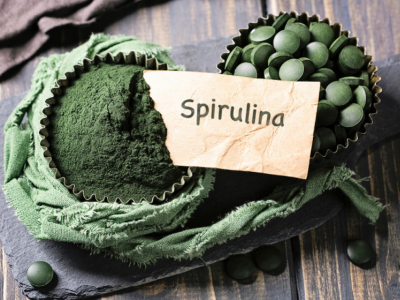
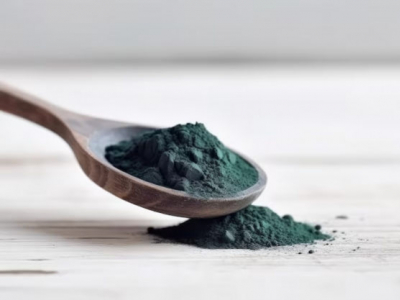
Spirulina (Arthrospira platensis) is a freshwater microalgae consumed since the Aztecs. It contains 55 to 70% complete proteins (dry matter), 15 to 20% phycocyanin — a unique blue pigment with strong antioxidant power — and 8 to 10% essential fatty acids including gamma-linolenic acid (GLA). For animals, it is probably the most documented and versatile superfood.
The benefits of spirulina in animals
For both dogs and cats, spirulina for dogs (or for cats) is used for:
- Strengthen the immune defenses during molting, stress, or convalescence
- Tone the coat, reduce hair loss and dandruff
- Support the energy of an elderly or athletic animal
- Supplement the protein intake of a homemade or semi-homemade diet
- Provide highly bioavailable iron (useful in cases of anemia confirmed by a veterinarian)
To learn more about the immune mechanism, check out our detailed article spirulina and immunity, which explores human and animal data.
What science says in 2026
The reference study remains the one published by Satyaraj and colleagues in 2021 in the journal Frontiers in Nutrition (Satyaraj et al., 2021, PubMed). Among 30 healthy adult dogs supplemented with 0.2% spirulina in their daily ration for 12 weeks, researchers observed a significant increase in fecal IgA (a marker of intestinal immunity) and a better vaccine response to a rabies revaccination. No adverse effects were reported.
A second study, conducted by Cordioli and colleagues in 2023 and published in Animals (Cordioli et al., 2023, PubMed Central), evaluated the palatability of spirulina in 40 dogs and 40 cats, at increasing doses. The animals accepted intakes of up to 2 g/day well, without notable digestive issues. The review by Kulpys et al. (2023) on Arthrospira in canine nutrition confirms this good tolerance profile.
Spirulina dog dosage: dosage by weight
The average recommended dose for a course is 50 mg of spirulina per kilogram of body weight per day. Specifically, for guidance:
- Cat or small dog (less than 10 kg): 0.5 to 1.5 g/day (a small pinch to 1/2 teaspoon)
- Medium dog (10 to 25 kg): 1.5 to 3 g/day (1/2 to 1 level teaspoon)
- Large dog (more than 25 kg): 3 to 5 g/day (1 to 2 level teaspoons)
Start systematically at a quarter of the dose for 7 days, then gradually increase over 2 weeks. Prefer a course of 3 weeks to be repeated 3 to 4 times a year (seasonal changes, molting, vaccination period). For more on consumption methods, our guide how to consume spirulina offers six practical uses applicable to the animal's diet.
Fresh, frozen, or powdered: which form to choose?
The quality of spirulina primarily depends on its place of production. The ANSES reminded in its 2017-SA-0244 opinion of the risks of contamination with heavy metals, microcystins, and PCBs associated with spirulinas produced in certain Asian areas. Always prefer a French spirulina, without preservatives or additives.
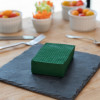
- The fresh spirulina certified in France (400 g) — the most vibrant form, to be kept in the freezer; pasty texture, ideal when mixed with food
- The frozen spirulina in pellets — economical format, one pellet = one precise dose
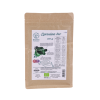
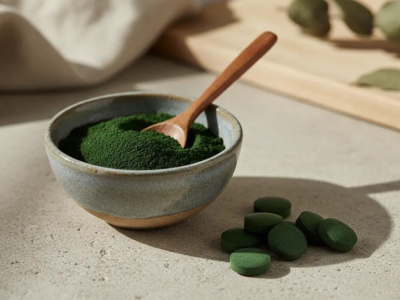
- The organic spirulina powder 500 g — the simplest form to sprinkle on kibble
To compare formats and optimize your budget, see our analysis on the price of spirulina per kilo.
Spirulina dog danger: precautions to know
French spirulina is very safe, but some precautions are necessary:
- Puppies and kittens under 2 months: to be avoided (digestive system still immature)
- Animal on anticoagulants: consult the veterinarian (possible interaction with phycocyanin)
- Chronic renal failure: adjust dosages (significant protein intake)
- Canine epilepsy: caution, one case reported in the literature
- Possible mild effects at the start of treatment: soft stools, slight temporary fatigue — signs of mild detoxification, resolved by reducing the dose
Marine plasma: the source of 78 minerals and trace elements
Marine plasma is microfiltered seawater, collected in oceanic vortex areas where plankton density is maximal. The work of René Quinton in the early 20th century highlighted a composition remarkably close to the blood plasma of mammals — since then, it has been referred to as the law of marine constancy. It provides 78 minerals and trace elements in a natural colloidal solution, highly bioavailable.
Marine plasma for dogs and cats: for arthritis and remineralization
In our companions, aging weakens the cartilage. Arthritis is a common ailment that can sometimes be difficult to identify: a dog that struggles to climb stairs, a cat that no longer jumps on the couch, morning stiffness that eases with movement. Occasionally giving marine plasma to your dog or cat ensures them an optimal supply of minerals and trace elements beneficial for cartilage, bone, and overall hydro-electrolytic balance.
To fully understand the differences between the various types of marine plasma, consult our guides on Quinton hypertonic and Mediterranean or Atlantic marine plasma.
Isotonic dilution and dosage by weight
The hypertonic marine plasma (natural marine concentration) must be diluted for animal consumption to replicate the concentration of the internal environment. The rule: 3 volumes of spring water for 1 volume of hypertonic plasma.
- Cat or small dog (less than 10 kg): 50 to 100 ml/day of isotonic plasma
- Medium dog (10 to 25 kg): 100 to 200 ml/day
- Large dog (more than 25 kg): 200 to 300 ml/day
Our available ranges: 750 ml hypertonic marine plasma (for trial), 3 L for regular use, or 11 L in family size.
The two-bowl technique
A practical tip we've observed for years with our clients: provide your pet with two bowls of water — one with pure water, the other with water mineralized with isotonic marine plasma. You'll be surprised: depending on its current need, the animal will instinctively choose the one that benefits it. This self-regulation is particularly noticeable after exertion, heat, diarrhea, or stress.
Contraindications of marine plasma in animals
Few, but important to know: animals on a strict salt-free diet (decompensated heart failure, severe renal hypertension) should not receive marine plasma without explicit veterinary approval. The same applies to animals on long-term diuretics. For healthy animals, isotonic plasma is perfectly tolerated.
Green clay for dogs: sensitive digestion and wound care
Green clay for dogs is probably the oldest of all superfoods for animals. A naturalistic observation reported since antiquity: injured wild animals systematically seek a damp, clayey place to roll in. Clay heals the wound, disinfects, absorbs toxins, and protects from the sun. This tradition is well-documented in the French reference book The Healing Clay by Dr. Jade Allègre (re-ed. 2022).
Clay poultice for dog wounds: instructions
In case of superficial wounds, abrasions, localized dermatitis, or small injuries, applying a green clay poultice is effective and safe for our little companions:
- Mix 2 to 3 tablespoons of green clay powder with a little spring water in a ceramic or glass bowl (never metal)
- Let it sit for 10 minutes until you get a smooth paste, neither too dry nor too liquid
- Apply a thick layer (5 mm) directly on the clean wound
- Secure with a linen or cotton compress for 1 to 2 hours
- Rinse with lukewarm water. Repeat twice a day until the wound is closed
Our dedicated article clay, catalyst of life on earth explores in depth the mineralogical properties of this natural dressing.
Green clay for dog diarrhea: internal use
Similarly, in case of mild intestinal disorders. Add a level teaspoon of superfine green clay per 10 kg of weight to a bowl of spring water, let it sit for 2 to 3 hours, then give the clay-infused water to your pet (without the sediment). The clay adsorbs toxins, gases, and intestinal pathogens thanks to its considerable adsorption capacity (600 to 800 m²/g for montmorillonite).
Limit this use to a maximum of 3 weeks (clay also absorbs some useful minerals) and keep clay intake at least 2 hours away from any potential medication. If diarrhea persists for more than 48 hours, consult a veterinarian. For human use — the principle remains the same for animals — see drinking your weight in clay over a lifetime.
Montmorillonite, Illite, or Morélie: which one to choose?
Not all green clays are equal. Here are our three non-heated Biovie clays, and their best indication for animals:
- Mont Ventoux montmorillonite — the most absorbent (600-800 m²/g). Indicated for diarrhea and drinkable use.
- Illite — denser texture. Ideal for thick poultices on wounds, bumps, insect bites.
- Morélie (white clay) — the gentlest. Perfect for the sensitive skin of kittens and very young animals (external use only).
The golden rules of clay
Three absolute rules, passed down by tradition and confirmed by observation: containers made of glass or ceramic, spoon made of wood, spring or filtered water (never metal, which inhibits the activity of the clay). Always use non-heated, sun-dried clay — heat destroys the electrocolloidal properties.
Barley grass and chlorella: detox greens for animals
After algae and clay, here are two young green shoots with complementary profiles, particularly useful for supporting detoxification, the liver, and the overall vitality of the animal.
Chlorella dog dosage: heavy metal detox
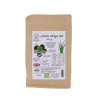
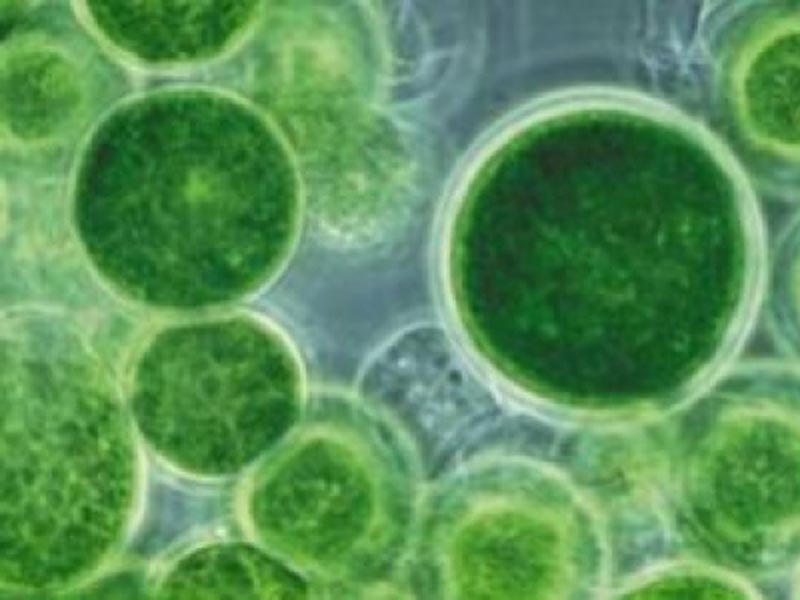
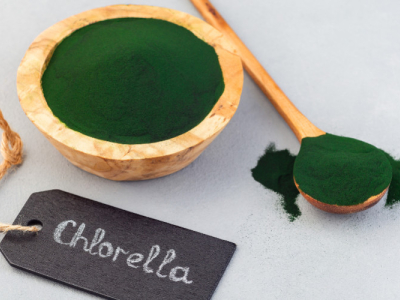
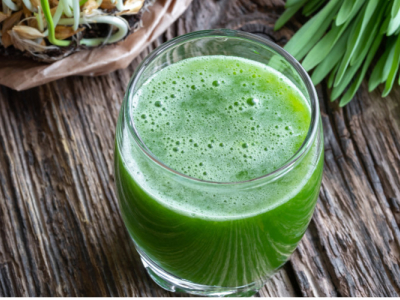
Chlorella (Chlorella vulgaris or pyrenoidosa) is a freshwater microalga whose cell wall is a powerful binder of heavy metals (lead, mercury, cadmium, aluminum). It is particularly indicated for a dog living in an urban environment, after heavy antiparasitic treatment or anesthesia, or for an animal with sensitive skin and odorous stools. Our organic chlorella powder is cultivated in greenhouse ponds for total traceability.
Recommended dosage: 1/4 to 1 teaspoon per day depending on weight, in a course of up to 21 days, then 1 week off.
Barley grass dog benefits: fresh chlorophyll
Barley grass is the young barley shoot (15-20 cm) harvested before heading. It is the most concentrated source of chlorophyll, living enzymes, and superoxide dismutase (SOD) — a powerful intracellular antioxidant. In animals, it supports:
- Digestion and fresh breath (chlorophyll = intestinal deodorizer)
- Daily energy and coat shine
- Acid-base balance (alkalizing profile)
- Recovery after exertion or illness
We offer it in organic dehydrated barley grass, secured at low temperature (below 42 °C) to preserve enzymes and vitamins.
Dosages of Greens for Dogs and Cats
- Cat or small dog (less than 10 kg): a pinch (0.5 g) per day
- Medium dog (10 to 25 kg): 1/2 to 1 teaspoon per day
- Large dog (more than 25 kg): 1 to 2 teaspoons per day
Courses of 3 weeks, 3 to 4 times a year. Avoid chlorella in puppies and kittens under 3 months old.
Klamath: The Wild Algae that Boosts Vitality
The wild Klamath algae (Aphanizomenon flos-aquae) is a cyanophyte microalgae harvested in the wild from the volcanic Upper Klamath Lake (Oregon, USA). Unlike cultivated spirulina, it grows in a unique ecosystem rich in minerals from volcanic ash.
Its main advantage: a high concentration of phycocyanin, phenylethylamine (a molecule associated with nervous tone), and neuropeptides that cross the blood-brain barrier. In animals, it is used occasionally to:
- Support an elderly dog or cat losing vitality
- Assist in convalescence or post-operative recovery
- Help an anxious animal during a move, travel, or a stressful event
Reference dosage: a pinch for a cat or small dog, 1/2 teaspoon for a medium dog. Short course of 10-14 days. Avoid if on antidepressant treatment (MAOIs).
How to Introduce Superfoods into the Diet?
The success of supplementation relies less on the ideal dose than on the gradual introduction. The digestive system of dogs and cats adapts, but it must be supported.
Start Very Gradually
Begin with a quarter of the recommended dose for the first 7 days, then increase to half for 7 days, and finally reach the full dose from the 15th day. This gradual introduction limits initial digestive issues (soft stools, food refusal) and allows the intestinal flora to adapt.
Mix Intelligently
Spirulina, chlorella, and barley grass powder mix ideally with a wet ration (pâté, homemade ration, BARF) — their bitterness is then covered by the fat of the meat or broth. On dry kibble, sprinkle just before serving and slightly moisten with a bit of warm water or isotonic marine plasma. Marine plasma can replace all or part of the usual drinking water.
Course or Maintenance?
Two complementary approaches:
- In a course (3 weeks, 3-4 times/year) for spirulina, chlorella, barley grass, and klamath — during seasonal changes, molting periods, after vaccination, before/after surgery
- For occasional use for marine plasma (effort, heat, stress, convalescence) and for green clay (acute diarrhea, superficial wound)
Precautions, Interactions, and Foods to Avoid
Before any supplementation, keep in mind that superfoods do not replace veterinary advice, especially for an animal under treatment or suffering from a chronic condition (kidney failure, diabetes, hypothyroidism, epilepsy, cancer).
Medication interactions to be aware of:
- Anticoagulants + spirulina or klamath: phycocyanin can enhance the effect — veterinary advice is imperative
- Diuretics + marine plasma: risk of electrolyte imbalance
- Clay + oral medication: space out doses by at least 2 hours (adsorption)
- Antiepileptic treatment: caution with spirulina
Essential reminder: some human foods are toxic for dogs and cats, even in small quantities. Never give your pet:
- Chocolate (theobromine)
- Onion, garlic, chives (sulfur compounds)
- Grapes and raisins (acute kidney failure)
- Avocado (persin)
- Xylitol (sweetener, severe hypoglycemia in dogs)
- Alcohol and caffeine
- Cow's milk (for adult cats, poorly tolerated)
Signs to immediately stop any supplementation: repeated vomiting, persistent diarrhea beyond 48 hours, loss of appetite for more than 48 hours, unusual lethargy. Consult your veterinarian.
FAQ — your questions about superfoods for dogs and cats
Is spirulina good for dogs and cats?
Yes, spirulina is well tolerated by healthy dogs and cats and can boost their immunity, coat, and energy. A study published in 2021 in Frontiers in Nutrition on 30 dogs shows that spirulina supplementation at 0.2% of the diet increases fecal IgA and vaccine response. Always start with a small dose and avoid in puppies under 2 months.
What dose of spirulina should be given to a dog?
The average recommended dose is 50 mg of spirulina per kilogram of body weight per day. Specifically: 0.5 to 1.5 g/day for a dog under 10 kg, 1.5 to 3 g/day for a dog between 10 and 25 kg, and 3 to 5 g/day for a dog over 25 kg. Mix with wet food or sprinkle on kibble, in a 3-week course 3 to 4 times a year.
Can green clay be given to a dog in case of diarrhea?
Yes, green clay (montmorillonite or illite) is a recognized natural digestive dressing, often used in veterinary medicine. Mix 1 teaspoon per 10 kg of weight in a little spring water, to be added to the food bowl or left available in a second bowl. Limit to a maximum of 3 weeks. If diarrhea persists for more than 48 hours, consult a veterinarian.
How to use marine plasma for an elderly dog or cat?
Marine plasma provides 78 minerals and trace elements in a natural solution, useful for aging animals suffering from arthritis or fatigue. Dilute in isotonic form (3 parts water to 1 part hypertonic plasma). Count 50 to 100 ml/day for a cat or small dog, 200 ml/day for a dog over 10 kg. Contraindicated in case of a strict salt-free diet.
What are the dangers of spirulina for a dog?
Spirulina is very safe when sourced from a reliable producer (ideally France, outside Asia to limit heavy metal contamination). Possible mild side effects: digestive issues (soft stools, vomiting) at high doses, rare allergic reactions, temporary fatigue at the start of a course. Avoid in puppies under 2 months and in cases of kidney failure or anticoagulant treatment without veterinary advice.
Chlorella or spirulina: which one to choose for my dog?
Both are complementary. Spirulina provides proteins, iron, and phycocyanin, ideal for immunity and vitality. Chlorella binds heavy metals, supports the liver, and aids detoxification, particularly useful after antiparasitic treatment or for an animal living in the city. They can be alternated in courses: spirulina during active periods, chlorella during recovery periods.
About this article
"For over thirty years, I have fed my own animals — dogs, cats, chickens — with the superfoods we produce at Biovie. I have seen coats rejuvenate, joints regain flexibility, and old dogs regain energy. These field observations now align with scientific literature, such as Satyaraj's study on spirulina in dogs. My only advice: always prioritize quality, always start gradually, and always observe your companion — they will tell you themselves what benefits them."
Updated: April 22, 2026 — article written by Éric Viard, founder of Biovie and ISTOM engineer, co-author of "Algues au quotidien" (Gallimard, 2024) — Best Cookbook in the World, Gourmand Cookbook Awards 2025, and Best Cookbook in France, National Culinary Academy 2025.
Disclaimer: The information presented in this article is provided for informational purposes and does not constitute veterinary advice. Consult a qualified animal health professional before making any significant changes to your dog or cat's diet or supplementation, especially in cases of chronic illness, ongoing treatment, pregnancy, or for a very young or very old animal.
Find all our superfoods for natural dog and cat nutrition on https://www.biovie.fr/en/.