

Introduction: a discovery that really caught our attention
With Aurélie, we have always been attentive to the quality of what we consume. Organic food, sprouted seeds, , algae, , superfoods... Recently, at the beginning of 2025, we came across a study from the CNRS in Toulouse that literally sent shivers down our spine.
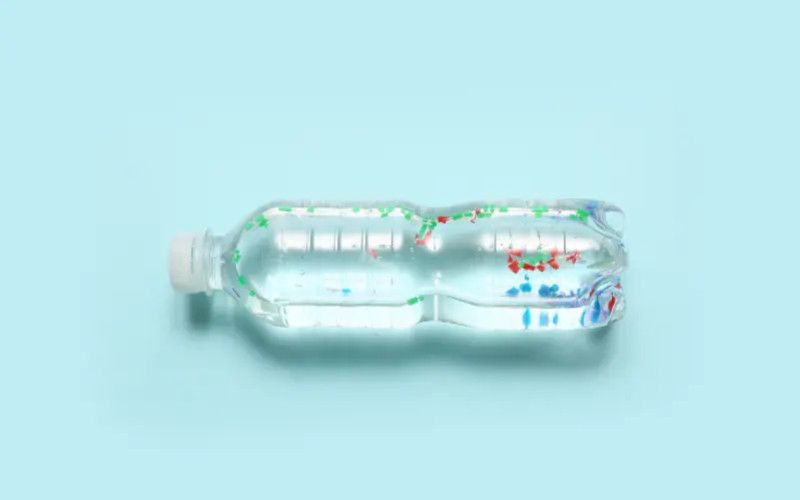
Thetap waterA Toulouse resident would contain on average 413 microplastic particles per liter. 413 particles! And that's not all: 98% of these particles measure less than 20 microns, which means they are not even detected by current European standards. Essentially, our water is declared "drinkable" even though it contains thousands of plastic particles invisible to the naked eye. Polluted tap water becomes a reality that few people are aware of.
Do you imagine the equivalent of a plastic credit card being ingested every week? That's exactly what's happening according to the WWF. Frankly, it makes you think. This drinking water pollution affects us all on a daily basis without us realizing it.
But here it is, and this is where it gets really interesting: we have also discovered that solutions exist that are natural, effective, and scientifically proven. How to naturally filter tap water ?That's precisely the question we asked ourselves. So, no need to panic, just clear information and concrete actions to implement.
In this article, I will share with you what we have learned about microplastics in water, the real health risks (without catastrophizing), and especially the solutions we have tested and adopted at Biovie. Because can you drink tap water without risk ?The answer is more nuanced than one might think.
Microplastics in Water: The Situation in France (2025)
What exactly are microplastics ?
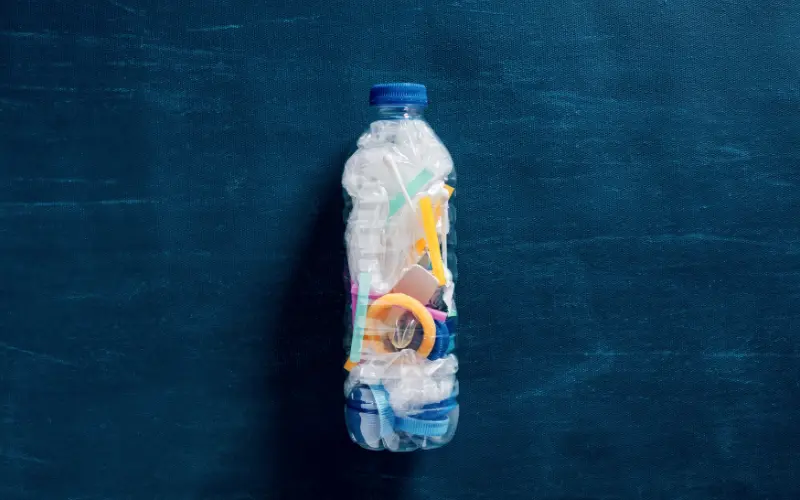
Concretely, microplastics are particles of plasticLess than 5 millimeters. Most are even invisible to the naked eye, measuring less than 20 microns (to give you an idea, a human hair is about 70 microns).
Where do they come from? From everywhere, unfortunately:
- The degradation of plastic bottles, bags, packaging
- Synthetic textiles that release fibers with each wash
- Cosmetics (some exfoliants contain microbeads)
- Tire wear on a car
- Road surfaces
There are mainly five types of polymers: polyethylene (PE), polypropylene (PP), polyethylene terephthalate (PET), polystyrene (PS), and polyamide (PA). These complex names hide a simple reality: plastic in our water.
The situation in France in 2025
The study by the CNRS in Toulouse, published in January 2025, was a real wake-up call for the scientific community. They analyzed the local tap water and compared it with 10 brands of bottled water sold in France.
The results are enlightening:
- Tap water of Toulouse : 413 particles per liter
- Bottled water : between 19 and 1,154 particles per liter depending on the brands
- The paradox : 8 out of 10 brands contained MORE microplastics than tap water
That's why this discovery caught our attention: if we buy (well, we never buy) bottled water in plastic thinking we're avoiding "tap pollution," we end up increasing our exposure to microplastics. The plastic bottle danger is very real, contrary to popular belief.
But that's not all. Another major finding from the study published in the journal PLOS Water in January 2025 shows that 98% of microplastics present in drinking water measure less than 20 microns. And guess what? Current European standards ONLY detect particles between 20 microns and 5 millimeters. Essentially, 98% of microplastics completely go under the radar of official controls. The tap water contaminants are therefore not limited to what official analyses detect.
The illusion of bottled water
We have always favored filtering tap water before consuming it for obvious ecological reasons (less plastic, less transport). But many of our customers were asking us if Bottled water contains microplastics. and if it was not "safer."
Recent studies show exactly the opposite.
The association Agir pour l'Environnement analyzed the 9 best-selling bottled water brands in France in 2022. Result: 7 out of 9 contained microplastics, with concentrations ranging from 1 to 121 particles per liter.
The record is held by... Vittel Kids. Yes, you read that right: the water specifically marketed for children contained 121 microplastic particles per liter. Both ironic and concerning.
But the worst is an American study from Columbia University and Rutgers published in 2024, which detected an average of 240,000 fragments per liter in bottled water, 90% of which are nanoplastics (even smaller than microplastics, less than 1 micron). These particles are so small that they pass through all cellular barriers.
The problem? The bottle itself. Every time you open, close, carry, or leave a bottle in the sun, the plastic releases particles into the water. The longer the bottle is stored, the more the water is contaminated. Tap water vs bottled water microplastics ?The verdict is clear: filtered tap water is undeniably safer.
Impact of microplastics on human health
The 7 systems of the body affected
In reality, I am deeply convinced that we do not yet fully grasp the magnitude of the problem. Research on microplastics is relatively recent (the first serious studies date back to 2015-2016), but the data is accumulating and it is concerning.
Here is what science has documented so far:
1. Cardiovascular system
An Italian study from 2024 conducted by Dr. Parvaiz Koul in Naples showed that people with microplastics in their carotid arteries have a 4.5 times higher risk of experiencing a Stroke or a heart attack. 4.5 times! This is not insignificant.
2. Digestive system
Microplastics create chronic inflammation of the intestinal wall. Worse still, they disrupt our microbiota (these precious bacteria that help us digest and defend ourselves). Dr. Muriel Mercier-Bonin from INRAE explains it clearly: "Microplastics cross the intestinal barrier and enter the bloodstream to migrate to secondary organs."
3. Reproductive system
Several studies show a correlation between exposure to microplastics and decreased fertility in both men and women. The endocrine disruptions caused by certain plastic additives (phthalates, bisphenol A) exacerbate the problem.
4. Nervous system
Here is perhaps the most worrying data: between 2016 and 2024, the concentration of microplastics in the human brain increased by 50%. In just 8 years! Researchers found particles in brain tissues during autopsies.
5. Skeletal system
Preliminary studies show a weakening of bone structure linked to the accumulation of microplastics in the bone marrow.
6. Endocrine system
Microplastics act as endocrine disruptors, interfering with our hormones.thyroid, reproduction, growth).
7. Immune system
Chronic inflammation caused by microplastics creates permanent oxidative stress that weakens our immune defenses.
Presence in all our organs
Honestly, the list is long and depressing. Microplastics have been found in: the blood, the brain, the liver, the kidneys, the lungs, the heart, the placenta, the amniotic fluid, the testicles, and even the bone marrow.
What particularly strikes me is that newborns are already born with microplastics in their bodies. They are exposed from intrauterine life through the placenta. What kind of legacy are we leaving them...
The particular case of PFAS
As long as we're talking about pollutants in the water, it is absolutely necessary to mention the PFAS (Per- and polyfluoroalkyl substances). It's somewhat the silent accomplice of microplastics.
PFAS, nicknamed "forever chemicals," are chemical compounds that have been used since the 1940s in thousands of products: food packaging, waterproof textiles, non-stick pans, cosmetics, firefighting foams...
Their peculiarity? They NEVER degrade naturally. Once released into the environment, they remain there for centuries. And they massively contaminate our drinking water.
In France, the 2023 analysis conducted by Le Monde and Générations Futures revealed that:
- 17,000 sites are contaminated with PFAS in France
- 34 million French people drink water exceeding the recommended thresholds
- 84% of the waterways analyzed contain PFAS
- Concentrations vary from 10 ng/L to 1,500 ng/L according to the regions
PFAS accumulate in our bodies and cause: cancers (kidney, testicular), fertility issues, thyroid disruptions, high cholesterol, weakened immune system, and complications of pregnancy.
The catch? Traditional wastewater treatment plants DO NOT FILTER PFAS. They pass through and contaminate the distributed drinking water. That's why filter tap waterBecomes a health necessity, not just a trend.
Solutions to eliminate microplastics: what really works
Our exclusive scientific test: EcoFiltro VS microplastics
In February 2025, our manufacturer commissioned the independent laboratory Measurlabs (Finland) a rigorous test on our water filter EcoFiltro. The objective? To scientifically verify its effectiveness against microplastics.
The test protocol was as follows:
- Contaminant : Polystyrene (particles of 2-50 microns)
- Initial concentration : 1,000 particles/L
- Tested volume : 5 liters of water
- Detection method : Infrared Raman Spectroscopy
- Laboratory : Measurlabs (ISO 17025 accredited)
The results honestly blew us away:
- Before filtration : 1,000 particles/L (artificially contaminated water)
- After EcoFiltro filtration : 0 particles detected
- Efficiency : 100% elimination
- Recovery rate : 88.4% (test reliability measure)
Zero particles. Zero. That's exactly what we hoped for, but seeing the official results from an independent laboratory changes everything. We're no longer talking about marketing promises, but about tangible scientific evidence.
How does ceramic filtration work ?
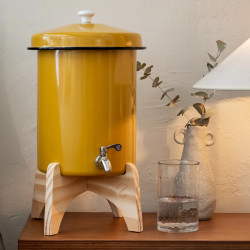
The secret of EcoFiltro lies in its triple-action technology:
1. Microporous ceramic (0.2 microns)
Natural ceramic contains millions of microscopic pores with a diameter of 0.2 microns. To give you an idea, that's 100 times smaller than a human hair.
Result? All microplastics (which measure between 1 and 5,000 microns) are physically blocked. They simply cannot pass through the ceramic pores. It's mechanical, unstoppable.
2. Activated vegetable charcoal
Made from coconut shells, the activated charcoal acts like a molecular sponge. It absorbs PFAS, pesticides, chlorine, heavy metals, and volatile organic compounds.
Documented effectiveness: 70-90% reduction of PFAS (according to independent studies on plant-based activated carbons). It is not a total elimination like with reverse osmosis, but it is already significant for such a simple system.
3. Natural colloidal silver
Integrated into the ceramic, colloidal silver prevents bacterial proliferation inside the filter. No mold, no biological contamination. The water remains pure even after several days in the reservoir.
Alternatives: Advantages and Limitations
To be completely transparent, other solutions exist for filtering tap water. Here is an honest comparison based on our research and the opinions of our customers:
Water filter pitchers Classics
- Advantages : Affordable price (20-40€), easy to find, compact
- Limits : Pores too large (50-100 microns) therefore ineffective against 98% of microplastics (those less than 20 microns), do NOT eliminate PFAS, plastic cartridges (irony...), slow flow rate
- Verdict : To be avoided if your goal is to eliminate microplastics and PFAS. It just improves the taste by removing chlorine.
Reverse osmosis
- Advantages : Maximum efficiency (eliminates 95-99% of EVERYTHING: microplastics, PFAS, metals, bacteria, viruses), proven technology
- Limits : High cost (€300-1,200 installation + €50-100/year maintenance), significant water waste (discharges 3-4 liters for 1 liter filtered), requires electricity, bulky, demineralized water (needs remineralization)
- Verdict : Premium solution but overkill for normal domestic use. Reserved for highly polluted areas or specific needs (aquariums, laboratories).
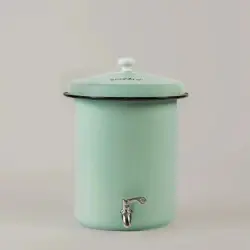
Ceramic gravity filtersEcoFiltroIt seems like your message is incomplete. Could you please provide the text you would like translated from French to English?
- Advantages : 100% effective microplastics (proven), 70-90% effective PFAS (activated carbon), autonomous (no electricity), eco-friendly (natural materials, long lifespan 5-10 years), good value for money (~€180 initial + €30/year maintenance), elegant design
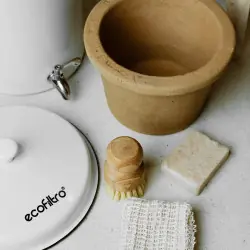
- Limits : Gravity flow (1-2L/hour), requires workspace, ceramic cleaning every 2-3 months (cold water + soft brush)
- Verdict : Best efficiency-price-ecology compromise for 95% of French households. It has been our personal choice for years.
Faucet filters
- Advantages : Easy installation, compact, instant flow
- Limits : Very variable efficiency depending on the models (many do NOT eliminate microplastics < 20 microns or PFAS), plastic cartridges, short lifespan (2-3 months), high annual cost (€60-120/year)
- Verdict : Absolutely verify the certifications (pore size, PFAS tests). There is a lot of greenwashing in this category.
.webp)
Natural detox: supporting your body from the inside
Alright, let's be clear: we cannot completely "detoxify" our bodies of microplastics once they are there. Unlike some soluble toxins (alcohol, heavy metals), microplastics are solid and inert. They accumulate.
BUT we can do two essential things:
- Drastically reduce daily exposure (including filtering the water)
- Support the body's natural detoxification abilities of our organization
Certain nutrients have shown an ability to support the organs of elimination (liver, kidneys, intestines) and to promote the elimination of toxins:
Organic spirulina
This microalgae concentrates chlorophyll, Phycocyanin, and powerful antioxidants. Studies show that the spirulina helps protect the liver and kidneys against oxidative stress, and promotes the elimination of certain heavy metals.
Dosage: 3-5g/day minimum (1 heaped teaspoon of powder). Preferably taken in the morning on an empty stomach with a large glass of filtered water.
Digestive enzymes
They support digestion and help reduce chronic intestinal inflammation caused by microplastics. A healthy gut = an effective intestinal barrier.
Our clients often report an improvement in digestive comfort within 2-3 weeks of treatment.
Maximum hydration
Drinking 2-3 liters of pure water per day supports the elimination work of the kidneys. The more you eliminate through urine, the less toxins stagnate.
Attention: not just any water. Drink filtered water to avoid adding new microplastics while trying to detoxify !
Our complete "Pure Water" protocol
Here is exactly what we've been doing at home for years, and I recommend it without hesitation:
Step 1: Installation of ceramic filter (EcoFiltro)
- Place on the kitchen countertop (within reach)
- Fill the tank with tap water
- Let it filter by gravity (1-2 hours for 8L)
- Pure water available at all times
Step 2: Daily hydration
- Drink 2-3L of filtered water per day
- Start the day with 500ml on an empty stomach
- Always have a gourd Stainless steel within reach
Step 3: Morning spirulina
- 1 teaspoon of organic spirulina powder in a glass of water
- Every morning on an empty stomach
- Recommended ongoing treatment
Step 4: Monthly maintenance
- Clean ceramic with a soft brush + cold water (every 2-3 months)
- Wash the tank with soapy water (1x/month)
- Change activated charcoal (once a year or according to the manufacturer)
Step 5: Reducing Plastic Exposure
- Replace plastic bottles with stainless steel/glass bottles.
- Avoid reheating food in plastic (microwave)
- Favor glass/stainless steel containers for storage
- Buy products in bulk when possible
It's just a matter of getting into the habit. At first, you think about it. Then it becomes automatic. And honestly, the taste of filtered water vs. tap water directly... there's no comparison! We couldn't go back.
Frequently Asked Questions About Microplastics in Water
Q1: Are microplastics really dangerous for health ?
Yes, recent scientific data (2024-2025) clearly shows the health risks. Microplastics are not inert as previously thought. They cause chronic inflammation in our organs, disrupt our endocrine system (hormones), and accumulate in all our tissues (blood, brain, liver, kidneys, heart, placenta). Dr. Parvaiz Koul's study (Naples, 2024) even showed that the presence of microplastics in the carotid arteries increases the risk of stroke or heart attack by 4.5 times. It is documented, it is real. Not in the sense of "you will die tomorrow" but in the sense of "chronic exposure = cumulative risks over 20-30 years." The precautionary principle is necessary: minimize your daily exposure by filtering your water and avoiding food plastics.
Q2: Is tap water more contaminated than bottled water ?
No, it's often quite the opposite! The study by CNRS in Toulouse (January 2025) revealed a shocking paradox: 8 out of 10 bottled water brands contained MORE microplastics than tap water. Average concentration: 413 particles/L for Toulouse tap water, compared to 19 to 1,154 particles/L for the bottled waters tested. Even worse: the American Columbia-Rutgers study (2024) detected an average of 240,000 fragments/L in the bottles, 90% of which were nanoplastics (< 1 micron). The problem? The plastic bottle itself releases particles into the water, especially if it is stored for a long time or exposed to heat. My frank advice: stop buying plastic bottled water. Filter your tap water with an effective ceramic system (like EcoFiltro), and you'll have much purer water AND make a major ecological gesture.
Q3: How do I know if my water contains microplastics ?
Impossible to detect without analysis in a specialized laboratory. Microplastics are invisible to the naked eye (98% measure less than 20 microns, which is 3 times smaller than a hair). No taste, no smell, no color. That's precisely the problem: you drink hundreds of particles without realizing it. Official analyses of drinking water do not even detect them (outdated European standards that ignore particles < 20 microns). The only practical solution: assume that ALL tap water and ALL bottled water contains microplastics (studies by CNRS, Columbia, Agir pour l'Environnement confirm this), and therefore systematically filter with a certified effective system. The independent test we commissioned from Measurlabs in February 2025 proves that EcoFiltro eliminates 100% of microplastics (0 particles detected after filtration). It is your only objective guarantee.
Q4: What are the effects of microplastics on the human body ?
Microplastics affect 7 major systems of the human body, with scientifically documented effects:
- Cardiovascular : risk of stroke or heart attack is increased by 4.5 times if present in carotid arteries (study by Dr. Koul, Naples 2024)
- Digestif : chronic intestinal inflammation + microbiota disturbance (Dr. Mercier-Bonin, INRAE)
- Reproducer : decreased fertility + endocrine disruptions (phthalates, bisphenol A)
- Nervous : +50% brain concentration between 2016-2024 (exponential accumulation)
- Bony : bone structure weakening (preliminary studies)
- Endocrine : hormonal disruption (thyroid, reproduction, growth)
- Immune : oxidative stress + chronic persistent inflammation
Sources: INSERM, CNRS, WHO, Prof. Tracey Woodruff (University of California). Nanoplastics (< 1 μm) cross all cellular barriers and accumulate in our organs: blood, brain, liver, kidneys, lungs, heart, placenta, testicles, bone marrow. Newborns are already contaminated via the placenta. Urgent prevention: reduce exposure (filter water + avoid food plastics) + support natural detoxification (spirulina, enzymes, maximum hydration).
Q5: What is the best filter to eliminate microplastics and PFAS ?
For microplastics alone: ceramic filter (0.2-0.5 μm) like EcoFiltro = 100% proven efficiency (Measurlabs test February 2025). For PFAS + microplastics simultaneously: combined ceramic + activated carbon system. EcoFiltro contains both and removes 70-90% of PFAS thanks to natural activated carbon (from coconut shells), IN ADDITION to 100% microplastics. For maximum elimination of EVERYTHING (PFAS > 95%, microplastics 99%, metals, chlorine): reverse osmosis, but expensive (€300-1200) and water waste (70-80%). Which filter to effectively remove PFAS and microplastics? Our honest recommendation: EcoFiltro = best compromise of efficiency-price-ecology. Price: ~€180 initial + €30/year maintenance. Natural materials (ceramic, plant-based activated carbon, colloidal silver), zero plastic waste, autonomous (gravity, no electricity), lasts 5-10 years. Absolutely avoid: traditional filter pitchers (pores 50-100 μm) = ineffective against 98% of microplastics (< 20 μm) AND against PFAS.
Q6: Can we still drink tap water safely ?
Nuanced response: French tap water meets the 63 European drinking water standards and is generally safe for immediate consumption. HOWEVER, it has significant limitations:
- (1) Obsolete standards : do not detect microplastics < 20 μm (98% of the total), PFAS in low doses, pharmaceutical residues, endocrine disruptors.
- (2) Geographic variation : high chlorine in urban areas, pesticides in agricultural areas, old pipes (lead, copper) in old neighborhoods.
- (3) Average controls : local point analyses, not continuous real-time monitoring.
Verdict: drinkable ≠ pure. Low acute health risk in the short term (no immediate danger), but chronic exposure to micro-contaminants (microplastics, PFAS, chlorine, residues) remains questionable in the long term (10-20-30 years). My personal recommendation after 15 years of experience with Biovie: apply the precautionary principle and filter at home = maximum safety without buying plastic bottles. Tap water dangerous, what to do? Install a quality ceramic filter = simple, economical, ecological solution. That's exactly what we've been doing at home for years, and honestly, the taste of filtered water vs. direct tap... there's no comparison !
Conclusion: autonomy, health, ecology
Here, I have shared with you everything we have learned about microplastics in water over the past few months. Honestly, at first, it was a bit discouraging. Yet another environmental and health issue we are discovering... Yet another source of concern...
But in reality, I am intimately convinced that To know is to be able to act.. And to act is to regain control.
When we installed our EcoFiltro filtration system at home, we felt a real sense of relief. We knew we were doing something tangible to protect our health and that of our loved ones. Just pure water, available at home, as much as we want.
It's just a matter of a different mindset: moving from passivity ("there's nothing we can do anyway") to autonomy ("I take charge of my health").
Solutions exist. They are natural, accessible, and scientifically proven. Whether it's ceramic filtration for your water or supplements like spirulina and enzymes to support your natural detox, you have the tools at your disposal.
So, what we have been doing with Aurélie for years - filter our water, adopt a living diet, incorporate superfoods - you can do it too. And even better: today you have access to recent scientific evidence (studies from 2024-2025) and independent tests (Measurlabs) that we didn't have in our early days.
Just try it. At worst, you'll have amazing-tasting water and a few less plastic bottles in your trash. At best, you'll protect your health and that of your family for decades to come.