


Summary
Near 80% of menopausal women suffer from hot flashes in France, according to INSERM — which is about 11 million women affected. And yet, the vast majority of them are still seeking a satisfactory solution: neither too radical nor too ineffective. If you are among those who have already tried sage, isoflavones, or other natural remedies for hot flashes without sufficient results, I would like to tell you about an approach we have been developing at Biovie for 18 years, and which few specialists address with enough precision: the role of algae and micronutrients in the management of hot flashes.
This is not a miracle promise. It is a micronutritional reality that studies are beginning to seriously document, and that our field experience with thousands of clients confirms on a daily basis. For comprehensive menopause support, you can consult our dedicated guide.
Why do hot flashes occur (and what happens in the body) ?
Before moving towards solutions, it seems essential to me to understand what is really happening. Because if you understand the mechanism, you will understand why seaweeds can be effective where other approaches remain insufficient.
The dysregulated hypothalamic thermostat: the mechanism explained simply
The hypothalamus is the region of the brain that regulates your body temperature, much like an internal thermostat. Normally, this thermostat operates within a "thermal neutrality zone": neither too hot nor too cold. When estrogen levels drop suddenly — which is characteristic of menopause — this thermostat loses its bearings. It becomes hypersensitive. The slightest heat signal (a spicy meal, stress, a slight increase in room temperature) triggers an alarm: the body suddenly dilates the skin vessels, sweating intensifies, and you feel that intense wave of heat rising from the torso to the face.
Concretely, at 25 to 30% of women affected individuals experience these hot flashes several times a day, disrupting sleep, concentration, and social life. It is at this precise point that the natural menopause micronutrition comes into play, because certain deficiencies make this thermostat even more unstable than it naturally is.
Hot flashes without menopause: what are the other causes ?
This point deserves our attention because it concerns many more people than one might think. The hot flashes without menopause are a documented clinical reality. They affect women aged 35 to 45, sometimes even younger, for very different reasons:
- Intense professional or emotional stress (cortisol spike that disrupts thermoregulation)
- A premature perimenopause, starting at 38-42 years old — the hot flash young woman is an underdiagnosed reality
- Deep deficiencies in magnesium or zinc, which amplify the instability of the autonomic nervous system
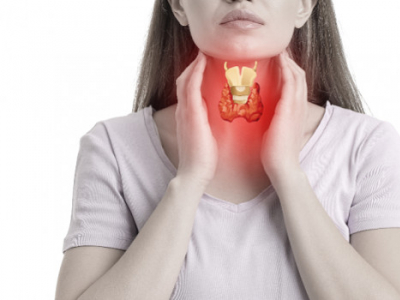
- Thyroid disorders (hypothyroidism or hyperthyroidism) that directly affect thermal regulation
- Certain medications or environmental endocrine disruptors
If you identify with these profiles, the good news is that the nutritional solutions we are going to discuss apply in all these cases, not just in the context of confirmed menopause.
What deficiencies amplify hot flashes ?
This is where micronutrition becomes truly enlightening. According to data from ANSES, 75% of menopausal women have a magnesium deficiency. (3). Magnesium is the major regulator of the autonomic nervous system — the one that precisely controls vasomotor responses like hot flashes. When it is lacking, the hypothalamic thermostat becomes even more unstable.
This is further compounded by frequent deficiencies in zinc (cofactor in the synthesis of sex hormones), in Vitamin B6 (essential for neuro-hormonal regulation during menopause), and in marine omega-3 (whose studies associate insufficient intake with an increased frequency of night sweats). This is why a purely hormonal approach does not solve everything: if micronutrient deficiencies are not addressed, the symptoms persist or quickly relapse after stopping the treatments.

Which algae can really help with hot flashes ?
Let me be direct about a point that is important to me: not all algae are the same for menopause, and confusing them would be a mistake. Each type of algae targets a different mechanism in the context of hot flashes algae micronutrients. It's the smart combination that makes the difference.
Klamath algae (AFA): the most documented plant hormonal ally
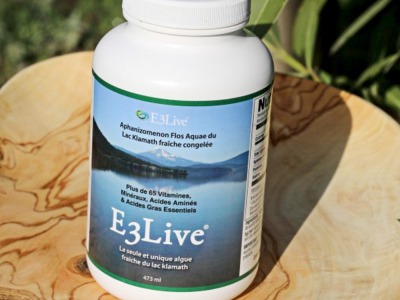
The Klamath — scientifically known as Aphanizomenon flos-aquae (AFA) — is a freshwater microalgae harvested from Klamath Lake in Oregon. To date, it is the most scientifically documented algae for menopausal symptoms, and the Benefits of Klamath algae for menopause are supported by a serious clinical study.
The Klamath contains some AFA plant phytohormones as well as PEA (phenylethylamine), a compound that acts on the brain's opioid receptors and helps regulate mood. It also contains Phycocyanin, a blue-green pigment with remarkable properties.
What truly distinguishes the Klamath is the clinical study published in Minerva Obstetrics & Gynecology in 2010 by Scoglio and his collaborators (1). Thirty menopausal women were followed for 8 weeks: the group receiving 1,600 mg of Klamath per day observed a significant reduction in hot flashes, irritability, and mood disorders compared to the placebo group. It is one of the few controlled studies in this field.
The Klamath bio offered by Biovie is dried at low temperature (DLT process) to preserve its phycocyanin and active compounds intact — a quality criterion that we consider non-negotiable. Learn more about Klamath algae and its regenerative properties.
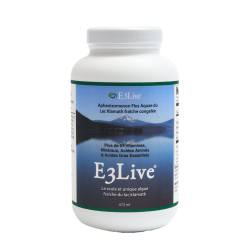
Wild Algae from Klamath Lake
€39.90
"I ordered the frozen Klamath from Biovie, delivered in insulated packaging. The quality is there! I am very satisfied."
— Agnès F., Biovie customer (Google review, 5★)
Spirulina: anti-inflammatory, remineralizing, and rich in phycocyanin
The spirulina hot flashes menopause : here is an association that few people make spontaneously. What interests us here is its phycocyanin menopause inflammation — this characteristic blue pigment that represents 15 to 20% of high-quality spirulina — and its effect on systemic inflammation.
A systematic review published in Marine Drugs In 2020 (PMID: 33348926), a study examined the effects of spirulina on metabolic syndrome in a post-menopausal context, and the results suggest beneficial effects on several markers of this syndrome (2). Furthermore, research by Romay and his collaborators (1998) highlighted the antioxidant and anti-inflammatory properties of phycocyanin (6).
On the mineral side, spirulina boasts an exceptional concentration of iron — 58 mg per 100 g according to the Ciqual data from ANSES (4), which is about 10 times more than red meat. Our organic spirulina shows a phycocyanin level of 15 to 20%, the recommended level to fully benefit from its anti-inflammatory properties.

"Perfect for ordering high-quality spirulina and algae. I completely trust Biovie!"
— Magali O., Biovie customer (Trustpilot review, 5★)
Chlorella: Support for the Elimination System and Hormonal Balance
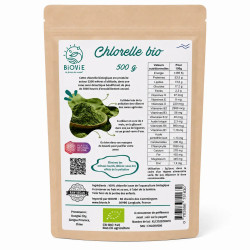
The Chlorella hormonal balance for women deserves a place in this conversation. This green freshwater microalga is particularly rich in chlorophyll and zinc, two elements that contribute to the body's natural elimination mechanisms.
Endocrine disruptors — bisphenol A, organochlorine pesticides, heavy metals — are known to amplify hormonal imbalances. Chlorella supports the body's natural elimination functions*, which can help reduce chronic exposure to these disruptors.
*A varied and balanced diet and a healthy lifestyle are important. The beneficial effect is achieved with regular consumption of organic chlorella as part of a diverse diet.
Wakame: Champion of Plant-Based Calcium for Menopause
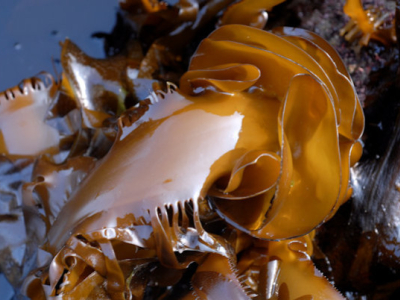
Wakame is often used in cooking, but few people realize its exceptional nutritional richness: 1,300 mg of plant-based calcium per 100 g, according to the Ciqual data from ANSES (4), which is 13 times more than cow's milk. It is a remarkable source of calcium wakame menopause osteoporosis.
The drop in estrogen accelerates bone demineralization and also destabilizes the autonomic nervous system involved in vasomotor responses. The magnesium seaweed menopause Wakame directly intervenes in this regulation.
A tablespoon of rehydrated wakame in a salad provides more calcium than a yogurt, in a naturally absorbable plant-based form. Discover wakame, an exceptional source of plant-based calcium
And since we're talking about brown algae, let's mention the fucoidan, a sulfated polysaccharide found in algae such as wakame, which is the subject of increasing studies for its antioxidant properties. Learn more about fucoidan from brown seaweed
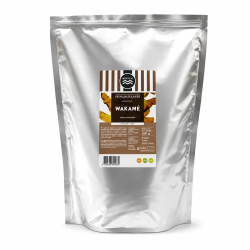
Dehydrated Curly Wakame Seaweed
€21.44 €26.80
Dulse: The Forgotten Trace Elements for Hormonal Balance
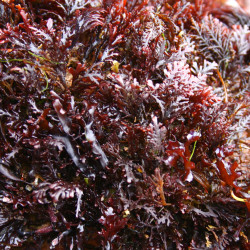
Dulse (Palmaria palmata) is the algae of the Marine plasma trace elements menopause : zinc, selenium, copper. These three micronutrients are essential enzymatic cofactors for the synthesis of sex hormones.
The zinc female hormones menopause involved in the transformation of androgens into estrogens. A zinc deficiency reduces the efficiency of this residual conversion, which worsens vasomotor symptoms.
Dulse can be easily incorporated into everyday dishes: crumbled over an omelet, in a soup, mixed with legumes. Discover Trace elements and their role in hormonal balance.
€9.50
AVAILABLE MI SEPTEMBER
Organic Fresh Dulse Seaweed
Which micronutrients are essential during menopause ?
Magnesium: The Number 1 Mineral Against Hot Flashes
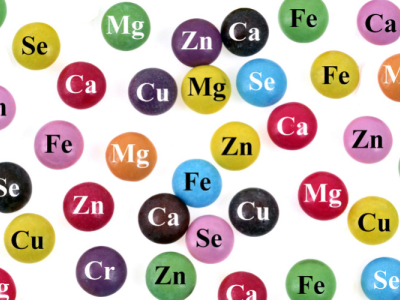
Honestly, if I had to focus on just one micronutrient to prioritize during a natural menopause hot flash treatment, it would be magnesium. ANSES (3) estimates that 75% of menopausal women have a deficiency — this is not an anecdotal figure, it is a public health reality.
Magnesium is involved at several levels in hot flashes: it regulates the sensitivity of receptors to noradrenaline (which trigger vasodilation), it modulates the parasympathetic nervous system, and it participates in the metabolism of tryptophan into serotonin.
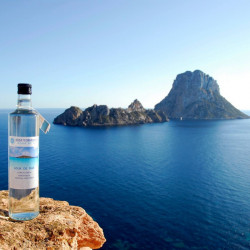
What distinguishes the magnesium seaweed menopause compared to synthetic supplements, it is its bioavailability. In ionic form, as in Quinton marine plasma, the minerals promote optimal assimilation. Isotonic marine plasma contributes to the remineralization of the body and the maintenance of electrolyte balance.
*A varied and balanced diet and a healthy lifestyle are important.
Zinc and selenium: enzymatic cofactors of hormonal synthesis
The zinc female hormones menopause is a cofactor of 5-alpha-reductase and aromatase, two key enzymes in the conversion of androgens into estrogens. Selenium is essential for the synthesis of thyroid hormones, which play a direct role in thermoregulation. Dulse and spirulina are excellent sources of these two minerals in their natural form.
Vitamins B6 and B12: Neuro-hormonal Regulation
The Vitamin B6 hormonal regulation menopause is directly involved in the synthesis of serotonin and dopamine. The EFSA (7) also acknowledges that vitamin B6 contributes to the normal functioning of the nervous system and the regulation of hormonal activity*. Seaweeds (nori, spirulina) provide significant amounts of natural vitamin B6.
*The beneficial effect is obtained within the framework of the recommended daily intake.
Marine-derived omega-3s: for night sweats
The omega-3 algae hot flashes : a serious lead. A Canadian study from 2013 observed a reduction in the frequency of hot flashes in women supplemented with omega-3. Seaweed provides ALA, a plant-based precursor of omega-3. For a more direct effect on the night sweats seaweed solution, microalgae rich in DHA/EPA are a top vegan source. How to naturally regain quality sleep
How to combine algae and micronutrients? A progressive 4-week protocol
The natural remedy for hot flashes what we recommend at Biovie is designed to be progressive — no dietary upheaval, just simple additions that naturally integrate.
Week 1-2: Start gently (spirulina + wakame in cooking)
- Morning Anti-Hot Flash Smoothie : 1 c.c. spirulina powder + plant-based milk + banana + fresh ginger.
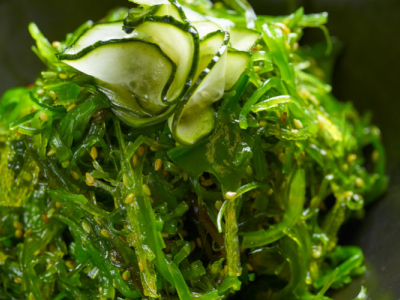
- Remineralizing wakame salad : rehydrated wakame for 10 minutes, seasoned with sesame, lemon, and olive oil. Source of calcium wakame menopause osteoporosis and bioavailable magnesium.
- Isotonic marine plasma : one ampoule in the morning on an empty stomach, for the Marine plasma trace elements menopause in ionic form.
Most of our clients report an improvement in sleep quality by the second week, even before incorporating Klamath.
Week 3-4: integrate the Klamath and optimize the protocol
Starting from the third week, introduce Klamath. The dose studied in Scoglio's clinical trial (2010) was 1,600 mg/day, which is about 1 teaspoon of powder. The easiest way is to dilute it in apple juice in the morning.
The full protocol recommended by Biovie:
- Morning : 1 c.c. Klamath in apple juice + 1 ampoule of isotonic marine plasma
- Lunch or dinner : wakame or dulse in the main dish (1-2 c.s.)
- Snack or breakfast : spirulina smoothie (1 to 2 g of powder or 4-6 tablets)
The first measurable effects generally appear after 3 to 6 weeks regular intake.
→ Learn more about Klamath, the algae of regeneration
Which algae for which symptom ?
Summary of the approach menopause dietary supplement hot flashes :
- Hot flashes + hormonal instability → Klamath (AFA phytohormones, PEA, Scoglio study 2010)
- Deep fatigue + inflammation → Spirulina (phycocyanin, iron 58 mg/100g, vitamin B6)
- Demineralization + bone fragility → Wakame (calcium 1,300 mg/100g, magnesium)
- Endocrine disruptors + hormonal balance → Chlorella (chlorophyll, zinc, elimination support)
- Global hormonal balance + rare trace elements → Dulse (zinc, selenium, copper)
- Multiple mineral deficiencies → Marine plasma (all bioavailable ionic minerals)
Are there any precautions to know before starting ?
Thyroid and iodine: what every woman should know about seaweed
I deliberately address this topic where many sites avoid it — and it is precisely this transparency that sets our approach apart at Biovie.
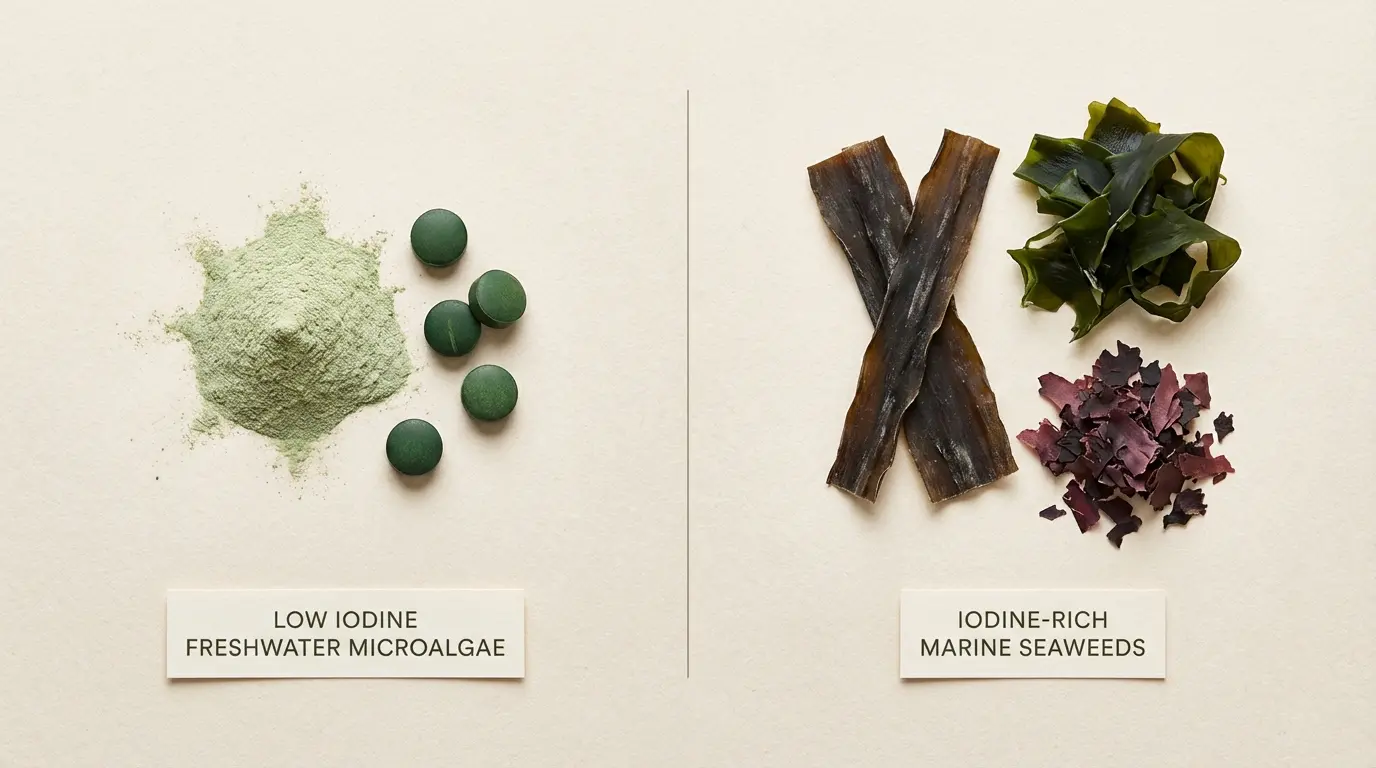
- Freshwater microalgae (spirulina, Klamath, chlorella): very low in iodine. They can be consumed without restriction by individuals undergoing thyroid monitoring, at usual doses.
- Brown seaweed (kombu, fucus, wakame, dulse): contain moderate to high amounts of iodine. Wakame and dulse, in reasonable culinary quantities (1-2 c.s./jour), are generally compatible with a healthy thyroid. Kombu and fucus require real caution in cases of thyroid pathology.
Demystifying the relationship between seaweed iodine and the thyroid
Who should avoid certain algae or consult first ?
- Anticoagulant treatment (spirulina is rich in vitamin K1)
- Phenylketonuria (spirulina contains phenylalanine)
- Thyroid pathology confirmed, before incorporating seaweed at a therapeutic dose
- Pregnancy or breastfeeding (therapeutic dosages are not established)
For all of the natural treatments for menopause, consult our comprehensive guide.
Conclusion: a systemic approach, not a miracle pill
In 18 years spent selecting certified organic algae at Biovie, co-writing Seaweed in everyday life (Gallimard, 2024) with Aurélie, and after receiving feedback from thousands of clients, I have acquired a deep conviction: the menopausal hot flashes are not an immutable hormonal fate.
Behind this symptom often lie specific micronutrient deficiencies — magnesium, zinc, B vitamins, omega-3s — that seaweed can help address as part of a varied diet*. Sage and isoflavones act on phytoestrogens. Seaweed works differently: on deep remineralization, systemic inflammation, and the enzymatic cofactors of hormone synthesis. Both approaches can complement each other.
Honestly, if you haven't explored this path yet, the 4-week protocol described in this article is an accessible starting point. To try it is to adopt it !
A varied and balanced diet and a healthy lifestyle are important for maintaining good health.
→ Order the Klamath bio Biovie — low-temperature drying preserved
FAQ — Frequently Asked Questions about Algae and Hot Flashes
Which algae is the most effective against hot flashes ?
The Klamath (AFA - Aphanizomenon flos-aquae) is the most scientifically documented algae for menopause symptoms. A clinical study published in Minerva Obstetrics & Gynecology (2010) showed that an 8-week supplementation at 1,600 mg/day contributed to a significant reduction in hot flashes, irritability, and mood disorders compared to a placebo, in 30 menopausal women. Spirulina is an interesting supplement for its anti-inflammatory properties through phycocyanin. For a comprehensive approach, combining Klamath + spirulina + wakame (calcium) better supports overall balance than each algae taken separately.
What deficiency causes hot flashes ?
Hot flashes are primarily triggered by the drop in estrogen levels, which disrupts the hypothalamic thermostat. However, several deficiencies amplify this mechanism: magnesium (deficient in 75% of postmenopausal women according to ANSES), zinc (a cofactor in the synthesis of sex hormones), vitamin B6 (neuro-hormonal regulation), and marine omega-3s (reduction of night sweats). Seaweeds—wakame, dulse, and marine plasma—are particularly bioavailable sources of these minerals in ionic form.
Is it possible to have hot flashes without being menopausal ?
Yes. Hot flashes without menopause occur in connection with intense and prolonged stress, early hormonal fluctuations from ages 38-42, magnesium or zinc deficiencies, thyroid disorders, certain medications, or a pro-inflammatory diet. In all these cases, nutritional solutions based on algae and micronutrients apply, regardless of menopause.
What dose of spirulina per day to help during menopause ?
Studies generally use doses of 1 to 3 grams per day. For a maintenance regimen, 1 to 2 grams (1-2 teaspoons of powder, or 4-6 tablets) per day for a minimum of 4 weeks is a reasonable starting point. Start at 1 g/day the first week, then gradually increase. It is essential to choose a certified organic spirulina with a phycocyanin content of at least 15%.
Are algae dangerous for the thyroid during menopause ?
It depends on the chosen algae. Freshwater microalgae (spirulina, Klamath, chlorella) contain very little iodine and are generally safe for the thyroid at recommended doses. Brown seaweeds like kombu or fucus are rich in iodine and should be consumed with caution in cases of thyroid pathology. Wakame and dulse contain moderate amounts of iodine, compatible with reasonable consumption. If in doubt, consult your doctor.
Do omega-3s really help with hot flashes ?
Omega-3s — particularly EPA — can help reduce the frequency of night sweats associated with menopause. Seaweeds (wakame, dulse, nori) provide alpha-linolenic acid (ALA), a precursor to omega-3s. For a more direct effect on vasomotor symptoms, microalgae oils rich in DHA/EPA offer a vegan alternative to fish oils.
How long does it take to see the effects of algae on hot flashes ?
The initial effects are generally felt after 3 to 6 weeks of regular supplementation. The study on Klamath (Scoglio et al., 2010) observed significant changes after 8 weeks. Consistency is more important than dosage. The recommended protocol is a minimum duration of 4 weeks to assess the initial results, with a complete evaluation at 8 weeks.
Bibliography
- Scoglio S. et al. — "Effects of Klamath Algae extract on psychological disorders and depression in menopausal women: a pilot study" — Minerva Obstet Gynecol, 2010 Oct. [essai clinique contrôlé, n=30] PubMed
- Mazzocchi A. et al. — "Are There Any Beneficial Effects of Spirulina Supplementation for Metabolic Syndrome Components in Postmenopausal Women?" — Mar Drugs, 2020 Dec;18(12):651. PMID: 33348926 [revue systématique] PubMed
- ANSES — Nutritional references for vitamins and minerals — National Agency for Health Security, updated 2024. anses.fr
- Ciqual — Nutritional composition table of foods — ANSES 2024. ciqual.anses.fr
- INSERM — Epidemiological data on menopause in France — National Institute of Health and Medical Research. inserm.fr
- Romay C. and others. — "Antioxidant and anti-inflammatory properties of C-phycocyanin from blue-green algae" — Inflamm Res, 1998;47(1):36-41 [étude observationnelle]
- EFSA — Scientific Opinion on Dietary Reference Values for Calcium — EFSA Journal, 2015;13(5):4101. [autorité réglementaire européenne]
Update: March 2026. Article approved by Éric Viard, founder of Biovie and engineer ISTOM, co-author of " Seaweed in everyday life "(Gallimard, 2024) —" Best cookbook in the world, Gourmand Cookbook Awards 2025, and Best cookbook in France, National Academy of Cuisine 2025.