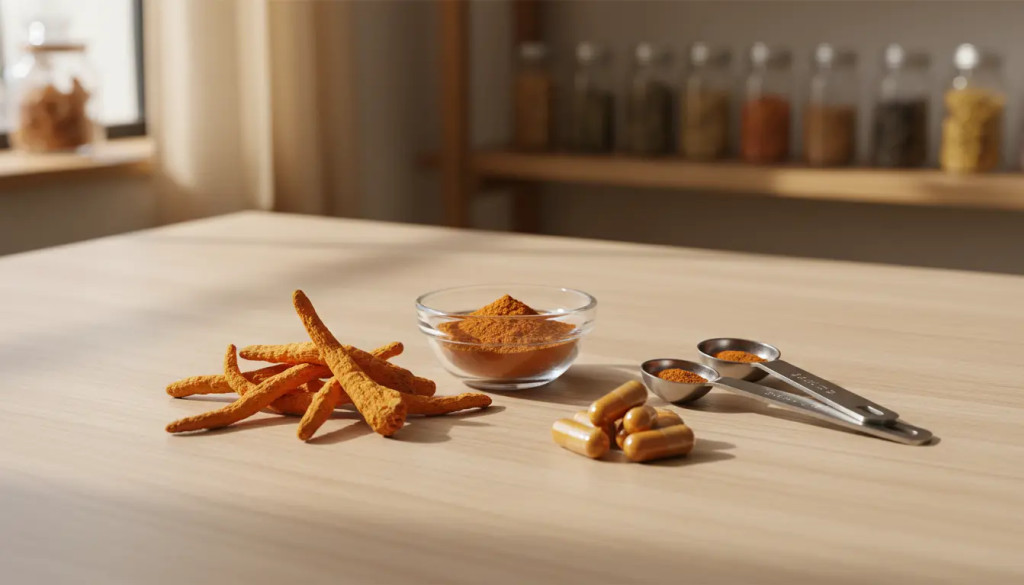
This is where many get lost, and I will explain why. One gram of raw powder is not equivalent to one gram of concentrated extract. Here's what studies say about cordyceps dosage:
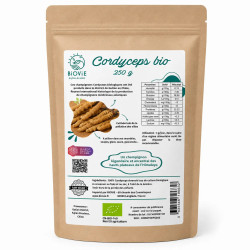
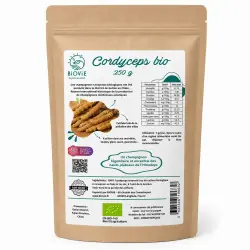
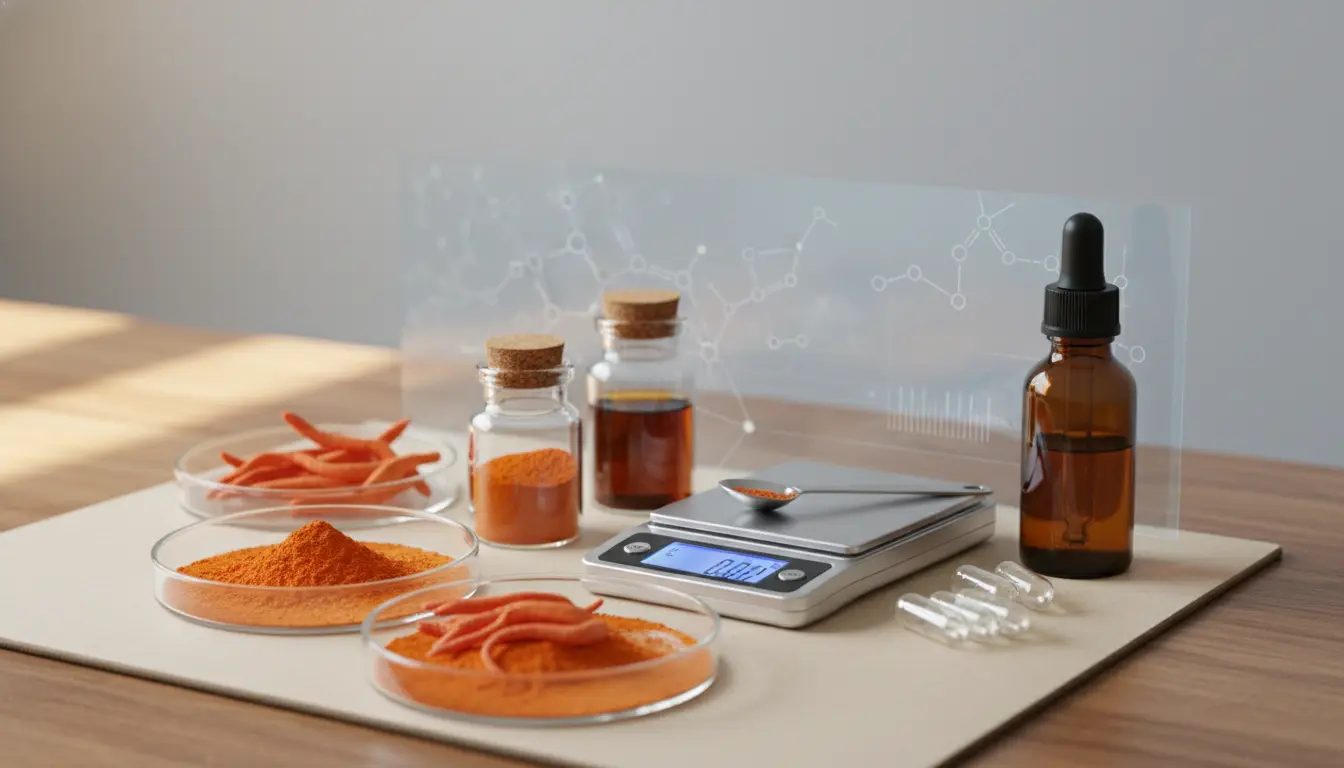
Raw Cordyceps Powder (what we offer at Biovie): Count between 3 and 10 grams per day, ideally divided into 2 to 3 daily doses. It's the least concentrated form, so more is needed to achieve measurable effects. This daily amount of cordyceps powder is what is used in traditional studies.
Standardized Extract: Here, we're talking about 500 mg to 1500 mg per day, or 1 to 3 doses. It's much more concentrated because the active ingredients have been extracted and concentrated.
500 mg Capsules: Generally, recommendations are around 2 to 6 cordyceps capsules per day, taken in the morning and at noon. It's the most convenient form for maintaining a precise dosage.
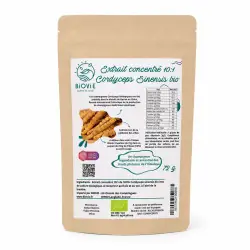
20:1 Extract: This ratio means that 1 gram of extract is equivalent to 20 grams of raw mushroom. Therefore, a cordyceps dosage of 500 mg to 1000 mg per day is more than sufficient.
Mother Tincture: For this liquid form, we're talking about 1 to 2 ml per day, morning and evening.
Dosage According to the Quality of the Product
And here's a point I find crucial and often overlooked. Not all cordyceps are created equal. A quality standardized extract will contain a guaranteed concentration of active ingredients, particularly cordycepin and polysaccharides (ideally > 30%).
Clearly, this is where you need to be vigilant. A quality concentrated extract often ends up being cheaper than a low-grade powder that requires large quantities. If you're looking for other natural solutions against fatigue, discover our 5 tips to fight fatigue.
Summary of Recommended Dosages
- Raw Powder 3 to 6 g per day in 2-3 doses
- Standardized Extract 500 to 1500 mg per day in 1-3 doses
- 500 mg Capsules 2 to 6 capsules per day, morning and noon
- 20:1 Extract 500 to 1000 mg per day in 1-2 doses
- Mother Tincture 1 to 2 ml per day, morning and evening
When to Take Cordyceps: Optimal Timing
The question of timing is just as important as the quantity. And here, science gives us clear indications on when to take cordyceps.
Why Prefer the Morning?
Cordyceps has an energizing effect that boosts the production of ATP, the energy molecule of our cells. In short, it gives you a natural boost. Therefore, taking it in the morning allows you to benefit from this effect throughout the day. If you're looking to better manage your daily life, also discover our 11 tips for managing stress well.
Cordyceps and Sports: The Ideal Timing
If you are an athlete, timing becomes even more strategic. Studies show that taking cordyceps before training, 30 to 60 minutes before exertion, optimizes its effects on performance.
And here, I must tell you an anecdote that truly propelled scientific interest in this mushroom. At the 1993 World Athletics Championships, two Chinese athletes broke no less than 3 world records in the 1500 m, 3000 m, and 10,000 m events. Initially suspected of doping, they revealed consuming daily cordyceps decoctions prepared by their coach. This event caused a sensation in the Western scientific community!
For endurance sports cordyceps dosage, studies recommend regular intake for at least 6-8 weeks for measurable results on VO2 max.
Can You Take Cordyceps in the Evening?
So, let's be clear on this question of cordyceps morning or evening: for most people, I advise against taking it after 4 PM. Does cordyceps in the evening prevent sleep? Yes, the stimulating effect can disrupt sleep in some individuals. Of course, we are not all the same in this regard; some people will have no issues. But as a precaution, it's better to favor morning doses.
Dosage Protocols According to Your Goal
Here is the part that interests our clients the most: how to adapt the dosage to your specific needs? Because obviously, you don't take the same amount whether you're looking for a daily energy boost or an improvement in sports performance.
Dosage for Energy and Chronic Fatigue
If you are dealing with persistent fatigue, here is what studies recommend for chronic fatigue cordyceps dosage:
- Dosage: 1 to 3 g of extract per day, 3 to 10 g of powder per day
- Duration of Treatment: At least 2 to 3 months
- Time of Intake: In the morning
The first effects, notably better mental clarity and an energy boost, generally appear within the first 2 weeks. But for lasting results on chronic fatigue, plan for at least 2 months of regular supplementation.
For optimal synergy, you can combine cordyceps with spirulina, particularly effective against fatigue thanks to its richness in iron and B vitamins.
This is probably the most scientifically documented use of cordyceps. A study published in the Nutrients Journal in 2020 showed an 11% improvement in VO2 max after 6 to 8 weeks of supplementation. Another 8-week study demonstrated that athletes taking cordyceps limited their power drop to 8.9% compared to 17% for the placebo group.
- Dosage: 3 to 6 g of powder or equivalent in extract
- Duration: Minimum 1 week before a competition, ideally 6-8 weeks
- Timing: 30 to 60 minutes before exercise
- Recovery: 500 mg three times a day during recovery phases
Cordyceps sinensis: Which Dosage to Choose?
This is a question we are often asked: should you choose cordyceps sinensis or militaris?
In reality, cordyceps militaris is not yet accepted in the European Union, it is at the novel food stage. Only Cordyceps sinensis is authorized.
Cordyceps sinensis (CS-4)
- Traditional historical form
- Reference in clinical studies
- Dosage: 1 to 3 g of extract/day or 3 to 10 g of powder/day
- Grown by fermentation (mycelium)
Duration of Treatment and Progression of Effects
Patience is required with cordyceps, as with most adaptogenic mushrooms. Here's what to expect:
Progression of Effects Over Time
- Week 1-2: Initial sensations (energy, mental clarity)
- Week 3-4: More pronounced and regular effects
- Week 6-8: Optimal measurable results (VO2 max, endurance)
- Month 2-3: Lasting benefits on chronic fatigue
For long treatments of 2 to 3 months, I recommend a one-week break every 4 weeks. This prevents the body from getting used to it and maintains the effectiveness of the supplementation.
Contraindications and Dosage Precautions
Even though cordyceps is very well tolerated, some precautions are necessary:
⚠️ Absolute Contraindications
Pregnant or breastfeeding women: As a precaution, supplementation is not recommended due to insufficient studies on this population.
People on anticoagulants: Cordyceps may have a slight anticoagulant effect that could enhance treatments.
Before surgery: Stop taking it at least 2 weeks before a scheduled surgical procedure.
Diabetics on treatment: Cordyceps may have a hypoglycemic effect. Monitoring blood sugar levels is recommended.
Drug Interactions
Besides anticoagulants and antidiabetics, be cautious if you are taking immunosuppressants. In any case, if you are on medical treatment, talk to your doctor or pharmacist before starting a course.
Possible Side Effects
The good news is that cordyceps is very well tolerated at recommended doses. Toxicology studies show excellent safety, with a safe dose of 3 g per day and a lethal dose (LD50) greater than 5g per kg of body weight, providing a considerable safety margin.
Reported side effects are rare and generally mild:
- Dry mouth
- Mild digestive issues (nausea, diarrhea)
- Occasional headaches
These effects usually disappear by reducing the dose or taking the supplement with a meal.
Sinensis, militaris, CS-4: which strain are you actually buying?
This is the question that determines a product's quality, well before dosage. Three names circulate, and they don't cover the same reality at all.
Cordyceps sinensis: the historic species, impossible to cultivate
This is the wild cordyceps from the Tibetan plateau, harvested for centuries - and the most problematic. Its harvesting weighs heavily on wild populations, and above all: no one has ever managed to reproduce its full life cycle in cultivation. A practical consequence worth knowing: a product labelled "cultivated Cordyceps sinensis" is necessarily something else - mycelium on a grain substrate, or a different species sold under a flattering name.
Cordyceps militaris: cultivable, but not authorised in Europe
A related species, found even in Europe, this one is fully cultivable, fruiting bodies included. It's also markedly richer in cordycepin. But it falls under the EU's Novel Food regulation, and that authorisation has not been granted to date: selling it as a food supplement in the Union is therefore not compliant. A product that proudly displays it on its label raises more questions than it answers.
CS-4: the strain clinical research is built on
CS-4 is a mycelium isolate derived from wild sinensis, cultivated by fermentation since the 1980s. Four reasons make it, in our view, the most credible option today:
- It's compliant: its consumption history predating 1997 exempts it from the Novel Food procedure.
- It's standardised: fermentation gives a constant composition, whereas the wild form varies enormously by origin and year.
- It's the strain behind the studies: the vast majority of clinical trials on cordyceps were conducted with CS-4. The dosages detailed above come from there.
- It takes nothing from the wild, unlike wild harvesting.
What's actually active in cordyceps
Four families of compounds keep coming up in the literature, and it's useful to know what each one does:
- Cordycepin, the most studied molecule, related to adenosine - hence its involvement in energy metabolism pathways.
- Polysaccharides, particularly beta-glucans, which play a role in immune modulation.
- Adenosine and its derivatives, linked to cellular energy production.
- Sterols, precursors of certain hormones.
This detail has a very concrete consequence when buying: a titrated extract states its active-ingredient content, while a plain mycelium-on-grain powder states nothing at all. That's where the gap in price - and in effectiveness - opens up.
How to Choose a Quality Cordyceps?
This is a point I always emphasize with our clients. The quality of the product directly determines its effectiveness and the necessary dosage.
Essential Quality Criteria
Concentration of Active Ingredients: If you are taking extracts rather than raw forms, look for standardized extracts indicating their polysaccharide content (ideally > 30%) and/or cordycepin.
Type of Cultivation: Favor organic cultivation on plant substrates (rice, cereals) rather than on caterpillars. It's more ethical, vegan, and often of better quality.
Origin and Traceability: The best cordyceps come from controlled cultures with complete and integral traceability, which is the case with Biovie.
Certifications to Look For
- Mandatory organic certification
Otherwise, at a minimum:
- Independent laboratory analyses
- Absence of heavy metals and pesticides
- Mention of active ingredient content
At Biovie, we pay particular attention to these criteria for our selection of superfoods and mushrooms.
Find our complete sheet on Cordyceps.
After 18 years of experience in this field, we have learned to identify serious suppliers. If you are interested in other medicinal mushrooms, discover our complete guide on Lion's Mane or the benefits of Lion's Mane for memory.
Responses to Common Objections
I also wanted to address the questions and concerns we hear regularly.
"Does it really work?" More than 30 clinical studies on humans and over 1300 studies in total. Official recognition in China since 2002. Yes, the effects are scientifically documented.
"I'm afraid of side effects." Excellent tolerance at recommended doses is one of the strengths of cordyceps. Side effects are rare and mild.
"Is it made with insects?" This question comes up often! Modern supplements are cultivated on plant substrates (rice), they are 100% vegan and contain no insects.
In Summary
There you go, I hope this guide will help you see more clearly about the dosage of cordyceps. To recap the essential points:
- Typical Dosage: 1 to 3 g of extract or 3 to 10 g of powder per day
- Ideal Time: In the morning or before training
- Duration of Treatment: Minimum 6 to 8 weeks for optimal results
- First Effects: As early as 2 weeks
- Choose Quality: Standardized extracts with guaranteed concentration
Cordyceps is one of those adaptogenic mushrooms that can really make a difference in your daily life, whether for energy, sports performance, or general well-being. As always with superfoods, consistency is key.
Discover Our Selection of Energizing Superfoods
If you have other questions, feel free to contact us. And if you want to explore other medicinal mushrooms for cognition, we have prepared similar guides on the blog.
To try it is to adopt it!
FAQ - Your Questions About Cordyceps Dosage
How much cordyceps to take per day?
The recommended amount varies depending on the form of the product: 1 to 3 grams of standardized extract or 3 to 6 grams of raw powder per day. For 500 mg capsules, count 2 to 6 capsules per day. The more concentrated the product is in active ingredients, the lower the necessary dose.
When to take cordyceps, morning or evening?
The morning is the optimal time because cordyceps has an energizing effect that stimulates ATP production. Athletes can take it 30 to 60 minutes before training. Avoid taking it after 4 PM as it may disrupt sleep for some people.
How long does a cordyceps course last?
An effective course lasts a minimum of 6 to 8 weeks to observe measurable results. The first effects (energy, mental clarity) often appear within 2 weeks. Plan a one-week break every 4 weeks for long courses of 2 to 3 months.
Is cordyceps dangerous?
No, cordyceps is very well tolerated at recommended doses. No toxicity has been observed even at high doses (LD50 >5g/kg). Side effects are rare: dry mouth, mild digestive issues. However, it is not recommended for pregnant women and people on anticoagulants.
Can you take cordyceps every day?
Yes, daily intake is recommended for optimal effects. Regularity is key: the benefits accumulate over time. Favor courses of 6 to 12 weeks with a 2-week break between each cycle.
Cordyceps sinensis or militaris: which one to choose?
Cordyceps militaris contains up to 90 times more cordycepin (the main active ingredient) than sinensis. It is also cultivated on a plant-based substrate (vegan) and is cheaper. For most uses, militaris is an excellent choice. Sinensis (CS-4) remains the reference for clinical studies.
How long before feeling the effects?
The first effects (boost in energy, better concentration) generally manifest in 1 to 2 weeks. The effects on sports endurance (improvement of VO2 max by +11%) require 6 to 8 weeks of regular supplementation according to clinical studies.
Update: March 2026. Article validated by Éric Viard, founder of Biovie and engineer at ISTOM, co-author of “Algues au quotidien” (Gallimard, 2024) - Best Cookbook in the World, Gourmand Cookbook Awards 2025, and Best Cookbook in France, National Culinary Academy 2025.