Our customers often ask me about cordyceps, and in particular about the amount to take. Frankly, I understand the confusion: between 500 mg capsules, 20:1 extracts, raw powders... how do you find your way? It is precisely to clarify all this that I wanted to prepare this practical guide for you.
Cordyceps: the recommended daily dose
Before going into detail, let's lay the groundwork. The cordyceps we offer is sold as a food supplement. This mushroom has been known for centuries in Tibet and China.
This is where many people get lost. A gram of powder is not equivalent to a gram of concentrated extract, and each product states its own daily dose on its label: that is the one that counts.
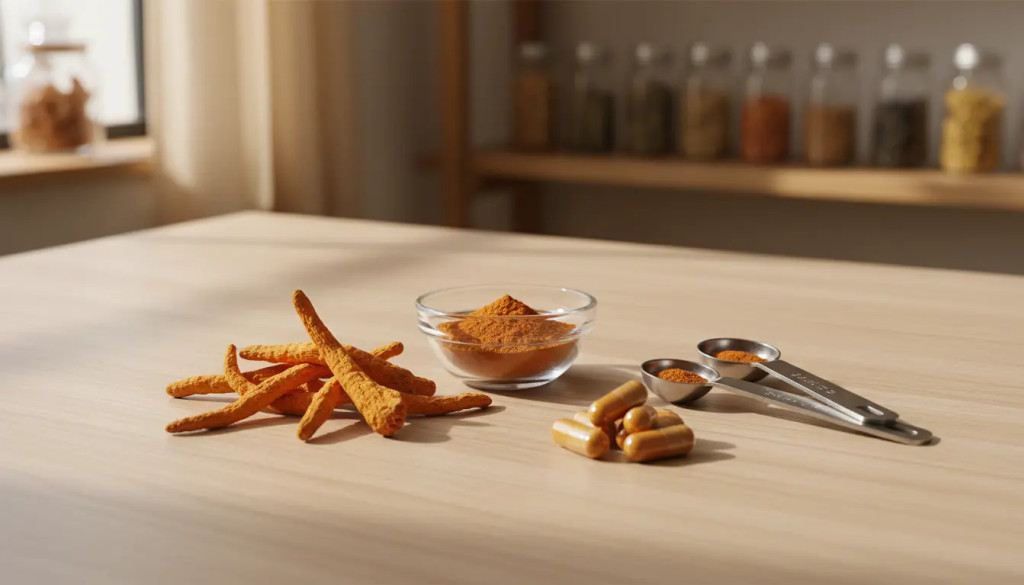
Cordyceps powder (what we offer on Biovie): the recommended daily dose is 1 g a day, to be diluted in a glass of water or juice. Do not exceed 3 g a day.
Standardised extract: more concentrated, it is dosed according to its concentration. For our 10:1 extract, the recommended daily dose is also 1 g, not exceeding 3 g. For any other product, follow the dose stated on the label.
Capsules: handy for sticking to a precise dose; again, follow the daily dose stated on the label.
20:1 extract: this ratio means that 1 gram of extract corresponds to 20 grams of raw mushroom. Refer to the daily dose stated by the manufacturer.
Mother tincture: liquid form, to be used according to the manufacturer's instructions.
Product quality
And here is a point I find crucial and often overlooked. Not all cordyceps are equal. A quality standardised extract states its cordycepin and polysaccharide content, which makes it possible to compare products with one another.
Clearly, this is where you need to be vigilant: compare the labels, the stated content and the origin before choosing.
Summary
Cordyceps powder: 1 g a day, not exceeding 3 g
10:1 extract: 1 g a day, not exceeding 3 g
Capsules: according to the dose stated on the label
20:1 extract: according to the dose stated on the label
Mother tincture: according to the manufacturer's instructions
When should you take cordyceps?
The question of when to take it comes up often.
In the morning, quite simply
Many of our customers take it in the morning, at breakfast, in a glass of water or juice: it is easy to fit into a routine and easy not to forget.
Can you take cordyceps in the evening?
There is no set time. Some people prefer to take it in the morning, others during a meal: the main thing is to respect the daily dose of 1 g.
Cordyceps sinensis or militaris?
This is a question we are often asked: should you choose cordyceps sinensis or militaris? In reality, cordyceps militaris is not yet accepted in the European Union, it is at the novel food stage. Only Cordyceps sinensis is authorised.
Cordyceps sinensis (CS-4)
Historical traditional form
Recommended daily dose of our powder: 1 g, not exceeding 3 g
Grown by fermentation (mycelium)
Precautions for use
A few precautions are called for:
⚠️ Absolute contraindications
Pregnant or breastfeeding women: As a precaution, supplementation is not recommended in the absence of sufficient studies in this population.
People on anticoagulants: ask your doctor's advice before taking any.
Before surgery: Stop taking it at least 2 weeks before scheduled surgery.
Diabetic people on treatment: ask your doctor's advice before taking any.
Ongoing treatments
If you take anticoagulants, antidiabetics or immunosuppressants, or more broadly if you are on medical treatment, talk to your doctor or pharmacist before starting.
Possible side effects
Respect the recommended daily dose of 1 g and do not exceed 3 g a day.
The reported side effects are rare and generally mild:
Dry mouth
Mild digestive upset (nausea, diarrhoea)
Occasional headaches
These effects generally disappear on reducing the dose or taking the supplement with a meal.
Sinensis, militaris, CS-4: which strain are you really buying?
This is the question that decides the quality of a product, well before the dosage. Three names are in circulation, and they do not cover the same reality at all.
Cordyceps sinensis: the historical species, impossible to cultivate
This is the wild cordyceps of the Tibetan plateau, harvested for centuries, and the most problematic. Its harvest weighs heavily on wild populations, and above all: nobody has ever managed to reproduce its full cycle in culture. A practical and useful consequence to know: a product labelled "cultivated Cordyceps sinensis" is necessarily something else, mycelium on a cereal substrate, or a different species sold under a flattering name.
Cordyceps militaris: cultivable, but not authorised in Europe
A neighbouring species, also present in Europe, this one can be cultivated entirely, fruiting bodies included. It is also markedly richer in cordycepin. But it falls under the European Novel Food regulation, and this authorisation has not been granted to date : its sale as a food supplement in the Union is therefore not compliant. A product that proudly displays it on its label raises more questions than it answers.
CS-4: the strain cultivated by fermentation
CS-4 is a mycelium isolate derived from wild sinensis, cultivated by fermentation since the 1980s. Several reasons make it, in our eyes, the most serious option today:
It is compliant : its history of consumption before 1997 exempts it from the Novel Food procedure.
It is standardised : fermentation gives a constant composition, whereas the wild varies enormously according to origin and year.
It takes nothing from nature, unlike wild harvesting.
What cordyceps contains
Four families of compounds are described in its composition:
Cordycepin, the most studied molecule, related to adenosine.
Polysaccharides, in particular beta-glucans.
Adenosine and its derivatives.
Sterols.
This detail has a very concrete consequence when buying: a titrated extract states its content of these compounds, a simple mycelium-on-grain powder states nothing at all. This is where the price gap opens up.
How to choose a quality cordyceps?
This is a point I always insist on with our customers: the quality and traceability of the product.
Essential quality criteria
Stated content: if you choose an extract, look for a standardised extract that states its polysaccharide and/or cordycepin content.
Type of cultivation: Favour organic cultures on a plant substrate (rice, cereals) rather than on caterpillars. It is more ethical, vegan, and often of better quality.
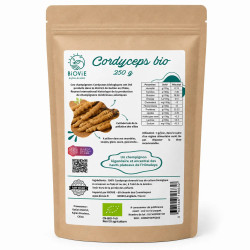
Origin and traceability: The best cordyceps come from controlled cultures with complete and full traceability, which is our case at Biovie.
Certifications to look for
Organic certification is imperative Otherwise, at a minimum:
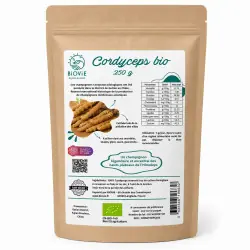
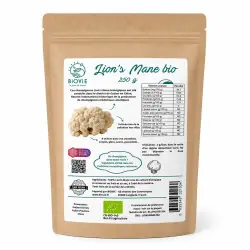
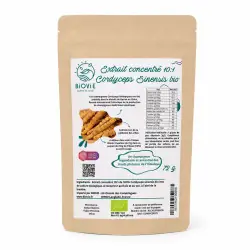
Two mushrooms make up this range: Cordyceps (Ophiocordyceps sinensis), offered as a food supplement in powder form, and Lion's Mane (Hericium erinaceus, crinière de lion), an edible mushroom in powder form to add to your drinks and preparations. Each is available as a plain powder or as a 10:1 concentrated extract, from certified organic cultivation. The composition, doses and precautions for use are given on each product page., 6
products
At Biovie, we pay particular attention to these criteria for our selection of mushrooms. Find our full Cordyceps page.
After 18 years of experience in this field, we have learned to identify serious suppliers.
Answers to common objections
I also wanted to answer the questions and hesitations we hear regularly.
"Does it really work?" More than 30 clinical studies in humans and more than 1300 studies in total. Official recognition in China since 2002. Yes, the effects are scientifically documented.
"I am afraid of side effects." Excellent tolerance at the recommended doses is one of the strengths of cordyceps. Side effects are rare and mild.
"Is it made with insects?" This question comes up often! Modern supplements are grown on a plant substrate (rice), they are 100% vegan and contain no insects.
In summary
Well, I hope this guide will help you see more clearly on cordyceps dosage. To recap the essential points:
Daily dose: 1 g a day, not exceeding 3 g
How: in a glass of water or juice
Precautions: not recommended during pregnancy and breastfeeding, medical advice if on treatment
Cordyceps is a food supplement: it is not a substitute for a varied and balanced diet and a healthy lifestyle. Respect the daily dose and keep it out of the reach of young children.
A question?
If you have any other questions, do not hesitate to contact us.
FAQ, Your questions on cordyceps dosage
How much cordyceps should you take per day?
The recommended daily dose of our cordyceps powder, like our 10:1 extract, is 1 g a day, in a glass of water or juice. Do not exceed 3 g a day. For any other product, follow the dose stated on its label.
When should you take cordyceps, morning or evening?
There is no set time. Many of our customers take it in the morning, at breakfast, which helps not to forget it. The main thing is to respect the daily dose of 1 g.
Is cordyceps dangerous?
Respect the recommended daily dose of 1 g, not exceeding 3 g. The reported adverse effects are rare: dry mouth, mild digestive upset. Cordyceps is not recommended for pregnant or breastfeeding women; ask your doctor's advice if you take anticoagulants or are on treatment.
Can you take cordyceps every day?
Yes, provided you respect the recommended daily dose of 1 g and do not exceed 3 g a day. A food supplement is not a substitute for a varied and balanced diet and a healthy lifestyle.
Cordyceps sinensis or militaris: which to choose?
Cordyceps militaris falls under the Novel Food regulation and is not currently authorised as a food supplement in the European Union. Only Cordyceps sinensis is authorised; it is now cultivated by fermentation, notably in the form of the CS-4 strain.





Sinensis, militaris, CS-4: which strain are you really buying?
This is the question that decides the quality of a product, well before the dosage. Three names are in circulation, and they do not cover the same reality at all.
Cordyceps sinensis: the historical species, impossible to cultivate
This is the wild cordyceps of the Tibetan plateau, harvested for centuries, and the most problematic. Its harvest weighs heavily on wild populations, and above all: nobody has ever managed to reproduce its full cycle in culture. A practical and useful consequence to know: a product labelled "cultivated Cordyceps sinensis" is necessarily something else, mycelium on a cereal substrate, or a different species sold under a flattering name.
Cordyceps militaris: cultivable, but not authorised in Europe
A neighbouring species, also present in Europe, this one can be cultivated entirely, fruiting bodies included. It is also markedly richer in cordycepin. But it falls under the European Novel Food regulation, and this authorisation has not been granted to date : its sale as a food supplement in the Union is therefore not compliant. A product that proudly displays it on its label raises more questions than it answers.
CS-4: the strain cultivated by fermentation
CS-4 is a mycelium isolate derived from wild sinensis, cultivated by fermentation since the 1980s. Several reasons make it, in our eyes, the most serious option today:
What cordyceps contains
Four families of compounds are described in its composition:
This detail has a very concrete consequence when buying: a titrated extract states its content of these compounds, a simple mycelium-on-grain powder states nothing at all. This is where the price gap opens up.
How to choose a quality cordyceps?
This is a point I always insist on with our customers: the quality and traceability of the product.
Essential quality criteria
Stated content: if you choose an extract, look for a standardised extract that states its polysaccharide and/or cordycepin content.
Type of cultivation: Favour organic cultures on a plant substrate (rice, cereals) rather than on caterpillars. It is more ethical, vegan, and often of better quality.
Origin and traceability: The best cordyceps come from controlled cultures with complete and full traceability, which is our case at Biovie.
Certifications to look for
Otherwise, at a minimum: