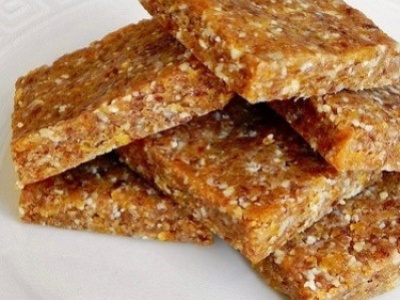




Forget the overpriced industrial energy bars: these come together in a few minutes, straight in the food processor. Soft dates and dried cherries bring the sweetness, while Brazil nuts and pecans give crunch and quality fats. The touch of carob brings a malty flavour close to chocolate, with no caffeine. Perfect for a rushed breakfast or an afternoon snack.

Brazilian carob energy bites
Share this article
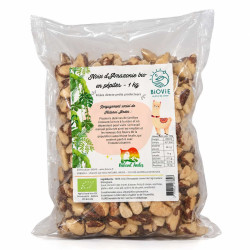
Organic and Fair Trade Brazil Nuts 1kg
€31.20 In stock
Ingredients
- 1 cup pitted dates
- 1/2 cup raw Brazil nuts
- 1/2 cup raw pecans
- 3 tbsp carob powder (or raw cacao)
- A pinch of sea salt (equivalent to 1 tablespoon - 15 ml - of seawater)
- 1/2 cup dried cherries
Preparation
- Put the dates, Brazil nuts, pecans, carob powder and salt in a food processor.
- Pulse until the nuts are finely ground and the mixture is even.
- Add the dried cherries and pulse again, just enough to spread them through while keeping a little chew.
- Press the mixture firmly into a 20 cm square tin lined with baking paper, then freeze for at least an hour.
- Once the slab is properly set, cut it into squares or bars as you like. Keep in the fridge or the freezer.
Tip
No carob at home? Unsweetened raw cacao works very well instead, for a more frankly chocolatey version. The dried cherries can likewise give way to cranberries or dried apricots cut into pieces.
The full range Oilseeds, nuts, seeds
Fair trade tiger nut from Niger, Amazon nuts from Bolivia, activated buckwheat from Brittany, and activated oilseed purées made in Alsace by Kaly: this range brings together oilseeds and seeds of raw quality, most of them soaked then dehydrated at low temperature (activation). To get started with activation, an activated almond or hazelnut purée is easier to use than a whole oilseed you have to soak yourself. For everyday raw cooking, tiger nut (whole, sliced or as a purée) comes in several formats suited to different uses, from homemade plant milk to crunchy snacks., 20 products
Discover the full range


FAQ: your questions about energy bites
Why no more than 2 Brazil nuts a day?
Because they concentrate selenium like no other everyday food: a single nut already covers the recommended daily intake for an adult, sometimes more depending on the soil it grew in. And selenium has a narrow window between a useful intake and an excess, which over time causes brittle nails, a characteristic breath and digestive trouble. Two to three nuts a day remains the consensus marker. In this recipe, half a cup is spread across a dozen bites: each square therefore contains a fraction, which leaves a comfortable margin.
Are Brazil nuts good for you?
They have a lot going for them: unsaturated fatty acids, magnesium, zinc, phosphorus, and that exceptional selenium content which contributes to the protection of cells from oxidative stress. Their profile is that of a rich but nourishing nut, to be eaten in small quantities. The real point of attention is not their quality but their quantity, as mentioned above, and their freshness: very high in fat, they turn rancid quickly. Buy them in small amounts and keep them cool, ideally in the fridge.
What can I replace dates with in my energy balls?
Dates play two roles at once: they sweeten and they stick. To replace them you therefore need a dried fruit that is both soft and sticky. Soft dried apricots come closest, with added acidity; dried figs work well but bring their little crunchy seeds; raisins are fine provided you rehydrate them for ten minutes in warm water. Prunes work too, with a more pronounced taste. A liquid syrup alone, on the other hand, is not enough: it sweetens without binding, and the mixture crumbles when you cut it.
What are the benefits of medjool dates?
Fleshier and softer than ordinary dates, medjools bring above all quickly available carbohydrates, which explains their place in sports snacks. They also contain potassium, magnesium, copper and a good dose of fibre, which tempers the rise in blood sugar a little. They remain a very sweet fruit: two or three are enough, and their interest lies precisely in replacing a refined sugar with a whole food. In a recipe like this one, they sweeten and bind at the same time, which saves adding a syrup.
Share this article