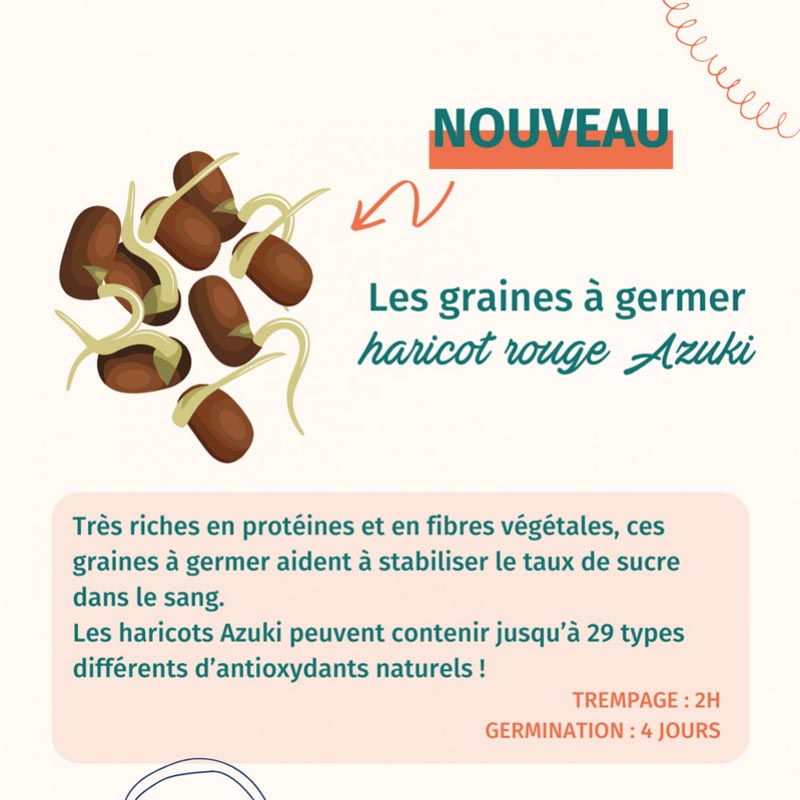
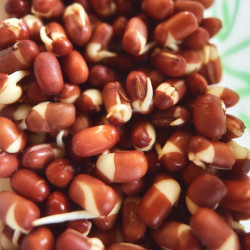
The azuki bean (Vigna angularis), a small red legume native to East Asia, packs an astonishing nutritional density into its 3 to 5 millimeters: 20 g of plant proteins, 12.7 g of fiber, and 622 µg of folates per 100 g. The Benefits of the azuki bean are not limited to its traditional cooking: sprouted over 4 to 5 days, it increases its bioavailability in minerals and antioxidants while becoming more digestible.
In this comprehensive guide updated in April 2026, you will discover the scientifically documented benefits of the azuki bean, its precise nutritional values (Ciqual data), the step-by-step method to sprout it at home, several sweet and savory recipe ideas, as well as the precautions to know before incorporating it into your daily routine.
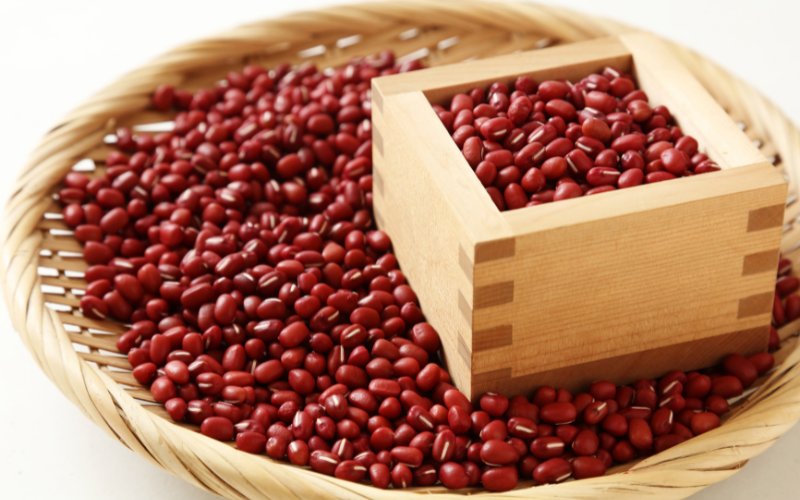
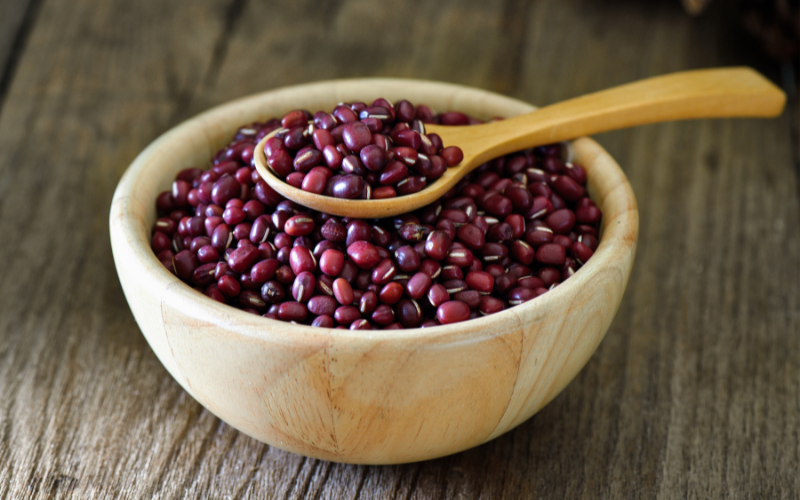
The azuki bean, sometimes spelled "adzuki," is a legume originating from Vigna angularis, cousin of the mung bean. Cultivated for over two millennia in China, Japan, and Korea, it holds a central place in Asian cuisine - particularly in the famous sweet paste Anko which fills mochis and Japanese pastries.
Difference between azuki bean and common red bean
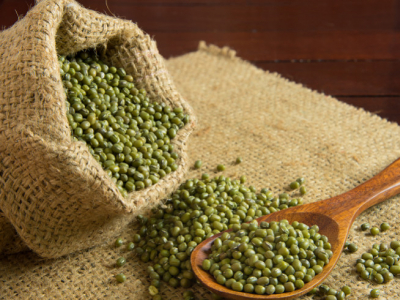
Unlike the common red bean (Phaseolus vulgarisThe azuki is smaller (3-5 mm compared to 10-12 mm), with a deeper red, almost burgundy color, with a Characteristic white thread. Its skin is thinner, which gives it better digestibility and a reduced cooking time. Its aromatic profile is also milder and slightly sweet, which explains its use in pastry.
The proven benefits of the azuki bean
The azuki beans, also known as Adzuki beans, are among the most studied legumes for their bioactive compounds. These small beans bring a rare concentration of protective nutrients: quality proteins, fibers, polyphenols, and essential micronutrients. Their deep red color signs the richness in proanthocyanidins, antioxidant pigments of the plant kingdom.
Rich in plant proteins
With 19.9 g of protein per 100 g (source Ciqual ANSES), azuki is a plant protein dense. Its amino acid profile, although limited in methionine like most legumes, becomes complete when combined with a cereal (rice, millet, buckwheat). A portion of 60 g dry thus covers nearly 20% of the daily recommended intake by the EFSA for an adult. These proteins contribute to the formation of red blood cells, tissue repair, and proper neuromuscular function - valuable for anyone following a vegetarian diet or vegan.
Soluble and insoluble fibers for digestion
Rich in 12.7 g of fiber per 100 g, Azuki beans combine soluble fibers (prebiotics that nourish the gut microbiota) and insoluble fibers (which support transit). This dual action promotes satiety, regulates postprandial blood sugar levels, and contributes to the reduction of LDL cholesterol by capturing some of the bile acids in the digestive tract.
Powerful antioxidants and polyphenols
The red skin of the azuki contains Proanthocyanidins - polyphenols among the most active in the plant kingdom. A review published in PMC (2023) lists more than 40 bioactive compounds identified in Vigna angularis, including flavonoids, saponins, and vitexin. These compounds neutralize free radicals and support the immune function and contribute to the prevention of cellular aging. Azuki is also a natural source of folic acid (622 µg per 100 g, which is three times the recommended daily intake) and, after germination, its vitamin C (ascorbic acid) content increases significantly.
Effect on cholesterol and blood sugar
A Japanese study published in Bioscience, Biotechnology, and Biochemistry (Itoh et al., 2009) demonstrated that a polyphenolic extract from azuki significantly reduces LDL cholesterol in an animal model. In humans, the randomized controlled trial by Polák et al. (2015) reports a hypoglycemic and hypolipidemic effect from regular consumption of adzuki. More broadly, the epidemiological study by Darmadi-Blackberry (2004), conducted on 785 individuals aged 70 to 89 years in five countries, identified legume consumption as the The food predictor most strongly associated with survival - each additional 20 g per day reduces the risk of mortality by 7 to 8%.
Contribution to weight management
With only 329 kcal per 100 g dry (or about 120 kcal once cooked, including the absorbed water), azuki combines high satiety (proteins + fibers), a moderate glycemic index, and low caloric density. It naturally fits into a strategy of sustainable weight loss, without frustration or drastic calorie restriction.
Nutritional values per 100 g (raw dry adzuki beans)
Data extracted from the Ciqual table ANSES, French reference for food composition:
Energy : 329 kcal / 1,378 kJ
Proteins : 19.9 g
Total carbohydrates : 54.5 g (of which sugars 2.6 g)
Dietary fibers : 12.7 g
Lipids : 0.53 g (low, predominantly unsaturated profile)
Iron : 5.0 mg (36% of the adult RDI)
Magnesium : 127 mg (34% of the RDI)
Potassium : 1,254 mg (63% of the RDI)
Folate (vitamin B9) : 622 µg (311% of the RDI)
Zinc : 4.0 mg
This profile places azuki above the common red bean in terms of iron, folates, and potassium, making it one of the most interesting legumes for a balanced vegan diet.
How to germinate azuki beans at home
Germination literally transforms the seed: it reduces antinutrients (phytates, lectins), multiplies the bioavailability of minerals, develops vitamin C, and activates digestive enzymes. As Eric Viard reminds us in his... Video FAQ on Sprouted Seeds, Azuki is one of the "large seeds" that germinate well in both a manual sprouter and an automatic sprouter.
Selection of quality seeds
For optimal results, choose certified organic seeds, whole and non-irradiated. Seeds intended for germination must be recent (less than 18 months since harvest) to ensure a high germination rate. Absolutely avoid conventional seeds from the food section: many have undergone heat treatment that kills the embryo.
Germination steps (4 to 5 days)
Soaking : cover 2 tablespoons of seeds with spring water for 8 to 12 hours.
Initial rinse : drain thoroughly then rinse with clear water.
Placement in a germinator : arrange the seeds in an even layer in the sprouter.
Twice-daily rinses : morning and evening for 4 to 5 days, at room temperature (18-22 °C), away from direct light.
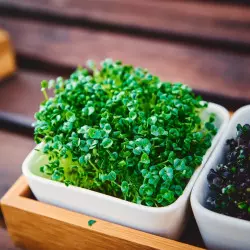
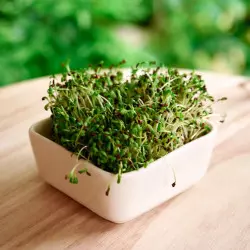
Harvest : the young shoots reach 2 to 4 cm and can be consumed from day 4, ideally on day 5 when the first cotyledons open.
Preservation of sprouts
Once harvested and well-drained, azuki sprouts can be stored in the refrigerator for 3 to 5 days in a ventilated container. Consume them quickly to take advantage of their enzymatic peak.
For dried azuki beans, pre-soaking is essential: soaking them in cold water for 8 to 12 hours helps reduce phytates and shortens the cooking time. Drain, rinse, then cover with fresh water in a pot (3 parts water to 1 part beans). Cook on low heat, covered, for 45 to 60 minutes until the beans can be easily crushed between two fingers. Add salt only at the end of cooking to prevent it from hardening the skin.
Flavors and textures
Azuki is developing a sweet flavor, slightly sugary and subtly earthy, with a creamy texture once cooked and even more tender when mashed. Its sprouted shoots are crunchy, fresh, with a hint of hazelnut.
Savory recipe ideas
In savory dishes, the azuki bean shines in:
the Asian soups comforting (ginger-miso-azuki) ;
the composed salads made with sprouted azuki, quinoa, pomegranate, and tamari-ginger dressing ;
the vegetable-azuki curry (sweet potato, coconut milk, turmeric) ;
the plant-based burgers house where they bring binder and color ;
the azuki hummus toasts (Simple puree of cooked azuki + tahini + lemon + cumin).
The spices that enhance them: cumin, smoked paprika, ginger, coriander, citrus zest.
Sweet recipe ideas
The most iconic use remains the dough. Anko : azuki beans cooked slowly with birch sugar or maple syrup, then mashed. This paste fills dorayakis, mochis, taiyakis, and Japanese pastries. More freely, it can be used as:
Although well tolerated by the majority of people, adzuki beans require some precautions:
Mandatory soaking for dry seeds (8-12 h), in order to reduce phytates and lectins.
Complete cooking (minimum 45 minutes after soaking) - do not consume the raw dry seeds.
Gradual introduction for individuals sensitive to FODMAPs or prone to flatulence. Start with 2 tablespoons cooked per meal and gradually increase.
Cross allergies possible with other legumes (soy, peanut, peas) - caution if there is a history.
Drug interactions : The documented hypoglycemic effect warrants caution for individuals undergoing antidiabetic treatment. Consult your doctor.
Frequency : 2 to 3 servings per week of 60 g (dry weight) are sufficient to fully benefit from the advantages without fiber overload.
For individuals with weakened digestive systems, a intestinal rehabilitation protocol may be useful before permanently incorporating legumes.
Frequently Asked Questions About Azuki Beans
What are the main benefits of azuki beans ?
The azuki bean provides 19.9 g of plant-based proteins and 12.7 g of fiber per 100 g, along with a high concentration of folates (622 µg), iron, potassium, and antioxidant polyphenols. It supports digestion, helps regulate blood sugar and LDL cholesterol, and aids in weight management due to its satiating effect.
How to germinate azuki beans ?
Soak 2 tablespoons of organic seeds for 8 to 12 hours, then rinse them and place them in a sprouter. Rinse morning and evening for 4 to 5 days at 18-22°C, away from direct light. The sprouts are ready when they measure 2 to 4 cm.
Azuki beans and cholesterol: what does the science say ?
A study by Itoh et al. (2009) demonstrated that azuki polyphenols significantly reduce LDL cholesterol in an animal model. The trial by Polák et al. (2015) confirms a lipid-lowering effect in humans. Soluble fibers contribute to this mechanism by capturing bile acids in the intestine.
Does the azuki bean help with weight loss ?
The azuki bean effectively integrates into a weight loss strategy due to its satiating effect (proteins + fibers), moderate glycemic index, and low caloric density (329 kcal / 100 g dry, or about 120 kcal cooked). It does not cause weight loss on its own, but it helps to naturally reduce overall caloric intake.
What is the difference between azuki beans and red beans ?
The azuki bean (Vigna angularis) is smaller (3-5 mm), with a characteristic white hilum and a thinner skin than the common red bean (Phaseolus vulgaris, 10-12 mm). It cooks faster, is better digested, and develops a milder and slightly sweet flavor.
Can you eat azuki beans every day ?
Yes, in reasonable portions. In a balanced diet, 2 to 3 servings of 60 g (dry weight) per week constitute an ideal consumption to enjoy the benefits without overloading the digestive tract with fiber. A gradual introduction is recommended for people sensitive to FODMAPs.
Are there any contraindications for azuki beans ?
The azuki bean is not recommended raw and requires soaking followed by thorough cooking. It should be introduced gradually in cases of digestive sensitivity or FODMAPs. People undergoing antidiabetic treatment should seek medical advice, as azuki has a documented hypoglycemic effect. Cross-allergies with other legumes are possible.
Itoh T. et al. (2009) - Polyphenol-rich adzuki bean extract and LDL cholesterol reduction, Bioscience, Biotechnology, and Biochemistry. PMID: 19801891.
Polák R. et al. (2015) - Hypoglycemic and hypolipidemic effects of adzuki bean, PubMed PMID: 26022133.
Darmadi-Blackberry I. et al. (2004) - Legumes: the most important dietary predictor of survival in older people, Asia Pacific Journal of Clinical Nutrition, 13(2).
Ciqual Table ANSES - Nutritional composition of Vigna angularis Dry vintage (2024).
EFSA - Scientific Opinion on Dietary Reference Values for protein (2012).
"Azuki is, in my opinion, the most underrated legume in our Western kitchens. Its small size, thin skin, and mild taste make it an ideal gateway for those who wish to explore legumes beyond the classic red bean. And when sprouted, it becomes not only more digestible but also more nutritious - it is this living transformation that has fascinated me my entire life. In 33 years of veganism, it is one of the three seeds I consistently recommend to beginners in raw food." - Eric Viard, founder of Biovie.
Warning: The information presented in this article is provided for informational purposes only and does not constitute medical advice. Consult a qualified healthcare professional before making any significant changes to your diet or supplementation. As part of a varied and balanced diet and a healthy lifestyle.