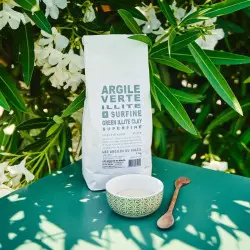
Honestly, between illite and montmorillonite, it's easy to lose track of which one to scoop into your bowl. It's the question we get asked most often about green clay. So let's be clear from the start: these two clays don't do the same job on the skin. Illite soothes. Montmorillonite absorbs. That, in a nutshell, is what should decide your recipe.
For centuries, green clay has been used to care for the beauty of skin and hair. It's actually one of humanity's oldest beauty rituals - a bit like fermentation or natural scrubs, rediscovered as it travels through the ages. Suited to every skin type and every hair type, it remains a simple, respectful alternative to industrial cosmetics.
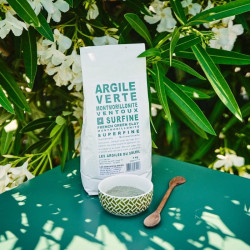
One detail changes everything though, and we're strict about it: the clay must be unheated. Low-temperature drying preserves its mineral structure and absorption capacity (Clay facial masks, 2007). Many commercial clays are dried at high temperature to speed things up, losing some of their properties along the way. One of our customers, Seb, put it better than we could: "the only site where I found unheated green clay". That's exactly what sets us apart.
In this 2026 guide, I'm sharing our 4 green clay mask recipes, one for each concern: combination-to-oily skin, hair, acne and wrinkles. All tested, all simple. Get your ceramic bowls out. You'll find all our green clays in our Clays range.
Green clay face mask: our recipe for combination-to-oily skin
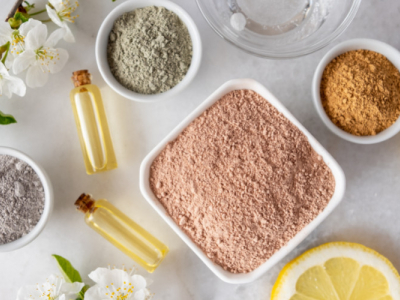
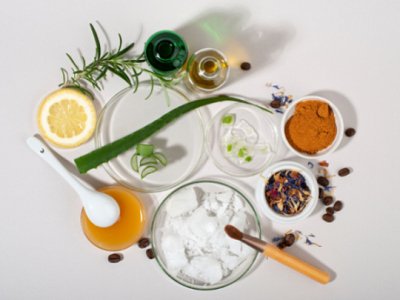
Here's an easy green clay face mask recipe made with natural ingredients, designed for combination-to-oily skin. One rule above all: never use metal utensils with clay, as it disrupts its properties. Use a wooden spoon instead, to mix and best preserve its benefits.
In short, to get your mask right:
Cleanse the skin before applying.
Mix the clay in a non-metal bowl.
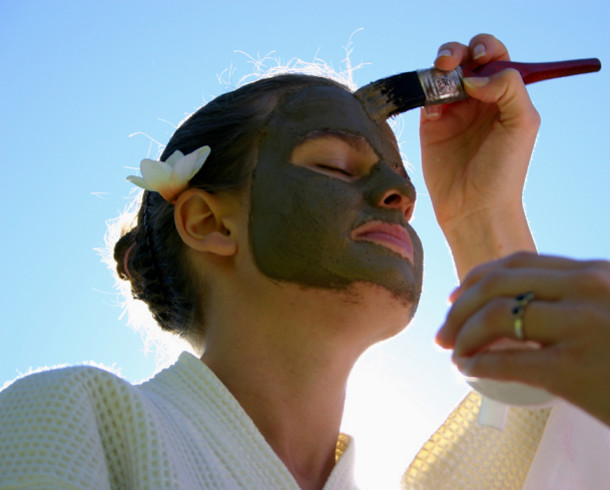
Apply a thick layer, avoiding the eye area.
Leave on for 10 to 15 minutes, without letting it dry out completely.
1 teaspoon of fresh lemon juice (for its astringent action)
3 drops of peppermint essential oil (optional)
Preparation: in a glass or ceramic bowl, mix the Montmorillonite with the mineral water until you get a smooth, thick paste. Add the lemon juice, which helps tighten the look of enlarged pores. If you like, a few drops of peppermint add a fresh feel.
Application: cleanse your face first. Apply the mask, avoiding the eye and lip area. Leave on for 10 to 15 minutes - a light tightening feeling is normal. Rinse off with lukewarm water using small circular motions, then finish with a light moisturiser suited to combination-to-oily skin.
Thanks to its absorbent power, this mask works as a real purifying treatment: it helps regulate excess sebum and cleanse the skin, which limits the appearance of acne. Once or twice a week is enough to keep things balanced.
"The Montmorillonite clay is very good quality and the price is fair." - Yveline-Justine (5/5, Biovie customer review)
Our green clay hair mask recipe
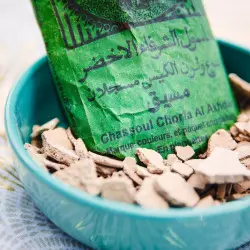
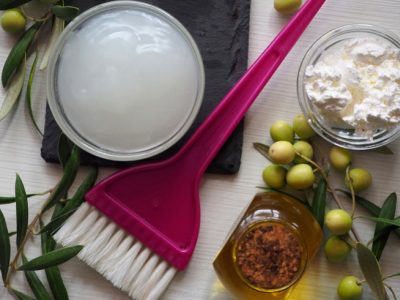
The green clay hair mask is the house's best-kept secret. Where industrial shampoos strip hair with sulphates, clay cleanses gently without irritating the scalp. For this use, we particularly like Rassal (rhassoul): a traditional, sulphate-free washing clay that suits every hair type.
Ingredients:
2 tablespoons of green clay or Rassal powder (about 20 g)
3 tablespoons of lukewarm water (adjust for consistency)
Preparation: in a non-metal bowl, mix the clay and lukewarm water into a smooth, lump-free paste. Add the cider vinegar, which leaves hair shiny, then the coconut or argan oil, and finally the lavender if using.
Application: wet your hair with lukewarm water. Spread the mask from roots to ends, gently massage the scalp, then leave on for 20 to 30 minutes under a warm towel (or without one - that works too). Rinse thoroughly until you no longer feel any clay.
"The only site where I found unheated green clay." - Seb (5/5, Biovie customer review)
Our green clay acne mask recipe
Now for skin with blemishes. For acne, we prefer green Illite clay: gentler than montmorillonite, it purifies without over-drying. A small 2023 clinical study also assessed the value of a clay mask on oily, acne-prone skin, with a good tolerance profile (Clay mask in oily and acne skin, 2023). Used well, it also helps fade the look of mild acne marks and scars over the weeks.
Preparation: mix the green clay and rose water into a smooth paste. Add the raw honey, known for antibacterial properties that help soothe the skin. Tea tree oil can boost this effect. Lemon juice is astringent - but use it carefully.
A note on lemon. Lemon juice is photosensitising: applied before sun exposure, it can cause dark spots. Avoid it on broken, cut or irritated skin, where it stings noticeably.
Application: cleanse your face, apply the mask avoiding the eyes and lips, leave on for 10 to 15 minutes, then rinse with lukewarm water. Finish with a non-comedogenic moisturiser so as not to dry out the skin.
What's the best clay for fighting acne?
For acne, green Illite clay is generally considered the most suitable. Thanks to its strong absorbent power, it soaks up excess sebum and helps unclog pores blocked by impurities and dead skin cells. Gentle by nature, it suits acne-prone skin that can't tolerate overly harsh treatments.
Its properties also help limit the growth of bacteria linked to blemishes - an effect documented in vitro on enriched montmorillonites (Lecithin-amended montmorillonite clays, 2023). One caveat though: overuse dries out the skin. One mask a week, followed by good hydration, is the right pace.
Our green clay wrinkle mask recipe
Clay is well known for acne. Less well known is how it can help mature skin. Green clay for wrinkles relies on the minerals in calcium montmorillonite: a recent clinical review highlights the cosmetic value of these calcium clays for the skin (Calcium montmorillonite clay, clinical review). In practice, the paste tightens the look of the skin as it dries and leaves a clearer complexion. Here's our recipe designed for mature skin.
Ingredients:
2 tablespoons of green clay powder (about 20 g)
2 tablespoons of rose water
1 tablespoon of argan oil
1 teaspoon of plain yoghurt
3 drops of rose essential oil
Preparation: mix the clay and rose water into a smooth paste. Add the argan oil, rich in essential fatty acids and antioxidant vitamin E. Stir in the plain yoghurt, which gently exfoliates, then the rose essential oil.
Application: on clean skin, spread the mask, avoiding the eye and lip area. Leave on for about 15 minutes, rinse with lukewarm water using gentle circular motions, then apply a moisturiser to seal in hydration.
Two more masks, for sensitive skin and mature skin
Purifying clay and aloe vera mask (sensitive skin)
Mix 2 tablespoons of montmorillonite clay and 2 tablespoons of aloe vera gel, adjusting with a little water until you get a smooth texture. Apply for 10 to 15 minutes, then rinse with lukewarm water. Aloe vera hydrates and soothes while the clay purifies: this is the version we recommend for skin that flushes easily, where clay alone would pull too much.
Regenerating clay and avocado mask (dry or mature skin)
Mash half a ripe avocado and mix it into 2 tablespoons of Illite clay, adding a little water if the paste is too thick. Leave on for 10 minutes, no more, and rinse with lukewarm water. The fats in the avocado offset the drying effect of the clay: skin comes out clean without feeling stripped.
What are the benefits of a green clay mask?
The benefits of a green clay mask mostly come down to its minerals and absorbent power. Here's what practice and the literature most often highlight:
Purifying and exfoliating. Clay soaks up excess sebum and impurities. As it dries, it contracts and lightly exfoliates the surface of the skin.
A tighter look. By deep-cleaning pores, it makes them visually less noticeable and revives skin radiance.
Comfort for reactive skin. Traditionally, green clay is used to soothe minor irritation, itching or mild sunburn.
You'll often read that green clay is "anti-inflammatory". Let's be precise: review papers do describe soothing effects with topical use (Benefits of bentonite clay, Medical News Today), but this is a cosmetic comfort use, not a treatment. Clay doesn't cure a skin condition. It supports a routine, as part of natural beauty care. For persistent skin issues, a dermatologist remains the right person to see.
Why shouldn't you let clay dry out on your skin?
You should never let a clay mask dry out completely on your face. Once fully dry, clay draws moisture out of the skin and can cause tightness and a dry feeling. Ideally, remove the mask once it starts to harden but is still slightly damp to the touch.
A simple tip? Spritz on some floral water now and then while the mask is on. It keeps the mask active without pulling on the skin. And always moisturise after rinsing.
Precautions: what are the downsides of green clay?
The main downside of green clay is dryness. Used too often, or left to dry out, it can leave skin dry and tight. One or two masks a week is plenty.
A few common-sense rules complete the picture. Avoid the eye area, which is more delicate. Never use metal utensils. Do a patch test on the inside of your elbow if you have sensitive skin. Avoid lemon juice before sun exposure (it's photosensitising) and on broken skin. Finally, always moisturise after the mask: that step, more than the mask itself, is what keeps skin soft and comfortable.
"Very happy with the quality of the clay." - Davy (4/5, Biovie customer review)
Frequently asked questions about green clay masks
What's the best green clay for a face mask?
Green clay mainly comes in two forms: illite and montmorillonite. Illite, which is soothing, suits sensitive or redness-prone skin well. Montmorillonite, more absorbent, is ideal for oily, acne-prone skin as it regulates excess sebum and purifies deeply.
How often per week should you use a green clay mask?
Once or twice a week. Beyond that, clay risks drying out the skin. After every mask, apply a moisturiser to keep skin balanced.
Can green clay be used on hair?
Yes, green clay is excellent for hair. It gently cleanses the scalp, absorbs excess sebum and restores shine. As a hair mask, mixed with water, apple cider vinegar or a plant oil, it nourishes and revitalises the hair fibre.
Is green clay effective against acne?
Thanks to its absorbent power, green clay helps unclog pores, mattify and cleanse blemish-prone skin. Used weekly as a mask, it helps regulate sebum and improve the look of acne-prone skin. It doesn't replace a dermatologist's advice for severe acne.
Can green clay reduce the look of wrinkles?
Green clay is rich in minerals that help firm the look of the skin. Combined with nourishing ingredients like argan oil, yoghurt or rose essential oil, it helps smooth the look of fine lines and revive skin radiance.
Should you let a green clay mask dry out completely?
No. A mask that dries out fully dehydrates the skin and causes tightness. Rinse it off once it starts to harden but is still slightly damp, so you get its benefits without stressing the skin.
What are the downsides of green clay?
The main downside is dryness from overly frequent use or letting it dry out completely. It can also feel tight on very dry skin. Sticking to one or two applications a week, avoiding metal and moisturising afterwards removes these downsides.
Disclaimer: the information in this article is provided for informational purposes only and does not constitute medical advice. It relates to external cosmetic use. Consult a qualified healthcare professional for any persistent skin issue. As part of a suitable skincare routine and a healthy lifestyle.