A nutritional richness that defies preconceived notions
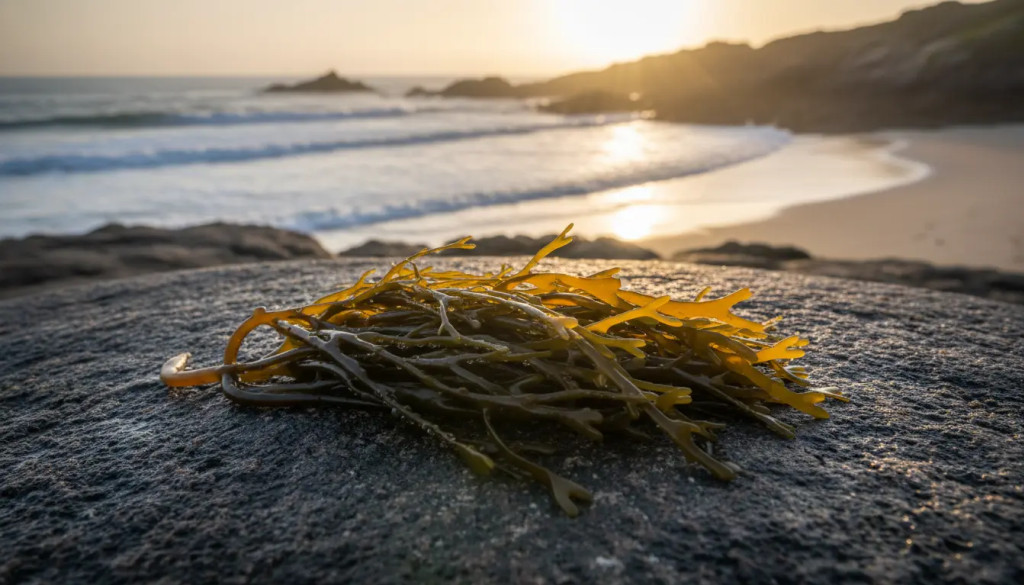
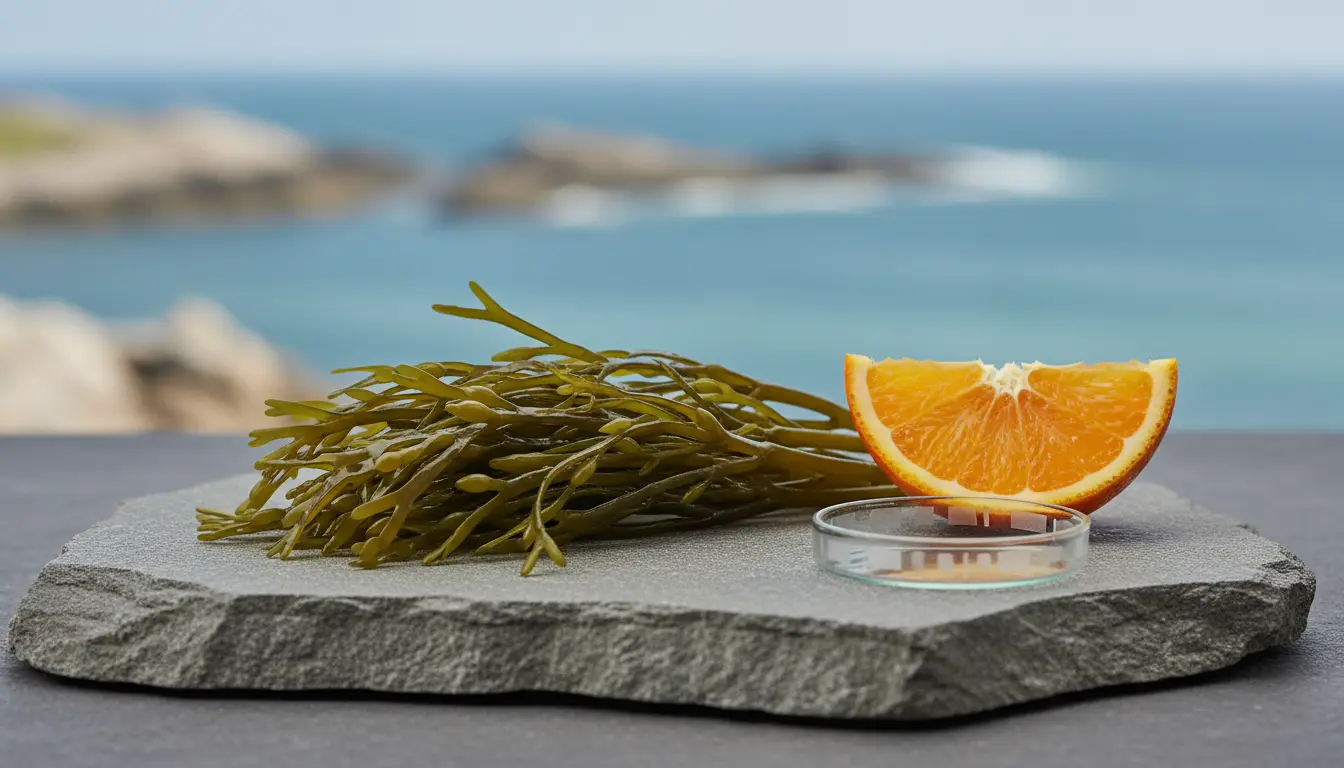
Let's start with the facts. The sea bean, this brown algae that naturally grows on the Breton coasts, has a truly exceptional nutritional composition. Analyses conducted by CEVA (Center for the Study and Promotion of Algae) and by producers like BIOCEAN in Roscoff reveal vitamin C levels that range between 28.5 and 120.5 mg per 100 grams dehydrated product.
To put these numbers into perspective: fresh orange contains about 53 mg of vitamin C per 100 g according to the Ciqual table of ANSES³. The dehydrated sea bean can therefore contain 2 to 10 times more vitamin C, depending on the harvesting and drying conditions.
So why this variability in the numbers? In reality, it is completely normal and even reassuring. The vitamin C content of an algae varies depending on several natural factors: the harvest season, the growth depth, the exposure to light, the water temperature. A study published in Food Research International demonstrated that the algae harvested in the spring, between March and June, generally exhibit the highest levels of bioactive compounds⁴. This is a well-documented phenomenon in the scientific literature on marine macroalgae.
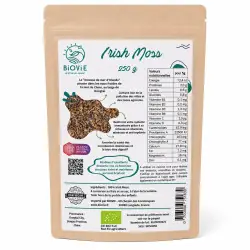
At Biovie, we offer fresh organic seaweed harvested precisely during this optimal period, as well as from organic dehydrated seaweed which retain these nutritional properties throughout the year.
The synergy of iron and vitamin C: a unique duo in the plant kingdom
Here is what makes sea beans truly exceptional, and it's a point I find too rarely mentioned. This seaweed is not only rich in vitamin C: it also contains a remarkable amount of iron. The analyses indicate approximately 59 mg of iron per 100 g dehydrated product, which is nearly 9 times more than the lentils52.
And that's where things get really interesting. Vitamin C helps increase iron absorption.*. This is a health claim recognized by the EFSA (European Food Safety Authority). Several studies have shown that the presence of vitamin C can multiply the absorption of non-heme iron by 2 to 6 times (plant-based iron) at the intestinal level⁶⁷. A study published in theInternational Journal for Vitamin and Nutrition Research showed that only 50 mg of vitamin C is enough to double the absorption of non-heme iron⁸.
Specifically, the sea bean offers this natural synergy : iron AND vitamin C, which helps to increase its absorption, in the same food. This is a considerable advantage compared to supplements or forced food combinations.
For individuals looking to maintain adequate iron intake while following a plant-based diet, this feature can be particularly interesting. Iron helps reduce fatigue* and to the normal functioning of the immune system*, and the vitamin C present in sea beans helps to increase its absorption by the body.
Our fresh organic sea beans constitutes a preferred source of this natural iron-vitamin C synergy.
An alternative for people sensitive to citrus fruits
Another aspect that is close to my heart is thinking about those who cannot consume citrus fruits. Allergy or intolerance to citrus is more common than one might think, and those affected often find themselves at a loss for their vitamin C intake.
The sea bean presents a remarkable advantage here: its PRAL index (Potential Renal Acid Load) is -167.9, which makes it a food very alkalizingUnlike citrus fruits, which, despite their reputation, can have an acidifying effect on some sensitive individuals, sea beans have the opposite effect on the body's acid-base balance.
Vitamin C helps protect cells against oxidative stress. and to the normal functioning of the nervous system*. By consuming sea beans, you can benefit from these properties without the digestive inconveniences that some experience with citrus fruits.
Beyond Vitamin C: A Complete Nutritional Profile
It would be reductive to limit the sea bean to its vitamin C content alone. This brown algae offers a Nutritional profile of remarkable richness. The works of Holdt and Kraan published in the Journal of Applied Phycology highlighted the diversity of bioactive compounds present in edible macroalgae¹⁰. These include:
Of the minerals in significant quantities: calcium, magnesium, potassium, iodine
Of the Soluble dietary fibers (brown algae contain between 25% and 75% of their dry weight according to Jiménez-Escrig & Sánchez-Muniz¹¹)
Of the Polysaccharides specific to brown algae, including the fucoidan, which is the subject of numerous studies¹²
Of the Antioxidants various, including polyphenols and carotenoids¹³
However, it is important to mention a key point for transparency: like all seaweeds, sea beans contain iodine. Iodine contributes to normal thyroid function*. However, individuals with thyroid disorders or those undergoing treatment should take this into account and consult their doctor before incorporating seaweed into their regular diet. This is a precaution that we consistently remind at Biovie.
To deepen your knowledge about algae, I recommend our book. Seaweed in everyday life, co-written with Aurélie and awarded at the Gourmand CookBook Awards 2025.
How to enjoy these benefits daily
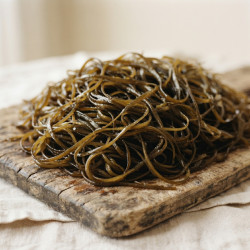
Let's move on to practice. Sea beans can be consumed in two main forms: fresh or dehydrated.
Fresh sea bean
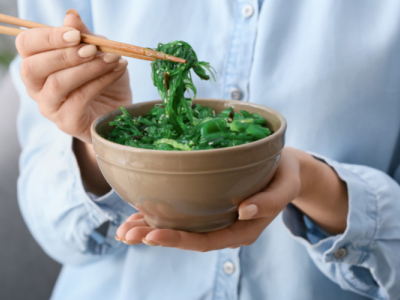
Fresh sea beans, available primarily from March to June, has the advantage of retaining all of its nutrients. Its crunchy texture and subtle iodized taste make it an ideal ingredient for salads, marinades, or simply to accompany fish dishes. It was in this form that we discovered it with Aurélie during our first trips to Brittany.
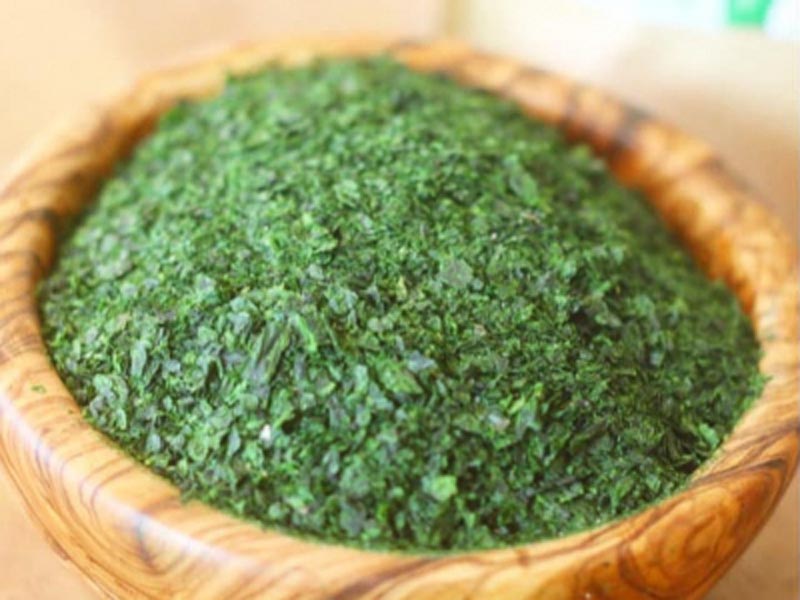
The dehydrated format, on the other hand, offers several practical advantages. It can be stored up to 2 years away from light and moisture. Dehydration concentrates the nutrients: this is why the vitamin C and iron contents mentioned in this article refer to the dried product. A few grams of glitter sufficient to enhance a soup, a pasta dish, or a sauce.
To rehydrate dehydrated sea beans, simply soak them 10 to 15 minutes in cold water. It then regains its original texture and can be used like the fresh product.
A tip we have learned over time: to preserve vitamin C as much as possible, Avoid prolonged cooking at high temperatures. This vitamin is sensitive to heat and oxidation, as demonstrated by the work of Lee and Kader on the stability of vitamins in foods¹⁴. Prefer using it raw or with gentle and quick cooking.
Signature recipe: warm sea bean and celeriac salad
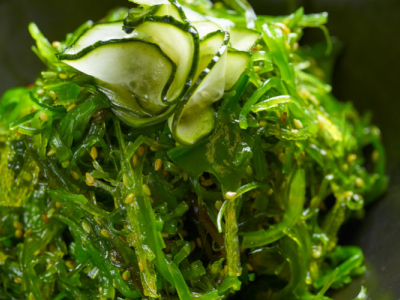
A signature recipe we're particularly fond of: rehydrated sea bean, quickly pan-fried in olive oil with julienned celeriac, sprinkled with toasted sesame seeds, lemon zest and fresh parsley. The full version of this recipe is available in our article celeriac and sea bean salad.
Seaweed is a concentrated food: its nutritional strengths need to come with sensible consumption.
Iodine content: according to ANSES recommendations, healthy adults are advised not to exceed 1 g of dried product a day for iodine-rich seaweeds.
Pregnancy and breastfeeding: seek medical advice before any regular consumption of seaweed.
Thyroid conditions (hyper- or hypothyroidism, levothyroxine treatment, Hashimoto's or Graves' disease): medical follow-up is essential.
Anticoagulant treatment: seaweed contains vitamin K, which can interfere with vitamin K antagonists. Talk to your doctor.
Children: introduce seaweed gradually and in small amounts.
Iodine allergy (rare): avoid.
How to choose sea bean well
Sea bean absorbs the minerals from its environment - so it's essential to choose one harvested from a controlled area. Breton seaweed certified EU Organic or Nature & Progrès benefits from regular checks on water quality. At Biovie, our sea beans are hand-harvested on the Breton shore.
Scientific data that deserves to be known
As an agronomist by training, I place great importance on verifiable data. Here is a summary of the main nutritional characteristics of sea beans, as reported in the scientific literature:
Vitamin C : 28.5 to 120.5 mg/100g (dehydrated form) - Sources: Sánchez-Machado et al.¹; Rupérez²
Iron : approximately 59 mg/100g (dehydrated form) - Source: Pereira⁵
PRAL index : -167.9 (alkalizing) - Source: Remer & Manz⁹
Fibers : 5 to 8% of the dry weight - Source: Gómez-Ordóñez et al.⁴
Proteins : 6 to 15% depending on harvest conditions - Source: Fleurence¹⁵
These values may vary depending on the season, the harvest area, and the processing methods. That is why it is important to source from producers who monitor and communicate about the quality of their products.
Research on seaweed has made significant progress in recent years. Studies published in journals such as Food Chemistry, the Journal of Applied Phycology and Marine Drugs confirmed the nutritional potential of edible macroalgae, and more specifically of brown algae from the North Atlantic.
In summary
The sea bean represents a natural and lesser-known source of vitamin C which truly deserves attention. With levels that can reach 4 to 10 times those of the orange, this Breton seaweed offers a marine plant-based alternative for the intake of this essential vitamin.
But it is especially the natural synergy between its vitamin C and its iron which makes it a unique food. Vitamin C helps increase iron absorption, and this combination, rare in the plant kingdom, is naturally present in sea beans.
For those sensitive to citrus, those looking to diversify their sources of nutrients, or simply the curious seeking new flavors, sea beans are a discovery worth exploring.
After 18 years of working with algae at Biovie, I remain convinced that these treasures from our coasts still have much to offer us. Science is only beginning to document what coastal populations have known for generations.
And there you have it, you now know as much as I do about the subject. Feel free to try the experience with our Selection of algae ! !
A varied and balanced diet and a healthy lifestyle are important.
Health claims marked with an asterisk () are authorized by Regulation (EU) No 432/2012 establishing a list of permitted health claims made on foods.*
Frequently Asked Questions
Does sea bean really contain more vitamin C than orange ?
Yes, dehydrated sea beans contain between 2 and 10 times more vitamin C than fresh oranges. Scientific analyses report levels ranging from 28.5 to 120.5 mg/100g for dehydrated sea beans, compared to about 53 mg/100g for oranges. This variability is explained by the conditions of harvesting and drying.
Is sea bean a good source of iron for vegetarians ?
Sea beans are an excellent source of plant-based iron., with approximately 59 mg/100g of dehydrated product, which is 9 times more than lentils⁵. Additionally, its natural richness in vitamin C helps increase the absorption of this non-heme iron, making it a particularly interesting food for vegetarian and vegan diets.
Can sea beans replace citrus fruits for vitamin C ?
Sea beans are a relevant alternative to citrus fruits for vitamin C intake., particularly for people who are allergic or intolerant to citrus fruits. Its highly alkalizing PRAL index (-167.9) sets it apart from citrus fruits, which can be acidifying for some sensitive organisms.
How to store and prepare sea beans ?
Dehydrated sea beans can be stored for up to 2 years. away from light and moisture. To rehydrate it, soak it for 10 to 15 minutes in cold water. Fresh sea beans can be kept for a few days in the refrigerator and are consumed from March to June. To preserve vitamin C, avoid prolonged cooking at high temperatures.
How much sea bean should be consumed ?
A few grams of dehydrated sea beans per day are enough to benefit from its nutritional contributions. Due to its iodine content, it is recommended not to exceed 5 to 10 g of dried product per day. People with thyroid disorders should consult their doctor before consuming it regularly.
Can sea beans replace vitamin C supplements ?
Sea beans can be a natural and dietary source of vitamin C., alternative to synthetic supplements. However, the contents vary depending on the batches and storage conditions. For specific or medical needs, consult a healthcare professional who can assess if this natural source is suitable for your situation.
What are the other nutritional benefits of sea beans ?
Beyond vitamin C and iron, sea beans offer a complete nutritional profile. : dietary fibers (5-8% of dry weight), proteins (6-15%), minerals (calcium, magnesium, potassium, iodine), polysaccharides like fucoidan, and antioxidants (polyphenols, carotenoids). It is this richness that makes it a recognized marine superfood.
Bibliography
Sánchez-Machado, D.I., López-Cervantes, J., López-Hernández, J. & Paseiro-Losada, P. (2004). Fatty acids, total lipid, protein and ash contents of processed edible seaweeds. Food Chemistry, 85(3), 439-444. DOI : 10.1016/j.foodchem.2003.08.001
Rupérez, P. (2002). Mineral content of edible marine seaweeds. Food Chemistry, 79(1), 23-26. DOI : 10.1016/S0308-8146(02)00171-100171-1)
ANSES (2024). Table de composition nutritionnelle des aliments Ciqual. Agence nationale de sécurité sanitaire de l'alimentation, de l'environnement et du travail. URL : https://ciqual.anses.fr
Gómez-Ordóñez, E., Jiménez-Escrig, A. & Rupérez, P. (2010). Dietary fibre and physicochemical properties of several edible seaweeds from the northwestern Spanish coast. Food Research International, 43(9), 2289-2294. DOI : 10.1016/j.foodres.2010.08.005
Hallberg, L., Brune, M. & Rossander, L. (1989). Iron absorption in man: Ascorbic acid and dose-dependent inhibition by phytate. American Journal of Clinical Nutrition, 49(1), 140-144. DOI : 10.1093/ajcn/49.1.140
Cook, J.D. & Reddy, M.B. (2001). Effect of ascorbic acid intake on nonheme-iron absorption from a complete diet. American Journal of Clinical Nutrition, 73(1), 93-98. DOI : 10.1093/ajcn/73.1.93
Teucher, B., Olivares, M. & Cori, H. (2004). Enhancers of iron absorption: Ascorbic acid and other organic acids. International Journal for Vitamin and Nutrition Research, 74(6), 403-419. DOI : 10.1024/0300-9831.74.6.403
Remer, T. & Manz, F. (1995). Potential renal acid load of foods and its influence on urine pH. Journal of the American Dietetic Association, 95(7), 791-797. DOI : 10.1016/S0002-8223(95)00219-7
Holdt, S.L. & Kraan, S. (2011). Bioactive compounds in seaweed: Functional food applications and legislation. Journal of Applied Phycology, 23(3), 543-597. DOI : 10.1007/s10811-010-9632-5
Jiménez-Escrig, A. & Sánchez-Muniz, F.J. (2000). Dietary fibre from edible seaweeds: Chemical structure, physicochemical properties and effects on cholesterol metabolism. Nutrition Research, 20(4), 585-598. DOI : 10.1016/S0271-5317(00)00149-400149-4)
Fitton, J.H., Stringer, D.N. & Karpiniec, S.S. (2015). Therapies from fucoidan: An update. Marine Drugs, 13(9), 5920-5946. DOI : 10.3390/md13095920
Gómez-Guzmán, M., Rodríguez-Nogales, A., Algieri, F. & Gálvez, J. (2018). Potential role of seaweed polyphenols in cardiovascular-associated disorders. Marine Drugs, 16(8), 250. DOI : 10.3390/md16080250
Lee, S.K. & Kader, A.A. (2000). Preharvest and postharvest factors influencing vitamin C content of horticultural crops. Postharvest Biology and Technology, 20(3), 207-220. DOI : 10.1016/S0925-5214(00)00133-200133-2)
Fleurence, J. (1999). Seaweed proteins: Biochemical, nutritional aspects and potential uses. Trends in Food Science & Technology, 10(1), 25-28. DOI : 10.1016/S0924-2244(99)00015-100015-1)
Wells, M.L., Potin, P., Craigie, J.S., Raven, J.A., Merchant, S.S., Helliwell, K.E., Smith, A.G., Camire, M.E. & Brawley, S.H. (2017). Algae as nutritional and functional food sources: Revisiting our understanding. Journal of Applied Phycology, 29(2), 949-982. DOI : 10.1007/s10811-016-0974-5