


What the Huang 2024 study reveals about nori and B12
Study protocol: 30 vegetarians, 4 weeks, 3 doses
The team of Professor Huang conducted a randomized controlled clinical trial with 30 Taiwanese vegetarians for 4 weeks [1]. The participants were divided into three groups: a control group with no nori consumption, a group consuming 5 grams of grilled nori per day, and a third group with 8 grams daily.
The nori used in the study had a vitamin B12 content of 38.6 µg per 100 grams, which corresponds to the values usually observed in commercial quality nori. The researchers measured several blood biomarkers recognized for assessing B12 status: serum B12, holotranscobalamin (the active form of B12 in the blood), homocysteine, and the combined 4cB12 score developed by Fedosov and collaborators. [2].
Key results: significant improvements with 5g per day
The results of the group consuming 5 grams of nori per day are particularly remarkable:
- The Serum B12 increased by +59 pmol/L compared to the control group, with a very robust statistical significance (p=0.0014)
- TheHolotranscobalamin — which reflects the B12 actually available for the cells — has progressed from +28.2 pmol/L (p=0.0035)
- Thehomocysteine, a marker that rises in the case of a B12 deficiency, has decreased by -3.7 µmol/L (p=0.0226)
- The score 4cB12, which combines several parameters, has improved by +0.67 point (p=0.0036) [1]
Concretely, these figures mean that the B12 present in nori is not just an "inactive analogue" as previously thought, but rather a form that our body can use. This discovery has major implications for people seeking natural sources of B12 within a plant-based diet.
Why this study is a game changer
What makes this research particularly important is that it is the first randomized controlled clinical trial on humans to demonstrate the effectiveness of the Nori to improve B12 status [1]. Previous studies were either conducted in vitro, either on animal models or observational with significant methodological biases.
Watanabe and his collaborators had already suggested in 2014 that certain algae, including nori, contained biologically active cobalamin. [3]. However, the lack of solid clinical trials on humans prevented any clear recommendations. The Huang 2024 study fills this major scientific gap and opens up new perspectives for vegetarians and vegans in search of a reliable vegan B12 algae.
Nori B12: real vitamin or inactive analogue ?
Traditional French position (AVF, Vegan Federation)
For years, the Vegetarian Association of France and the Vegan Federation have maintained a cautious stance, advising against relying on algae as a source of B12. This recommendation was based on scientific data suggesting that the B12 present in many algae is mostly composed of analogs—molecules that resemble B12 but lack biological activity for humans, and may even potentially inhibit the absorption of true B12. [4].
This position was wise and responsible given the knowledge of the time. The B12 deficiencies in vegans and omnivores can have serious and irreversible neurological consequences, including peripheral neuropathies, cognitive disorders, and combined degeneration of the spinal cord [5]. It was logical to prioritize sources whose effectiveness was established with certainty: supplementation and fortified foods.
What previous studies said about dried nori
Yamada's study on dried nori had raised doubts by suggesting that the drying process could alter the form of B12 and generate inactive analogues. [6]. Other research had also shown that the B12 content varied significantly depending on the species of algae, cultivation methods, and processing conditions.
Dagnelie and his collaborators, in a study published in theAmerican Journal of Clinical Nutrition In 1991, had observed that regular consumers ofalgae did not systematically present a better B12 status, which reinforced doubts about the actual bioavailability of this vitamin in marine plant sources [7].
How to consume nori to optimize your B12 intake
The effective dose: 5g per day (about 4 sushi sheets)
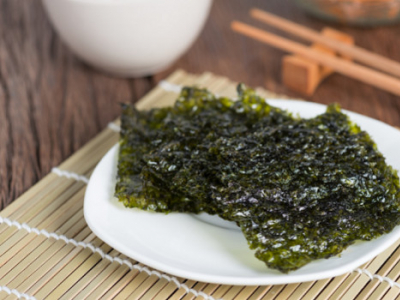
The Huang study clearly establishes that a consumption of 5 grams of nori per day — which is equivalent to about 4 standard sushi sheets — significantly contributes to improving B12 status [1]. This quantity provides approximately 1.9 µg of vitamin B12.
To give an order of magnitude, the French nutritional recommendations from ANSES place the daily B12 requirements for an adult at around 2.4 µg. [8]. Nori can therefore contribute substantially to these intakes, even if it does not fully cover them at this dose.
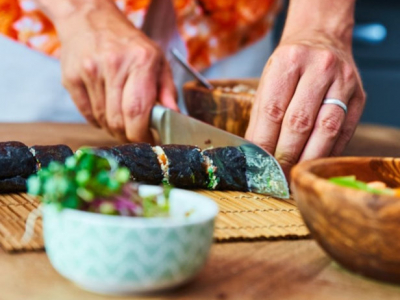
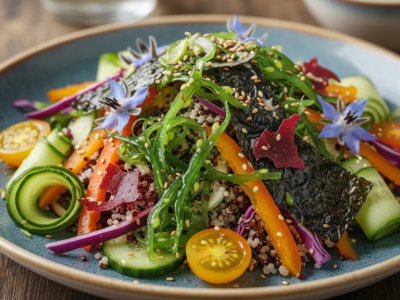
Five grams of Nori, it is also a completely realistic amount to incorporate into the daily diet: a few leaves in a bowl of rice, crumbled over a salad, wrapped around vegetables, or used to prepare homemade makis.
Frequency and timing of consumption
The results of the study were obtained with a daily consumption over 4 weeks. [1]. Regularity thus seems important for observing measurable effects on blood biomarkers.
The time of day has not been specifically studied, but as with any source of B12, distributing intake throughout the day may promote optimal absorption. Nori can easily be integrated into the breakfast Traditional Japanese, for lunch or dinner.
Conservation to preserve B12 (opaque packaging required)
A crucial point we have learned over the years: the Vitamin B12 is photosensitive.. The work of Ahmad and collaborators has demonstrated that exposure to light significantly degrades cobalamin. [9]. To preserve the B12 content of your nori as much as possible, it is essential to store it in an opaque package, away from light and moisture.
At Biovie, we have chosen protective packaging precisely for this reason. Poorly preserved nori can see its nutrient content significantly decrease, which reduces its nutritional value.
Nori and B12: Can we do without supplementation ?
What experts are saying after 2024
Following the publication of the Huang study, several researchers specializing in vegan nutrition have nuanced their recommendations. The site VeganHealth.org, an international reference on the subject, now acknowledges that nori can contribute to B12 intake, while still maintaining the recommendation for additional supplementation. [10].
This middle-ground position seems the most reasonable to us: the Huang study is solid and its results are significant, but it is a single study conducted over 4 weeks with 30 participants. Further research over longer durations and with larger populations is still needed to refine the recommendations regarding this natural source of B12.
Our position: nori as a supplement, not a replacement
We have extensively discussed the position to adopt at Biovie. Our conclusion is clear: nori can help support B12 status, but we do not recommend using it as the sole source of this vitamin for individuals following a strict vegan diet.
The reasons for this caution are multiple:
- The B12 content of nori varies depending on the quality and origin of the product.
- Individual needs for B12 can differ significantly from one person to another.
- The consequences of a B12 deficiency are too serious to take risks. [5]
On the other hand, nori is a valuable natural supplement to enrich one's diet with plant-based B12 in a pleasant and diverse way.
For whom is nori particularly suitable?
Nori can be particularly interesting for:
- The flexitarians who reduce their consumption of animal products without being strict vegans
- People who wish to diversify their natural sources of B12 in addition to a supplementation
- Fans of Japanese and Asian cuisine who already regularly consume seaweed
- People looking to reduce their reliance on synthetic dietary supplements
The figures are indeed telling: 39% of French people identify as flexitarians according to a 2024 Kantar study, and 32% say they are ready to try veganism according to Ifop, compared to only 12% in 2019 [11][12]. This evolution in dietary behaviors makes the question of natural sources of B12 increasingly relevant.
.webp)
Essential Precautions: Iodine and Thyroid
Iodine content of nori: what you need to know
Nori, like all seaweeds, naturally contains iodine. It is a trace element essential for the proper functioning of the thyroid, but which can cause problems in case of excess.
The iodine content of nori is generally considered moderate compared to other seaweeds like the Kombu or the wakame. A 5-gram serving of nori provides approximately 50 to 150 µg of iodine according to sources, this remains within acceptable limits for most people [13].
People affected by contraindications
⚠️ Warning: ANSES recommends caution for certain populations regarding the consumption of iodine-rich seaweed. [13] :
- Individuals with a thyroid disorder (hypo or hyperthyroidism)
- People suffering from heart diseases
- People withkidney failure
- The pregnant or breastfeeding women
If you are affected by any of these situations, consult your doctor or endocrinologist before incorporating nori into your daily diet.
Maximum dose recommended by ANSES
ANSES does not set a strict limit for nori specifically, but recommends moderation in the consumption of seaweed in general. A consumption of 5 grams per day, as tested in the Huang study, remains within reasonable limits for a healthy person without thyroid disorders. [13].
In case of doubt, a simple thyroid check-up prescribed by your doctor can verify that your thyroid function is normal before increasing your consumption of seaweed.
Why choose a quality nori for B12
Variability of B12 content according to quality
A point often overlooked in discussions about nori and vitamin B12 is that not all nori sheets are the same. The vitamin B12 content can vary significantly — from 30 to more than 70 µg per 100 grams — depending on the cultivated species, the growing conditions, the harvesting method, and the processing process [3].
The nori used in the Huang study had a content of 38.6 µg/100g. [1]. To achieve the same effects, it is important to choose a nori whose quality is similar to that used in the research.
Criteria for selecting a nori rich in B12
Here are the criteria we recommend for choosing quality nori, knowing that all nori sheets found in France are imported, as no French or European operator has yet invested in a nori rolling machine, which costs several hundred thousand euros:
- A controlled origin with traceability
- A Opaque packaging preserving the nutrients from light
- A crunchy texture testifying to good preservation
- A uniform dark green color indicating proper drying
Our selection of nori at Biovie
At Biovie, we have been offering carefully selected algae for their nutritional quality for years. Our nori meets the criteria we just mentioned: strict traceability and protective packaging.
We work directly with our suppliers to ensure consistent quality, as we know that the nutritional value of seaweed heavily depends on these parameters. If you wish to incorporate nori into your diet for its plant-based B12 content, choosing a quality product truly makes a difference, with all the precautions we have mentioned.
FAQ - Nori and Vitamin B12
Does nori really contain usable vitamin B12 ?
Yes, the Huang 2024 clinical study, published in theEuropean Journal of Nutrition, demonstrates that grilled nori contains bioavailable B12 and not an inactive analogue [1]. A consumption of 5g of nori per day for 4 weeks significantly improved all B12 biomarkers in vegetarians, with statistically robust results (p<0.01).
How much nori should one eat to meet their B12 needs ?
The Huang study shows that 5g of nori per day (about 4 sushi sheets) provides approximately 1.9 µg of B12 and significantly helps improve B12 status. [1]. However, this does not cover 100% of the recommended daily needs (2.4 µg according to ANSES). [8]Nori can contribute to intake but should not be the sole source of B12.
Can nori replace B12 supplements for vegans ?
No, we do not recommend nori as a complete substitute for supplementation for strict vegans. Nori can help support B12 status and is an interesting natural supplement, but the consequences of a B12 deficiency can be potentially serious. [5], caution remains advisable. Nori ideally fits into a complementary approach.
Why did vegan associations advise against nori for B12 ?
This position was based on previous studies, including Yamada's work on dried nori, which suggested that nori primarily contained inactive analogues of B12. [6]. This caution was justified by the absence of clinical trials on humans. The Huang 2024 study, the first well-designed human RCT, has since demonstrated the opposite with grilled nori.
Does nori present risks due to iodine ?
Nori contains iodine, which requires precautions for certain people. ANSES recommends caution for individuals with thyroid disorders, heart diseases, kidney failure, or for pregnant women. [13]. At 5g per day, the amount of iodine remains moderate for a healthy person, but if in doubt, consult your doctor.
How to store nori to preserve its vitamin B12 ?
B12 is photosensitive and can degrade if the nori is poorly stored. [9]. It is imperative to store it in an opaque package, away from light and moisture. Ensure that your nori is packaged in protective packaging — this is a quality criterion that we strictly adhere to at Biovie.
Conclusion
The Huang 2024 study marks a turning point in our understanding of nori as a source of vitamin B12. For the first time, a randomized controlled human trial demonstrates that this seaweed can significantly improve the B12 status of vegetarians.
Does this mean we can throw our B12 supplements in the trash? Clearly, no. But it does open an interesting perspective for those looking to diversify their intake of plant-based B12 naturally, as a complement to other sources.
Nori fits perfectly into a balanced and delicious plant-based diet. Whether you are vegan, vegetarian, or simply flexitarian, incorporating a few quality nori sheets into your daily meals is a simple and enjoyable habit that can support your B12 status.
At Biovie, we will continue to follow scientific advancements on this fascinating subject. And if you wish to discover our algae, our selection of nori awaits you.
Bibliographic references
DOI: 10.1007/s00394-024-03486-3 | PMID: 39352476
DOI: 10.1515/cclm-2014-0818
DOI: 10.3390/nu6051861
DOI: 10.3945/ajcn.2008.26947A
DOI: 10.1056/NEJMcp1113996
DOI: 10.1024/0300-9831.69.6.412
DOI: 10.1093/ajcn/53.3.695
Disponible sur : anses.fr
Note : La photosensibilité de la B12 est documentée dans de multiples sources dont : Ahmad et al., 2018, J Photochem Photobiol B
Disponible sur : veganhealth.org/vitamin-b12/
Consulté en janvier 2025.
Disponible sur : franceagrimer.fr
Disponible sur : anses.fr
Disponible sur : vegetarisme.fr