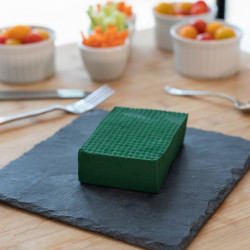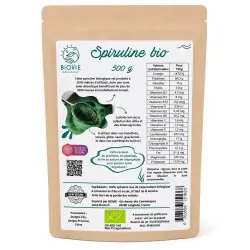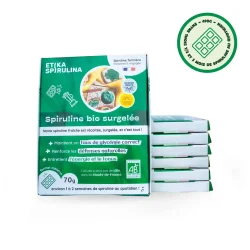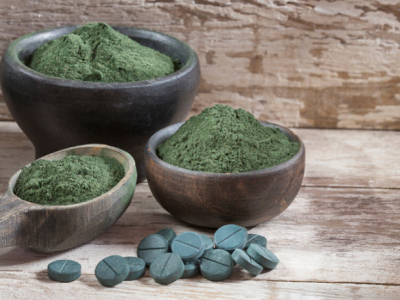

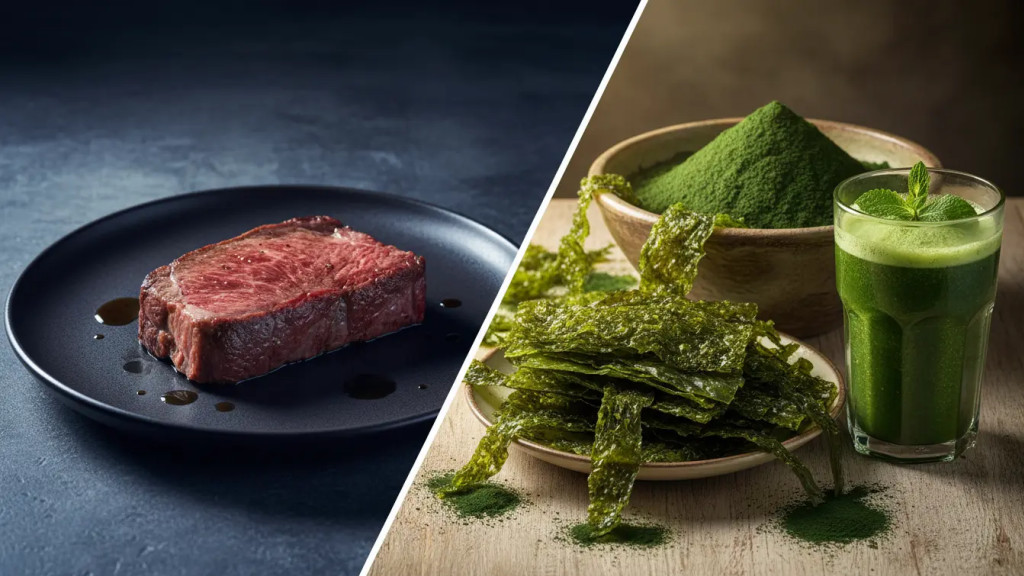
Spirulina contains up to 200 mg of iron per 100 g, which is 80 times more than red meat. And contrary to popular belief, this plant-based iron is absorbed by the body at a rate of 40%, more than the iron from meat (25%). Specifically, 8 grams of organic spirulina provide as much absorbable iron as 100 grams of steak. This is information I would have liked to know much earlier in my journey with a raw food diet.
At Biovie, we have been working with algae for 18 years. With Aurélie, we have seen hundreds of tired, breathless, and freezing people, to whom the same soothing message was repeated: "Eat red meat, it's the best source of iron." Maybe (and that's not even the case, by the way), but at what cost in collateral damage? No campaign in the world today raises awareness about eating 5 pieces of animals per day...
Frankly, when we look closely at the scientific data, this claim no longer holds.
In this article, I share with you what we have learned about plant-based iron, the edible seaweeds, and why this natural solution could very well change your daily life if you suffer from chronic fatigue or iron deficiency.
Iron deficiency: 25% of French women affected
Let's start with the numbers, because they are enlightening. According to Santé Publique France (ESTEBAN study, 2023), 25% of women of childbearing age have an iron deficiency.. One in four women. And this is just the visible part: many people live with low ferritin without knowing it, attributing their fatigue to stress or lack of sleep.
The 7 symptoms that reveal an iron deficiency
How to know if you are lacking iron? Here are the most common signs that we regularly observe in our clients:
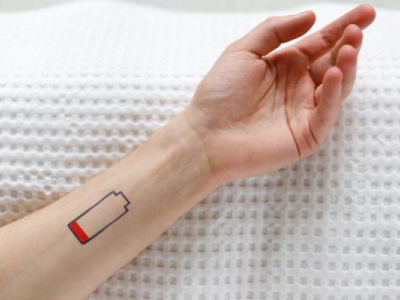
- Persistent fatigue : You wake up tired, even after a good night's sleep
- Unusual shortness of breath : Climbing stairs leaves you more breathless than before
- Excessive shyness : You are always cold, especially in the extremities.
- Paleness of the complexion : Your skin lacks radiance, your mucous membranes are pale
- Brittle nails and dull hair : Your hair and nails suffer first
- Difficulties concentrating : "Mental fog" sets in
- Palpitations : Your heart beats faster to compensate
If you recognize yourself in several of these symptoms, there is a strong chance that your iron is the cause. Discover our tips for fight against fatigue Naturally.
Why are women affected three times more than men?
The answer is physiological: menstruation. Each month, a woman loses between 15 and 30 mg of iron. The daily iron requirement for a woman of childbearing age is 16 mg per day, compared to only 9 mg for a man.
And during pregnancy, it is even more pronounced. ANSES indicates that iron needs increase by 50% during this period. The INCA3 study reveals that 77% of pregnant women have insufficient intakes. This is significant. To learn more about theLiving food and pregnancy, consult our dedicated guide.
The trap of traditional iron supplements
When faced with a deficiency, the classic medical reflex is to prescribe ferrous sulfate. On paper, it's effective. In practice, it's often problematic.
Side effects are common: constipation, nausea, abdominal pain, black stools. About 30% of people discontinue their treatment due to these inconveniences. I personally know vegetarian friends who struggled for months with these supplements, never really regaining their energy.
That's where algae come into play. And frankly, when you compare the options, the difference is striking.

Heme iron vs non-heme iron: the myth of absorption
It is often said that animal iron (heme) is "superior" to plant iron (non-heme). This statement deserves to be nuanced or even corrected.
What scientific studies really say
Heme iron, found in meat and fish, is absorbed at about 15 to 25% depending on the sources. Non-heme iron from plants varies greatly: from 2% for spinach to 40% for spirulina.
You read that right: the iron in spirulina is better absorbed than that in red meat.
This data comes from studies using the Caco-2 model, the international standard for measuring intestinal absorption. The Journal of Agricultural and Food Chemistry published these results, and they challenge everything we have been taught.
Bioavailability: The Criterion That Changes Everything
Bioavailability is the amount of iron that actually enters your bloodstream and becomes usable by your body. It is THE criterion that matters. Here is what studies show:
- Spirulina : at least 40% bioavailability
- Red meat : 15-20% bioavailability
- Legumes ungerminated: 2-5% bioavailability
- Spinach : approximately 2% bioavailability
Popeye's spinach? A nutritional myth that persists. To obtain the same amount of absorbable iron as in 8 g of spirulina, one would need to eat... several kilos of spinach. That sets the record straight.
Why comparing raw contents makes no sense
When we say "meat contains 2.6 mg of iron per 100 g," we forget the essential: how much of this iron can your body actually use? Let's do the calculation:
- 100 g of red meat : 2.6 mg × 25% absorption = 0.65 mg of absorbed iron
- 8 g of spirulina : 16 mg × 40% absorption = 6.4 mg of absorbed iron
Do you see the difference? With just a spoonful of spirulina, you absorb 10 times more iron than with a portion of meat. Without the saturated fats, without the environmental impact, and with significantly better digestive tolerance.
Algae: Unsung Champions of Bioavailable Iron
At Biovie, we have been offering algae since our beginnings. And over the years, we have learned to distinguish those that truly excel in iron. Discover why the Seaweed is a superfood from the sea. ally of your health.
Spirulina: 200 mg of iron per 100 g (absolute record)
The organic spirulina holds the absolute record for iron content among common foods. According to compositional studies, its content varies from 28.5 mg to 200 mg per 100 g, depending on the quality and growing conditions.
But it's not just a question of quantity. The spirulina It possesses a unique cellular structure, without a cellulose wall. Therefore, its nutrients are directly accessible to our digestive system. This explains its exceptional bioavailability of 40%.
Moreover, the spirulina naturally contains vitamin B12 (even though its bioavailable form is debated), complete proteins (60-70%), chlorophyll, and phycocyanins. It's a vitality concentrate in a single spoonful.
Chlorella, dulse, wakame: the complete comparison
Other algae also deserve your attention:
Chlorella : 100-130 mg of iron per 100 g, with a bioavailability of about 35%. It is particularly interesting for its detoxifying properties. Discover all the Benefits of chlorella. At Biovie, many of our customers associate it with spirulina.
Dulse : 30-50 mg of iron per 100 g, with a bioavailability of 15%. This red Atlantic seaweed has a slightly iodized taste. It easily integrates into salads and seaweed tartares.
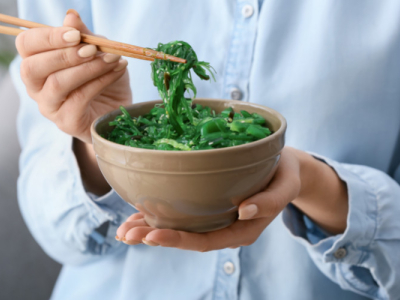
Wakame : 2-3 mg of iron per 100 g, with a bioavailability of 10%. Less concentrated in iron, but excellent for iodine and minerals. The wakame is the perfect algae to start with.
Nori (the one in sushi): about 12 mg of iron per 100 g. Convenient and familiar, but less concentrated than spirulina.
For a priority objective of increasing iron levels, the quality spirulina remains unbeatable. It has been our recommendation for 18 years, and feedback from our clients confirms it.
The secret of the exceptional absorption of algae
Why are algae, and particularly spirulina, so well absorbed? Several factors come into play:
- Absence of a cellulosic wall : Unlike terrestrial plants, spirulina does not have a cellulose wall to "break" in order to release its nutrients.
- Presence of natural cofactors : Spirulina naturally contains vitamin C, amino acids, and enzymes that facilitate iron absorption.
- Ionic form of iron The iron in spirulina is in a chemical form that is particularly well recognized by our intestines.
- Absence of anti-nutrients : Unlike legumes or cereals, spirulina does not contain phytates or oxalates that block iron absorption.
How to optimize the absorption of plant-based iron
Even with a source as bioavailable as spirulina, a few tips can help maximize absorption. Here is what we recommend after 18 years of experience.
The winning combination: spirulina + natural vitamin C
The American Journal of Clinical Nutrition has demonstrated that vitamin C can multiply the absorption of plant-based iron by 2 to 6. That's considerable.
In practice, it's simple: take your spirulina with freshly squeezed orange juice, a few slices of kiwi, or even better, a bit of acerola powder (the cherry from the Antilles, 30 times richer in vitamin C than an orange).
At Biovie, we offer a spirulina + acerola duo specifically designed for this synergy. Many of our customers have adopted it and wouldn't go back.
The 5 mistakes that block iron absorption
Avoid these common pitfalls:
- Drink tea or coffee with your spirulina Tannins reduce iron absorption by 60%. Wait at least 2 hours.
- Take calcium at the same time Calcium competes with iron for absorption. Space out your intake by 2-3 hours.
- Eating a lot of fiber in the same meal Phytates in whole grains can partially block absorption.
- Take spirulina in the evening : Its energizing effect can disrupt sleep in some people.
- Underdose : 1 g per day is not enough to correct a deficiency. A minimum of 3 g is needed for prevention, and 5-8 g for correction.
The ideal time to take your spirulina
The morning at breakfast remains the best time. Your stomach is empty (better absorption), you benefit from the energizing effect for the day, and you can easily pair it with a fruit rich in vitamin C.
For know how to take spirulina, we have written a comprehensive guide with 6 ways to incorporate it into your diet.
Second option: before lunch, 30 minutes before the meal. Absolutely avoid the evening if you are sensitive to its stimulating effect.

Dosage and duration of treatment: the protocol that works
Here is the protocol we recommend, based on feedback from hundreds of clients and the available scientific data.
As a preventive measure: 3 g of spirulina per day
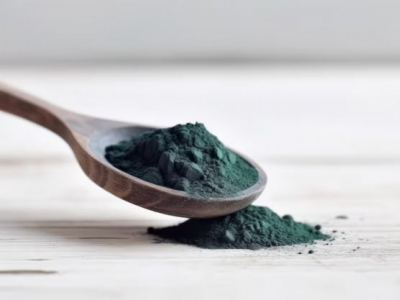
If your ferritin levels are within the normal range (above 30 µg/L) and you simply want to maintain good levels, 3 g of spirulina per day is sufficient. This is equivalent to a level teaspoon of flakes or 6 tablets of 500 mg.
At this dosage, you already provide more absorbable iron than with a daily steak. And you benefit from all the other nutrients in spirulina: proteins, antioxidants, B vitamins.
In case of deficiency: 5 to 8 g per day for 3 months
If your ferritin is low (below 30 µg/L), or if you are experiencing deficiency symptoms, you need to increase the dosage.
Weeks 1-2 : Start with 3 g per day to get your body accustomed.
Weeks 3-8 : Increase to 5 g per day, divided between morning and noon.
Weeks 9-12 : Continue at 5 g per day.
Maintenance : After 3 months, you can return to 3 g per day for maintenance.
Systematically associate with vitamin C (acerola, orange, kiwi) to optimize absorption.
Expected results: what to expect week by week
Our customers' feedback generally follows this pattern:
Weeks 1-2 : No notable change. Your body is replenishing its reserves. It's normal.
Weeks 2-3 : The first effects on energy are appearing. Many people report waking up more easily.
Weeks 4-6 The improvement becomes clear. Fatigue recedes, and sensitivity to cold decreases.
Month 2-3 : Ferritin levels increase significantly (verifiable by a blood test). Energy stabilizes at a good level.
Special cases: pregnancy, sports, menopause
Certain periods of life require special attention to iron. Here are our recommendations.
Iron and Pregnancy: Doubled Needs, Natural Solutions
During pregnancy, iron needs almost double. ANSES recommends 16 mg per day, but many gynecologists advise more.
Spirulina can be consumed during pregnancy to help with iron intake. Its natural form is generally well tolerated, unlike traditional iron supplements which often cause nausea and constipation – discomforts that pregnant women would rather avoid.
Recommendation : Start with small doses (1-2 g) and consult your midwife or doctor to validate the dosage suitable for your situation. Every pregnancy is unique.
Vegetarian Athletes: Optimizing Performance
Athletes have increased iron needs: intense physical effort causes the destruction of red blood cells (hemolysis), and sweating leads to iron loss.
A vegetarian or vegan athlete who trains regularly would benefit from supplementing with spirulina. The amino acids it contains (it is a complete protein at 60-70%) also contribute to muscle recovery.
Sports dosage : 5 to 8 g per day during periods of intensive training, to be taken in the morning and before training.
Menopause and Anemia: Regaining Energy
Paradoxically, menopause can be accompanied by persistent anemia, even though menstrual losses have ceased. Iron absorption decreases with age, and accumulated reserves become depleted.
Spirulina offers a gentle and gradual solution to increase ferritin levels.
FAQ - Your questions about plant-based iron and algae
What is the best source of plant-based iron ?
Organic spirulina is the best source of plant-based iron, with up to 200 mg per 100 g and a bioavailability of 40%. This microalgae surpasses all other plant sources in both concentration and absorption. Eight grams of spirulina provide as much absorbable iron as 100 g of red meat.
Is plant-based iron well absorbed by the body ?
The plant-based iron from algae such as spirulina is absorbed at 40%, which is better than red meat (15-25%). This exceptional bioavailability is explained by the unique cellular structure of microalgae and the presence of natural cofactors that facilitate intestinal absorption. Combining it with natural vitamin C can further double this absorption.
How to quickly and naturally increase your iron levels ?
To naturally boost your iron levels, take 5 to 8 g of organic spirulina per day, combined with a source of vitamin C (acerola, orange, kiwi). The first effects on energy can be felt after 2-3 weeks. Ferritin levels significantly increase after 2-3 months of continuous treatment. Avoid tea and coffee for 2 hours after taking it.
Is spirulina really effective against anemia ?
Yes, spirulina can effectively help correct mild to moderate iron deficiency anemia. Several clinical studies show an improvement in blood markers (hemoglobin, ferritin) after 8-12 weeks of daily supplementation. For severe anemia, consult your doctor for appropriate follow-up.
How much spirulina per day for iron ?
For prevention, 3 g of spirulina per day is sufficient to maintain good iron levels. In case of a confirmed deficiency, increase to 5-8 g per day for a minimum of 3 months. Distribute the doses (morning and noon) and always combine with vitamin C to optimize absorption.
Spirulina or chlorella: which one to choose for iron ?
Spirulina is richer in iron (28-200 mg/100 g) than chlorella (100-130 mg/100 g). For a primary goal of increasing iron levels, prioritize spirulina. Chlorella remains interesting as a supplement for its detoxifying properties. Both can be combined to benefit from their respective advantages.
Can you take spirulina during pregnancy for iron ?
Spirulina can be consumed during pregnancy to help meet iron needs, which double during this period. Its natural form is generally well tolerated, unlike traditional iron supplements. As a precaution, start with small doses (1-2 g) and consult your midwife or doctor to confirm the appropriate dosage for your situation.
Conclusion: What if you tried it ?
There you have it, we have covered this topic that has been close to my heart for a long time. Plant-based iron, particularly that from algae, is a natural, effective, and well-tolerated solution for those suffering from fatigue due to a deficiency.
What I take away after 18 years of supporting our clients at Biovie:
- Spirulina contains 80 times more iron than red meat.
- Its iron is better absorbed (40%) than that of meat (20%).
- 8 g of spirulina = 100 g of steak in assimilable iron
- The combination with vitamin C doubles the effectiveness.
- Zero side effects unlike traditional supplements
If you are vegetarian, if you suffer from chronic fatigue, if traditional iron supplements cause constipation, spirulina is definitely worth trying.
Trying it is adopting it. This is what we have observed since the beginning. And frankly, when we see the enthusiastic feedback from our customers, we understand why this little blue algae has revolutionized their daily lives.