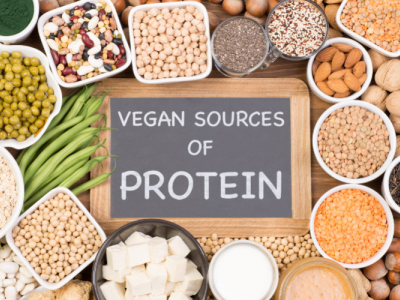



In modern nutrition, labels contradict each other and myths persist. A question often arises, especially in vegetarian diets: are legumes (chickpeas, lentils, beans) and pseudo-cereals (quinoa, buckwheat) primarily proteins or carbohydrates?
At Biovie, we don't settle for half-truths. We will analyze the composition of these plant-based dietary staples. We want to give you a clear answer. We also want to show you why this binary distinction is actually a false question. Hold on tight. It's time to set the record straight. We need to understand the real nutritional richness of these treasures of the earth. They are much more complex than animal proteins. They are too quickly compared to animal proteins.
Plant Proteins: The Myth of Incompleteness Debunked
For decades, the dogma was clear: meat, eggs, dairy products... these are the sources of complete proteins. What about plant proteins? They were considered "incomplete," requiring complex combinations (the famous rice and lentils) to provide all the essential amino acids (EAAs).
Quinoa, the Dogma Breaker
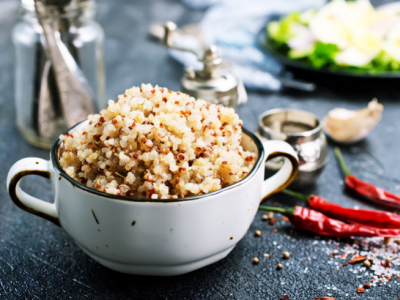
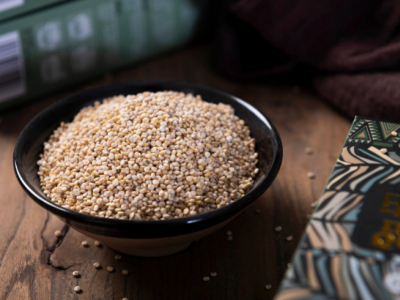
Let's start with the most emblematic case: quinoa. Technically, it is not a cereal, but a "pseudo-cereal," related to beets and spinach. And what a shock to nutritional orthodoxy! Quinoa is one of the rare plant sources to contain all nine essential amino acids, making it a complete protein, similar to animal products (and soy).
For 100g of raw quinoa, you have on average:
- Proteins: about 14 to 16g
- Carbohydrates: about 60 to 70g
So, protein or carbohydrate? If we look at the raw quantity, quinoa is clearly richer in carbohydrates. But it's the quality of the proteins (being complete) that makes it exceptional and an undisputed champion.
Legumes: The Strength of the Group
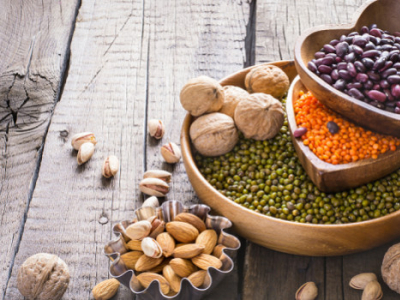
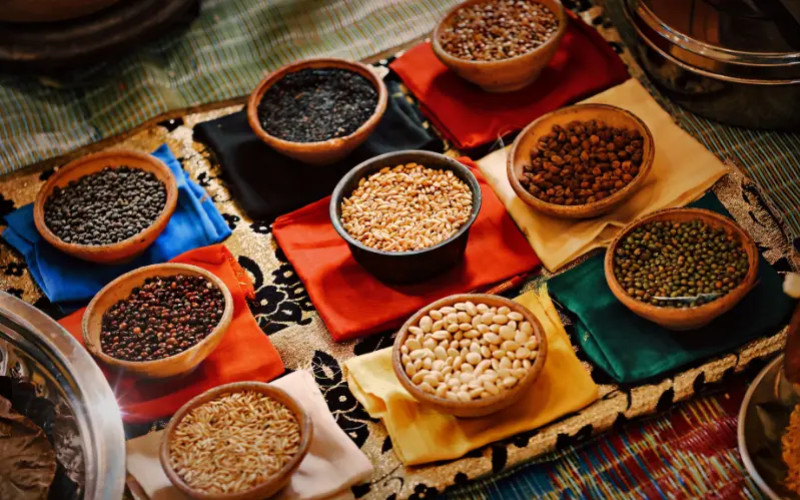
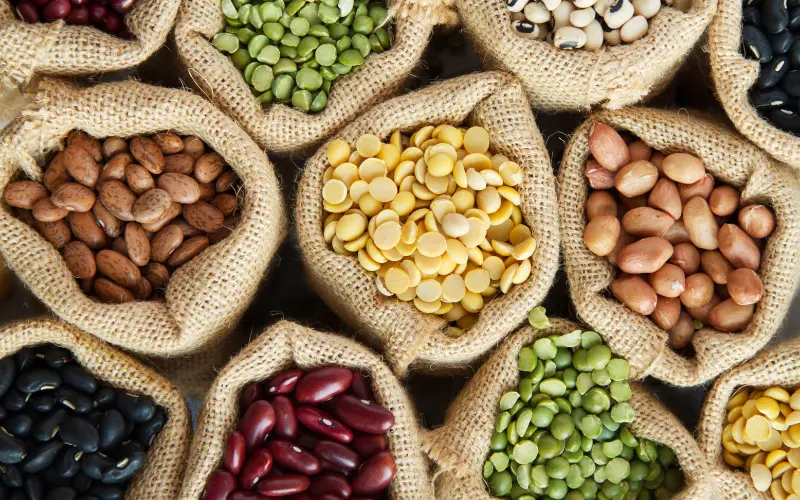
Let's move on to legumes: lentils, chickpeas, dried beans. They have been the pillar of global nutrition for millennia.
For 100g of dry legumes (before cooking):
- Lentils: 25-30g of Proteins / 55-60g of Carbohydrates
- Chickpeas: 19-25g of Proteins / 50-60g of Carbohydrates
Once again, the amount of carbohydrates is higher. However, their protein content is colossal! Dry lentils rival meat in terms of protein concentration.
As for the "incompleteness" argument, it's high time to discard it. Legumes are generally a bit lower in an essential amino acid called methionine. Grains (rice, wheat, spelt) are limited in lysine.
But here is the truth, the one that's hidden from you:
- Complementarity does not need to be achieved within the same meal! Our body is an amazing recycling factory. It has an "amino acid pool." If you eat lentils at lunch and rice in the evening (or even the next day), the complementation happens naturally. The imperative of immediate association is an oversimplification.
- Is your diet varied? If yes, you have absolutely nothing to worry about. The idea that vegans spend their time calculating their associations is an absurdity that discourages the shift to a more ethical and ecological diet.
Verdict: These foods are significant and high-quality sources of plant proteins. Their raw carbohydrate content does not diminish their status as protein champions.
And if we go further in this living logic, some of these legumes can reveal their full biological potential through germination. This is where life comes into play — and where the Biovie philosophy makes perfect sense.
- Biovie sprouting mung bean: a staple of Asian cuisine, it contains about 24g of protein per 100g dry. Sprouted, it becomes more digestible, rich in enzymes and antioxidants, while reducing antinutrients. A source of vitality and living proteins, perfect for salads, bowls, or stir-fried dishes.
€9.90
Out-of-Stock
Organic mung bean seeds

-
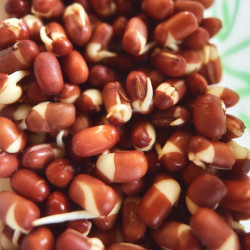
Organic sprouting azuki red bean: small but mighty, this Japanese bean contains 20 to 25g of protein per 100g. Sprouted or lightly cooked after pre-sprouting, it develops a sweet and mild taste, and supports the renal sphere according to Asian tradition. An excellent food to strengthen the body without weighing it down.
-
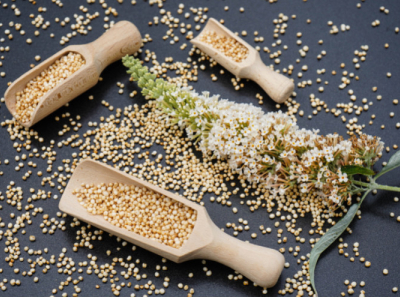
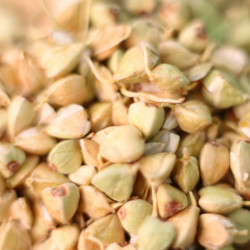
Biovie activated buckwheat: although technically a pseudo-cereal, it plays a key role in amino acid complementarity. Activated - that is, sprouted then dehydrated at low temperature - it contains all essential amino acids, including lysine, absent from traditional cereals. Crunchy, nourishing, it naturally balances meals based on legumes.
The great forgotten: The quality of carbohydrates (and fibers!)
Focusing only on the Protein/Carbohydrate binary hides the true richness of these foods. We especially ignore the quality of these carbohydrates.
Slow Carbohydrates vs. Fast Carbohydrates
When we hear "carbohydrates," we often think of white sugar, sodas, or industrial pastries, staples of an industrial diet that has stripped foods of their meaning and nutritional value. This confusion, maintained by the agro-industry, traps us in poor, simplistic, and unbalanced diets.
However, carbohydrates from whole grains, legumes, and pseudo-cereals like quinoa, lentils, or chickpeas have nothing to do with these fast sugars. They consist of complex carbohydrates, surrounded by a matrix rich in dietary fibers, both soluble and insoluble.
These complex carbohydrates are indeed valuable allies for muscle recovery. After physical exertion, they help replenish glycogen stores in a stable and gradual manner, without causing a spike in blood sugar. Combined with plant proteins naturally present in these foods, they promote muscle fiber repair and cellular regeneration, while supporting metabolic balance.
The soluble fibers, also present in certain whole grains like oats or barley, slow down sugar absorption and promote a gradual release of energy. Insoluble fibers work deeply on transit. They stimulate intestinal motility. They increase stool volume. They contribute to the natural elimination of metabolic waste. Together, they contribute to digestive and metabolic balance.
This is where the term "carbohydrate" takes on its full meaning:
```html
- Low Glycemic Index (GI): Thanks to the fibers, the digestion of these carbohydrates is slowed down. Sugar gradually enters the bloodstream, avoiding blood sugar spikes and energy yo-yos that promote weight gain and, eventually, type 2 diabetes. Lentils (GI 30) and chickpeas (GI 35) are textbook examples of glycemic regulation.
- The Intestinal Regulator: Often forgotten, fibers are the engine of your gut microbiota. They are the favorite food of the billions of friendly bacteria lining your intestines, responsible for 80% of your immunity and the synthesis of many nutrients (such as certain B vitamins).
The binary question is a trap. Labeling these foods as "proteins" or "carbohydrates" ignores that their strength comes from the intelligent combination of these two macronutrients. They contain proteins, slow carbohydrates, and fibers. It's a complete nutritional package that nature has designed for us.
The Biovie Assessment: Beyond Macronutrients
At Biovie, our advocacy for raw, living, and organic foods is not a whim, it's a necessity. Why? Because the answer is not only in the quantity (Protein vs. Carbohydrate), but in the vitality and bioavailability of micronutrients.
Unmatched Micronutritional Richness
Forget meat for a moment. Let's look at what 100g of plant-based foods like lentils or chickpeas provide:
- Non-heme Iron: They are among the best plant sources, crucial for energy and oxygen transport. (Biovie Tip: always pair them with vitamin C, for example, a squeeze of lemon on your hummus, to optimize iron absorption!).
- Magnesium and Potassium: Essential minerals, often deficient, for muscle and nerve function.
- B Vitamins: Especially folate (vitamin B9), vital for cell regeneration.
The Active Tip: Sprouting
If we talk about living nutrients, we cannot overlook sprouting.
Sprouting chickpeas or lentils (even slightly, a Biovie favorite) is not a health-guru whim, it's a cutting-edge nutritional strategy! Sprouting transforms these foods:
```
- It multiplies the vitamin content.
- It reduces the content of anti-nutrients (like phytic acid) that can block mineral absorption.
- It triggers enzymes making proteins and carbohydrates even more digestible.
Eating sprouted lentils is moving from matter to living energy. This is the very essence of the Biovie approach: not just settling for what is, but seeking to reveal the maximum potential of life.

Conclusion: The Enlightened Choice
So, to frankly answer the question "Quinoa, chickpeas, lentils... protein or carbohydrate?", we must answer: both, and that's what makes them strong!
These are foods that are both rich in quality complex carbohydrates (their main energy source), while being an exceptional source of complete or highly concentrated plant protein (their structural asset).
We do not measure their value by the dominance of one macronutrient. Their value comes from the whole of the nutrients they contain: fibers that regulate, proteins to build, and many important vitamins and minerals.
By incorporating quinoa, chickpeas, and lentils into your plate – and prioritizing organic quality and vitality (think about germination!) – you are not just adopting a healthy diet. You are making a conscious act: that of nourishing your health, preserving the planet (these plants fix nitrogen in the soil, limiting chemical fertilizers) and saying no to simplistic diets that reduce nutrition to boxes.
The choice is yours: the living and the complex, or the industrial and the simplified.
Your Questions and Our Answers (FAQ)
Q1: Is quinoa considered a protein or a carbohydrate by nutritionists?
Among the most complete plant foods, quinoa holds a special place. Primarily rich in complex carbohydrates (about 60 to 70% dry), it is an excellent source of slow energy. However, it is famous for its exceptional content of complete proteins (about 14-16% dry) because it contains the nine essential amino acids, giving it a unique status as a plant champion.
Q2: Do lentils or chickpeas belong to the family of starches or proteins?
Lentils and chickpeas are legumes, and they belong to both the category of starches (because they are rich in complex carbohydrates) and meat substitutes (because they are very rich in proteins and iron). Their high fiber content gives them a low glycemic index, promoting sustainable energy.
Q3: Is it absolutely necessary to combine legumes and grains to have complete proteins?
No, this rule is outdated. Although legumes are low in methionine and grains in lysine, your body maintains a "pool" of amino acids. A varied diet throughout the day or over a few days allows for protein completion. It is not necessary to consume them in the same meal.
Q4: What is the best way to improve the digestibility of chickpeas and lentils?
The most effective way is sprouting: soaking and then lightly sprouting the legumes. This process increases digestive enzymes and reduces anti-nutrients (like phytic acid), making their proteins and minerals much more bioavailable and easier to assimilate.
Q5: Can these foods be included in a weight loss diet?
Absolutely. Despite their richness in carbohydrates, their very high protein and fiber content significantly increases the feeling of satiety. Their low glycemic index helps stabilize blood sugar levels, preventing cravings and facilitating weight control as part of a balanced diet.